" We don't sell the wine without touching the vine "
| BUY MORE! SAVE MORE! | ||||||||||||||||
|
| Country: | France |
| Region: | Languedoc |
| Winery: | Cave de Pomerols |
| Grape Type: | Picpoul |
| Vintage: | 2024 |
| Bottle Size: | 750 ml |
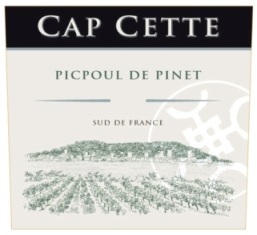
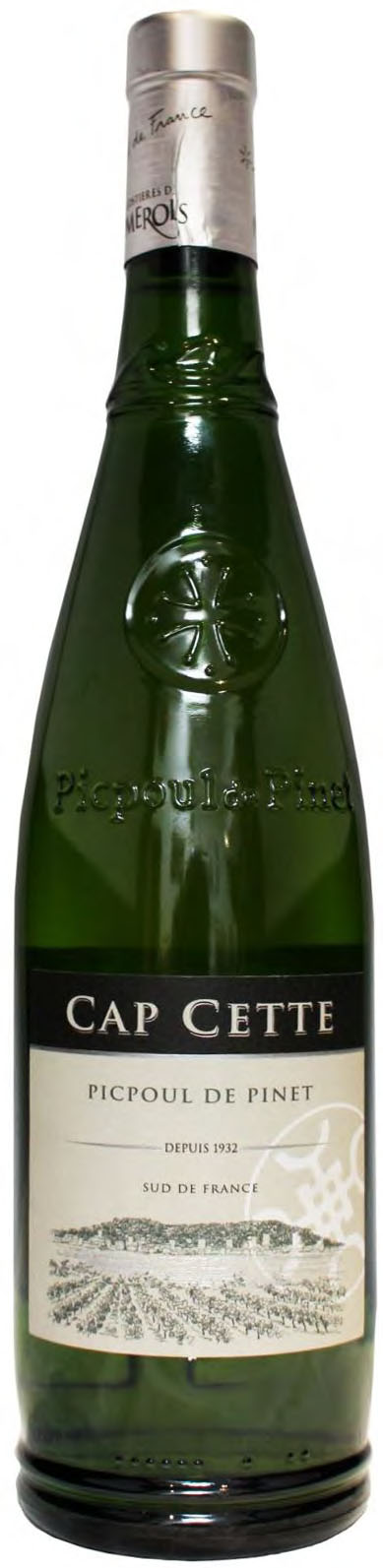
Cap Cette Picpoul de Pinet is made from 100 percent Picpoul de Pinet
A very popular, traditional local variety planted on sun-drenched hillsides called "costières" (coastal region) in the Mediterranean garrigue, near the Etang de Thau - a coastal lagoon situated between the port of Sète and Marseillan.
The color is a superb pale yellow with bright hues. The nose is elegant, with aromas of fresh fruit and citrus fruit especially grapefruit. Well-balanced with typical focusing and zesty acidity. A pure expression of the grape varietal, the wine shows how good Picpoul can be when grown on its favorite terroir.
It will complement a vast array of dishes such as Asian cuisine, sushi, spicy fare and all sorts of seafood and grilled fish. Enjoy!
The Cave de Pomerols Estate
Founded in 1932, this Cave Cooperative is located in the top commune of Pomerols, located between the garrigue of Pezenas and the sea dominated by the Mont St Clair in Sete. The co-op has merged with the Cave de Castelmau de Guers. They include 320 members and produce 55,000 hectoliters of wine (600,000 cases).
The Cave de Pomerols Vineyard
The members control 1,200 hectares of vineyard land (2,964 acres) of which 330 hectares (815.1 acres) are Picpoul de Pinet. Six communes are entitled to the name Picpoul de Pinet: Florensac, Pomerols, Pinet, Castelnau de Guers, Montagnac, Meze. The Pomerols vineyards stretch over vast sun-light terraces with clay/calcareous soils.

Rich aromas of honeycomb, baked apple and toasted bread. The palate is firm yet rich — a seamless expression of restraint and elegance. The silky texture extends through a lingering finish with hints of Mandarin orange peel and sweet Asian spice. This Chardonnay will continue to develop over the next five to seven years.

Palacio de Fefinanes Albarino "III Ano" is made from 100 percent Albarino
The III Año shows all the expressiveness of the Albariño grape, with full nose of mature fruit and a mineral character. Complex and meaty with firm structure in the mouth, it promises a splendid evolution which will favor a long life for this elegant wine with personality.
Aged for 3 years on the lees in stainless steel tanks.
Wine is aged for a total of 6 months: 4 months in French and American Oak barrels. No new oak, only 1, 2 and 3 year old barriques. During these 4 months, wine is aged on the fine lees with frequent Batonnage (stirring of the lees) in order to get the most expressive notes from the Albarino varietal. Then, it is transfered into a stainless steel tank, which allows the oak aromas to be assimilated and integrated.
1583 is the birth date of the Viscount of Fefinanes, Gonzalo Sarmiento Valladares, builder of the Castle of Fefinanes, in Cambados. They wanted to pay tribute to their ancestor with this wine that managed to reach a perfect harmony between the fruitiness of the Albarino grape and the complexity brought by the oak aging.
Excellent with shellfish, grilled or stewed fish, white meats, poultry

Le Jade Picpoul de Pinet is made from 100% Picpoul de Pinet
Pale straw color. Delicate white flower, citrus and juicy pear aromas. Fresh, crisp, and bright acidity with mineral and saline accents. Well-balanced and easy-drinking.
A refreshing treat laced up with snappy food-friendly acidity.
Picpoul Le Jade makes a classic match with oysters on the half shell and goes very well with exotic food in general. Picpoul means lip-smacking good.
SOIL : Clay and limestone soil just a few kilometres from the reputed Etang de Thau (salted water lagoon) overlooking the Mediterranean town of Sète.
VINIFICATION : Grapes are harvested at 12°- 13° maturity
Skin maceration for several hours
Selection of drained juice after undergoing pneumatic pressure.
Cold double decantation.
Thermoregulated fermentation at 16°C
No malolactic fermentation.

This wine consists of 100% Picpoul (or Piquepoul) - a very popular, traditional local variety planted on sun-drenched hillsides called "costières" (coastal region) in the Mediterranean garrigue, near the Etang de Thau - a coastal lagoon situated between the port of Sète and Marseillan. The vines are 20-25 years old.
The garrigue is the name given to open scrubland made up of low-growing, dwarf bushy shrubs including holm oak, juniper, broom and wild herbs such as rosemary, thyme and sage.
The color is a superb pale yellow with bright hues. The nose is elegant, with aromas of fresh fruit and citrus fruit especially grapefruit. Well-balanced with typical focusing and zesty acidity. A pure expression of the grape varietal, the wine shows how good Picpoul can be when grown on its favorite terroir. Our best value, this wine impresses novices and hardened geeks equally.

Picpoul de Pinet H.B. Chevalier Patience is a white wine made from 100% Picpoul.
Clear and crystalline color of an intense pure yellow with golden reflections.
The aromas in retro-olfaction are particularly faithful to direct olfaction, also intense, complex and extend long in the final too.
It is a fresh, generous and round wine with a rich taste balance.
The entry is supple, the beautiful natural freshness of this exceptional Picpoul is revealed from the middle of palate and extends beautifully on the finish.
The nose is very expressive, flattering and complex.

Pago de los Capellanes Tinto Joven is made from 100% Tempranillo.
Joven Roble is for everyone and for every moment. Fresh and vibrant, while at the same time complete and full of energy. A clear, affable, open and solid character. We take its production very seriously to obtain a blissfully satisfying wine with every vintage.

Capezzana Ghiaie Della Furbia Toscana IGT is made from Cabernet Sauvignon 40%, Syrah 35%, Merlot 25%.
In 1979 Ugo Conti Bonacossi created Ghiaie della Furba from vineyards planted among the pebble (Ghiaie) rich soils of the Furba stream. Originally planted with clippings from the famed Chateau Lafite estate in Bordeaux, the wine was made from Cabernet Sauvignon, Cabernet Franc and Merlot until the blend was changed in 1998 with the addition of Syrah. The inclusion of Cabernet Franc was slowly discontinued and today the blend includes Cabernet Sauvignon, Merlot and Syrah and is made only in the best vintages
Review:
This wine starts with pine needles and crunchy red fruit on the nose, with wet slate, cedar and tobacco leaf slowly emerging. The palate turns richer, with cherries, blackberries, dark chocolate, a little tar, coffee and sambuca. Tannins are very firm and the acid vibrant through a long finish.
-Wine Enthusiast 93 Points

Marco Capra Langhe Nascetta is made from 100% Nascetta - 15 years old - 1.73 acres
Aged 6 months in stainless steel vats
The name "CONNA" is a sweet nickname after his wife Monica.
Bright straw yellow with greenish hues, with an intense and interesting perfume of grapefruit, apple and aromatic herbs. Floral, fresh, focused, good acidity. Refreshing and bright, full bodied with an aromatic persistence, it is savory and tasty on the palate with a smoothness that enhances the rich character of the wine
Altitude: 400 m above sea level.
Soil composition: lime and sand.
Plant density: 5000 vines / hectare.
Cultivation system: traditional Guyot.
Yield per hectare: 6 tons.
After a short period of maceration on skins, the grapes are soft pressed. The clear must obtained ferments slowly in stainless steel vats at a controlled temperature of 16-17°C. The wine spends a long period of time on the fine lees, with frequent “batonnage”
Ideal with apetizers, shellfish and other fish dishes.

All older vintage wines have been purchased from a single collectors cellar. Pictures can be requested before shipment.

Dal Forno Romano Valpolicella Superiore is made from Corvina, Corvinone, Rondinella, Oseleta and Croatina grown at the Monte Lodoletta estate in the Val d'Illasi, eastern Valpolicella.
One of Italy's most iconic producers, Romano Dal Forno revolutionized Valpolicella winemaking with an obsessive pursuit of quality. The grapes are hand-harvested with meticulous selection, then dried for approximately 45 days in the estate's patented, computer-controlled appassimento rooms. After pressing, the wine is fermented in custom-designed stainless steel tanks and aged for 24 months in new French oak barrels, followed by extended bottle aging before release.
Deep ruby in color with aromas of blueberry, blackberry, cherry and cocoa. Full-bodied and opulent on the palate with powerful yet polished tannins, layers of dark fruit, sweet spice, tobacco and chocolate. Despite its remarkable concentration, the wine maintains an elegant freshness and balance. Pairs beautifully with grilled or roasted red meats, game and aged cheeses.
14.5% ABV
A perfumed and elegant wine with subtle aromas of balsamic, coconut, dark bramble fruit, jasmine, mulberries, red cherries and chocolate. It’s spicy rather than fruity. On the palate it shows salted chocolate flavors and a full body. It’s crisp, zesty and velvety, with creamy tannins and a graphite finish. It shows tension despite its concentrated style. It will be released in January 2027. Try then or hold.
-James Suckling 97 Points