" We don't sell the wine without touching the vine "
| BUY MORE! SAVE MORE! | ||||||||||||||||||||
|
| Country: | Italy |
| Region: | Piemonte |
| Winery: | Marco Capra Azienda Agricola |
| Grape Type: | Nascetta |
| Organic: | Yes |
| Vintage: | 2024 |
| Bottle Size: | 750 ml |
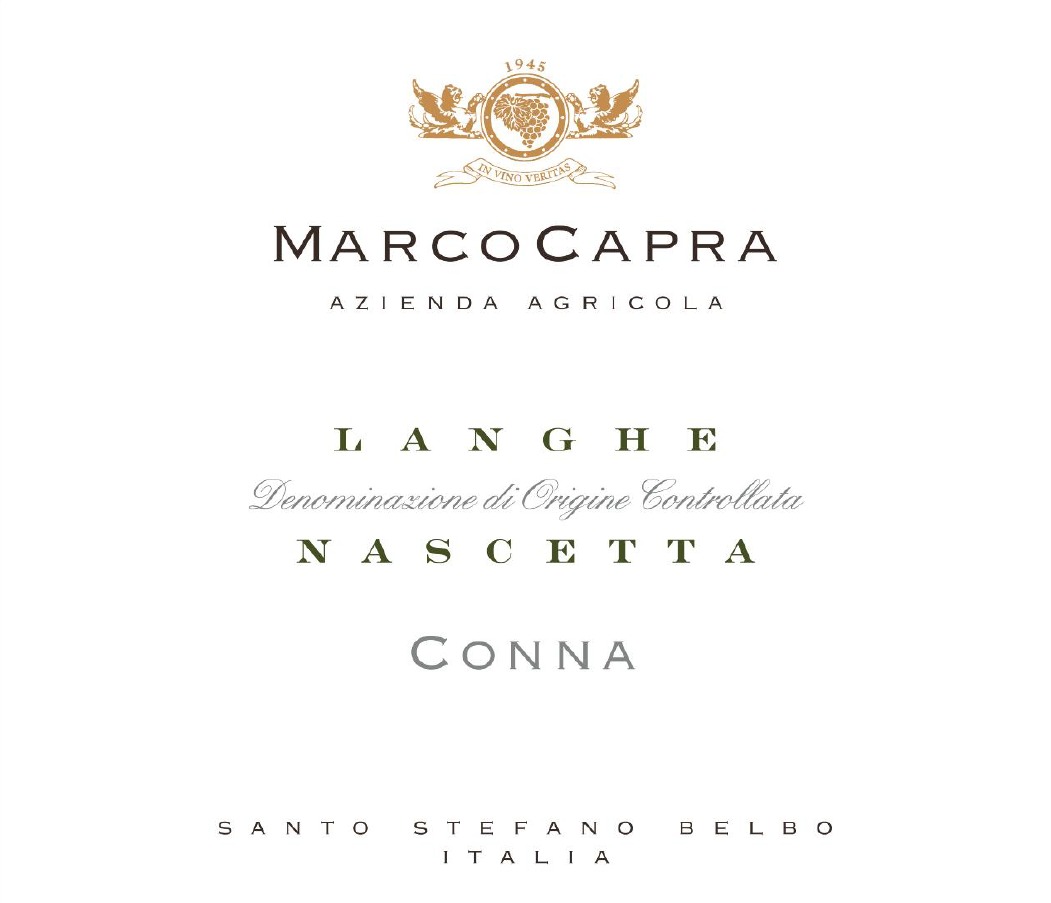
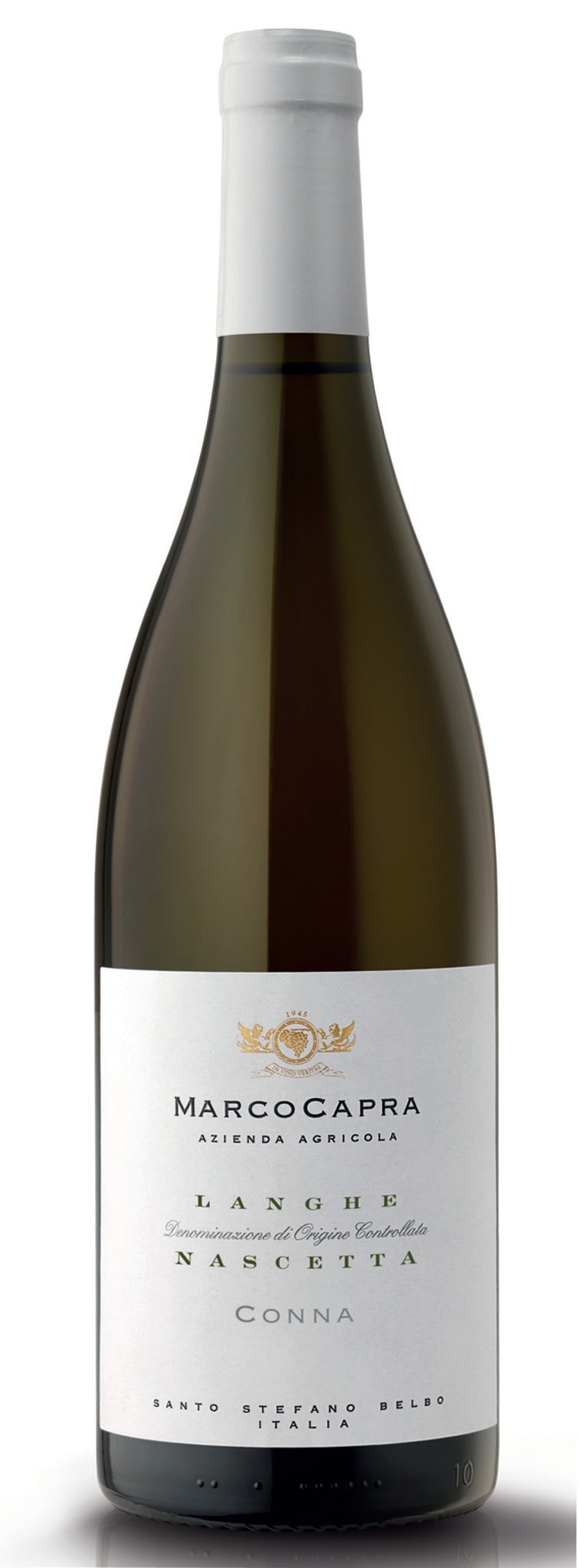
Marco Capra Langhe Nascetta is made from 100% Nascetta - 15 years old - 1.73 acres
Aged 6 months in stainless steel vats
The name "CONNA" is a sweet nickname after his wife Monica.
Bright straw yellow with greenish hues, with an intense and interesting perfume of grapefruit, apple and aromatic herbs. Floral, fresh, focused, good acidity. Refreshing and bright, full bodied with an aromatic persistence, it is savory and tasty on the palate with a smoothness that enhances the rich character of the wine
Altitude: 400 m above sea level.
Soil composition: lime and sand.
Plant density: 5000 vines / hectare.
Cultivation system: traditional Guyot.
Yield per hectare: 6 tons.
After a short period of maceration on skins, the grapes are soft pressed. The clear must obtained ferments slowly in stainless steel vats at a controlled temperature of 16-17°C. The wine spends a long period of time on the fine lees, with frequent “batonnage”
Ideal with apetizers, shellfish and other fish dishes.

Irresistible ripened plums and opulent dusty blackberries lift the senses, alluring the nose to tertiary notes of delicate florals and intriguing mineral edges. Balance is the defining quality of this wine; even in its youth, 2021 Black Label is resolutely complete from beginning to end. Every element is in place, as dimpled yet silky tannins unfold with grace and finesse, revealing a core of power and depth. Broad strokes of black mulberries, crème de cassis, and juniper accelerate through the mid-palate with captivating width and focus. This thrilling dance culminates in a stunning finish of opulent and elegant dark fruits that persist with each sip, leaving an indelible impression of the near-perfect growing season that shaped the Fortuna Vineyard—full of power and sinue—and Leopoldina Vineyard—full of poise and intention—in the 2021 vintage.
"Stunning stuff, the 2021 Cabernet Sauvignon Black Label offers a full-bodied, deep, majestic style as well as beautiful aromatics of cr me de cassis, violets, flowers, and nicely integrated background oak. It has ultra-fine tannins, flawless balance, and a regal, age-worthy style that has so much to love. It, however, is not going to be for the instant gratification crowd and this actually shut down pretty quickly with air. I would hide bottle for 4-6 years and it s going to cruise over the following two decades in cold cellars."
- 97 Points Jeb Dunnuck

Domaine La Maionnette Rose Cotes de Provence is made from 60% Syrah, 20% Cinsault and 20% Grenache.
The plots of Domaine de la Maïonnette benefit from a clay-limestone soil and are located on a plateau surrounded by hundred-year-old oaks. Bordered by the Provencal scrubland, the vineyard enjoys a dry climate typical of the region.
An emblematic cuvée of the estate, this Cotes de Provence rosé reveals concentrated aromas of citrus fruits and white flowers, and a beautiful structure. The fresh palate brings out sweet candy notes, gooseberry and litchi, and delivers bright acidity and ample length on the finish.

Guy Bernard Cote Rotie Cote Rozier is made from 100 percent Syrah.
A deep color, an intense nose where we can easily recognize the notes of small red and black fruits (crushed strawberry, blackcurrant), the spices (licorice, cinnamon) come to complete this already very complex nose. On the palate, this wine surprises by its amplitude, the notes of black cherries, toast and caramel are very pleasant and announce a big potential of ageing. Powerful and delicate, this Côte Rôtie is already pleasant and promises a good potential to cellar 5 to 15 years.
With red meats, big game, lamb or roasts. To be served between 16 and 18°C.

Figaro Tinto Calatayud is 100% Garnacha, made from a selection of the best grapes grown in the oldest vineyards. While not truly an "oaked wine", a short stay in oak barrels provides a nice spicy flavor boost.
Tasting notes: Bright violet. Dark berry and cherry aromas show a jammy aspect. Supple and gently sweet, with good lift to its black raspberry and boysenberry flavors. Smooth and broad on the finish, leaving behind a hint of spiciness. Extremely easy to drink and an excellent value.

Mordoree Tavel Rose Reine des Bois is made from Grenache
Nose: Steady rose, brilliant and cristal clear.
Aromas : very complex : from flowers, white fruits and red fruits (strawberries, pomegranate, rapsberry). Slightly mentho-lated
Palate : fresh, classy, elegant, very long.
Aging capacity : 8 to 10 years.
This wine comes from a parcel planted on a pebbled soil covered with stones, whose geology is typical of the grands crus from the Rhone Valley (a base made of marine molasse from the Miocene period covered with an alpine diluvium from the Villafranchian period). 100 % destemming, cold maceration during 48 h., pneumatic pressing, fermentation at 18° C.
To pair with: roasted and or spicy chicken, duck, goose, fish soup, white meat, seafood and a lot of fishes (tuna, John Dorry, red mulet, etc...).Quite all Asian cuisine. Dishes with garlic, dishes with tomatoes.
Review:

Corne Loup Tavel Rose is made from 60% Grenache, 15% Cinsault, 10% Syrah, 15% mix of Mourvèdre, Clairette & Carignan
Elegant, refreshing, food-friendly and versatile, this Tavel offers mouth-watering aromas of strawberry and berry pie.
Corne Loup Tavel represents the pinnacle of the rose pyramid quality wise that can be achieved in the Southern Rhone. The town of Tavel has been famous for its rose wine since the time of the Popes in Avignon (1300's). Tavel is about 2,300 acres in size and produces about 500,000 cases yearly of 9 liter cases, plus can age for 2-3 years, unlike many other roses. Produced from a blend of Grenache, Cinsualt, Syrah, Mourvedre, Cinsault and Carignan, the wine comes from a famous sub-parcel called the Plateau de Vallongue between Tavel and Lirac AOC's.
The 20 hectare-vineyards are located in the hamlets of Oliver, Campet, Vestides and Vallongue. The Tavel from this producer is a blend of all 3 soils types you can find in the AOC:
Dry and lively, it is an ideal wine for barbecues as it makes a wonderful sipper that's also capable of matching with a wide variety of summer foods, including grilled chicken, seafood and summer salads

Marco Capra Langhe Nascetta is made from 100% Nascetta - 15 years old - 1.73 acres
Aged 6 months in stainless steel vats
The name "CONNA" is a sweet nickname after his wife Monica.
Bright straw yellow with greenish hues, with an intense and interesting perfume of grapefruit, apple and aromatic herbs. Floral, fresh, focused, good acidity. Refreshing and bright, full bodied with an aromatic persistence, it is savory and tasty on the palate with a smoothness that enhances the rich character of the wine
Altitude: 400 m above sea level.
Soil composition: lime and sand.
Plant density: 5000 vines / hectare.
Cultivation system: traditional Guyot.
Yield per hectare: 6 tons.
After a short period of maceration on skins, the grapes are soft pressed. The clear must obtained ferments slowly in stainless steel vats at a controlled temperature of 16-17°C. The wine spends a long period of time on the fine lees, with frequent “batonnage”
Ideal with apetizers, shellfish and other fish dishes.

Capra Marco Doppiadi Barbera d'Asti is made from 100% Barbera.
Color: very deep bright ruby red with violet hues.
Bouquet: intense and persistent, pleasantly fruity and reminiscent of plums and black cherries.
Flavor: vinous, full, pleasantly fresh and generous.
Suitable as an aperitif with appetisers and sliced meats, it is perfect throughout a meal. it is perfect with pasta dishes featuring tagliatelle and ravioli, as well as with meaty main courses, such as stews and roasts. Interesting with medium-mature cheeses, with Toma and Pecorino.

Capra Marco Sireveris Dolcetto d'Alba is made from 100% Dolcetto.
Color: deep, bright ruby red with violet hues.
Bouquet: vinous, fruity and fragrant, with notes reminiscent of ripe cherries.
Flavour: full, dry flavour with a pleasantly bitter aftertaste, typical of this variety.
A wine for drinking throughout a meal, it is perfect with cured meat and cheese snacks, ideal with rice and pasta dishes or with red meat, all combinations which enhance its delightful suitability for drinking.

Quercia nelle Langhe Gavi is 100% Cortese.
Straw yellow with greenish reflections. The bouquet is fruity with hints of daisy and acacia flowers.
Citrus notes can be detected on the palate; Fruity charming, fresh and elegant taste.
Hand-picked during the first ten days of September.
The grapes are delicately pressed and the stalks are removed.
The must ferments in stainless steel vats at a controlled temperature of 18°–20°C for about 20 days.
After fermentation, the wine is kept in stainless steel vats until the bottling.

GRAPE
100% Arneis
POSITION
Hillside
EXPOSURE
Southwest
COLOR
Straw yellow with greenish reflections
NOSE
The bouquet is fruity with hints of chamomile and acacia
TASTE
Fresh elegant, fruity aromas with floral hints
TEMPERATURE
Ideal serving temperature is 8°/10°C.
ALCOHOL
12.5 % - 13%

Weinkeller Erbach Goldmuskateller Feinherb is made from 100% Goldmuskateller.
The old name for the Erbacher Honigberg was Wacholderwiesen, meaning juniper meadows. At the Wacholderwiesen there was an uprising of the peasants in the 16th century. All the ringleaders were hanged.
The Muskateller grape has the smell of elder-berries, apricots and quince. A subtle aroma of lime and coconut rounds off the experience.
RS: 27.7grams / Liter
Acidity: 6.1
Pairing: Mountain cheese, spicy Asian food, ice-cubes with lemon balm in a long drink (lemon balm grows in the vineyard Erbacher Honigberg).

Elvio Cogno Pre-Phylloxera Barbera d'Alba is made from 100 percent Barbera.
Produced from one of the last archaic vines of the Langhe area, an open air museum of viticulture from a time gone by, the plants are over one hundred years old. The vines are not grafted but propagated through cuttings, thus maintaining, over the decades, the original Barbera characteristics.
The vineyard has an excellent exposure and sandy-chalky terrain, situated in Berri near La Morra, which guaranteed the vines a natural protection from Phylloxera and imparts unique and exclusive characteristics to the vines. The intriguing simplicity of the vines and their typical, traditional charm that derives from the microclimate and favorable altitude make a one of-a-kind wine.
The low production per hectare guarantees an intensely rare and rich organoleptic concentration. The wine is refined in oak casks that slowly develop the primary aromas. Pleasant and refined, complex even as a young wine but able to withstand bottle aging, it expresses its solid uniqueness even over the years.
A bright, rich ruby color with intense purplish highlights. The aroma is enveloping, aromatic and deep with noticeable spices on first impression and raspberry, strawberry and ripe cherry notes in background. Finish with pleasant harmonies of wild flowers. On the palate it is well structured, fresh and the acidity is excellently balanced, the tannins texture is embracing and flavors remind you of sour cherries, blackberries and prunes.
Review:
Planted in almost entirely sand, this own-rooted vineyard with some vines over 120 years old is a singular expression of Barbera. Elegant aromas of wild rose and fresh bay leaf mixed with cranberry, sour cherry and underbrush are just some of the notes you will discover in this complex wine. The palate is refined and well-balanced with fresh youthful red fruits, fresh flowers and fine tannins driving the wine home. Drink Now–2035.
-Wine Enthusiast 95 Points

Fleuriet Demoiselles Sancerre Blanc is made from 100 percent Sauvignon Blanc.
The name "Les demoiselles" (translate as "The young ladies"), refers to the beautiful migratory birds (Cranes) that fly over the town of Sancerre twice a year (in the Fall going South to spend the winter in the African continent, and in the Spring going back North to spend the Summer in Northern Europe). These graceful birds offer a unique and impressive show when they sometimes land on the banks of the Loire River. The Fleuriet family wanted to highlight this exceptional grace and express an elegant and refined bouquet in this Sancerre Demoiselles cuvée.
The wine shows a bright yellow color with green highlights, a fruity nose with aromas of white flowers and acacia. Light-medium bodied in the mouth, supple and well structured, its concentration and crisp acidity make it a harmonious and food-friendly wine.
Pairs nicely with fresh goat cheeses, oysters with lemon, grilled lemon chicken breasts and Mexican dishes. Serve these whites at 46 °F (8 °C).