
" We don't sell the wine without touching the vine "
| BUY MORE! SAVE MORE! | ||||||||||||||||||||
|
| Country: | France |
| Regions: | Rhone Cote Rotie |
| Winery: | Guy Bernard |
| Grape Type: | Syrah |
| Organic: | Yes |
| Vintage: | 2022 |
| Bottle Size: | 1500 ml |
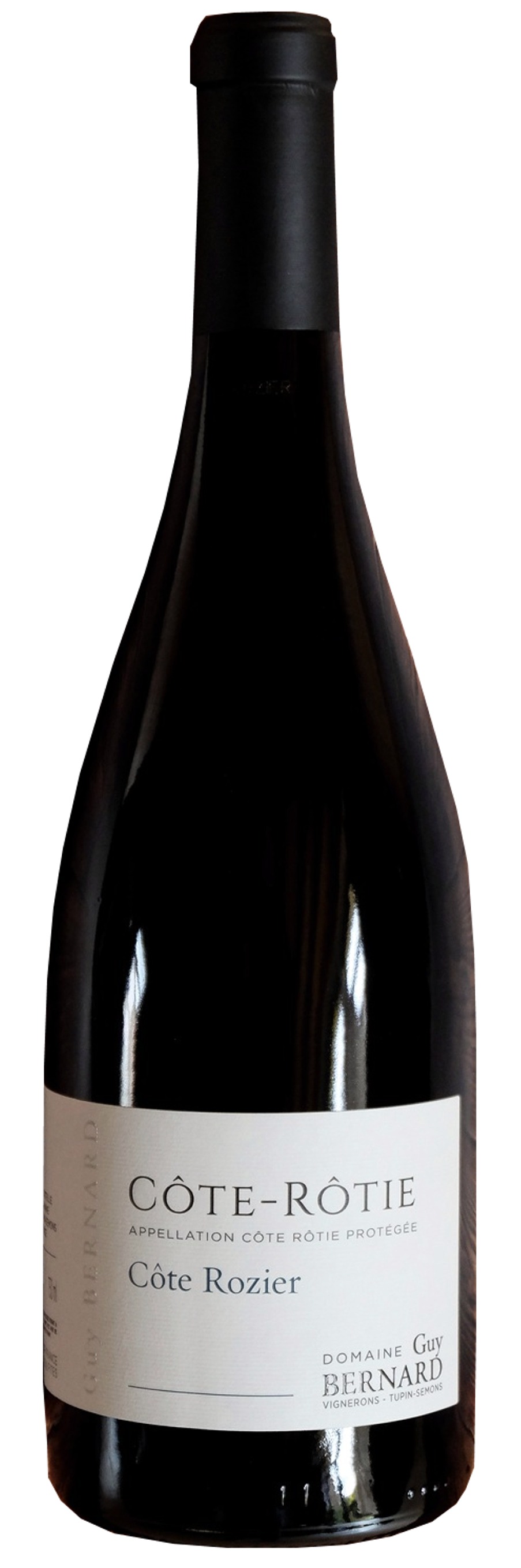
Guy Bernard Cote Rotie Cote Rozier is made from 100 percent Syrah.
A deep color, an intense nose where we can easily recognize the notes of small red and black fruits (crushed strawberry, blackcurrant), the spices (licorice, cinnamon) come to complete this already very complex nose. On the palate, this wine surprises by its amplitude, the notes of black cherries, toast and caramel are very pleasant and announce a big potential of ageing. Powerful and delicate, this Côte Rôtie is already pleasant and promises a good potential to cellar 5 to 15 years.
With red meats, big game, lamb or roasts. To be served between 16 and 18°C.
Domaine Guy BERNARD is a small estate of the Bernard family, well established in Tupin et Semons for several generations. We produce wines in the Côte-Rôtie and Condrieu appellations in the Northern Rhône Valley. Our estate is currently in the process of converting to organic viticulture (since 2017) and will apply for our official Organic Agriculture certification.

Irresistible ripened plums and opulent dusty blackberries lift the senses, alluring the nose to tertiary notes of delicate florals and intriguing mineral edges. Balance is the defining quality of this wine; even in its youth, 2021 Black Label is resolutely complete from beginning to end. Every element is in place, as dimpled yet silky tannins unfold with grace and finesse, revealing a core of power and depth. Broad strokes of black mulberries, crème de cassis, and juniper accelerate through the mid-palate with captivating width and focus. This thrilling dance culminates in a stunning finish of opulent and elegant dark fruits that persist with each sip, leaving an indelible impression of the near-perfect growing season that shaped the Fortuna Vineyard—full of power and sinue—and Leopoldina Vineyard—full of poise and intention—in the 2021 vintage.
"Stunning stuff, the 2021 Cabernet Sauvignon Black Label offers a full-bodied, deep, majestic style as well as beautiful aromatics of cr me de cassis, violets, flowers, and nicely integrated background oak. It has ultra-fine tannins, flawless balance, and a regal, age-worthy style that has so much to love. It, however, is not going to be for the instant gratification crowd and this actually shut down pretty quickly with air. I would hide bottle for 4-6 years and it s going to cruise over the following two decades in cold cellars."
- 97 Points Jeb Dunnuck

Domaine La Maionnette Rose Cotes de Provence is made from 60% Syrah, 20% Cinsault and 20% Grenache.
The plots of Domaine de la Maïonnette benefit from a clay-limestone soil and are located on a plateau surrounded by hundred-year-old oaks. Bordered by the Provencal scrubland, the vineyard enjoys a dry climate typical of the region.
An emblematic cuvée of the estate, this Cotes de Provence rosé reveals concentrated aromas of citrus fruits and white flowers, and a beautiful structure. The fresh palate brings out sweet candy notes, gooseberry and litchi, and delivers bright acidity and ample length on the finish.

Marco Capra Langhe Nascetta is made from 100% Nascetta - 15 years old - 1.73 acres
Aged 6 months in stainless steel vats
The name "CONNA" is a sweet nickname after his wife Monica.
Bright straw yellow with greenish hues, with an intense and interesting perfume of grapefruit, apple and aromatic herbs. Floral, fresh, focused, good acidity. Refreshing and bright, full bodied with an aromatic persistence, it is savory and tasty on the palate with a smoothness that enhances the rich character of the wine
Altitude: 400 m above sea level.
Soil composition: lime and sand.
Plant density: 5000 vines / hectare.
Cultivation system: traditional Guyot.
Yield per hectare: 6 tons.
After a short period of maceration on skins, the grapes are soft pressed. The clear must obtained ferments slowly in stainless steel vats at a controlled temperature of 16-17°C. The wine spends a long period of time on the fine lees, with frequent “batonnage”
Ideal with apetizers, shellfish and other fish dishes.

Figaro Tinto Calatayud is 100% Garnacha, made from a selection of the best grapes grown in the oldest vineyards. While not truly an "oaked wine", a short stay in oak barrels provides a nice spicy flavor boost.
Tasting notes: Bright violet. Dark berry and cherry aromas show a jammy aspect. Supple and gently sweet, with good lift to its black raspberry and boysenberry flavors. Smooth and broad on the finish, leaving behind a hint of spiciness. Extremely easy to drink and an excellent value.

Bernard Cote Rotie Cote Rozier is made from 100% Syrah.
A deep color, an intense and complex nose dominated by notes of small red and black fruits of crushed strawberry and blackcurrant complemented by spices (licorice, cinnamon). On the palate, the wine is amazingly ample and round with beautiful flavors of black cherries, toast and caramel. Powerful and delicate, this Côte Rôtie is already pleasant and promises a good potential to cellar for 5 to 15 years.
With red meats, big game, lamb or roasts. To be served between 16 and 18°C.

Bernard Cote Rotie Cote Brune is made from 100% Syrah. Wine was aged in French oak barrels for 16 months (25% new)
Like its little sister (Côte Rôzier) the Côte Brune is a 100% Syrah with a beautiful dark and brilliant color. The nose shows grilled and toasted notes and is completed by small red and black fruits. It is a wine with a very good length, nice complexity, finesse, and firm tannins. Its ageing in barrels for 16 months, 25% of which are new, brings a real balance to this wine. A very pleasant, elegant and modern wine that can be cellared for many years.
Pair with roasts, white meat with wine sauce, game, red meat and dark chocolate. To be served between 16 and 18°C. (60-64°F)
Bernard Cote Rotie Cote Brune is made from 100% Syrah. Wine was aged in French oak barrels for 16 months (25% new)
Like its little sister (Côte Rôzier) the Côte Brune is a 100% Syrah with a beautiful dark and brilliant color. The nose shows grilled and toasted notes and is completed by small red and black fruits. It is a wine with a very good length, nice complexity, finesse, and firm tannins. Its ageing in barrels for 16 months, 25% of which are new, brings a real balance to this wine. A very pleasant, elegant and modern wine that can be cellared for many years.
Pair with roasts, white meat with wine sauce, game, red meat and dark chocolate. To be served between 16 and 18°C. (60-64°F)

On the palate, it reveals a fresh attack followed by an ample, structured, long-lasting finish. The wine unfurls in successive stages and ends with top-quality tannins produced by whole cluster fermentation. It features aromas and flavors of smoked ham, violet, graphite, graphite, and licorice.
Review:
A refined, fine-textured and precise Cote-Rotie with aromas of cherries, wild berries, wild herbs, bark and baking spices. Medium-bodied with finely grained tannins. There is a vibrant and spicy character at the center, with a succulent, precise and lively expression toward the long finish. Try after 2026.
-James Suckling 95 Points

Delas Freres Cote Rotie La Landonne Rouge is made from 100 percent Syrah.
This very ancient region dates back to the Roman Era and is located on the right bank of the Rhône. It is said that during the Middle Ages, “The Seigneur de Maugiron” gave a hillside to each of his two daughters - one was brunette and the other fair - thus, were born the names of “Côte Brune” and “Côte Blonde.” Wines from the Côte Blonde tend to be more delicate and lighter in character than the fuller wines of the Côte Brune. Together, they make a wine of style and substance. This cuvée is a vineyard plot selection. The grapes come exclusively from a plot within the named slope of “La Landonne.”
This cuvée‘s first vintage was 1997. The wine is only made in the very best years. Its highly limited production never exceeds 2,500 bottles per year.
The steep, terraced hillsides along the river produce wines that are among the "biggest" reds of France. The Delas Côte-Rôtie is primarily Syrah with an addition of up to 10 to 20% of Viognier grapes in the crop. The soils of the northern part of the Côte Brune vineyard consists of extremely steep, terraced slopes of ferruginous mica schists which are covered with schist sand (arzel). The Côte Blonde has a varied geology with gneiss and granite predominating at the most southern side of the appellation. The area has dry, hot summers with regular rainfalls during other seasons. The grapes for the “La Landonne” cuvée are picked by hand at maximum maturity. Fermentation takes place in traditional open-topped concrete tanks, following three days of pre-fermentation cold maceration. Before fermentation, the maceration process continues under controlled temperatures of 82°F to 86°F. Daily cap pushing down and pumping over are carried out for about 10 days with total vatting time of up to 20 days. The wine is aged for 14 to 16 months in new or one year old oak casks. The barrels are topped up regularly.
Food Pairing: This wine pairs wonderfully with fine meats, roasted beef, water games, truffles and spicy stews. The bottle should be opened 1 to 3 hours before drinking. This wine needs at least 3 years cellaring before it can open up its complexity. In such case it is strongly recommended to decant before serving.
Tasting Notes: The wine‘s deep color is underscored by plummy hues. A complex nose shows deep, fruity aromas with hints of licorice and roasted coffee. Endowed with a dense and silky tannic structure, this is a full, fleshy wine that provides an ample and generous palate. Its lasting finish speaks of considerable ageing potential.
Reviews:
This is dark and still a bit reticent, with a cast iron cloak around the core of dark currant, plum and blackberry paste flavors, showing lots of sweet bay leaf, anise and singed apple wood notes in the background. There's serious grip through the finish. For the cellar.
-Wine Spectator 96 Points
Very open, spicy and fresh on the nose, you could almost open this now. Struck flint notes assist in teasing out notes of leaf tea, tobacco, rosemary and rose. Very full-bodied, generous but powerful on the palate, tense and mineral. Mouthcoating ripe, sweet tannin and robust amounts of sweet baking spices, along with more tobacco and black fruit on the palate. Has depth, length, power and impressive balance despite the high alcohol. Drink from now into 2022, or from 2031 to 2040. Lieu-dit La Landonne, from the Brune side (mica schist bedrock). Matured in new and one-year-old barrels for 14 months.
-Decanter 96 Points
The 2019 Côte Rôtie La Landonne comes from one of the greatest sites for Syrah in the world, the La Landonne lieu-dit located close to the center of the appellation, on the Côte Brune side. It reveals a deeper purple hue (it's slightly more opaque than the Seigneur de Maugiron) and offers a brilliant nose of ripe cassis, black raspberries, scorched earth, smoked herbs, and seared meat. Full-bodied and powerful on the palate, this is a deep, spicy, concentrated Côte Rôtie with a plush, layered mouthfeel, sweet tannins, beautiful balance, and a great, great finish. This puppy brings the fruit, opulence, and texture of the vintage yet still has a classic Côte Rôtie character.
-Jeb Dunnuck 96 Points
Fresh aromatic layers of mint sit atop crushed red cherries and wild strawberries, with light clove and thyme on the nose. The palate is rich and enticing with black cherries, plums, rhubarb, pomegranate seeds, black olives and freshly picked rosemary leaves. Tremendous texture, structure, and refreshing acidity carry this wine to a robust finish of orange zest and black tea leaves. Maisons Marques & Domaines USA.
- Wine Enthusiast 96 Points
This very ancient region dates back to the Roman Era and is located on the right bank of the Rhône. It is said that during the Middle Ages, “The Seigneur de Maugiron” gave a hillside to each of his two daughters - one was brunette and the other fair - thus, were born the names of “Côte Brune” and “Côte Blonde.” Wines from the Côte Blonde tend to be more delicate and lighter in character than the fuller wines of the Côte Brune. Together, they make a wine of style and substance. This cuvée is a vineyard plot selection. The grapes come exclusively from a plot within the named slope of “La Landonne.”
This cuvée‘s first vintage was 1997. The wine is only made in the very best years. Its highly limited production never exceeds 2,500 bottles per year.
The steep, terraced hillsides along the river produce wines that are among the "biggest" reds of France. The Delas Côte-Rôtie is primarily Syrah with an addition of up to 10 to 20% of Viognier grapes in the crop. The soils of the northern part of the Côte Brune vineyard consists of extremely steep, terraced slopes of ferruginous mica schists which are covered with schist sand (arzel). The Côte Blonde has a varied geology with gneiss and granite predominating at the most southern side of the appellation. The area has dry, hot summers with regular rainfalls during other seasons. The grapes for the “La Landonne” cuvée are picked by hand at maximum maturity. Fermentation takes place in traditional open-topped concrete tanks, following three days of pre-fermentation cold maceration. Before fermentation, the maceration process continues under controlled temperatures of 82°F to 86°F. Daily cap pushing down and pumping over are carried out for about 10 days with total vatting time of up to 20 days. The wine is aged for 14 to 16 months in new or one year old oak casks. The barrels are topped up regularly.
Tasting Notes
The wine‘s deep color is underscored by plummy hues. A complex nose shows deep, fruity aromas with hints of licorice and roasted coffee. Endowed with a dense and silky tannic structure, this is a full, fleshy wine that provides an ample and generous palate. Its lasting finish speaks of considerable ageing potential.
Food Pairing
This wine pairs wonderfully with fine meats, roasted beef, water games, truffles and spicy stews. The bottle should be opened 1 to 3 hours before drinking. This wine needs at least 3 years cellaring before it can open up its complexity. In such case it is strongly recommended to decant before serving.
-150x300.jpg "Bernardins Muscat Beaumes Venise VDN 2022")
Bernardins Muscat Beaumes Venise VDN 100% Muscat petits grains (75% Blanc, 25% Red)
Copper/rose hue and ripe soft aromas of orange, spice and flowers. The wine is full bodied with the texture of silk and flavors of orange custard, white peach, pear, apricot, toffee and orange peel.
The vineyards and their terroir are the essence of our wines. This is where everything starts and where we focus our efforts throughout the year. You can’t make great wine without great grapes.
The viticulture is essentially done by hand. Five people work full-time in the vineyards. They are supplemented by seasonal employees who work during bunch thinning and the harvest in order to bring out the very best in our vines. Working by hand and the attention each vine gets are fundamental. Pruning, de-budding, trellising, leaf removal and picking are thus carried out by hand with the utmost care.
We prepare the soil by using good old-fashioned ploughing. Organic compost is made from grape marc (the discarded stalks and skins).
As a way of protecting the plants, we only use phytosanitary products when necessary and within strict guidelines by staggering the treatments appropriately, to minimise the amount of chemicals used. We prefer to use as much as possible manual and organic techniques . Leaving natural grass cover, removing buds and leaves from the vines, preserving biodiversity around the vineyard: olive, almond and cypress trees, wild rosemary and capers.
In the spirit of respecting traditional techniques and the best elements of modern technology, cellar manager Andrew Hall and his winemaker son Romain Hall take family traditions very seriously.
When making our wines, the Muscat de Beaumes de Venise plays a central role and requires great care. After picking the grapes by hand, we press them straightaway to ferment the juice without skins. We don’t add any yeasts and keep the alcoholic fermentation in check by temperature control. Vin Doux Naturel winemaking involves stopping fermentation to preserve the grapes’ natural sweetness. During vinification, we watch the vats day and night and add the fortifying spirit just at the right moment. At this stage, the wine’s final balance is at stake. The wine is then aged in stainless steel tanks for 6 months before bottling.

The Peumo Vineyard is located 170 m above sea level and extended along the Cachapoal River, on terraces of hills of the Coastal Mountains. The vines come from pre-phylloxera cuttings and are trellised to vertical shoot position and cordon pruned. The soils are deep with an upper layer of clay that retains moisture, which controls the vines’ vigor and growth and allows them to remain active through late May, when the Carmenere is picked.
Deep, dark red with hints of violet. Elegant and mineral on the nose, with notes of blackberry and a touch of blackcurrant. It fills the palate with underlying mature tannins. Deep, concentrated, with a long aftertaste and distinctive hints of the Peumo terroir. This 2018 vintage is characterized by its elegance and freshness; it is a wine with a lot of Carmenere character. Pairs best with elegant but simply prepared dishes such as juicy, rare roast beef, veal, pork tenderloin with roasted beets and cranberries, duck (con t or magret). Also delightful with squash-stuffed pasta with morel mushrooms or aged goat cheese with figs.
Review:
Carmín made its debut with the 2003 vintage, and since then it has come from a selection from Block 32, a sector of the vineyard in Peumo, on the banks of the Rapel River. Of its 28 hectares, seven are actually used and usually produce about 18,000 liters. The vineyards were planted in 1983 on stony clay soils on the hills that flank the Cachapoal River on its way to Lake Rapel. This was a cool year, and that's evident in the herbal notes and red fruits that fill the nose. The palate is generous in ripe red fruits, as well as in the herbal tones that refresh and add complexity at the same time. The texture is friendly, although it leaves room for a layer of very fine, sharp tannins that contribute tension, while the fruits and herbs continue their private party. We think this is the best version of Carmín that we have tried—far from the first Carmíns, which were tremendously ripe and extracted and far from this balance and elegance. Carmenere at the highest level.
-Patricio Tapia - Descorchados 98 Points

Chakana Estate Malbec is made from 100 percent Malbec.
hakana is the name of the Southern Cross constellation. Its rotation in the sky throughout the year made it an effective agricultural calendar for the ancient Andean people.
The "yaguarete" (jaguar) on the label was known by the ancient Andean people as the "lord of the starred night"; the wildest known animal.
Chakana Estate Malbec is from Chakana's Altamira (3,200 ft elevation) and Gualtallary (5,500 ft elevation) vineyards.
The color is deep purple, very intense, typical of Malbec. Plum, brambly berries, spices and an iris/violet note are apparent on the nose. Intense, fruity flavors with velvety tannins.



