" We don't sell the wine without touching the vine "
| Country: | Italy |
| Region: | Piemonte |
| Winery: | Ferraris Agricola |
| Vintage: | 2018 |
| Bottle Size: | 750 ml |
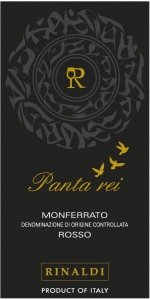
Rinaldi Panta rei Monferrato Rosso is a blend of 50% Barbera and 50% Cabernet Sauvignon.
This wine is quite tasty, smooth, silky and powerful.
It is loaded with dried red fruit notes from the appassimento of the grapes and it also has a lot of spicy aromas and flavors from the oak ageing.
Grown on limestone soils.
The average age of the vines is 30 years old.
10% of the wine is appassimento. Appassimento is an Italian term for drying harvested grapes, traditionally on bamboo racks or straw mats, for a few weeks up to several months to concentrate the sugars and flavors. This process is used in making Amarone, Recioto and Sforzato.
This drying method is not traditional in Piemonte but is popular in other part of Italy like in the Veneto region.
Thanks to this new method the wine is rounder and softer, boasts beautiful notes of red dried fruits.
Pantarei is aged 14 months in French oak ((the wood is Allier, medium toast) barrels and 6 months in bottle before release.
Delicious with wild game, grilled meat and strong cheese.
Rinaldi Panta rei Monferrato Rosso is a blend of 50% Barbera and 50% Cabernet Sauvignon.
This wine is quite tasty, smooth, silky and powerful.
It is loaded with dried red fruit notes from the appassimento of the grapes and it also has a lot of spicy aromas and flavors from the oak ageing.
Grown on limestone soils.
The average age of the vines is 30 years old.
10% of the wine is appassimento. Appassimento is an Italian term for drying harvested grapes, traditionally on bamboo racks or straw mats, for a few weeks up to several months to concentrate the sugars and flavors. This process is used in making Amarone, Recioto and Sforzato.
This drying method is not traditional in Piemonte but is popular in other part of Italy like in the Veneto region.
Thanks to this new method the wine is rounder and softer, boasts beautiful notes of red dried fruits.
Pantarei is aged 14 months in French oak ((the wood is Allier, medium toast) barrels and 6 months in bottle before release.
Delicious with wild game, grilled meat and strong cheese.
Falletto di Bruno Giacosa Barolo is made from 100 percent Nebbiolo
The 2018 vintage was well received after the turbulent 2017 growing year. A longer winter heralded in heavy rains in May and June, which gave the vines much needed water after the previous year's drought. Throughout the summer, conditions were generally ideal with warm days and cool nights, making harvest an overall success. Early samples of Barbaresco and Barolo are indicating a soft, balanced vintage.
Red garnet in color. Intense and fine aromas of fresh red fruit. The palate presents good freshness, excellent structure and fine, velvety tannins.
Review:
The 2018 Bruno Giacosa Barolo is very rich and hedonistic, with ripe strawberries and rose hip and notes of incense, lilies and violets. It is a lovely nose, persistent, intense and enticing and on the palate it is like falling into a soft velvety bed of rose petals. It already has such beautiful harmony and poise. It has a lush, sensual texture of crushed velvet, and is full-bodied without feeling heavy. There are plenty of dense, savory tannins extending the very long finish, creating a combination of seductive charm and power. This is something special, a great achievement in this vintage. Wait 2-3 years at least but I would not want to miss that young fragrance. (SH)
-Wine Independent 98 Points
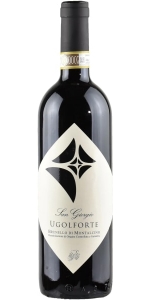
San Giorgio Ugolforte presents a dark core of red and black berry fruit layered with earth, leather, smoke, and herbs. Complex and elegant, the wine is full on the palate and firm in tannin structure. Refreshing acidity frames a graceful finish. Classic Brunello di Montalcino.
This red is marked by cherry, plum, thyme, sage and loam aromas and flavors. Lively and firmly structured, featuring a saline undercurrent. An open-knit version, with nice equilibrium, fine energy and a long, resonant finish.
-Jeb Dunnuck 94 Points
-Wine Spectator 94 Points
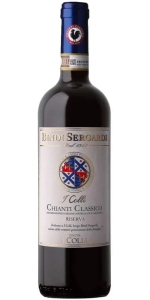
Intense ruby red color. Hints of spices, fruit and flowers, a bouquet that reflects the soil on which it is born, rich in Alberese. In the mouth it is soft, with a pleasant acidity that makes the wine fresh and lively. Sweet and ripe tannins give the wine a pleasant persistence. Riserva dei Colli is an excellent expression of the Estate's Sangiovese, so much so that it bears its name.
Review:
Bordering on opulent, this red features blackberry, black currant, plum, iron and spice aromas and flavors, matched to a velvety texture. Firms up as the resonant tannins emerge, yet remains harmonious and long. Drink now through 2032. 1,700 cases made, 570 cases imported.
-Wine Spectator 93 Points
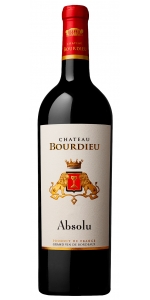
Chateau Bourdieu Absolu Blaye Cotes de Bordeaux is made from 79% merlot, 17% Cabernet Sauvignon, 4% Malbec.
When Luc Schweitzer was joined by his two sons Richard and Ludovic at the estate, he wanted to embrace this new chapter in the family history and launched in 2016 a special cuvée from Château Bourdieu called "Absolu". This top-of-the-range cuvée is the best of what their terroir has to offer. The 35 year-old facing south vines benefit from a meticulous care: regular maintenance of the soil, yield control, manual leaf stripping, sorting of the berries - all practices that ensure the quality of this great Bordeaux wine.
A deep garnet color with magnificent purple highlights. The nose is intense and full, revealing notes of ripe black fruits and subtle hints of vanilla and roasted coffee. Great structure with finesse and tannic density that brings depth and length to the mouth. The aromatic purity of the perfectly ripened grape varieties is magnified by the complex and subtle oak flavors.
Pair: Rib of grilled beef and tournedos Rossini - butter pan-fried beef filet served on a crouton, and topped with a hot slice of fresh foie gras.
Review:
"A rich, opulent wine, this is full of dark tannins and powerful fruit. It's a big wine, with licorice and dense wood flavors that give a smoky character and reflect some serious extraction. The wine needs to smooth out to showcase its concentrated richness. Drink from 2024. - Roger VOSS"
- Wine Enthusiast (May 2021), 91 pts
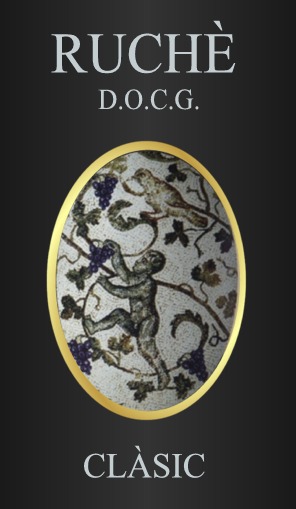
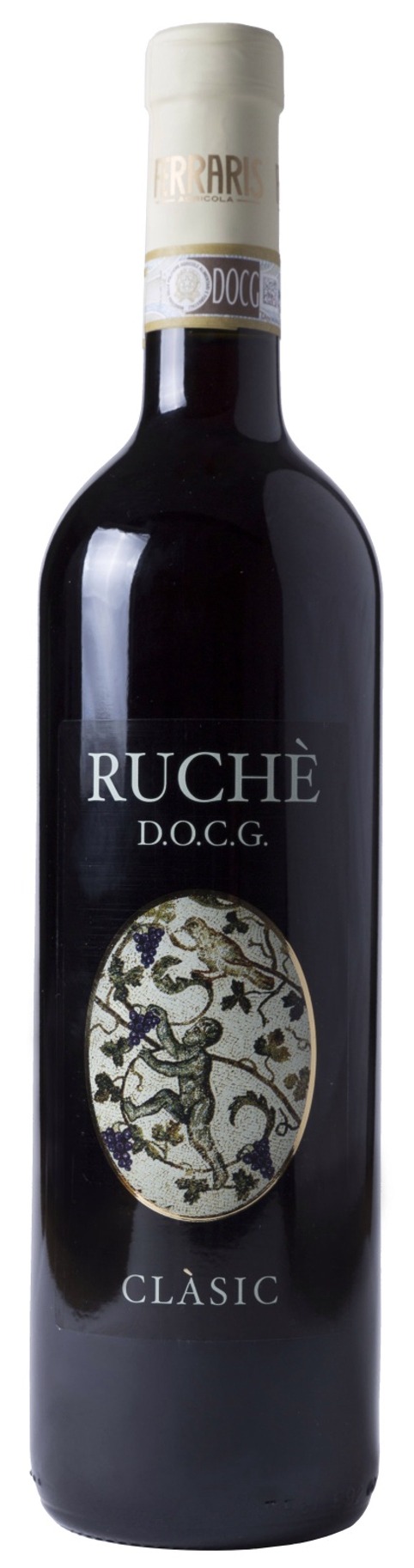
Ruchè Clasic is obtained from grapes coming from the best-exposed vineyards, which means the southwest side of the hills. Because a heavy pruning, these vineyards never produce more then seven tons per hectare. Fermentation is done in 54-hectoliter temperature-controlled French oak vats for 15 to 20 days, according to the quality of the grapes at the time of pressing. A controlled temperature of 23 degrees enables the fermentation time to be lengthened and to keep the must in contact with skins for longer. During this period, the skins give the must more structure, tannin and color. This is important, particularly for Ruchè, whose precise aromas are its main characteristic. Once fermentation is finished, the wine rests for six months in the same vats where malolactic fermentation also takes place, perfect containers because they allow the exchange of oxygen necessary for a quicker maturation of the wine and for developing more elegant scents without imparting too much oak flavor.
Color: Ruby red
Bouquet: The wood is perfect for providing a natural level of oxygenation, without much oak flavor, very intense aromas of flowers
Taste: Also at the palate, intense aromas of flowers, balanced, elegant, with tannins that work hard at being soft
Alcohol: 14 %
Residual Sugar: 1.17 g/l
Total Acidity: 4.74 g/l
Grape Varietal: Ruchè 100%
Production Area: Castagnole Monferrato, Asti District
Soil: Clay and tuff
Growing System: Long Cordon Spur
Yield: 6 tons/ha-260 meters above sea level
Alcoholic Fermentation: In temperature controlled stainless steel rotofermenters for 10-15 days
Malolactic fermentation: In 54 hectoliters oak foudre
Truffles, game, medium aged cheeses, red and white meats, pasta
The Ferraris Estate produces about 130,000 bottles of wine (about 50,000 of Ruchè) from 18 vineyards covering 25 hectares. Luca Ferraris Agricola is the largest family owned agricultural company in the seven municipalities of the Ruchè-growing region.
Date Founded: 1999
To understand how the Luca Ferraris winery came about we must trace the story back to the nineteenth century when Luca’s great-grandfather Luigi Ferraris emigrated to America during the gold rush. Striking gold, he sent the money back to his wife Bruno Teresa, giving her the chance to realize her dream. After her husband passed away in 1921, she bought the house in Via al Castello that until recently housed Luca’s winery. Two years later, Luca’s grandfather Martino purchased II Casot, at the time nothing more than a simple rural hut in the middle of 40,000 square meters of land. Martino planted vines and bought barrels to make wine with his own grapes in his own cellar. He started by selling his wine to wholesalers in the area, then later began to increase his business by selling larger bottles to individuals traveling back and forth to Turin every week on horseback. Today on that land we have one of our most representative vineyards: Vigna del Casot.
Following the footsteps of Luca’s grandfather Martino, it was up to his father to decide what to do with the family’s passion for wine. In the time of the great industrialization by Fiat in Turin, he moved to the city as his peers did, but he also decided to keep his passion for the vineyards alive by collecting and giving its grapes to the agricultural cooperative in the village. That continued every year until 1999, when after graduation as an agriculturist, Luca began working at the family business, restoring the old cellar and starting to make wine from the vineyards. It was the turning point for the operation, and perhaps even for the Ruchè variety. In the area of the seven municipalities producing Ruchè, Luca was the first to thin vineyards to improve their quality. He wanted the company to specialize exclusively in high-quality production and also began to travel the world looking for new customers and markets. Production was raised from 10,000 bottles in the 2000 vintage to 60,000 in 2003 thanks to a partnership with Randall Grahm, the Californian winemaker founder of already famous for his Bonny Doon Vineyard. Today the Ferraris estate produces about 130,000 bottles of wine (about 50,000 of Ruchè) from 18 vineyards covering 25 hectares. Luca Ferraris Agricola is the largest family owned agricultural company in the seven municipalities of the Ruchè-growing region.
Winery:
The new Luca Ferraris winery was built in 2009. It was finished on August 31, just in time to press its Viognier harvest the following day. The switch to a more modern winery was necessary – despite the global economic climate, the company was growing rapidly, thanks in no small measure to the increasing popularity of Ruchè. The building, 1,000 square meters wide and three stories high, is on the main road between Asti and Castagnole Monferrato. The cellar and storage room are underground, where the temperature and humidity are constant year-round. The ground floor is where all production, from pressing to bottling, takes place. Advanced machinery allows Ferraris to produce the best possible wines without interfering with their natural characteristics. This is possible only through the combination of modern technology and the knowledge of old winemakers. Luca’s family taught him not to pander to a wider but less-educated public by producing wines that betray the typical characteristics of each variety. Also on the ground floor, behind the bottling line, are the company offices where the Luca Ferraris team meets to discuss production and marketing strategies. Above the offices on the first floor is the wine tasting room that seats up to 30 people. Large windows overlook the production area allowing tasters a view across the winery – illustrating the total transparency in Ferraris’ production.

All older vintage wines have been purchased from a single collectors cellar. Pictures can be requested before shipment.
On the nose, it opens with mineral hints of flint, followed by sweet spices such as nutmeg. Citrusy notes of bergamot then emerge, together with delicate floral nuances and hints of rosehip. On the palate, it shows a sweet and juicy entry, with a medium to full body. It is warm and spicy, with a slightly piquant edge. Freshness balances the structure nicely, while the fruity finish, recalling ripe plums, is savory and persistent. It displays good softness and an overall sense of balance and harmony
Review:
-James Suckling 96 Points