
" We don't sell the wine without touching the vine "
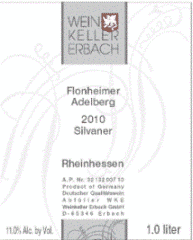
| Country: | Germany |
| Region: | Rheinhessen |
| Winery: | Flonheimer |
| Grape Type: | Silvaner |
| Vintage: | 2010 |
| Bottle Size: | 900 ml |
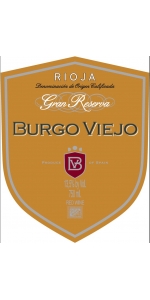
Burgo Viejo Rioja Gran Reserva is made from 100 percent Tempranillo. 30 year old vines.
Burgo Viejo Gran Reserva shows a deep red ruby color and offers powerful aromas of blackberry jam, spice, leather, chocolate with toasty nuances. Smooth yet full-bodied with firm tannins and a long finish.
Review:
"Shimmering garnet. Aromas of cherry, blueberry, candied flowers, tobacco and coconut pick up a smoky overtone with air. Smooth and fleshy on the palate, offering ripe red and blue fruit, mocha, cola and spicecake qualities that tighten up on the back half. Finishes long and supple with repeating spiciness, even tannins and a lingering suggestion of red berry preserves. This old-school Rioja was aged for two years in 90% American and 10% French oak. - Josh Raynolds"
- Antonio Galloni's Vinous (April 2021), 92 pts
2010 Burgo Viejo Rioja Gran Reserva - Silver Medal - MUNDUS VINI
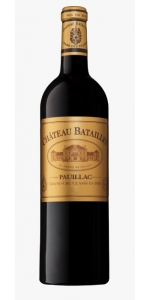
Chateau Batailley Grand Cru is made from 78% Cabernet Sauvignon, 19% Merlot, 2% Petit Verdot & 1% Cabernet Franc.
Château Batailley is a winery in the Pauillac appellation of the Bordeaux region of France. The wine produced at the estate was classified as one of eighteen Cinquièmes Crus (Fifth Growths) in the Bordeaux Wine Official Classification of 1855.
Garnet-purple colour. Rich and expressive nose, fruity with notes of spices, smoke and vanilla. On the palate, this wine is supple, round, well balanced, with good acidity, a nice fruitiness and nice notes of leather and cedar. Long elegant finish.
Review:
The 2010 Batailley repeated its magnificent showing when poured at the chateau. It has a detailed bouquet of blackberry and cedar, quite backward and seemingly having advanced lite since | tasted in in April 2016. The palate remains full of tension and brimming with energy, delivering classic cedar and tobacco notes toward the persistent finish. Batailley can produce wines that live many decades, and this is clearly one of them. Tasted at the property. Drink 2020-2050
- Neal Martin Vinous 95 Points

All older vintage wines have been purchased from a single collectors cellar. Pictures can be requested before shipment.
All older vintage wines have been purchased from a single collectors cellar. Pictures can be requested before shipment.
All older vintage wines have been purchased from a single collectors cellar. Pictures can be requested before shipment.
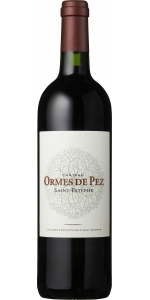
Ormes de Pez Saint Estephe is made from 54% Merlot, 38% Cabernet Sauvignon, 4% Cabernet Franc and 4% Petit Verdot.
Château Ormes de Pez 2020 displays deep garnet-purple color with notes of plum preserves and dark berries, plus hints of graphite. Nice chewiness to the texture and lovely freshness, finishing on a lingering fragrant-earth note.
Flonheimer Adelberg Silvaner ,The fruity, mouthwatering wine has a nice acidity-sugar balance and comes from the so called 'Rheinhessen-Switzerland', the heartland of Rheinhessen. It has a floral bouquet and smells like yellow fruit, lemon-grass and green tea.
The Flonheimer Estate
The winegrower's association 'Weinkeller Erbach' has long been known as a producer of fruity, spritsy wines in the Rheingau. In 2010 they took to the west, crossed the Rhein-river into Rheinhessen and started looking out for a vineyard that was able to provide high-quality Silvaner grapes. Eventually they found what they were looking for in the 'Flonheimer Adelberg'. Here, under the close cooperation and scrutiny of cellarmaster Jochen Bug a floral and aromatic Silvaner is being produced.
The Flonheimer Vineyard
The soil of the vineyard Flonheimer Adelberg consists of sandy loess and loam. Its total size is 130 hectares (325 acres). Here the annual rainfalls are low, the summers are warm and the winters mild. These are perfect conditions for growing wine. The name 'Adelberg' derives from the nobility of the quality of the wine. Literally it means 'noble hill'.
Silvaner is one of the most important grape varieties of the winegrowing region of Rheinhessen and also one of the oldest. First documented in 1659 it now comprises of almost 2,500 hectares (6250 acres) in Rheinhessen, making Rheinhessen the biggest winegrowing region of this variety not only in Germany, but also in the world. Being one of the oldest grape-varieties that is still being cultivated today, it is assumed, that the Silvaner-grape originally came from the Danube-river region of Romania. The roman writer 'Gaius Plinius Secundus' described in his book 'Naturalis Historia' a grape variety, that it has similar characteristics as the Silvaner.
Ossian Capitel Verdejo is made from 100% Verdejo.
Ossian Capital represents a particular expression of very old Verdejo vines, taking its potential far finesse, elegance and longevity. It is made in selected years with a selection of extraordinary grapes.
Color: Old golden yellow color with greenish reflections.
Aromas: Surprisingly nuanced and profound.
Flavors: Fresh, full and very light.
Review:
"The 2020 Capitel is pure Verdejo from the oldest vines from the Peña Aguda vineyard in the village of Nieva on slate soils. This is the last vineyard to be bottled and has higher alcohol (14%) than the rest of the vineyards despite now harvesting earlier. The wine has a different aromatic profile but getting closer to the style of Ossian, less opulent than in the past, with more energy, quite fruit-driven with some exotic notes reminiscent of banana skin. The whole clusters were pressed and the juice put to ferment in barrel where the wine matured with the lees and, starting this year, without bâtonnage, because they feel the wines have enough volume and stirring the lees can bring more oxidation to the wine. 2,500 bottles produced. - Luis GUTIERREZ"
- Robert Parker's Wine Advocate (January 31st 2023), 93+ pts

Larroque Bordeaux Blanc is made from 73% Sauvignon Blanc and 27% Colombard.
No oak.
Color : Pale yellow with green tints.
Nose : Complex aromas of white flowers, exotic fruits, citrus and boxwood, with a touch of minerality.
Mouth : Aromatic, with a nice richness and freshness. Predominant flavors of tart, crisp fruit.
Marie-Christine, the daughter of Henri Ducourt, purchased this prestigious left-bank property in 1979, which lies on the border of the Graves appellation.
The 60-hectare vineyard was rapidly replanted and the château building, which dates from 1348, was restored.
Our family now produces three different-colored wines there: red, white and rosé.
Grown on loamy-clay soil.
Harvest : Machine harvesting in the cool, early morning
Maceration : Skin-contact maceration for several hours, depending on ripeness, and pressing
Fermentation : Beginning of the cold alcoholic fermentation (12°C / 53°F) then an increase in temperature to finish the fermentation at 20°C / 68°F.
Enjoy this wine as an aperitif or during the meal with fish, seafood or chicken salad.



