
" We don't sell the wine without touching the vine "
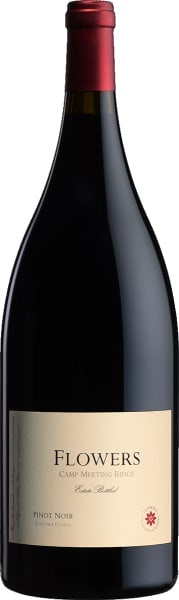
| Country: | United States |
| Regions: | California California (Sonoma County) |
| Winery: | Flowers |
| Grape Type: | Pinot Noir |
| Organic: | Yes |
| Vintage: | 2017 |
| Bottle Size: | 750 ml |

Copain Edmeades Pinot Noir is made from 100 percent Pinot Noir.
This wine embodies everything you love about Anderson Valley Pinot; flavors of strawberry, Rainier cherries with hints of spice.
VINTAGE NOTES:
The 2017 vintage began with significant rainfall prior to bloom, refilling the state’s reservoirs and ending California’s five-year drought. We saw a sudden spike in temperatures just prior to harvest, leading fruit to ripen quicker than anticipated. This sped up our harvest schedule, but due to our team’s vigilance, the fruit was still able to be picked at optimal ripeness. Temperatures then cooled back down by mid-September, allowing the remaining vineyards to complete ripening at an ideal pace. The rest of harvest was finished as planned, with yields coming in at their typical levels.
The historical Edmeades Vineyard sits along the western side of the small town of Philo in what’s known as the “deep-end” of Anderson Valley. Flanked by the Navarro River, there is a diversity of sandstone soils throughout the vineyard. The Edmeades vineyard is planted with vines facing southwest, allowing this vineyard to receive warmer afternoon weather. This helps to balance the prolonged cool fog influence this vineyard sees throughout the growing season.
Aromas: Raspberry, dried cherries, pennyroyal, orange zest.
Palate: Medium weight palate with soft tannins. Notes of cherry, pomegranate, and clove with light delicate cola notes on the finish.
Review:
-Jeb Dunnuck 94 Points

Appasionata Andante Pinot Noir Willamette Valley is made from 100 percent Pinot Noir.

Loring Cooper Jaxon Pinot Noir is made from 100% Pinot Noir
Aged 10 Months in French Oak (15% New)
A special blend in honor of Cooper Jaxon Loring - the next generation of Loring. We don't limit the wine to any
specific AVA, but rather look for a blend that is big, bold, and super tasty!
Juicy and vibrant, with aromas of raspberry puree, blackberry and spring flowers.
Vines are planted on Arroyo Seco Sandy Loam soils on the following vineyard sites: Rancho La Viña, Kessler-Haak, Clos Pepe, John Sebastiano, Aubaine, Rosella's and Sierra Mar.
Vinification is traditionnal with minimal intervention.
Wine went thought Malo-Lactic fermentation and was bottled without filtration.
pH 3.61
Clones: Pisoni, 113, 115, 667, 777, 23
Pairs well with steak and lamb, spicy foods & mild cheeses.
Review:
"This fun and whimsical label from Brian Loring delivers his rich style of Pinot Noir at an affordable price, offering aromas of black cherry, forest herbs, damp sage and crushed slate. The palate is earthy, offering flavors of dark berry, fennel frond, roasted meat and clove. Matt Kettmann"
- Wine Enthusiast (June 2019), 92 pts - Editors' Choice

Sokol Blosser Big Tree Block Pinot Noir is made from 100 percent Pinot Noir.
1970 was winding down when our founders, Bill Blosser and Susan Sokol Blosser pulled their ’68 VW Camper up to an abandoned prune orchard some 30 miles southwest of Portland. These moonstruck kids had little farming experience and just a basic knowledge of winemaking. What they did have, in abundance, was a passion for growing the Pinot Noir grape and creating world-class wine. Soon after settling on this extraordinary land, they planted their first vines and cinched their place as pioneers in Oregon’s budding wine industry.
Review:
-James Suckling 94 Points

Argot Mosaic Pinot Noir is made from 100 percent Pinot Noir.
Sourced from both high-elevation and valley floor vineyards, located in the cool-climate AVAs of Sonoma Mountain, Bennett Valley and Petaluma Gap. A drama-free growing season allowed for a leisurely harvest of perfectly ripe, healthy fruit. Low-stress, clean ferments, led to an exceptionally pure Pinot Noir, laden with fruit, earth and spice.

Holocene Memorialis Pinot Noir is made from 100 percent Pinot Noir.
Holocene Pinot Noir Memorialis is a blend of 777, Pommard and 115 clones from MonksGate vineyard in the Yamhill-Carlton AVA, and it saw about 20% new French oak for 16 months prior to bottling. It is always the lighter and more feminine of the two Holocene wines, with red fruits, white flowers, dried herbs, mushroom and forest floor aromatics, bright acidity and a lithe texture, long finish.
By now, everyone knows that the Willamette Valley is an amazing place to grow Pinot Noir. When I relocated from Napa Valley to partner up with Force Majeure Vineyards, I knew I also wanted to start a project where I could focus attention on a varietal and growing region that I loved. Part of the excitement of being in the Pacific Northwest is the ability to have access to so many amazing vineyards and so much diversity, along with the opportunity to push boundaries and try new things – something that is becoming increasingly difficult in other growing regions.
We partner up with a few very small, diverse and amazing vineyards in the Willamette Valley, sourcing fruit from these dry-farmed sites that emphasize low yields, sustainable practices and produce outstanding fruit.
The wines are crafted in the same way I have been making wine since I was carrying it out at Bryant Family Vineyard in the Napa Valley — utilizing very low-impact, non-industrial techniques, native yeasts, little extraction and little new oak, and never filtering or fining. This allows a real sense of place to show through in the wines that is often dimmed when too much manipulation is undertaken.
Our first vintage was 2015, and was released in early 2017. As production is currently extremely small, the best way to get the wines into your hands is to join our mailing list at the “Mailing List” link above to receive an allocation when we have a release. We release wines once per year, and they will be sold on a first come, first served basis, shipped straight to your door.
Review:
-Jeb Dunnuck 95 Points
As nursery owners in Bucks County, Pennsylvania, Walt and Joan Flowers had long dreamed of combining their love of wine with their passion for agriculture. They knew they wanted to produce their favorite varietals, Chardonnay and Pinot Noir; what they didn’t know was that their path would eventually lead them across country to Northern California’s rugged Sonoma Coast. After responding to a small classified ad in a national wine publication, that’s exactly where they landed.In 1989, after many information-gathering trips to Napa and Sonoma, Walt and Joan purchased 321 acres, including a ridge top, high above the Pacific Ocean on the northern Sonoma Coast. With the same determination they drew on to build their successful nursery business; the Flowers proceeded with the dream of producing their favorite cool-climate varietals in a place they believed uniquely suited to growing them.Today, Flowers Winery produces Chardonnay and Pinot Noir from its two estate properties, Camp Meeting Ridge Vineyard and Sea View Ridge Vineyard, as well as select vineyards in the coolest regions of the Sonoma Coast AVA, which are farmed to Flowers’ specifications by their own crews. In addition to direct consumer sales, the wines are sold to fine restaurants and retailers in the US and overseas.
Review:
Offers a rich and lusciously spicy aroma, with flavors to match, as well as a deep core of cherry compote, berry, currant and red plum accents that glide across the palate. Unctuous midpalate, featuring a long, cream-filled finish. Drink now through 2026.
-Wine Spectator 94 Points
Nearly 30 years ago, Flowers Vineyards & Winery pioneered the growing of Pinot Noir and Chardonnay on the rugged coastal ridges of the extreme Sonoma Coast. Joan and Walt Flowers had a simple goal — make exceptional wine that captures the wild beauty of the land and the spirit of the Sonoma Coast. This passion drives everything we do — farming responsibly, harvesting by hand, using 100% native fermentation, and crafting wine with minimal intervention. Our unwavering commitment to creating distinctive wines that capture the spirit of the Sonoma Coast has been the bedrock of our success, and will continue to guide us for years to come.
EARLY 1980’S Our story begins in the early 1980s with Joan and Walt Flowers, owners of a nursery in Bucks County, Pennsylvania. On their biannual trips to California to buy seeds and learn about west-coast plants, they would always carve out time to pursue their budding interest in wine. Before long, their passion grew into a dream of owning a vineyard and using their immense agricultural and farming knowledge to grow exceptional wine.
1989 In 1989, Joan and Walt came across a brief advertisement in the back of a wine publication for a mountaintop piece of land on the first ridgeline of the Sonoma Coast. This was uncharted territory for farming grapes, and despite being warned of the risks, they visited the property. The drive there took them along the scenic Highway 1, down miles of narrow switchbacks with breathtaking views of the Pacific Ocean.
THE ROAD TO FLOWERS They turned on to a narrow road and started the steep trek up the first ridgeline of the Sonoma Coast. Around 1100 feet up, they broke through the thick cloud layer and were welcomed with abundant sunshine. At this moment they knew farming this land was possible. The site for the vineyard was a large piece of rugged, untouched land that had once been used as a trading ground between the Pomo Indian Tribe and the Russian fur traders. After extensive, meticulous research on the property’s soil, history, and climate, it was time to plant their vineyard.
1991 By 1991, Camp Meeting Ridge had been planted with Chardonnay and Pinot Noir and was beginning to bear fruit of exceptional quality. Rocky soils, hillside exposures, fog-filled mornings, warm sunny days, and cool nights — the perfect combination of elements to produce distinctive and expressive wines.
1998 In a rugged, unforgiving landscape where others could only see obstacles, Joan and Walt Flowers had the vision and courage to chart new territory and see the potential of the land. Flowers Vineyards & Winery was formed, and a nearby untouched mountaintop property, Sea View Ridge, was acquired and planted.
TODAY Nearly 30 years after Joan and Walt first stepped onto the Camp Meeting Ridge property our commitment to making Pinot Noir and Chardonnay that express the true character of the land has not changed. In those thirty years we’ve perfected our farming, pushed the boundaries of our winemaking, and connected with lovers of cool-climate Pinot Noir and Chardonnay around the world. As we look to the future we can’t wait to continue our journey as stewards of the lands and pioneers of balanced and terroir-driven wines.
SUSTAINABLE FARMING Using a blend of organic and sustainable farming practices, we harness the true potential of our extreme vineyard sites. The grapes benefit from the influence of the nearby Pacific Ocean, which provides cool daytime breezes to ensure proper ripening and evening fog to guarantee lively acidity for freshness in the finished wines.
MINIMAL INTERVENTION IN THE CELLAR Every winemaker has the opportunity intervene in the natural winemaking process to impact the color, flavor, aroma and texture of their wine – but at Flowers we do not. We want our wine to be a pure expression of our unique coastal terroir and the vintage.
100% NATIVE YEAST FERMENTATION Yeast is the magic in the winemaking process, as it is the catalyst for fermentation. And although there is natural yeast all around us, most wineries will purchase yeast strains from the store and use them to control the fermentation process. At Flowers, we use 100% native yeast in all our wines, thus relying on the wild yeast that gets carried in on the grapes from the vineyard for fermentation. We believe our yeast strain gives our wine a unique identity and in 2015 we began sending out samples for DNA fingerprinting.
UNIQUE & PURE We have been shocked to learn that we had a common strain of yeast throughout all of our wines that is carried in through our vineyards – and this strain is 100% unique to Flowers, meaning there is no genetic relationship to any commercial yeast on the market. Although using native yeast is uncommon, we believe that it is necessary to showcase the purity of our fruit and power of our vineyards.

J. Davies Nobles Vineyard Pinot Noir is made from 100 percent Pinot Noir.
The Nobles Pinot Noir starts off with aromas of rich strawberry, black cherry and Earl Grey tea, followed gracefully with coriander and exotic spices. The palate offers a juicy mid-palate of blueberry and plum layered with mocha and rhubarb, closing with a long-integrated acidity.
Review:
Elegant and pure-tasting, with red berry, plum and raspberry flavors that are well-structured. Toasty midpalate, with a rich finish that offers spicy minerality. Drink now through 2026.
-Wine Spectator 92 Points

Elvio Cogno Cascina Nuova Barolo 2017
Born to satisfy the curiosity of consumers keen to have a more immediate understanding of Barolo, the wine is bright garnet red in color with orange tints. Pleasing and immediate, it offers scents of flowers and light, delicate spices. The mouth is agreeably rounded, juicy and fresh, with just the right balance between pleasantness and elegance. The aftertaste is very harmonious with a mineral, aromatic finish.
Review:
Attractive dried strawberry with cherry and tar on the nose. Full-bodied with powerful tannins that are dusty and intense. Very flavorful and long. Solid as a rock. Needs at least three or four years to soften and come together.
-James Suckling 95 Points
"Truffle, wild berry, rose and baking spice aromas come to the forefront along with a balsamic whiff of menthol. Delicious and smooth, the full-bodied palate doles out juicy black cherry, crushed raspberry, blood orange and licorice set against tightly knit, refined tannins. Drink 2024–2032. Kerin O’Keefe"
-Wine Enthusiast 96 Points

The 2024 Far Niente Winery Estate Bottled Chardonnay is a white wine from California known for its buttery and complex style, made from Chardonnay grapes grown in the Coombsville region. It features notes of citrus, melon, and pear, with a silky texture and a long, elegant finish that is complemented by hints of spice from oak aging.
Review:
-James Suckling 93 Points

DuMOL 'Isobel' Charles Heintz Vineyard Sonoma Coast Chardonnay is made from Chardonnay.
Founded in 1996, DuMOL is one of the Russian River Valley's benchmark producers of Chardonnay, Pinot Noir and Syrah, built on meticulous, small-lot winemaking under longtime winegrower Andy Smith. "Isobel" is DuMOL's bottling from the legendary Charles Heintz Vineyard, planted high on a ridge above Occidental on the far Sonoma Coast — some of California's oldest and most coveted Chardonnay vines, now more than forty years old. Fermented and aged in cigar-shaped French oak barrels, the 2023 captures the site's signature oily texture and breadth alongside crystalline, mineral energy.
Review:
"The 2023 Chardonnay Isobel Charles Heintz Vineyard was brought in on October 12 and 14, very late by historical standards. It captures all the magic of this site in its oily texture and breadth. Citrus confit, white pepper, flowers and crushed rocks are all beautifully delineated. For readers who want to know what Charles Heintz Chardonnay is all about, this is it!"
- Antonio Galloni, Vinous, 96 Points



