
" We don't sell the wine without touching the vine "

| Country: | Portugal |
| Region: | Douro |
| Grape Type: | Port Blend |
| Vintage: | 1966 |
| Bottle Size: | 750 ml |
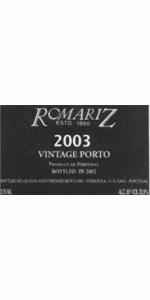
Flowering in the Duoro occurred in the last 10 days of May. The weather conditions provided for a perfect flowering season. The Romariz Vintage Port 2003 yielded wines of great color and supple tannins, with a vintage stamp being evident in most wines. Production: 8,000 cases. "Another bright and fruity young Vintage Port with plum, grape and blackberry aromas with just a hint of stems. Serious nose here. Full-bodied, with soft, round tannins and a long, caressing finish. A beauty."
- J.S., Wine Spectator, 89-91 pts
"Bright dark ruby. Deep, perfumed aromas of cassis, licorice, violet and minerals. Lush and high-toned in the mouth but with very good vinosity and spine. Lovely fruit-driven flavors of black cherry, blackberry and dark chocolate. Little sign of the roasted side of 2003. Not hugely concentrated but suave, supple, minerally and sweet. Finishes with ripe tannins and very good spicy persistence. A very good showing. Accessible already but balanced for medium-term aging."
- Stephen Tanzer's International Wine Cellar, 89 pts
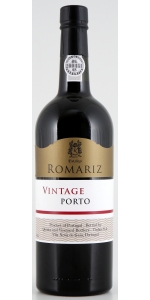
Romariz Vintage Port is made from Touriga Nacional, Touriga Franca, Tinto Cão, Tinta Roriz, Tinta Barroca
Deep inky purple color. Intricate nose with aromas of blackberries and logan berries, subtle hints of amber and spring blossom and delicate spice. A tight, well-formed palate with an abundance of dark berry fruit, rich chocolate and liquorice, culminating in a long finish. Firm, closely woven tannins that give the wine great structure and body. An elegant finely constituted Vintage Port which will drink beautifully now or age quietly in the cellar.
A vintage port is made from blended grapes, all from the same vintage year. Vintage ports are historically only declared every 3 out of 10 years. Romariz vintage ports age for up to two years in oak, then go unfiltered into the bottle for further aging.

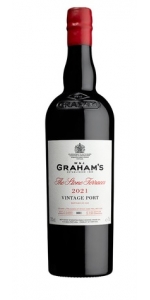
The Stone Terraces 2021 Vintage Port has incredibly fresh and lifted aromas with the hallmark tropical fruit character. The wine is concentrated whilst being supremely refined with polished tannins and taut acidity combining to deliver sublime elegance and balance.
Review:
What a polished and beautifully structured vintage port with ultra-fine tannins that run the length of the wine. It’s medium-bodied with a terrific intensity and brightness. Seems slightly drier than normal for a Graham’s vintage. Fantastically fine tannins. Black berries and tangerines with other tropical fruits. Hints of nuts at the end. Racy and muscular.
-James Suckling 95 Points
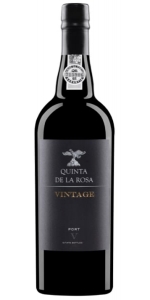
Opaque color. Very rich, dark chocolate aromas with some black cherry and mature fruit coming through. There is also a pleasing freshness to the port originating from its floral and cistus (rockrose) bouquet. The Quinta de la Rosa Vintage 2017 is a powerful wine with much potential but at the same time elegant and generous on the palate. Full of flavors, very complex with fine tannins that gives the wine a nobility and persistence. A great vintage made to give pleasure now and in the next few decades.
Review:
The 2017 Vintage Port was bottled a few weeks before tasting after spending 18 months in used tonels. It is a field blend, mostly Touriga Nacional and Touriga Franca, coming in with 98 grams per liter of residual sugar. Wonderfully aromatic and filled with flavor, this got plenty of aeration and didn't blink even a little. It was still vibrant and expressive. Aeration only made it more tannic. It is also delicious. This is potentially a great Port, and it seems like the best I've seen from La Rosa. This is sort of approachable in the near future, but it really needs (at least) a decade of cellaring. It has a lot of muscle and should age well.
-Wine Advocate 95 Points
Very floral in profile, with violet and lilac accents leading off, followed by a decidedly red-fruit spectrum of raspberry, cherry and red currant coulis flavors that race throughout. Has grip, but this is more reliant on acidity, showing a nearly piercing feel as the tightly focused finish zips along, leaving a mouthwatering impression. Delightfully idiosyncratic. Best from 2033 through 2050. 112 cases imported. — JM
-Wine Spectator 95 Points
This is a rounded Port, showing layers of black fruits, ripe tannins and spice. At the same time, it does have a solid structure that will allow it to age. The acidity comes through at the end. Drink from 2028.
-Wine Enthusiast 95 Points
Fonseca Vintage Port 1966 has been pulled from a Gentleman's cellar, all wines from this cellar have been purchased by the owner either from the importer or direct from winery. They stayed in his cellar until being moved to the Timeless Wines warehouse.
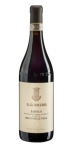
G.D. Vajra Bricco Delle Viole Barolo is made from 100 percent Nebbiolo.
The Barolo Bricco delle Viole shows the signature verticality of its vineyard. The wine is beautifully layered and - while restrained as it’s always the case in the youth of Bricco delle Viole - it also shows a complexity of layers with purple flowers, sweet spices and mineral tones. The palate is noble, with a refined acid spine and profound tannins that promise a long aging potential.
Among the historical vineyards of Barolo, Bricco delle Viole is the highest and the closest to the Alps. It rises from 400 to 480 meters above sea level, on the Western ridge of the village. Its name, “Hill of Violets”, originates from the flowers that blossom early here due to the perfect south exposure. Up above the fogs, Bricco delle Viole enjoys the earliest sunrise and the last sunset every day. Thanks to its vines dating back to 1949 and -now- 1931, a dramatic diuturnal temperature range and this pure light, Bricco delle Viole generates a sophisticated and profound Barolo DOCG of bright aromatics, chiseled tannins and subtle minerality. 2018 is a vintage that shows many nuances of Bricco delle Viole: beyond the signature verticality of this site, the wine offers high tones laced with mineral nuances and plenty of energy and youth.
Review:
The 2018 Barolo Bricco delle Viole is not super intense, but it is balanced in its own way. The wine is subdued but complete with softly yielding tannins to support an elegantly streamlined mouthfeel. Bricco delle Viole is a high and cool growing site in Barolo at 400 to 480 meters in elevation with characteristic Sant'Agata marl soils with fossils. The wine represents a selection of fruit from over seven hectares. With fermentation in steel tank and aging in large Slavonian oak, you are invited to a silky, lifted and beautifully delicate experience with an accessible personality.
-Wine Advocate 95 Points
An elegant version, this red features rose, black currant, cherry, mineral and a hint of eucalyptus aromas and flavors. Linear in profile, this is solidly built on a graceful frame, with finely woven tannins and vibrant acidity.
- Wine Spectator 95 Points
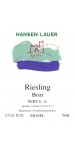
Hansen Lauer Sekt Riesling Brut is made from 100 percent Riesling grown on Devonian slate.
A very fine bubbles along with a very nice fruit (apple, pear, citrus) and minerality coming from the stony (slate) vineyards.
Production techniques: the Sekt is bottle fermented, stayed on the lees for 12 months, thus giving it very fine bubbles along with a very nice fruit and minerality.
The vineyard sites are Bernkasteler Graben, Bernkasteler Badstube, Bernkasteler Bratenhöfchen, Graacher Himmelreich. The vineyards are situated at the beginning of a long stretch of approx. 2 million vines.
Enjoy on its own as an aperitif or with delicate food, such as pike, lobster and scalops.



