
" We don't sell the wine without touching the vine "
| BUY MORE! SAVE MORE! | ||||||||||||||||||||
|
| Country: | Portugal |
| Region: | Douro |
| Winery: | Romariz Port |
| Grape Type: | Port Blend |
| Vintage: | 2017 |
| Bottle Size: | 750 ml |
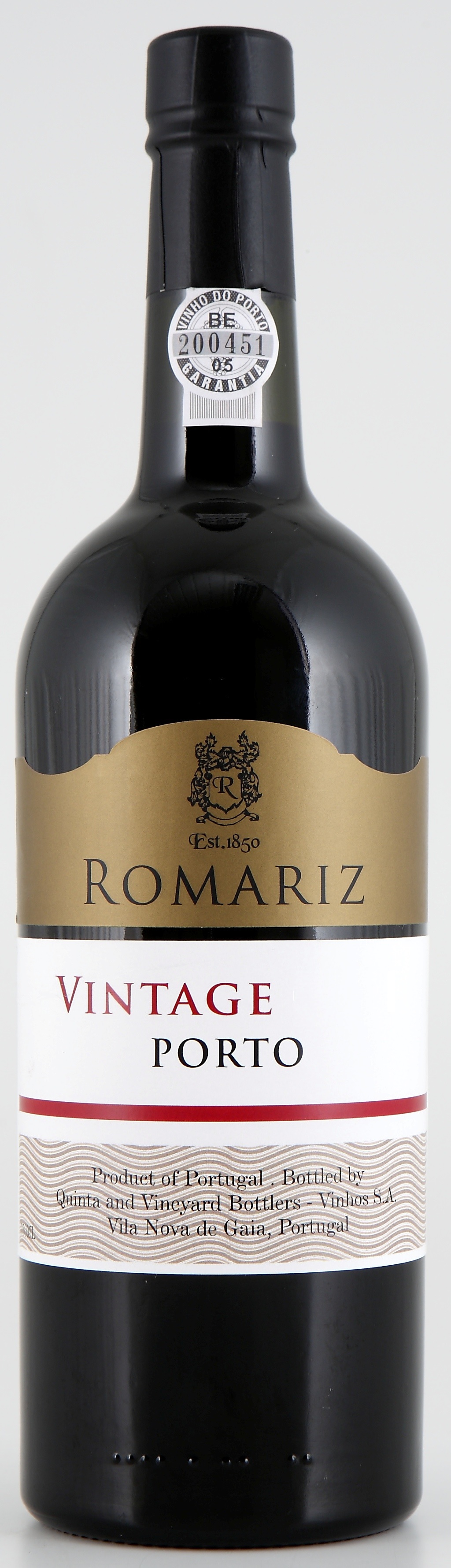
Romariz Vintage Port is made from Touriga Nacional, Touriga Franca, Tinto Cão, Tinta Roriz, Tinta Barroca
Deep inky purple color. Intricate nose with aromas of blackberries and logan berries, subtle hints of amber and spring blossom and delicate spice. A tight, well-formed palate with an abundance of dark berry fruit, rich chocolate and liquorice, culminating in a long finish. Firm, closely woven tannins that give the wine great structure and body. An elegant finely constituted Vintage Port which will drink beautifully now or age quietly in the cellar.
A vintage port is made from blended grapes, all from the same vintage year. Vintage ports are historically only declared every 3 out of 10 years. Romariz vintage ports age for up to two years in oak, then go unfiltered into the bottle for further aging.
The Romariz Port Estate
The port house of Romariz was founded in 1850 by Manoel (Manuel) da Rocha Romariz. Manoel was a descendant from a well known Oporto family.
Over the years, Romariz developed business dealings in Brazil and other Portuguese Colonies (Africa and China), and to a lesser extent England. Historically, Romariz was known for wood ports, like Colheitas (single vintage Tawnies) and in top years vintage ports.
In 1966, the Romariz family sold their brand and business to Guimaraens & Co. (who own Fonsecca) and the business continued on. Some years passed by and eventually Fonsecca and Taylor’s joined forces. Today, Fonsecca, Talyor and Romariz share the same winemaker and facility in Vila Nova de Gaia.
Today, Romariz offers a wide range of Ports: wood, vintage, LBV’s and Colheitas. Their main markets are Portugal, Denmark and France. All grapes come from region #2, Cima Corgo, the heart of the best growing area along the Douro River. Romariz being a “Portuguese” port firm, adheres to a rich warm style of port wines.

Flowering in the Duoro occurred in the last 10 days of May. The weather conditions provided for a perfect flowering season. The Romariz Vintage Port 2003 yielded wines of great color and supple tannins, with a vintage stamp being evident in most wines. Production: 8,000 cases. "Another bright and fruity young Vintage Port with plum, grape and blackberry aromas with just a hint of stems. Serious nose here. Full-bodied, with soft, round tannins and a long, caressing finish. A beauty."
- J.S., Wine Spectator, 89-91 pts
"Bright dark ruby. Deep, perfumed aromas of cassis, licorice, violet and minerals. Lush and high-toned in the mouth but with very good vinosity and spine. Lovely fruit-driven flavors of black cherry, blackberry and dark chocolate. Little sign of the roasted side of 2003. Not hugely concentrated but suave, supple, minerally and sweet. Finishes with ripe tannins and very good spicy persistence. A very good showing. Accessible already but balanced for medium-term aging."
- Stephen Tanzer's International Wine Cellar, 89 pts

"Opaque ruby. A complex, beautifully structured wine from Europe’s hot summer of 2003. Lively spicy, toasted aromas and a ripe and generous palate with layers of rich, dense flavors of dark fruit, chocolate, tobacco, spice box and a hint of marmalade. Finishes dry and long with still firm tannins. A delicious Port that should be paired with Roquefort and other blue cheeses."
- International Wine Review (Succulent Sweet Wines for the Holidays: The Best of 2018), 92 pts


Opaque color. Very rich, dark chocolate aromas with some black cherry and mature fruit coming through. There is also a pleasing freshness to the port originating from its floral and cistus (rockrose) bouquet. The Quinta de la Rosa Vintage 2017 is a powerful wine with much potential but at the same time elegant and generous on the palate. Full of flavors, very complex with fine tannins that gives the wine a nobility and persistence. A great vintage made to give pleasure now and in the next few decades.
Review:
The 2017 Vintage Port was bottled a few weeks before tasting after spending 18 months in used tonels. It is a field blend, mostly Touriga Nacional and Touriga Franca, coming in with 98 grams per liter of residual sugar. Wonderfully aromatic and filled with flavor, this got plenty of aeration and didn't blink even a little. It was still vibrant and expressive. Aeration only made it more tannic. It is also delicious. This is potentially a great Port, and it seems like the best I've seen from La Rosa. This is sort of approachable in the near future, but it really needs (at least) a decade of cellaring. It has a lot of muscle and should age well.
-Wine Advocate 95 Points
Very floral in profile, with violet and lilac accents leading off, followed by a decidedly red-fruit spectrum of raspberry, cherry and red currant coulis flavors that race throughout. Has grip, but this is more reliant on acidity, showing a nearly piercing feel as the tightly focused finish zips along, leaving a mouthwatering impression. Delightfully idiosyncratic. Best from 2033 through 2050. 112 cases imported. — JM
-Wine Spectator 95 Points
This is a rounded Port, showing layers of black fruits, ripe tannins and spice. At the same time, it does have a solid structure that will allow it to age. The acidity comes through at the end. Drink from 2028.
-Wine Enthusiast 95 Points

Romariz White Port is a blend of wines from the Arinto, Boal, Codega, Esagna CAO, Folgasao, Gouveio, Viosinho, and Rabigato grapes grown in the Douro. This is aged in oak for three years. Aromas of fruit cocktail, round and full, orange-nutty undertone, strong flavored and sweet. Refreshing summertime drink on ice.
FOOD MATCH: Served alone for after-dinner sipping.

The Stone Terraces 2021 Vintage Port has incredibly fresh and lifted aromas with the hallmark tropical fruit character. The wine is concentrated whilst being supremely refined with polished tannins and taut acidity combining to deliver sublime elegance and balance.
Review:
What a polished and beautifully structured vintage port with ultra-fine tannins that run the length of the wine. It’s medium-bodied with a terrific intensity and brightness. Seems slightly drier than normal for a Graham’s vintage. Fantastically fine tannins. Black berries and tangerines with other tropical fruits. Hints of nuts at the end. Racy and muscular.
-James Suckling 95 Points

Mascot is a small-production label founded by Will Harlan in Napa Valley. The wines under this label are made from the younger vines of Harlan Estate, BOND, and Promontory, but The Mascot bottles share an exclusive preview at the development of their estates. Founded as an initial experiment to see what the young vines were capable of producing, the wines were initially only shared with close friends and family. By 2008, Will officially released the first vintage to the public since production had increased significantly. They create just one wine made from Cabernet Sauvignon, and the bottle is aged for five years before release. Assembled into a single, youthful expression, this wine shares a glimpse into the evolution and pedigree of its parent estates.

Maranones 30.000 Maravedies Vinos de Madrid Sierra Gredos is made from 90% Garnacha and 10% local grape varietals called Morenillo (Morate).
“The first of our red wines would be 30,000 maravedíes, which is our Comarca wine, a regional wine, village wine.
30,000 maravedíes is the coming together of all soils, orientations, dominantly Garnacha at 90 percent with a remaining 10 percent of local grapes.
The name also reflects the union between history, the winery, the structure and the place. Álvaro de Luna paid 30,000 maravedíes to buy the whole region from the monks who fostered the cultivation of the vine. It is a historical name. It refers to what was paid for the Valley and pays homage to the Valley. It also evokes what the monks had developed. This history is part of our heritage and we continue it.
This village wine wants to tell you the whole history of the Valley. At the end it delivers a structure tending towards the mineral, the floral, length, fruitiness and ease of drinking.”
30-70 year-old vines produce a vibrant, fresh wine that boasts juicy red berry, wild herb, flower and balsamic flavors with hints of sweet spice. Smooth tannins provide finesse and longevity.



