
" We don't sell the wine without touching the vine "
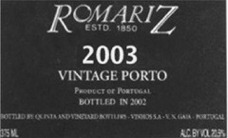
| Country: | Portugal |
| Region: | Douro |
| Winery: | Romariz Port |
| Grape Type: | Port Blend |
| Vintage: | 2003 |
| Bottle Size: | 375 ml |
"Opaque ruby. A complex, beautifully structured wine from Europe’s hot summer of 2003. Lively spicy, toasted aromas and a ripe and generous palate with layers of rich, dense flavors of dark fruit, chocolate, tobacco, spice box and a hint of marmalade. Finishes dry and long with still firm tannins. A delicious Port that should be paired with Roquefort and other blue cheeses."
- International Wine Review (Succulent Sweet Wines for the Holidays: The Best of 2018), 92 pts
The Romariz Port Estate
The port house of Romariz was founded in 1850 by Manoel (Manuel) da Rocha Romariz. Manoel was a descendant from a well known Oporto family.
Over the years, Romariz developed business dealings in Brazil and other Portuguese Colonies (Africa and China), and to a lesser extent England. Historically, Romariz was known for wood ports, like Colheitas (single vintage Tawnies) and in top years vintage ports.
In 1966, the Romariz family sold their brand and business to Guimaraens & Co. (who own Fonsecca) and the business continued on. Some years passed by and eventually Fonsecca and Taylor’s joined forces. Today, Fonsecca, Talyor and Romariz share the same winemaker and facility in Vila Nova de Gaia.
Today, Romariz offers a wide range of Ports: wood, vintage, LBV’s and Colheitas. Their main markets are Portugal, Denmark and France. All grapes come from region #2, Cima Corgo, the heart of the best growing area along the Douro River. Romariz being a “Portuguese” port firm, adheres to a rich warm style of port wines.

Romariz 20 Years Old Tawny is rich, warm and well balanced. Concentrated, firm tannins. Aromas of hazelnuts and walnuts, raisin, honey, caramel and dark chocolate notes. Excellent with desserts, cheese or by itself at the end of a meal.

Flowering in the Duoro occurred in the last 10 days of May. The weather conditions provided for a perfect flowering season. The Romariz Vintage Port 2003 yielded wines of great color and supple tannins, with a vintage stamp being evident in most wines. Production: 8,000 cases. "Another bright and fruity young Vintage Port with plum, grape and blackberry aromas with just a hint of stems. Serious nose here. Full-bodied, with soft, round tannins and a long, caressing finish. A beauty."
- J.S., Wine Spectator, 89-91 pts
"Bright dark ruby. Deep, perfumed aromas of cassis, licorice, violet and minerals. Lush and high-toned in the mouth but with very good vinosity and spine. Lovely fruit-driven flavors of black cherry, blackberry and dark chocolate. Little sign of the roasted side of 2003. Not hugely concentrated but suave, supple, minerally and sweet. Finishes with ripe tannins and very good spicy persistence. A very good showing. Accessible already but balanced for medium-term aging."
- Stephen Tanzer's International Wine Cellar, 89 pts

Romariz Vintage Port is made from Touriga Nacional, Touriga Franca, Tinto Cão, Tinta Roriz, Tinta Barroca
Deep inky purple color. Intricate nose with aromas of blackberries and logan berries, subtle hints of amber and spring blossom and delicate spice. A tight, well-formed palate with an abundance of dark berry fruit, rich chocolate and liquorice, culminating in a long finish. Firm, closely woven tannins that give the wine great structure and body. An elegant finely constituted Vintage Port which will drink beautifully now or age quietly in the cellar.
A vintage port is made from blended grapes, all from the same vintage year. Vintage ports are historically only declared every 3 out of 10 years. Romariz vintage ports age for up to two years in oak, then go unfiltered into the bottle for further aging.


Romariz White Port is a blend of wines from the Arinto, Boal, Codega, Esagna CAO, Folgasao, Gouveio, Viosinho, and Rabigato grapes grown in the Douro. This is aged in oak for three years. Aromas of fruit cocktail, round and full, orange-nutty undertone, strong flavored and sweet. Refreshing summertime drink on ice.
FOOD MATCH: Served alone for after-dinner sipping.
Smith Woodhouse Vintage Port 1991 has been pulled from a Gentleman's cellar, all wines from this cellar have been purchased by the owner either from the importer or direct from winery. They stayed in his cellar until being moved to the Timeless Wines warehouse.

Domaine Jean Grivot Clos de Vougeot Grand Cru is made from 100 percent Pinot Noir.
Domaine Jean Grivot is among the great names in Burgundian wine. Étienne Grivot and his wife Marielle took over from Étienne’s father Jean Grivot in 1987. The vineyards are densely planted and farmed organically “sans certification” while the aim in the cellar is for balance and clear expression of terroir.
Jean Grivot’s 38.3 acres spread across 22 appellations with vineyards in the communes of Vosne-Romanée, Vougeot, Chambolle-Musigny, and Nuits-Saint-Georges. Besides the three grand crus, there are 8 premier crus including the much lauded Les Beaux Monts and Suchots in Vosne-Romanée. The grapes are completely de-stemmed and fermentation is spontaneous.
About the Vineyard:
Clos de Vougeot grand cru was acquired by Étienne’s grandfather, Gaston Grivot, in 1919. The total holding is 4.6 acres from the middle of the vineyard to the lower wall and the average vine age is 40 years old. A good Clos de Vougeot should be a complete wine without any one feature standing out. It is a perfect balance of power, aroma, and flavor.
Wine Production:
The grapes are destemmed and maceration à froid usually lasts just a day or two. The alcoholic fermentation is spontaneous and malolactic fermentation occurs in barrel. Depending on the vintage, the proportion of new oak is around 40-70% percent for the grands crus.
Tasting Notes:
The wine shows aromas and flavors of red berries, herbs, and purple flowers. The palate is rich with ripe fruit and medium weight with bright acidity and fine tannins. Aging in 40-70% new Burgundian pièce brings notes of vanilla, toast, and baking spices.
Food Pairing:
Red Burgundy might be the world’s most flexible food wine. The wine’s high acidity, medium body, medium alcohol, and low tannins make it very food-friendly. Red Burgundy, with its earthy and sometimes gamey character, is a classic partner to roasted game birds, grilled duck breast, and dishes that feature mushrooms, black truffles, or are rich in umami.
Review:
This round version is packed with ripe black cherry, violet, graphite and tobacco flavors. The silky texture and vibrant acidity work in tandem, while refined tannins provide support without getting in the way. There are a few edges to be worked out, yet this is long and concentrated.
-Wine Spectator 95 Points

Chakana Estate Malbec is made from 100 percent Malbec.
hakana is the name of the Southern Cross constellation. Its rotation in the sky throughout the year made it an effective agricultural calendar for the ancient Andean people.
The "yaguarete" (jaguar) on the label was known by the ancient Andean people as the "lord of the starred night"; the wildest known animal.
Chakana Estate Malbec is from Chakana's Altamira (3,200 ft elevation) and Gualtallary (5,500 ft elevation) vineyards.
The color is deep purple, very intense, typical of Malbec. Plum, brambly berries, spices and an iris/violet note are apparent on the nose. Intense, fruity flavors with velvety tannins.



