
" We don't sell the wine without touching the vine "

For over half a century, America’s premier grape-growing state has enjoyed a reputation more or less interchangeable with Cabernet Sauvignon’s. It’s the king of red wine grapes in California—and also in France—for a reason: the amazing complexity that skilled winemakers are able to coax out of it when grown in optimum locations. They know all about this in the great, old chateaux of Bordeaux, as well as at many younger, but equally prestigious, wineries in Napa Valley. The world’s best Cabernet grapes are grown in these respective regions.
On the short list of the latter sits Freemark Abbey, a St. Helena winery founded in 1886, that hasn’t been “young” for a long time. With nearly 50 vintages’ worth of Napa Valley Cabernet Sauvignon vintages tucked away in its library, Freemark’s signature portfolio of wines represents one of the most fully realized Cabernet programs in America. They're produced by a winery whose contemporary rise to prominence has, from the 1960s to present, coincided with that of California’s fine wine industry.
Today, Freemark Abbey is many things to many people: a team of some of the most respected winemakers working in Napa Valley; a historic 1886 winery and pristine estate, with an enthusiastic hospitality program that highlights both; a collection of source vineyards up and down Napa Valley, representing several of California’s most distinctive terroirs; an extensive—and unparalleled—wine library that stretches back decades; and a winery that, because of its long history and international reputation, is one of Napa Valley’s true ambassador brands.
Freemark Abbey’s newly appointed Winemaker Emeritus, Ted Edwards, has overseen much of its ascendance. As he moves into a self-described “co-pilot” role to new Winemaker Kristy Melton, he can reflect on the changes he’s witnessed at this iconic St. Helena winery over 40 years.
Moving forward, Ted’s job will be to offer advice and counsel to Kristy and her winemaking team, to continue in a leading viticultural role, and to carry on as Freemark’s most experienced proponent. The two Rutherford vineyards, Bosché and Sycamore, are, like Ted himself, closely linked to the winery’s identity. This won’t change. What will change is Ted’s ability to focus his energy on the growing protocols at this pair of vineyards, which are closer to his winemaker’s heart than any others in Napa Valley.
The transition from Ted to Kristy in 2020 is just another step in the evolution of this extraordinary wine estate. There are bookends to the story, however, at least up to the present day: a pioneering, unstoppable woman founded the property 135 year ago, and today an equally unique and determined woman is taking charge.
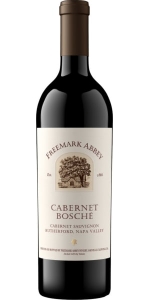
Freemark Abbey Bosche Cabernet Sauvignon is made from 93% Cabernet Sauvignon, 7% Merlot.
The nose exhibits aromas of black cherry, mocha, cassis and forest floor. The palate is bright yet creamy and filled with notes of forest fruits, leather, baking spices and soft vanilla. The textures are vibrant and integrated making this wine lovely now with the ability to age for decades in the cellar.
Review:
Blended with 7% Merlot from the famous site, along the benchlands of the Mayacamas, this is a juicy, delicious and sophisticated wine, with impressive, complementary bolts of freshness and intensity that are fully in sync. Notes of gravel, black cherry, currant and herb ride along a structured and generous palate of memorable greatness. Enjoy best from 2028–2038. Cellar Selection
- Wine Enthusiast 98 Points
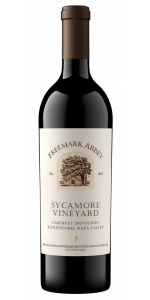
Freemark Abbey Sycamore Cabernet Sauvignon is made from
Wine Profile: Opaque dark ruby describes the color of this Rutherford wine. Black currant and Boysenberry notes dominate the aroma, with dark chocolate truffle, cocoa powder, Worcestershire sauce, cremini mushrooms and forest floor adding to the complexity. The oak adds the ideal amount of complexity with aromatic cedar, cinnamon and clove. The wine has great depth of black fruit flavor, with a strong expression of sweet black cherry. This full-bodied cabernet sauvignon has resolved tannins yet firm structure, with good acidity. Lovely long finish!
Primary Vineyard: Sycamore Vineyard—Rutherford (100%): Small 24-acre vineyard located about 1.2 miles south of Bosche, right up against the Mayacamas Range, this vineyard has a rich clay loam. Sycamore Vineyard produces small berries reminiscent of mountain fruit berries, with intense extract of color and flavor. The color is very dark early in the fermentation, with flavors of black currant and black berry with a forest floor complexity.
Review:
From a vineyard closer to the Mayacamas Mountains and first made in 1980, the 2016 Cabernet Sauvignon Sycamore Vineyards checks in as 88% Cabernet Sauvignon, 7% Merlot, and the rest Petit Verdot and Cabernet Franc. It spent 27 months in 66% new French. It offers more black fruits, earth, tobacco, cedar, and gravelly minerality as well as a touch more burly, masculine style on the palate. Nevertheless, it's still beautifully balanced, has considerable elegance, and a great finish.
-Jeb Dunnuck 95 Points
Deep garnet-purple colored, the 2016 Cabernet Sauvignon Sycamore Vineyards gives up powerful crème de cassis, dark chocolate-covered cherries, mulberries and baked plums scents with hints of lavender, camphor, pencil shavings and dusty soil. Medium to full-bodied, the palate is packed with rich, black fruits plus a beautiful perfumed undercurrent, framed by finely grained tannins and lovely freshness, finishing with a mineral lift. 1,989 cases were made.
-Wine Advocate 95 Points
Herbal, with characteristics of peppercorn, cedar and pencil shavings, this beautiful wine is also dusty and mineral-driven, with demure flavors of red and black currant. Full bodied and well structured, it shows an underlying softness that should continue to soften in the cellar. Enjoy best from 2026–2031.
-Wine Enthusiast 95 Points
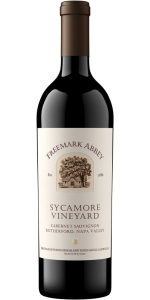
The nose opens with aromas of blackberry, blueberry, black current and boysenberry. The fruit elements are complimented with notes of forest floor, cigar box, dark chocolate and espresso. The wine is rich and balanced and French oak barrels add the ideal amount of complexity with notes of baking spice and warm vanilla. This is a full-bodied wine with integrated tannins that give it a long, lingering finish. Stunning.
Primary Vineyard: Sycamore Vineyard—Rutherford (100%): Small 24-acre vineyard located about 1.2 miles south of Bosche, right up against the Mayacamas Range, this vineyard has a rich clay loam. Sycamore Vineyard produces small berries reminiscent of mountain fruit berries, with intense extract of color and flavor. The color is very dark early in the fermentation, with flavors of black currant and black berry with a forest floor complexity.
Review:
Mint, spearmint, dark-berry and blueberry aromas. Leaves and sage, too. Full-bodied and firm with fantastic depth. Cool fruit with menthol and mint. Spice. Refreshing. Firm tannins. Fantastic 2017. Drink or hold.
-James Suckling 97 Points
The Prisoner Wine Company The Prisoner Red Blend is made from a blend of Zinfandel, Cabernet Sauvignon, Petite Sirah, Syrah, and Charbono.
Bright aromas of ripe raspberry, vanilla, and coconut give way to flavors of fresh and dried blackberry, pomegranate, and vanilla, which linger harmoniously for a smooth and luscious finish.The Prisoner Red Blend was inspired by the wines first made by the Italian immigrants who originally settled in Napa Valley. The Prisoner is now the most recognized red blend, leading the resurgence of interesting blends by incorporating Zinfandel with the unlikely mix of Cabernet Sauvignon, Petite Sirah, Syrah, and Charbono.
On the nose, dried blackberry, dried açai berries, and hints of cedar and tobacco leaf are accented by sweet spices of clove, cinnamon, and nutmeg. Flavors of ripe dark cherry, blackberry coulis, and hints of anise linger harmoniously for a soft, vibrant finish balanced by ripe tannins.
Chef Brett recommends pairing The Prisoner Red Blend with Kalbi Short Ribs or Chicken Mole Tostada.
Vineyards: When you outgrow winemaking tradition, you must forge your own path. And we did. The Prisoner exists because of the collaboration with our growers, many of which have been with us since the very beginning—from the Solari Family Vineyard in Calistoga, where old school sensibilities meet new techniques, to the Korte Ranch in St. Helena, a vineyard whose diligence outlasted the Prohibition and has sustained four generations.

Review:
A fabulous wine of focus and polish with very fine tannins that caress your palate and give great length to the finish. Medium to full body. The aromas of violets and currants are so beautiful. Dreamy. Best ever? A blend of 92% cabernet sauvignon, 4% cabernet franc, 2% merlot, 1% malbec and 1% petit verdot.
-James Suckling 99 Points



