
" We don't sell the wine without touching the vine "
| Country: | United States |
| Regions: | California California (Sonoma County) |
| Winery: | Gamba |
| Grape Type: | Zinfandel |
| Vintage: | 2015 |
| Bottle Size: | 750 ml |

The Black Oak White Zinfandel is a wonderful warm weather sipper. This is sometimes called our ‘hammock wine’ for lazy days by the river.
Lovely perfume aromas that remind one of ripe melons, honeysuckle in summer, and cherry blossoms in spring. The flavors are bright and delicately sweet, with a very good balance of fresh acidity that lightens up the complex texture. The succulent flavors are of juicy tangerine, white peaches and just picked strawberries. All this with an additional hint of lemon-lime and sass that make this a very approachable and fun wine selection.

My First comment tasting this wine is "wow!" It's delicious; our flagship wine at Paradigm and it delivers. Dense, deep, ripe aromas of black berry and black cherry-like fruit layered with caramel and toastiness from a nice mix of French Oak barrels. Flavors coat the palate with matching notes in a classic Cabernet Sauvignon presentation. One of our best Cabs to date!
Paradigm Cabernet Sauvignon is made from 96% Cabernet Sauvignon, 3% Merlot , 1% Petit Verdot
Review:
-Decanter 95 Points

Trione Zinfandel Flatridge Ranch 2019 is made from Zinfandel.
From the secluded Flatridge Ranch, a ten-acre vineyard planted in 2008 in the coastal hills using a Zinfandel clone taken from a century-old Cloverdale block, and aged eighteen months in American oak. Aromatic and generous, it shows ripe blue and black fruit, sweet spice and a supple, elegant palate.
Winery Info: Trione Vineyards & Winery is a three-generation Sonoma County farming family whose winery was established in 2005, crafting estate-grown wines from prime sites across Alexander Valley, the Russian River Valley and the Sonoma Coast.
Review:
-James Suckling 92 Points

Hahn Estate Lucienne Chardonnay Lone Oak Vineyard is made from 100 percent Chardonnay.
Reviews:
Lemon blossom, grapefruit rind, pastry flake and a hint of ash show on the nose of this single-vineyard expression from the Hahn family. It's suave and broad on the palate at first, then it chisels down to pinpoint acidity, delivering flavors of apricot, lime zest and chalk before the slightly nutty finish. Matt Kettmann
-Wine Enthusiast 94 Points

I Brand Melon de Bourgogne Chalone is made from Melon de Bourgogne.
The Graff Family began working in Chalone in the early 60s, with Dick Graff as the driving force behind the Chalone Vineyard, building, with the support of his brothers and a gaggle of stockholders, the original 1919 planting to international fame. After selling the Chalone group and Dick’s untimely death in a plane crash, the family’s land holdings have shrunk progressively to just this 160 acre parcel, owned by Dave Graff and his children. On those 160 acres is a small 3 acre vineyard planted in 1989 to Syrah, Mourvédre and Melon de Bourgogne. The site has depleted, granitic soils. The Melon de Bourgogne in Chalone was originally thought to be Pinot Blanc. Dick Graff distributed cuttings of these vines as far as Oregon. In the 1970s, a visiting ampelographer correctly identified the vines as Melon de Bourgogne. These vines were selected from the older ‘Pinot Blanc’ planting and can legally be labeled as either (but we like accuracy).
The wine comes from a tiny parcel of 30+ year old Melon planted on depleted granitic soils. The warm days and cold nights of the Chalone AVA produce a perfect balance of concentration and acidity, which Ian Brand amplifies with a few days of skin contact. The pure aromas of light peach, pear and gardenia are slightly toasty on the nose. The palate is defined by lemon-skin and grapefruit-pith grip, with a touch of baked apple in the midpalate.

Boroli Barolo Brunella is made from 100 percent Nebbiolo.
A clear ruby red color, with very light orange reflections. A net aroma in which liquorice stands out at first, immediately followed by a fruity scent; the aroma makes you scent it again and again to discover different and pleasant facets. The fruity aroma magnificently prevails after a few minutes in the glass. A very enveloping, fresh and harmonious taste, with a delicate and tasty presence of wood. A long lasting taste that invites to sip it slowly again and again.
Tasting Notes
Brunella is distinguished by a careful selection of grapes, perfect destemming, long macerations with submerged cap. The barrels for Brunella are specifically chosen by the winemaker.
Wine Production
Brunella is one of the most historic single vineyard sites of all of Castiglione Falletto, however it hasn’t ever been bottled singularly under the Menzione Geografica Aggiuntiva BRUNELLA until 2013. The Brunella vineyard occupies the western crest of the Villero hillside and complete surrounds the Boroli winery. The vineyard is a monopole—owned entirely by Boroli and is the most prestigious wine in the lineup. As it occupies the best exposed section of the Villero hillside, La Brunella expresses power, drive, complexity, and extraordinary length and ageability.
About the Vineyard
The Boroli family is a family of entrepreneurs, with roots in Piedmont dating back to 1831. The family started their winemaking business in1997, when Silvano and Elena Boroli felt an ardent desire to step away from the pressures of their publishing business and reconnect to nature. Silvano and Elena grew the company until their son, Achille, stepped in to run the wine-growing and production business in 2012.
With the 2012 grape harvest Achille decided to radically change the methods used in vineyards and wineries, aiming for the highest quality in Barolo and its crus. He cut production levels, updated the winemaking technology, and focused on low intervention methods to raise the quality of the Boroli wines be on par with the finest Barolo wines.
Review:
-James Suckling 93 Points
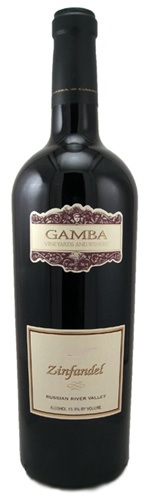
Sourced from several sites in the heart of the Russian River Valley, the grapes are vinified in our traditional style; with an extended soaking period. The vineyard lots were fermented on the natural indigenous yeasts, each lot fermented separately to highlight the distinctive characteristics and unique distinct flavor profiles of this world famous growing region. Dark ruby-garnet in color, this classic Russian River Zinfandel shows aromas of boysenberry, raspberry, brown spices, and pepper. Medium to full-bodied, the Family Ranches Zinfandel is balanced with excellent acidity: a powerful, rich and concentrated wine, with flavors of nectarine, cherry and raspberry that build through the lingering finish. This lovely wine can be enjoyed now, and will continue to develop with bottle age over the next several years.
The Estate
Gamba Vineyards and Winery is a small, family owned and operated winery in Sonoma County, California. The winery was founded in 1999, by Agostino and Paulette Gamba, the realization of a life-long dream. The estate vineyards have been in the Gamba family for over 50 years, although the vineyard itself is over 100 years old.
The Vineyard
The vineyard has been organically dry farmed since its original planting in 1900, and produces a very limited yield of highly concentrated fruit.

Prager Smaragd Klaus Riesling is made from 100 percent Riesling.
Franz Prager, co-founder of the Vinea Wachau, had already earned a reputation for his wines when Toni Bodenstein married into the family. Bodenstein’s passion for biodiversity and old terraces, coupled with brilliant winemaking, places Prager in the highest echelon of Austrian producers.
Smaragd is a designation of ripeness for dry wines used exclusively by members of the Vinea Wachau. The wines must have minimum alcohol of 12.5%. The grapes are hand-harvested, typically in October and November, and are sent directly to press where they spontaneously ferment in stainless-steel tanks.
Klaus sits adjacent to Achleiten and is one of the Wachau’s most famous vineyards for Riesling. The vineyard is incredibly steep with a gradient of 77% at its steepest point. The southeast-facing terraced vineyard of dark migmatite-amphibolite and paragneiss produces a tightly wound and powerful wine. The parcel belonging to Toni Bodenstein was planted in 1952.
Tasting Notes:
Austrian Riesling is often defined by elevated levels of dry extract thanks to a lengthy ripening period and freshness due to dramatic temperature swings between day and night. “Klaus is not a charming Riesling,” says Toni Bodenstein with a wink. Klaus is Prager’s most assertive and robust Riesling.
Food Pairing
Riesling’s high acidity makes it one of the most versatile wines at the table. Riesling can be used to cut the fattiness of foods such as pork or sausages and can tame some saltiness. Conversely, it can highlight foods such as fish or vegetables in the same way a squeeze of lemon or a vinaigrette might.
Review:
What a stunning example of cool climate riesling. It’s full-bodied and deep, but so cool and delicate, packing in sleek layers of honeysuckle, apricots, lemons and grapefruit married to thyme and crushed rock. So long and seamless, with tension and focus that just keeps going. Sustainable. Try from 2025.
-James Suckling 98 Points

Merryvale Pinot Noir Sonoma Coast 2022 is made from Pinot Noir.
From the cool, fog-swept vineyards of the Sonoma Coast — including fruit from the celebrated Durell and Sunchase sites — this is Merryvale's elegant, Burgundian-minded take on California Pinot Noir. A mix of Dijon and heritage clones (667, Pommard, 777 and 828) was largely destemmed, fermented with native yeasts, and aged about ten months in roughly 40% new French oak — restraint that lets the fruit lead. Expect a perfumed, silky glass: black cherry, raspberry and dark berry lifted by forest floor, cola spice and a whisper of graham cracker, with bright acidity and fine, polished tannins carrying a long finish. Lovely now and over the next decade.
Winery Info: Merryvale Vineyards was founded in 1983 and makes its home in the historic Sunny St. Helena winery on Main Street — a stone landmark built in 1933 as the first winery raised in the Napa Valley after Prohibition, and the cellar where Robert and Peter Mondavi first made wine with their father, Cesare. The Schlatter family has owned and run Merryvale since the 1990s, today led by René Schlatter. At its heart lies the Historic Cask Room, where two stories of century-old 2,000-gallon oak casks line the walls. Four decades on, Merryvale remains a quintessential St. Helena house.
Review:
A wonderful interplay of brightness and savoriness captures the elegance of wines from the Sonoma Coast. Aromas of crushed red raspberries, sauteed mushrooms and wild blackberries. On the palate there’s red fruit and black pepper, with bright, crunchy acidity and taut tannins. The finish is long, with umami flavors. Medium-bodied. Drink or hold.
-James Suckling 94 Points



