" We don't sell the wine without touching the vine "
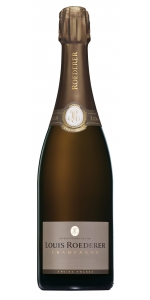
Intense, fresh and fruity bouquet, reminiscent of a tangy red fruit tart (wild strawberry, blueberry), slightly sweet yet underpinned by more concentrated, jammy and citrus notes. The aromatic complexity comes through after a few swirls in the glass giving us a medley of spice, warm cinnamon and peppers. Fleshy attack dominated by ripe, crunchy, plump red fruit that brings depth and creaminess. The fruity structure is gradually elongated by a chalky, mineral freshness that creates a lingering sensation of lightness and harmony on the finish.
Review:
Roederer's 2014 Brut Vintage is beautiful, offering up aromas of pear, mirabelle plum, red berries, warm biscuits and smoke. Full-bodied, layered and elegantly muscular, it's seamless and complete, with terrific mid-palate depth and amplitude. Framed by bright acids and enlivened by a pinpoint mousse, it concludes with a penetrating finish. The blend is 70% Pinot Noir, emphasizing Verzy, and pressure is a touch higher than in its more ethereal Blanc de Blancs counterpart. As I wrote of its 2013 predecessor, this is a wine that puts many prestige cuvées to shame.
95 Points Robert Parker's Wine Advocate
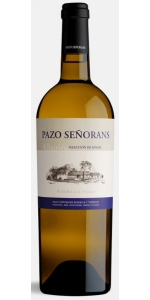
Pazo de Senorans Seleccion de Anada Albarino is made from 100 percent Albarino.
Straw yellow with greenish tints, vivid and brilliant. High intensity and very expressive. Profusion of aromas with traces of mineral. Great volume and ample body leaving a lasting impression from beginning to end.
Reviews:
I think the 2014 Albariño Selección de Añada could be the finest vintage of this characterful long-aging Albariño, from a year with a more moderate 13% alcohol and very high acidity (and low pH) that make the wine fresher and more vibrant. It is developing very slowly and showing quite young after it spent over 30 months with lees in 1,500- and 3,000-liter stainless steel tanks. It has a pale color and an elegant nose with notes of freshly cut grass, white flowers and wet granite. The palate is vibrant with effervescent acidity, and it has a long, dry and tasty finish with an austere sensation, far away from the tropical notes of some past vintages. This is superb and should continue developing nicely in bottle. Bravo! It wasn't bottled until April 2023, and 14,000 bottles were produced.
-Wine Advocate 96 Points
Tech:
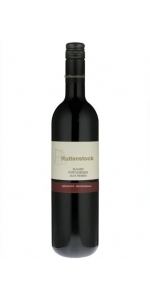
Ruttenstock Blauer Portugieser Alte Reben is made from 100% Blauer Portugieser (Modry).
Aroma of red berries and cherry, flavor offers a pleasant fruitiness. A soft and velvety finish completes the taste experience of this wine.
Hand harvested with the sorting of the grapes upon arrival. Grapes are 100% destemmed with skin contact maceration for 5-7 days at 25-27°C. There is a slight filtration before bottling and after bottling, wine is aged in bottles for 2-3 months to avoid bottle-shock.
RS: 1.8g/L, TA: 4.5g/L, ABV: 12.5%
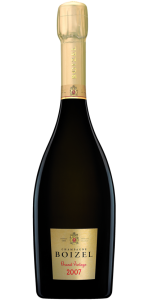
Boizel Grand Vintage Brut is made from 50% Chardonnay, 50% Pinot Noir.
BACKGROUND
In 1834 the Boizel House was established in Épernay, the heart of Champagne, by a family passionate about the wines of its region. Intimate knowledge of the Champagne region, passed on through the generations, and access to grapes from the finest cru sites, are the essential elements behind the Boizels’ elegant portfolio. Working with Chardonnay and Pinot Noir sourced only from Champagne’s most coveted Grands and Premiers Crus blended with the best crus of Pinot Meunier, Boizel’s intimate knowledge of each village and hillside coupled with longstanding grower relationships allows them the ability to select the finest quality grapes for their Champagnes.
TERROIR & VINTAGE NOTES
Pinot Noir and Chardonnay grapes for the production of the Grand Vintage wines are sourced from Grands and Premiers Cru vineyards within the villages of La Montagne de Reims (Pinot Noir) and the Côte des Blancs (Chardonnay). Pinot Meunier is sourced from the best sites within the Vallée de la Marne.
All wines are aged sur lie in Boizel’s historic chalk cellars beneath the Avenue de Champagne for a minimum of 3 years, climbing to 15 years and above for the best vintages.
WINEMAKING & AGEING
A unique expression of the vintage, the Grand Vintage is only produced in the best years. This cuvée is a blend of 50% Chardonnay from the Côte des Blancs (Mesnil sur Oger, Oger, Avize, Vertus) and 50% Pinot Noir from the Montagne de Reims (Mailly, Bisseuil, Chigny les Roses).
The wine was aged 8 months in stainless steel vats. Post second fermentation, the wine was aged for 8 years on its lees.
TASTING NOTES
Due to the long lees aging, almond, frangipane, candied orange and brioche aromas are rich and balanced. The palate is complex and mature, with the silky perlage supplying acidity and lift. Elegant pastry notes rounds out the finish.
Review:
Disgorged in October 2014, this smooth, now mature, wine has flavors of yeasty toastiness and a tight, mineral structure. Sliced apple and lemon zest still give freshness. Behind the fruit, crisp texture and a steely edge await. It is beautifully balanced, rich while dry and ready to drink. ROGER VOSS
-Wine Enthusiast 94 Points
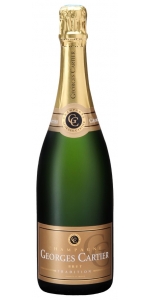
Georges Cartier Champagne Brut Tradition NV is made from 65% Pinot Meunier, 25% Pinot Noir, and 10% Chardonnay.
This champagne was made to reflect the potential of each grape growing areas of the Champagne region.
The grapes for Georges Cartier Brut Tradition have been carefully selected from the 3 emblematic areas of Champagne. Chardonnay is sourced from the Côte des Blancs, Pinot Noir from Montagne de Reims and Pinot Meunier from the Marne Valley.
Each grape variety brings its own character and specific quality to the wine: Pinot Meunier brings fruit and roundness, Pinot Noir brings character, power, structure and balance, while Chardonnay contributes to the finesse, minerality and elegance of the result wine.
The blend in 2022 will be 70% 2018 vintage and 30% of reserve wines (consisting of 2014, 2015 and 2016 vintages).
It will be RD (meaning "Recently Disgorged") to keep freshness, fruitiness, minerality and elegance.
Review:
"A blend of Pinot Noir, Pinot Meunier, and Chardonnay. Lemon drop and buttercup combine with lime sorbet. Bubbles burst with ease and the wine’s mineral tone keeps the palate cleansed."
- The Tasting Panel (May/June 20022), 93 pts
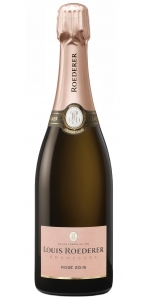
Salmon hue with bright red tints. Fine and energetic bubbles. A ripe, complex and youthful bouquet of slightly tangy red fruit (redcurrants, blackcurrants), ripe citrus (blood orange) and roasted cocoa beans. After some time in the glass, the wine reveals sappier, floral and sweet notes with a saline, almost briny, core. The first impression of the wine is of a generosity, softness and concentration. One has the sensation of biting into juicy, ripe fruit and blood orange, it is a fabulous aromatic explosion with luscious and slightly tangy overtones. The concentrated and dense body takes over and reinforces the impression of substance, of concentrated liqueur on the mid-palate. The finish stretches out, perfectly-honed, gradually revealing umami notes thanks to the precise and crisp mineral freshness.
Reviews:
The 2015 Brut Vintage Rosé is generous and demonstrative, bursting with aromas of peach, orange and pear mingled with hints of red berries, fresh bread and ginger. Full-bodied, layered and vinous, it's rich and enveloping, its textural attack segueing into an ample, fleshy core that's girdled by bright acids and enlivened by a pillowy mousse. Long and expansive, it's more generous and gourmand than its racier 2014 predecessor, but just as good.
-Wine Advocate 94 Points
This shows lots of cotton candy and peach, together with strawberries and cream. But not overpowering. Some cranberry, too. It’s medium-to full-bodied with fine bubbles and a lively finish. Dosage 8g/L. Drink now or hold.
-James Suckling 94 Points
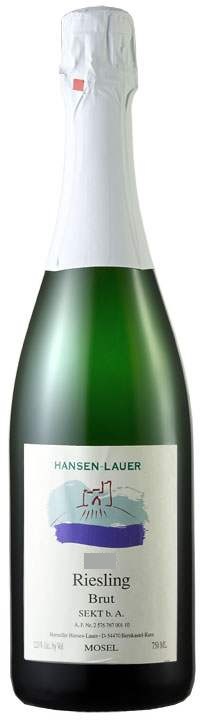
A very fine bubbles along with a very nice fruit (apple, pear, citrus) and minerality coming from the stony (slate) vineyards.
Production techniques: the Sekt is bottle fermented, stayed on the lees for 12 months, thus giving it very fine bubbles along with a very nice fruit and minerality. The vineyard sites are Bernkasteler Graben, Bernkasteler Badstube, Bernkasteler Bratenhöfchen, Graacher Himmelreich. The vineyards are situated at the beginning of a long stretch of approx. 2 million vines.
The Hahn Estate
The Hahn family has been in the wine business since 1650 and moved to Kobern, the present location, in 1892 to start a small winery. Konrad Hahn took over the operation in 1991, when his father retired, and works now with his Colorado-born wife Laurel Kerns-Hahn. The winery is recognized as one of the top estates in the region. The high quality of the wines is continuously confirmed by awards and medals received in regional and national as well as international competitions.
The Hahn Vineyard
The vineyards are located in Michelsberg, which is near the town of Piesport (Mosel Valley). In this most northern part, the Mosel valley is very narrow and the vineyards very steep. The warm micro climate and the use of terraces along the south facing slopes allows the vines to grow to full ripeness despite the northern location. The use of machinery is impossible and all work including harvesting is done by hand. The grapes for this wine were grown in slate soil, which is typical for the Mosel area and provides a unique minerality. The harmonious climate, warm summers and mild winters promote a long growing season providing fine fruit with balancing acidity and low alcohol.
A warm, but by far not as hot summer as 2003, continued into a beautiful sunny autumn. This allowed a perfect ripening of the grapes in 2005 vintage. Especially the always late ripening Riesling grapes achieved exceptional quality with must-weights similar to 2003 but with higher acidity levels and mineral concentration similar to 2004.
We view the 2005 vintage as the best vintage in our estate in years even though it is following several great vintages such as 2001, 2002 and 2003. We are very excited about this great vintage
Our DuMOL Estate Vineyard is our original high-density vine planting from 2004. It’s organically farmed without irrigation – these vines work hard each season. We make a strict selection for this bottling, one of our flagship wines, so that only three acres of its nine total comprise this bottling; the balance forms the core of Highland Divide. This is the best of the best. The high vine density and exclusively Calera Selection produce a wine with a significant level of both tannin and acidity. This structure is buffered by a deep core of fruit extract, the product of the ripe grape skins themselves, and the essence of the wine. Each vintage can age for many years, and it gradually deepens into a woodsy, truffley, and enveloping wine with grand scale complexity while never relinquishing its inherent brightness.
The wine’s aromas and flavors are akin to black cherry, boysenberry, hibiscus, anise, moss, and juniper. The palate is simultaneously bright yet dark, with mineral drive, violet floral lift, and bay laurel freshness. Tannins and acidity fuse to lengthen these flavors, and the wine finishes with dried herbs and orange zest lift. Great aging potential. Drink between 2025 and 2034 and decant for an hour in its youth to hasten the development.
Review:
Medium to deep ruby-purple in color, the 2022 Pinot Noir Estate Vineyard comes barreling out with bold notes of fresh blackberries and black cherries opening out to suggestions of anise, garrigue, and lilacs. The medium-bodied palate reveals impactful black berry flavors with wonderfully spicy accents supported by grainy tannins and great tension, finishing long with a minerally lift. This is an all Calera vineyard. (LPB)
-The Wine Independent 97 Points

Lydian Cabernet Sauvignon is made from 100 percent Cabernet Sauvignon.
Lydian was established in 2019 as a new way to experience Washington wine. The team behind the fast-rising success of Avennia brings you another delicious wine that serves as an introduction to a lifetime of wine appreciation and a fresh take on Washington terroir.
In music, Lydian refers to a musical mode, or scale that is used as a building block for some of the world’s oldest and newest masterpieces. This happy sounding mode brings joy on its own, yet when molded and crafted by talented musicians can become a work of timeless art.
We believe Washington vineyards produce some of the finest building blocks in the world. With these grapes, and the collective talent behind those growing and working with them, Lydian wines can be as complex, nuanced, and profound as any jazz classic.
Lydian: a fun, fresh take on Washington Wine.
Full bodied and rich, with black cherry, currant, dark chocolate, and fresh herbs. Great Washington Cabernet character and structure.


.jpg)