
" We don't sell the wine without touching the vine "
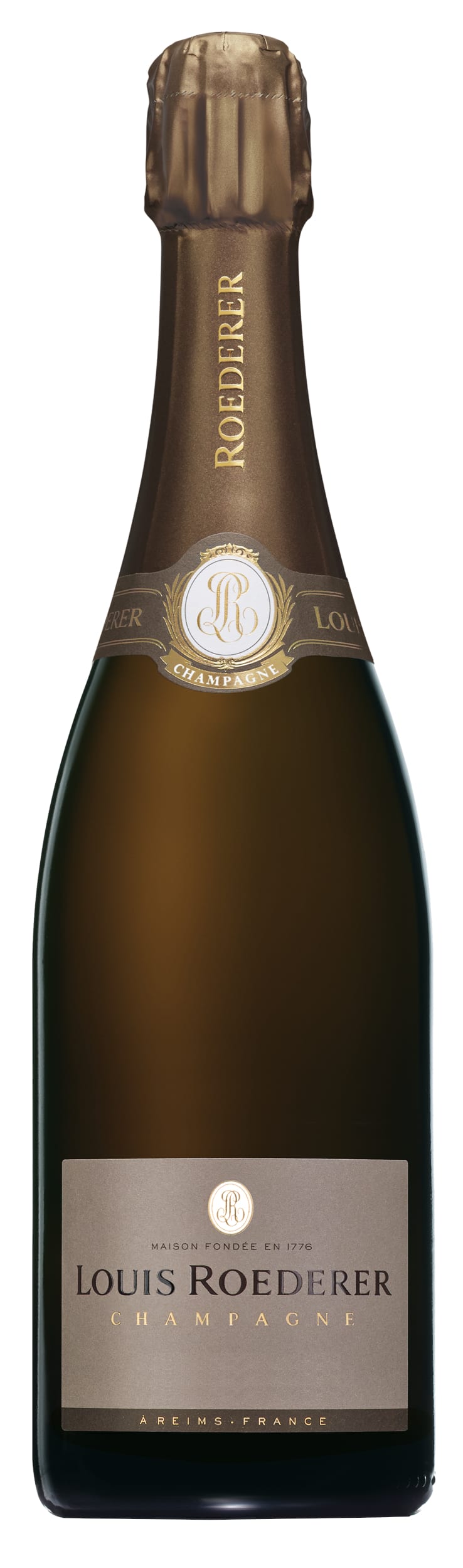
| BUY MORE! SAVE MORE! | ||||||||||||||||||||
|
| Country: | France |
| Region: | Champagne |
| Winery: | Louis Roederer |
| Grape Type: | Pinot Noir |
| Organic: | Yes |
| Vintage: | 2014 |
| Bottle Size: | 750 ml |
Intense, fresh and fruity bouquet, reminiscent of a tangy red fruit tart (wild strawberry, blueberry), slightly sweet yet underpinned by more concentrated, jammy and citrus notes. The aromatic complexity comes through after a few swirls in the glass giving us a medley of spice, warm cinnamon and peppers. Fleshy attack dominated by ripe, crunchy, plump red fruit that brings depth and creaminess. The fruity structure is gradually elongated by a chalky, mineral freshness that creates a lingering sensation of lightness and harmony on the finish.
Review:
Roederer's 2014 Brut Vintage is beautiful, offering up aromas of pear, mirabelle plum, red berries, warm biscuits and smoke. Full-bodied, layered and elegantly muscular, it's seamless and complete, with terrific mid-palate depth and amplitude. Framed by bright acids and enlivened by a pinpoint mousse, it concludes with a penetrating finish. The blend is 70% Pinot Noir, emphasizing Verzy, and pressure is a touch higher than in its more ethereal Blanc de Blancs counterpart. As I wrote of its 2013 predecessor, this is a wine that puts many prestige cuvées to shame.
95 Points Robert Parker's Wine Advocate
ONE OF THE LAST GREAT INDEPENDENT AND FAMILY-RUN CHAMPAGNE HOUSES
When he inherited the Champagne House in 1833, the aesthete and entrepreneur Louis Roederer took a visionary approach to enriching his vines, aiming to master every stage of the wine’s creation. He forged the wine’s unique style, character, and taste. In the mid-nineteenth century, Louis Roederer acquired some of Champagne’s grand cru vineyards—an approach that contrasted sharply with contemporary practices..
While other Houses bought their grapes, Louis Roederer nurtured his vineyards, familiarized himself with the specific characteristics of each parcel, and methodically acquired the finest land. Louis Roederer’s guiding principle was that all great wine depends on the quality of the soil, a passion for tradition, and an astute vision of the future; the fame and reputation of the House of Louis Roederer was firmly established. His heir, Louis Roederer II was equally enlightened and adopted his father’s conscientious approach to the production of champagne, patrimonial estate management, and instinctive audacity.
He also drew inspiration from the many books and drawings he collected with great discernment. In the 1870s, the Louis Roederer Champagne House began to export its wines to the United States, and even to Tsar Alexander II of Russia.
A man of great taste and an inveterate researcher, Louis Roederer II fashioned an exclusive champagne for the Tsar and launched a novel concept: the very first Cuvée de Prestige. It was created in 1876 and named ‘Cristal’. Ever since, the subtleness and elegance of Cristal have forged Louis Roederer’s reputation for excellence
In the 1920s, the future heir to the House of Louis Roederer, Léon Olry-Roederer consecrated his efforts to creating a highly balanced wine—a consistent and delicate blend of several vintages, to ensure that the wine would always be of the highest quality. This wine would form the basis for the later Brut Premier. This fine blend greatly contributed to the renaissance of the House of Louis Roederer.
After his death, from 1933 onwards, the winery was managed by his strong-minded widow, Camille, who ran the Champagne House with formidable intelligence and singular dynamism. Camille loved horse racing and owned one of the most famous stables in the world; she was also an enlightened patron and embraced the more festive and pleasurable aspects of champagne. Camille Olry-Roederer held many receptions in the family’s Hôtel Particulier in Reims. These parties had a lasting impact on the history of the House and introduced a whole new generation of wine lovers to the joys of Louis Roederer Champagne.
Her grandson, Jean-Claude Rouzaud, an oenologist and agronomist, took over the running of the entire estate and decided to consolidate the vineyards. Through his passionate commitment to the metier of wine-growing, he cultivated more than ever the inventive qualities that are so representative of the House’s philosophy.
The Louis Roederer House has remained an independent, family-owned company and is now managed by Jean-Claude’s son, Frédéric Rouzaud, who represents the seventh generation of the lineage. With the same patience and unshakeable faith in its creative vocation, the House of Louis Roederer’s annual exports total three million bottles around the world.

Salmon hue with bright red tints. Fine and energetic bubbles. A ripe, complex and youthful bouquet of slightly tangy red fruit (redcurrants, blackcurrants), ripe citrus (blood orange) and roasted cocoa beans. After some time in the glass, the wine reveals sappier, floral and sweet notes with a saline, almost briny, core. The first impression of the wine is of a generosity, softness and concentration. One has the sensation of biting into juicy, ripe fruit and blood orange, it is a fabulous aromatic explosion with luscious and slightly tangy overtones. The concentrated and dense body takes over and reinforces the impression of substance, of concentrated liqueur on the mid-palate. The finish stretches out, perfectly-honed, gradually revealing umami notes thanks to the precise and crisp mineral freshness.
Reviews:
The 2015 Brut Vintage Rosé is generous and demonstrative, bursting with aromas of peach, orange and pear mingled with hints of red berries, fresh bread and ginger. Full-bodied, layered and vinous, it's rich and enveloping, its textural attack segueing into an ample, fleshy core that's girdled by bright acids and enlivened by a pillowy mousse. Long and expansive, it's more generous and gourmand than its racier 2014 predecessor, but just as good.
-Wine Advocate 94 Points
This shows lots of cotton candy and peach, together with strawberries and cream. But not overpowering. Some cranberry, too. It’s medium-to full-bodied with fine bubbles and a lively finish. Dosage 8g/L. Drink now or hold.
-James Suckling 94 Points

Henriot Brut Millesime 2014 is made from 50% Chardonnay, 50% Pinot Noir.
If the expression is intense and heady, it is nevertheless of an extraordinary finesse and elegance. A strength of character emerges, powerful, virile yet restrained and humble. The register is fresh, floral, vanilla, greedy. In the mouth the structure is solid, constructive, rectangular. The tannins take place and last after tasting. The freshness is present throughout the tasting, ending with a delicate bitter touch.
Review:
Showing floral notes of acacia and jasmine alongside sourdough, lemons and green apples. Walnuts and apricots, too. Open and inviting, with gentle nutty undertones, a medium to full body and a fine mousse. Long and persistent. 50% chardonnay and 50% pinot noir. Disgorged October 2022. This will be released later in 2023. Drink or hold.
- James Suckling 93 Points

Pazo de Senorans Seleccion de Anada Albarino is made from 100 percent Albarino.
Straw yellow with greenish tints, vivid and brilliant. High intensity and very expressive. Profusion of aromas with traces of mineral. Great volume and ample body leaving a lasting impression from beginning to end.
Reviews:
I think the 2014 Albariño Selección de Añada could be the finest vintage of this characterful long-aging Albariño, from a year with a more moderate 13% alcohol and very high acidity (and low pH) that make the wine fresher and more vibrant. It is developing very slowly and showing quite young after it spent over 30 months with lees in 1,500- and 3,000-liter stainless steel tanks. It has a pale color and an elegant nose with notes of freshly cut grass, white flowers and wet granite. The palate is vibrant with effervescent acidity, and it has a long, dry and tasty finish with an austere sensation, far away from the tropical notes of some past vintages. This is superb and should continue developing nicely in bottle. Bravo! It wasn't bottled until April 2023, and 14,000 bottles were produced.
-Wine Advocate 96 Points
Tech:

Boizel Grand Vintage Brut is made from 50% Chardonnay, 50% Pinot Noir.
BACKGROUND
In 1834 the Boizel House was established in Épernay, the heart of Champagne, by a family passionate about the wines of its region. Intimate knowledge of the Champagne region, passed on through the generations, and access to grapes from the finest cru sites, are the essential elements behind the Boizels’ elegant portfolio. Working with Chardonnay and Pinot Noir sourced only from Champagne’s most coveted Grands and Premiers Crus blended with the best crus of Pinot Meunier, Boizel’s intimate knowledge of each village and hillside coupled with longstanding grower relationships allows them the ability to select the finest quality grapes for their Champagnes.
TERROIR & VINTAGE NOTES
Pinot Noir and Chardonnay grapes for the production of the Grand Vintage wines are sourced from Grands and Premiers Cru vineyards within the villages of La Montagne de Reims (Pinot Noir) and the Côte des Blancs (Chardonnay). Pinot Meunier is sourced from the best sites within the Vallée de la Marne.
All wines are aged sur lie in Boizel’s historic chalk cellars beneath the Avenue de Champagne for a minimum of 3 years, climbing to 15 years and above for the best vintages.
WINEMAKING & AGEING
A unique expression of the vintage, the Grand Vintage is only produced in the best years. This cuvée is a blend of 50% Chardonnay from the Côte des Blancs (Mesnil sur Oger, Oger, Avize, Vertus) and 50% Pinot Noir from the Montagne de Reims (Mailly, Bisseuil, Chigny les Roses).
The wine was aged 8 months in stainless steel vats. Post second fermentation, the wine was aged for 8 years on its lees.
TASTING NOTES
Due to the long lees aging, almond, frangipane, candied orange and brioche aromas are rich and balanced. The palate is complex and mature, with the silky perlage supplying acidity and lift. Elegant pastry notes rounds out the finish.
Review:
Disgorged in October 2014, this smooth, now mature, wine has flavors of yeasty toastiness and a tight, mineral structure. Sliced apple and lemon zest still give freshness. Behind the fruit, crisp texture and a steely edge await. It is beautifully balanced, rich while dry and ready to drink. ROGER VOSS
-Wine Enthusiast 94 Points

Georges Cartier Champagne Brut Tradition NV is made from 65% Pinot Meunier, 25% Pinot Noir, and 10% Chardonnay.
This champagne was made to reflect the potential of each grape growing areas of the Champagne region.
The grapes for Georges Cartier Brut Tradition have been carefully selected from the 3 emblematic areas of Champagne. Chardonnay is sourced from the Côte des Blancs, Pinot Noir from Montagne de Reims and Pinot Meunier from the Marne Valley.
Each grape variety brings its own character and specific quality to the wine: Pinot Meunier brings fruit and roundness, Pinot Noir brings character, power, structure and balance, while Chardonnay contributes to the finesse, minerality and elegance of the result wine.
The blend in 2022 will be 70% 2018 vintage and 30% of reserve wines (consisting of 2014, 2015 and 2016 vintages).
It will be RD (meaning "Recently Disgorged") to keep freshness, fruitiness, minerality and elegance.
Review:
"A blend of Pinot Noir, Pinot Meunier, and Chardonnay. Lemon drop and buttercup combine with lime sorbet. Bubbles burst with ease and the wine’s mineral tone keeps the palate cleansed."
- The Tasting Panel (May/June 20022), 93 pts

This 100% Chardonnay blend is made from Tête de Cuvée, or first pressing of the grapes, considered superior in quality, with a high percentage of reserve wines for extra complexity, depth and richness, and a low added dosage to preserve purity and freshness.


Marie Baron Pouilly Fume is made from 100 percent Sauvignon Blanc.
Pouilly-Fumé is one of the Loire Valley's most prestigious white wine appellations, located on the right bank of the Loire River across from Sancerre. The 'Fumé' in the name refers to the smoky, flinty character imparted by the Kimmeridgian clay and silex (flint) soils.
This wine displays a brilliant pale gold color with intense aromas of citrus, white peach, and the signature gunflint smokiness. On the palate, it is elegant and focused with mineral-driven acidity, flavors of green apple and grapefruit, and a long, precise finish.
Pairs beautifully with shellfish, sushi, grilled fish, or fresh goat cheese like Crottin de Chavignol.



