" We don't sell the wine without touching the vine "

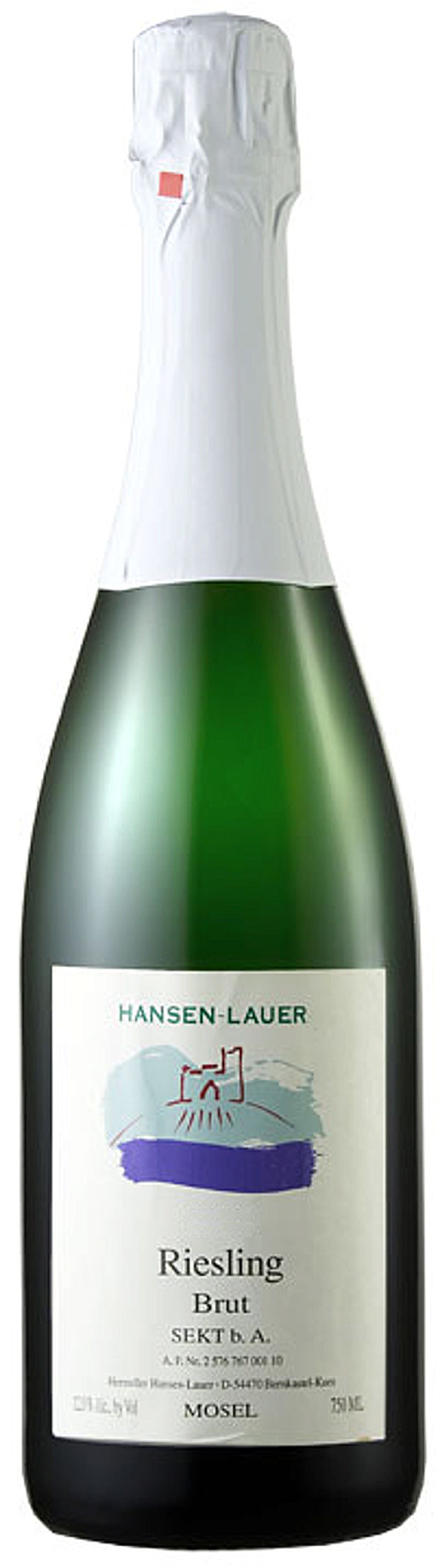
Hansen Lauer Sekt Riesling Brut is made from 100 percent Riesling grown on Devonian slate.
A very fine bubbles along with a very nice fruit (apple, pear, citrus) and minerality coming from the stony (slate) vineyards.
Production techniques: the Sekt is bottle fermented, stayed on the lees for 12 months, thus giving it very fine bubbles along with a very nice fruit and minerality.
The vineyard sites are Bernkasteler Graben, Bernkasteler Badstube, Bernkasteler Bratenhöfchen, Graacher Himmelreich. The vineyards are situated at the beginning of a long stretch of approx. 2 million vines.
Enjoy on its own as an aperitif or with delicate food, such as pike, lobster and scalops.

Inspired by the historical winemaking techniques of Erni Loosen’s great-grandfather, the Appassionata Riesling GG is made in the same way as the Dr. Loosen Grosses Gewächs (“Great Growth”) Rieslings he produces in Germany. The GG designation indicates a dry-style wine from a vineyard of special distinction — in this case, the old-vine Medici vineyard, planted in 1976. We farm this exceptional site, which is just a few miles east on the Chehalem Mountain ridge.
The fruit for this wine was harvested from old Rieslng vines (planted in 1976) in the Medici Vineyard, which is also in the Chehalem Mountains AVA, just a few miles from the winery. We lease this vineyard and have been farming it organically since 2015. The wine was fermented in a 3,000-liter German oak cask, and rests on the full lees for 12 months before bottling. The extended lees contact allows the wine to clarify and find its own harmonious balance naturally.
Production notes:
Whole-cluster pressing; natural fermentation in a neutral 3,000-liter oak cask; matured on the full lees for 12 months; no bâtonnage.
Review:
If you prefer a thinking person's wine you'll run out of superlatives to describe this Riesling from Dr Loosen's Oregon project with J Christopher Wines. From a personal favourite, the old vines of the Medici Vineyard, the winemaking shows serious patience and determination. Fermented in a 3,000-liter, neutral oak German Fuder cask. It rests on the full lees for two years and is then held in bottle for three to five years before release. Aged, savoury and delicious. Aromas are savoury and saline. Lanolin, dandelion, seafoam, and beeswax with hints of fresh herbs and dried lemon peel. The palate is brilliant, savoury and bright and complex. Energetic flavours of wet slate, savoury bee pollen, white tea and lanolin notes. The finish offers crushed stone vibrancy.
-Decanter 93 Points
"This energetic and fully dry Riesling is made in the same way as the Dr. Loosen Grosses Gewächs (“Great Growth”) Rieslings are produced in Germany and was raised in a 3000-liter oak cask. The 2017 Riesling GG Chehalem Mountains offers a pale straw hue and is forward and expressive with aromas of flint, ripe apricot, petrol, and wild herbs. Medium-bodied, it offers a fantastic, rich core of concentration along with a mineral, soft, stony texture and a long finish. If opening now, it will do well to decant this serious style of white. It’s certainly another age-worthy wine from Ernst Loosen. Drink 2025-2045."
-Jeb Dunnuck 96 Points

Roland Champion Champagne Le Mont Aigu Chardonnay Brut Nature is made from 100% Chardonnay.
Grand Cru Chouilly from a single parcel called "Montaigu".
Aged in Oak barrels for 10 months on the fine lees and then, aged "sur lattes" for 3 years.
Brut Nature : no liqueur d'expedition (zero dosage)
This 100% oaked chardonnay will be perfect with salmon cooked in a parchment paper "en papillote", as well as roasted bone marrow.
Review:
-Jeb Dunnuck 93 Points

A late harvest Riesling with fruity sweetness and great aging potential, aromatic bouquet of honey, melon, ripe fruits. Grapes come from Brauneberger Juffer and Juffer-Sonnenuhr - one of the most prestigious vineyards in the Mosel winegrowing region. The vineyard faces south and provides the best conditions for growing Riesling.
Pairs well with pâté, Asian cuisine.

This 100% Chardonnay blend is made from Tête de Cuvée, or first pressing of the grapes, considered superior in quality, with a high percentage of reserve wines for extra complexity, depth and richness, and a low added dosage to preserve purity and freshness.

Wolfberger Cremant d Alsace Rose Brut is 100 % Pinot Noir.
The wines from Alsace date back to 589 A.D., but Cremant d’Alsace has more recent beginnings, starting in 1900. Dopff au Moulin (founded in 1574) was the first to produce Cremant d’Alsace in the Method Champenoise style. Cremant d’Alsace received AOC status for sparkling wine in 1976. Two types of Cremant are produced today, resulting in about 2.5 million+ cases of Cremant d’Alsace production annually:
Wolfberger's Cremant d'Alsace Rose Brut displays a lovely delicate salmon color with active, small bubbles. Round and full-bodied, this Cremant Rose displays beautiful watermelon and strawberry aromas cascading in a smooth finish. A minimum of 15 months bottle aging before disgorging ensures ripeness.
Hansen Lauer Sekt Riesling Brut is made from 100 percent Riesling grown on Devonian slate.
A very fine bubbles along with a very nice fruit (apple, pear, citrus) and minerality coming from the stony (slate) vineyards.
Production techniques: the Sekt is bottle fermented, stayed on the lees for 12 months, thus giving it very fine bubbles along with a very nice fruit and minerality.
The vineyard sites are Bernkasteler Graben, Bernkasteler Badstube, Bernkasteler Bratenhöfchen, Graacher Himmelreich. The vineyards are situated at the beginning of a long stretch of approx. 2 million vines.
Enjoy on its own as an aperitif or with delicate food, such as pike, lobster and scalops.
The Hahn Estate
The Hahn family has been in the wine business since 1650 and moved to Kobern, the present location, in 1892 to start a small winery. Konrad Hahn took over the operation in 1991, when his father retired, and works now with his Colorado-born wife Laurel Kerns-Hahn. The winery is recognized as one of the top estates in the region. The high quality of the wines is continuously confirmed by awards and medals received in regional and national as well as international competitions.
The Hahn Vineyard
The vineyards are located in Michelsberg, which is near the town of Piesport (Mosel Valley). In this most northern part, the Mosel valley is very narrow and the vineyards very steep. The warm micro climate and the use of terraces along the south facing slopes allows the vines to grow to full ripeness despite the northern location. The use of machinery is impossible and all work including harvesting is done by hand. The grapes for this wine were grown in slate soil, which is typical for the Mosel area and provides a unique minerality. The harmonious climate, warm summers and mild winters promote a long growing season providing fine fruit with balancing acidity and low alcohol.
A warm, but by far not as hot summer as 2003, continued into a beautiful sunny autumn. This allowed a perfect ripening of the grapes in 2005 vintage. Especially the always late ripening Riesling grapes achieved exceptional quality with must-weights similar to 2003 but with higher acidity levels and mineral concentration similar to 2004.
We view the 2005 vintage as the best vintage in our estate in years even though it is following several great vintages such as 2001, 2002 and 2003. We are very excited about this great vintage

Krug Grande Cuvée is born from the dream of one man, Joseph Krug, to craft the very best Champagne he could offer, every single year, regardless of annual variations in climate. Since 1843, the House of Krug has honoured this vision with each new Édition of Krug Grande Cuvée: the most generous expression of Champagne.
Review:
The NV Grande Cuvée 171ème Edition is a delightful blend of 45% Pinot Noir, 37% Chardonnay and 18% Pinot Meunier and boasts an attractive and captivating aroma of dried fruits, pastry, lemon oil, marzipan, spring flowers and ginger, with hints of almond and vanilla notes that become more pronounced over time. This medium to full-bodied wine is precise and well-structured, with a fleshy core of fruit and a sapid, incisive finish. Crafted around the 2015 vintage, the blend comprises 131 reserve wines from as far back as 2000 (42% of the total blend) and is expected to age beautifully over the next decade.
-James Suckling 99 Points

Luigi Baudana Barolo Baudana is made from 100 percent Nebbiolo.
A deep red in the glass introduces aromas of pure cherries and plums accented with spice, graphite, eucalyptus and licorice. Warm and dry character with firm tannins balanced by a fresh and gentle acidity. A unique soil composition with blue clay translates in a wine with a powerful elegance.
Luigi Baudana is a small, historic estate in Serralunga d'Alba, farmed since 2009 by the Vaira family of G.D. Vajra, who kept the Baudana name and its old vines — including a parcel planted in 1960 — intact. Serralunga's calcareous, magnesium-rich soils give Barolo its most structured, long-lived expression, and the balanced 2022 vintage produced perfumed, firmly tannined Nebbiolo built for the cellar.
Review:
An incisive, compelling nose, showing wild berries, a touch of smoke and an equally vivid eucalyptus note. The deep palate has pronounced, integrated acidity and juicy yet delicate, transparent fruit so typical of the vintage. Balanced, focused tannins combine with freshness, adding further dimension. This needs a couple of years to come together. From vines planted in 1960. Better in 2028.
James Suckling, 96 points
-Monica Larner (Robert Parker) 94 Points