
" We don't sell the wine without touching the vine "
| BUY MORE! SAVE MORE! | ||||||||||||||||||||
|
| Country: | Australia |
| Region: | Western Australia |
| Winery: | Howard Park |
| Grape Type: | Cabernet Sauvignon |
| Organic: | Yes |
| Vintage: | 2018 |
| Bottle Size: | 750 ml |
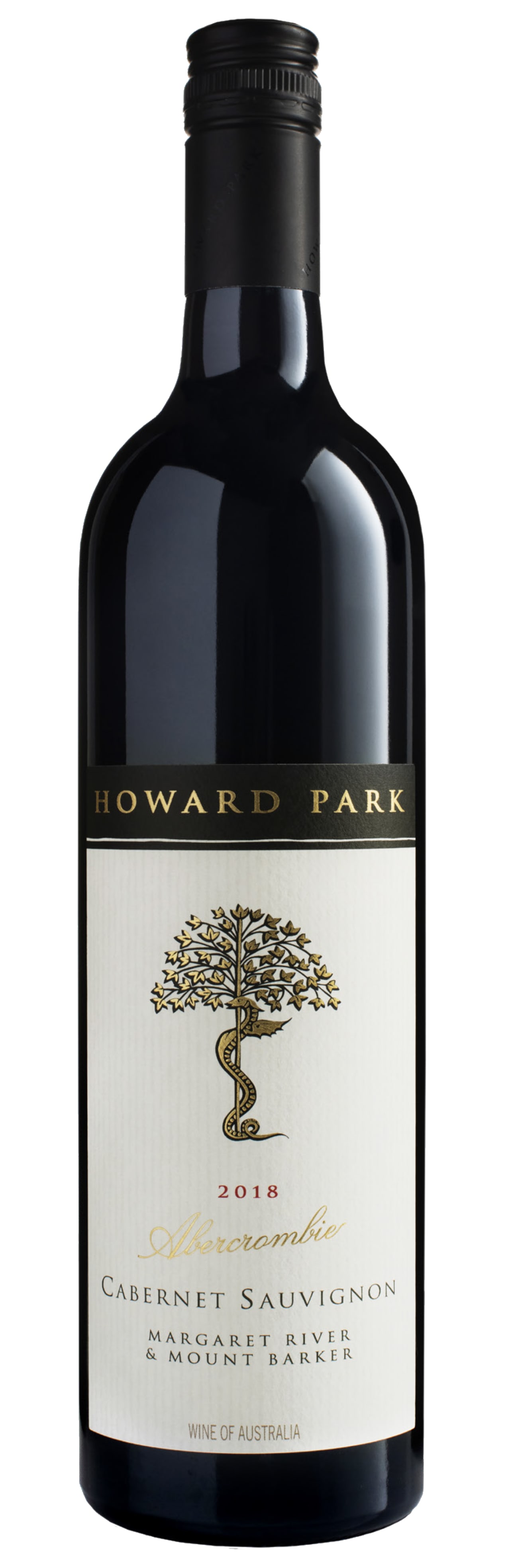
Howard Park Abercrombie Cabernet Sauvignon 100% Cabernet Sauvignon.
The 2018 Abercrombie reflects the highs that can be achieved in a superb vintage when thoughtful and deliberate winemaking combine with exceptional vineyards. The color is a vivid, deep ruby, tingeing purple and betraying the wine's youth. The bouquet evolves in a measured fashion as the wine slowly aerates, filling the glass with textbook Cabernet perfume of powerful dark fruits, rubbed bay leaf, cedar, coffee beans and vanilla. Intensity and purity of fruit is the standout feature, and this transmits seamlessly to the palate, where the profound structure and effortless length also take centre stage. The harmony of rich fruit, clean and vibrant acidity and fine, abiding tannins speak to the beguiling nature of this young wine and the glorious future that awaits its patient custodians in ensuing decades. This is true West Australian Cabernet.
Named for Walter Abercrombie, the much loved Great Grandfather and mentor of Jeff Burch, the owner of Howard Park Wines, this is Howard Park's finest Cabernet Sauvignon.
Howard Park’s winemaking philosophy is to craft elegant, age-worthy wines from our best sites in the Margaret River & Great Southern regions of Western Australia. Critical site selection, meticulous viticultural practice and detailed winemaking underline each Icon wine.
Review:
This is really fine with such polished and manicured fruit and tannins that deliver a thoroughly refined and beautiful palate with sweet dark fruit, from currants to blackberries. Long, long finish. Hard not to drink now. But one for the cellar. Try after 2025.
-James Suckling 97 Points
Howard Park is a pioneering family-owned winery specialising in the premier regions of Margaret River and the Great Southern. Our vision is simple: we have an uncompromising commitment to quality, crafting wines that are expressive of their terroir.

Crianza is the essential wine. Balance and integrity. It displays the fine manners of experience and the grace of plethoric vine. Juicy black fruit on the palate inviting you to eat well and feel good.
But there is more. Crianza maintains an invisible pact with the landscape. An imperceptible force that brings us closer to the truth of the place. And instantly turns extreme climate vineyards into the most welcoming place in the world.
Prepared with Tempranillo grapes (100%), this wine has a very bright, intense maraschino cherry colour that fades to a Cardinal red rim.
It has a very marked aroma with a good balance of fruit and wood, where tones of vanilla intermingle with well-ripened fruit, black berries and wild fruits. There are also noticeable hints of leather and liquorice, resulting from the mingling of the French oak and the aromas inherent in this variety of grape.
In the mouth, the wine has a smooth texture but fills the palate with balanced flavours, including fine tannins, which help extend the life of the wine. The finish and aftertaste are both long and elegant.
Vineyard:
Pago de los Capellanes, Pedrosa de Duero.
Variety composition:
100% Tempranillo.
Type of soil:
Clayey and chalky.
Aging:
12 months in barrel and remainder on rack.
Type of oak:
100% French oak, medium toast.
Serving:
Uncork and decant one hour before serving at a temperature of 16-18 ºC.
Selected harvest with yields limited to 5000 kg per hectare. The harvest begins in early October, starting with the most mature parcels. Once the grapes are brought into the winery, the tanks are seeded with indigenous yeast (start culture) and the alcoholic fermentation begins. During the barrelling period, which lasts 30 days, the wine is crushed and pumped over daily, all the while controlling the density, temperature and evolution of the yeast. At the end of this fermentation, the tanks are emptied and the wine taken for malolactic fermentation.
The malolactic fermentation begins without the addition of bacteria. The temperature is held steady at 20ºC for period of 22 days, during which we monitor the levels of malic and lactic acids. When the malic acid content is less than 0.1 grams per litre, the wine is decanted to separate the lees and is transferred directly to the barrels without undergoing any type of filtration, clarification or cold treatment.
The wine is aged for twelve months in new and semi-new French oak barrels (no more than three years old). At the end of this period, it is taken to the tank for homogenisation, where it undergoes light filtration through cartridges (open pore) and is then bottled.
Review:
"A wonderfully polished expression of Ribera del Duero's match-up of power and high-plain freshness, this still has gorgeous intensity of finger-staining blackberry and mullberry succulence, a shading of expensive, fine-grained, toasty oak and satisfyingly savoury tannins all coming together to match the meat coming off the wood-fired grill. - David WILLIAMS"
- Decanter (December 14th 2022), 94 pts

Begude Bandol Rouge La Brulade is made from 95% Mourvedre and 5% Grenache.
"La Brulade" is the name of a select slope located at an altitude of 400 meters overlooking the Mediterranean sea between La Baie d'Amour (the town of La Ciotat) in the South and La Sainte Baume in the North. This is one of the highest parcels in the Bandol appellation.
The wine is only produced in exceptional vintages. This carefully selected blend is made of 95% Mourvedre and 5% Grenache, aged in large French oak barrels for 24 months.
The wine shows a deep purple color. It is fresh and fruity on the nose with intense garrigue aromas. Structured, elegant and well-balanced on the palate with strong tannins. Licorice, ripe black fruits, garrigue flavors and some peppery freshness on the finish.
The 35-year old grapes are grown on clay and limestone soils and are farmed organically. Yield is very low - 15hl/ha. The grapes are harvested manually.
Winemaking: Double selection, destemming, crushing before skin contact fermentation. No filtration. Aging for 24 months in French oak casks (600L).
Grilled meat (lamb, beef, boar), Mediterranean cuisine, spicy dishes.
Review:
"Complex nose with deep black berry fruits, spice and hints of polish. Really lovely texture with layers of creamy red and black fruits, spices and powerful but super fine tannins. Great expression of the appellation; powerfully long."
- Decanter World Wine Award 2020 - 97 pts & Platinum Medal

Villero is undoubtedly one of the most important vineyards in Castiglione Falletto in terms of quality and exposure.
The soil is clayey and calcareous, with a south and southwest exposure. The combination of exposure and soil give us a structured and powerful Barolo, with a deep aromatic profile. The tannins are smooth and soft, thanks to long maceration.
Barolo Villero is a long-lasting wine, capable of reaching its full potential even many years after the harvest.
Wine Production
Villero is distinguished by a careful selection of grapes, perfect destemming, long macerations with submerged cap.
Tasting Notes
Clear bright ruby colour with very light garnet red reflections; intense and persistent aroma of red fruit with notes of plum and cherry. A pleasant aroma of wood is noticeable after the fruity aroma, anticipating the full taste of a great wine suitable for long lasting life. A succulent, rich, full-bodied and pleasant taste emerges after the woody one, with the presence of slightly ripe red fruit
Food Pairing
Thanks to its viscosity and body, Barolo is the ideal wine to combine with elaborate dishes such as truffle dishes, meat dishes, pasta with porcini mushrooms, game, and aged cheeses. Villero is also perfect with dry pastries or chocolate.
Review:
This Villero shows sterness and class at the same time. The nose is focused on cherrystone aromas, Parma violets, pomegranates and slightly earthy notes. The attack is dry and austere, with firm, dusty tannins soaked in licorice and tar, enhanced by a bright, juicy and polished blood-orange finish. This is a Barolo to discover over the years, even though it’s ready to drink now.
-James Suckling 95 Points

Holocene Memorialis Pinot Noir is made from 100 percent Pinot Noir.
Holocene Pinot Noir Memorialis is a blend of 777, Pommard and 115 clones from MonksGate vineyard in the Yamhill-Carlton AVA, and it saw about 20% new French oak for 16 months prior to bottling. It is always the lighter and more feminine of the two Holocene wines, with red fruits, white flowers, dried herbs, mushroom and forest floor aromatics, bright acidity and a lithe texture, long finish.
By now, everyone knows that the Willamette Valley is an amazing place to grow Pinot Noir. When I relocated from Napa Valley to partner up with Force Majeure Vineyards, I knew I also wanted to start a project where I could focus attention on a varietal and growing region that I loved. Part of the excitement of being in the Pacific Northwest is the ability to have access to so many amazing vineyards and so much diversity, along with the opportunity to push boundaries and try new things – something that is becoming increasingly difficult in other growing regions.
We partner up with a few very small, diverse and amazing vineyards in the Willamette Valley, sourcing fruit from these dry-farmed sites that emphasize low yields, sustainable practices and produce outstanding fruit.
The wines are crafted in the same way I have been making wine since I was carrying it out at Bryant Family Vineyard in the Napa Valley — utilizing very low-impact, non-industrial techniques, native yeasts, little extraction and little new oak, and never filtering or fining. This allows a real sense of place to show through in the wines that is often dimmed when too much manipulation is undertaken.
Our first vintage was 2015, and was released in early 2017. As production is currently extremely small, the best way to get the wines into your hands is to join our mailing list at the “Mailing List” link above to receive an allocation when we have a release. We release wines once per year, and they will be sold on a first come, first served basis, shipped straight to your door.
Review:
"A Bing cherry aroma slinks its way up from the glass, followed by spicy whispers of cardamom and cinnamon. Straw and chalkboard dust scents seal the deal. After a tannic black tea note materializes on the palate, the wine's cranberry and raspberry flavors punch the tart button. You can feel the tannins, but they aren't grippy. The acidity, however, lets you know it is ready for juicy business. Memorialis is quietly becoming one of Oregon's best Pinot Noirs. — Michael ALBERTYS"
- - Wine Enthusiast (October 1st 2025), 98 pts & Editor's Choice

Walt Clos Pepe Pinot Noir is made from 100 percent Pinot Noir.
Deep ruby in color, the wine carries luscious fruit aromas of blackberry preserves and dark cherry, infused with exotic notes of spice, black tea and pomegranate. The palate opens to a dense and velvety texture laced with flavors of barrel char and salinity, leading to a structured and focused finish.
Review:
Big and rich, with luscious spiciness to the plush dark fruit and berry flavors that are supported by medium-grained tannins. There's plenty of creamy and toasty accents on the open-textured finish.
-Wine Spectator 93 Points
Another Sta. Hills release, the 2019 Pinot Noir Clos Pepe Vineyard saw 10% stems and 10 months in 40% new French oak. It's a little more focused and firm, with classic ripe black raspberry, red plum, and cherry fruits as well as orange blossom, spice, and floral nuances. It too is medium-bodied, textured, and beautifully balanced.
-Jeb Dunnuck 93 Points
- The Clos Pepe Vineyard was founded in the late 1980s by Steven and Kathy Pepe. The vineyard is located just east of Lompoc in the Santa Rita Hills appellation. The 2019 ‘Clos Pepe’ revels in its aromatic range from peat moss and pipe tobacco to bright red fruits and wild blackberry. The palate is dense and fresh with beautiful red florals alongside orange rind with sandy soil undertones. Gorgeous now, this has a long way to go in the cellar.
-Owen Bargreen 95 Points

Saint Pierre Saint Julien is made from 79% Cabernet Sauvignon and 21% Merlot.
Chateau Saint-Pierre Saint-Julien 4th Grand Cru Classé boasts a rich and brilliant purple color, a complex aromatic expression marked by beautiful ripe fruits combined with soft spices, chocolate and licorice nuances. Well-balanced and a good texture, the palate is round and subtle, supported by velvety tannins that enhance the elegant and pure character of this Saint Julien.
Review:
"Very pretty and typical for the appellation with aromas of blackcurrants, violets and sandalwood that follow through to a full body with layers of polished tannins and a long, flavorful finish. Lasts a long time on the palate. Classic structure. Drink after 2027."
- James Suckling (January 2022), 96 pts

Lokoya Spring Mountain Cabernet Sauvignon is made from Napa Valley Cabernet Sauvignon.
Review:
The 2018 Cabernet Sauvignon Spring Mountain District is a monster of a mountain Cabernet that has a primordial bouquet of blackcurrants, smoked earth, chocolate, and graphite. While Spring Mountain wines tend to be more aromatic and complex right out of the gate, that’s not the case here, and this is going to need bottle age to round into form. Full-bodied on the palate, with a rich, concentrated mouthfeel, it has serious tannins, notable purity of fruit, and a great finish. With air, it picks up more and more classic Spring Mountain floral and exotic notes, and it’s flawlessly balanced, with gorgeous tannins and a great, great finish. This is a brilliant wine in the lineup and unquestionably one of the true gems from Spring Mountain in 2018. Give bottles 4-5 years and enjoy over the following 2-3 decades.
-Jeb Dunnuck 98 Points

The unique volcanic soil composition of this site is exhibited in this Cabernet’s mineral texture and intensely structured palate. This latest release from the exceptional 2018 vintage presents a deep purple rim surrounding an opaque garnet core with an abundance of aromas emerging from bakers’ chocolate and dark cherry to crème de cassis to tapenade. Both graceful and bold on the palate, the broad tannins are balanced by pulsing acidity that brings tension and freshness throughout. Notes of boysenberry are interspersed with accents of sweet thyme against a backdrop of crush rock minerality, adding to the long finish and layers of complexity.

Yalumba The Signature Cabernet Sauvignon Shiraz is made from 54% Cabernet Sauvignon, 46% Shiraz.
Encompassing everything the Hill-Smith family stands for and the perfect representation of Yalumba’s history and ethos, The Signature is a sentimental favorite. A classic Australian blend of Cabernet Sauvignon and Shiraz, the first vintage release of The Signature was in 1962. Since then, this outstanding wine has acknowledged more than 57 Signatories; people who have enhanced the traditions and culture of Yalumba.
Seductive and alluring florals, cool mints, red pomegranate with fine blackberry fruits and dark cherry aromas. The palate is delightfully generous with dark red cherry fruit that merges into ironstone tannins. A medium to full bodied wine with a long, flowing tannin profile.
Review:
The 2018 The Signature Cabernet Sauvignon Shiraz (the 48th vintage) is named for Nick Waterman (managing director and CEO of Yalumba 2015 - 2022). The 2018 vintage in South Australia (and specifically here, Barossa) was an excellent one: ripe/warm, even and long and produced wines with density, energy and gravitas. This is exactly that: plush and powerful. The fruit forms a perfect dovetail: the enveloping, mouth-filling abundance of the Shiraz, neatly wedged into the folds of the structuring and shapely Cabernet. Very impressive. This is one of the more impressive Signatures in recent times. It will cellar with grace and ease.
-Robert Parker 96 Points
Since its first release in 1962, The Signature has been Yalumba's deep dive into the classic Australian blend from the Barossa and one that honors the people who have enhanced the traditions and culture of Yalumba. There is a resonance and depth to this release that I really like. Wonderfully pure and concentrated blackberry and plum fruits, layered with spice, dark chocolate, earth, cedar and oak nuance. Succulent and sinewy in the mouth, it flexes considerable muscle, yet remains purely fruited and approachable even at this stage of its evolution. Rich and balanced with fine, ripe tannin and plenty of energy for such depth of fruit. Lovely.
- Australian Wine Companion 96 Points

Alejandro Bulgheroni Lithology Beckstoffer Las Piedras Cabernet Sauvignon is made from 100 percent Cabernet Sauvignon.
From a St. Helena vineyard planted by early Napa settler Edward Bale more than 150 years ago, and later serving as the estate vineyard for the area’s first winery built by Henry Pellet in 1860, the Las Piedras site always gives us our prettiest wine. When placed next to Dr. Crane and To-Kalon wines, the Las Piedras show a certain elegance, with a very graceful entry and finely detailed complexity. We produce it with at least 75% new French oak, so there is a floral, spicy, and vanilla accent to the intense red and black fruits, cassis, and black cherry liqueur. What distinguishes this bottling is the beautifully fine tannins, delicate texture, and stunning purity. (Less than 100 cases made.)
Fermentation 70% Oak, 24% Concrete, 6% Puncheon
Review:
"The 2018 Cabernet Sauvignon Lithology Beckstoffer Las Piedras Vineyard comes from a world-class site outside of St. Helena and is all Cabernet that spent 20 months in 80% new oak. It offers a touch more red fruit as well ample cassis, spring flowers, loamy earth, and spice-like aromas and flavors. It has a wonderful sense of minerality, ultra-fine tannins, a dense, layered texture, and incredibly purity of fruit. It’s another just about off the charts release from this estate."
- Jeb Dunnuck 98 Points

Avennia Red Willow Cabernet Sauvignon is made from 100% Cabernet Sauvignon.
The Red Willow Cabernet is a true blockbuster.
Coming from one specific block of 30 year old vines at this iconic vineyard, then strictly barrel selected, this is the essence of powerful, old vine Washington Cabernet. After all of our efforts promoting the idea of the Bordeaux blend, it would take a pretty compelling argument to suspend that idea and make a 100% varietal Cabernet. In 2016 Red Willow provided us with just that. Each time we tasted it in the barrel, the belief grew that this was something special. Something we can't make every year. In the end we were won over, and decided to make a limited amount of this wine. But don't be fooled, as this too is a blend and a selection. Each year as we are tasting the grapes as harvest approaches, we notice that the vines near the bottom of this long, steep west-facing slope, are a little different. The vines at the bottom are in a little richer soil, and get a little more water, so we pick them separately, sometimes even a week or ten days apart, and keep them separate in barrel.
This wine is all from the top of the vineyard, with its lower yield and poorer soils giving more concentration and interest. Then further, nearly every combination of new and used French oak barrels were trialed to find the best blend. It's not enough just to use the four best barrels, but to trial each combination to see how they complement each other. For a wine with this much mass, 100% new French oak was used for the first time at Avennia. It is a wine that needs a little cellaring to start, but should last a very long time.
Review:
The flagship Cabernet, the 2018 Cabernet Sauvignon Red Willow Vineyard is all varietal, from old vines in a great vineyard in Yakima Valley, that spent 20 months in 80% new French oak. It reveals a deep purple hue as well as a backward, brooding nose of smoked blackcurrants, tobacco, scorched earth, and violets. It has beautiful richness yet takes plenty of coaxing to open up. On the palate, it's medium to full-bodied and has a nicely textured, balanced mouthfeel, plenty of tannins, and outstanding length. It's mostly potential at this point and is going to benefit from at least 4-5 years of bottle age, but my money is on it having 20+ years of prime drinking.
-Jeb Dunnuck 96 Points

Laird Cabernet Sauvignon Flat Rock Ranch is made from 100 percent Cabernet Sauvignon.
Laird's Flat Rock Ranch vineyard is located near the north corner of where Yountville Cross Road meets Silverado Trail, on State Lane. This prized, complex fruit from the Yountville Appellation is a result of unique geological and meteorological conditions: volcanic soils similar to the adjacent Stags Leap District, but also display ancient coastal deposits, and sedimentary and alluvial soils that provide beneficial stress for our vines. Marine air currents from San Pablo Bay to the south are caught when they reach the "Yountville Mounts," providing a natural cooling effect that balances warm, sunny days that ripen the rich tannins of our hallmark Cabernet Sauvignon to elegant distinction.
Bold violet-red color introduces a captivating bouquet of blueberries, tea leaf, and vanilla. This full-bodied wine has flavors of cassis, hazelnut and briary undertones with fresh acidity and chewy tannins on the palate
Review:
"The 2018 Cabernet Sauvignon Flat Rock is laced with crème de cassis, menthol, lavender, spice and blueberry jam. Inky and plush, the 2018 also has quite a bit of energy backing it all up. The 2018 is a gorgeous wine from Laird.- Antonio GALLONI"
- Vinous (The 2019 Napa Valley Cabernets: A Deep Dive, January 2022), 93+ pts

All older vintage wines have been purchased from a single collectors cellar. Pictures can be requested before shipment.

Shirley & David Maudry Menetou Salon Cuvée Essentiel is made from 100% Sauvignon Blanc.
Really fresh and balance wine with peppery and slightly minty notes. The nose is intense and aromatic with notes of citrus, peach and ripe fruit. The palate is fruity and fresh.
RS: <1g/L
TA: 4.5g/L



