" We don't sell the wine without touching the vine "
| BUY MORE! SAVE MORE! | ||||||||||||||||||||
|
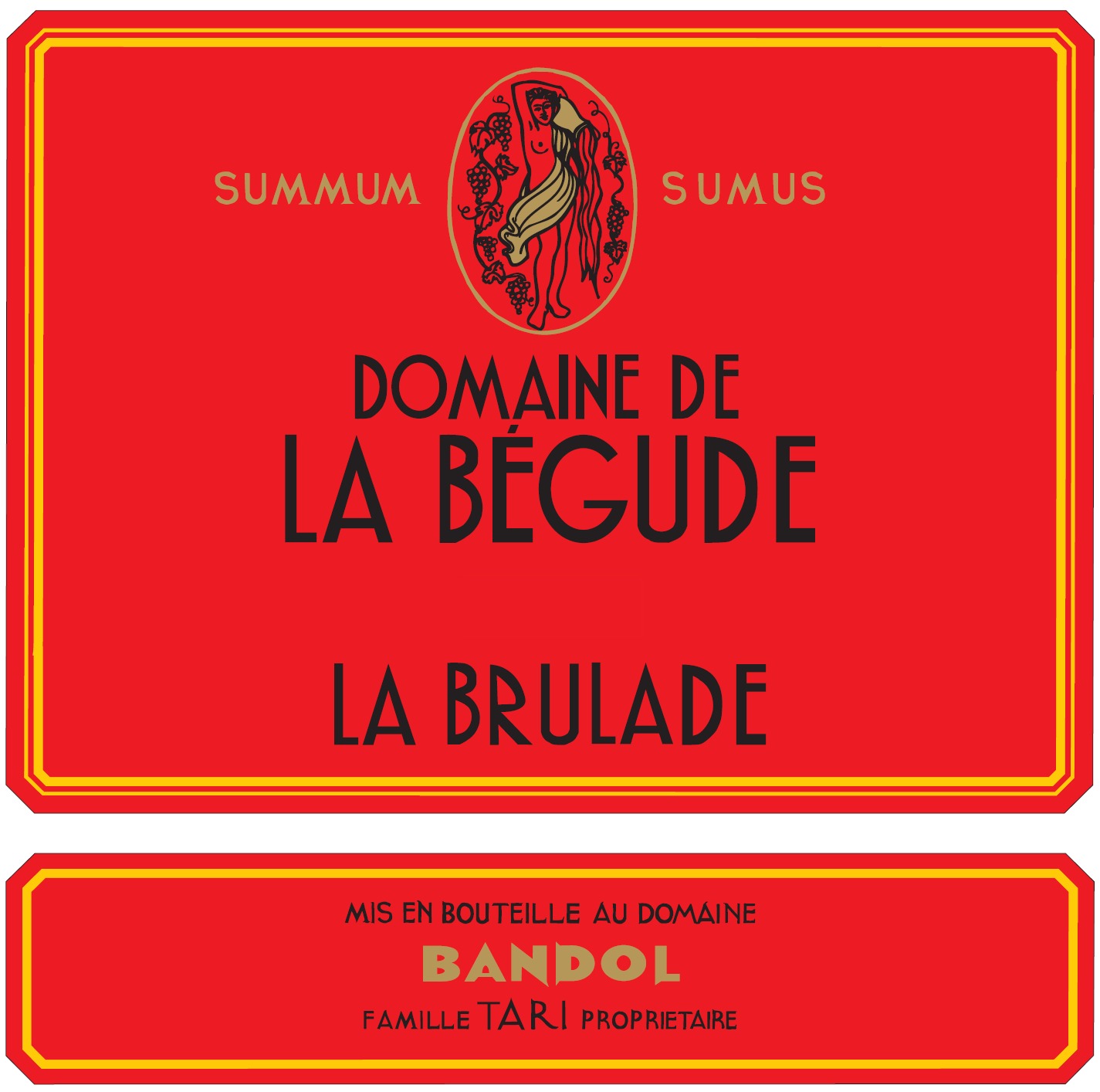
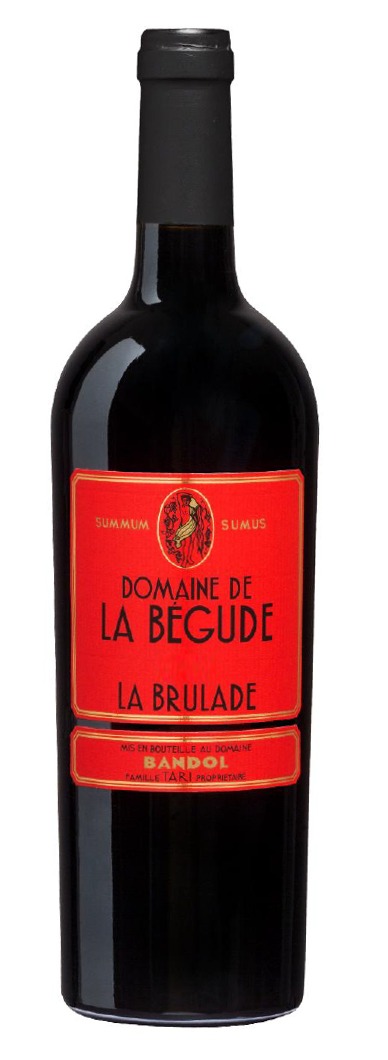
Begude Bandol Rouge La Brulade is made from 95% Mourvedre and 5% Grenache.
"La Brulade" is the name of a select slope located at an altitude of 400 meters overlooking the Mediterranean sea between La Baie d'Amour (the town of La Ciotat) in the South and La Sainte Baume in the North. This is one of the highest parcels in the Bandol appellation.
The wine is only produced in exceptional vintages. This carefully selected blend is made of 95% Mourvedre and 5% Grenache, aged in large French oak barrels for 24 months.
The wine shows a deep purple color. It is fresh and fruity on the nose with intense garrigue aromas. Structured, elegant and well-balanced on the palate with strong tannins. Licorice, ripe black fruits, garrigue flavors and some peppery freshness on the finish.
The 35-year old grapes are grown on clay and limestone soils and are farmed organically. Yield is very low - 15hl/ha. The grapes are harvested manually.
Winemaking: Double selection, destemming, crushing before skin contact fermentation. No filtration. Aging for 24 months in French oak casks (600L).
Grilled meat (lamb, beef, boar), Mediterranean cuisine, spicy dishes.
Review:
-Wine Enthusiast 95 Points
Domaine de La Begude was founded in 1996 by Guillaume and Louis Tari who continue an old family wine tradition (Chateau Giscours, 3rd Cru, Margaux). They are devoted to elaborating wines that express the characteristics of the Bandol terroir. The ageing cellars are the ancient Merovingian chapel of the 7th century from the "Conil" seigneury. This village has since disappeared, but it is mentioned as early as 966 in Saint Victor's maps. The estate produced some wine in the 16th century, and some ancient vinification tanks have been discovered there.
The Domaine de la Bégude Vineyard
The vineyard is situated at the top of the Bandol appellation (400 meters), overlooking the Mediterranean sea. The estate measures 1,240 acres of which 37 acres are in vines (15 hectares). The vines are cultivated on terraces facing south. The terraces are divided because of the very uneven relief of the wooded massif on which lies the estate. Olive trees surround most of the vine plots and take part in perfecting a typical landscape of the Bandol area.
The grape percentages are: 65% Mourvèdre, 25% Grenache,10% Cinsault, and the vines average 20 years of age. Grapes are hand harvested and totally de-stemmed before 3 – 4 weeks of fermentation on the skins. Egg white fining finishes the winemaking process before bottling. Production in total is 2,500 – 3,000 cases annually. This property makes clean and focused Bandol, as opposed to the rustic style so commonly seen from this A.O.C.
The Tari family also produces a Cotes de Provence (Rose and Red) made from grapes grown in the heart of the Provencal oak forest, dominating the Maures Mountains.

Villero is undoubtedly one of the most important vineyards in Castiglione Falletto in terms of quality and exposure.
The soil is clayey and calcareous, with a south and southwest exposure. The combination of exposure and soil give us a structured and powerful Barolo, with a deep aromatic profile. The tannins are smooth and soft, thanks to long maceration.
Barolo Villero is a long-lasting wine, capable of reaching its full potential even many years after the harvest.
Wine Production
Villero is distinguished by a careful selection of grapes, perfect destemming, long macerations with submerged cap.
Tasting Notes
Clear bright ruby colour with very light garnet red reflections; intense and persistent aroma of red fruit with notes of plum and cherry. A pleasant aroma of wood is noticeable after the fruity aroma, anticipating the full taste of a great wine suitable for long lasting life. A succulent, rich, full-bodied and pleasant taste emerges after the woody one, with the presence of slightly ripe red fruit
Food Pairing
Thanks to its viscosity and body, Barolo is the ideal wine to combine with elaborate dishes such as truffle dishes, meat dishes, pasta with porcini mushrooms, game, and aged cheeses. Villero is also perfect with dry pastries or chocolate.
Review:
-James Suckling 95 Points

Howard Park Abercrombie Cabernet Sauvignon 100% Cabernet Sauvignon.
The 2018 Abercrombie reflects the highs that can be achieved in a superb vintage when thoughtful and deliberate winemaking combine with exceptional vineyards. The color is a vivid, deep ruby, tingeing purple and betraying the wine's youth. The bouquet evolves in a measured fashion as the wine slowly aerates, filling the glass with textbook Cabernet perfume of powerful dark fruits, rubbed bay leaf, cedar, coffee beans and vanilla. Intensity and purity of fruit is the standout feature, and this transmits seamlessly to the palate, where the profound structure and effortless length also take centre stage. The harmony of rich fruit, clean and vibrant acidity and fine, abiding tannins speak to the beguiling nature of this young wine and the glorious future that awaits its patient custodians in ensuing decades. This is true West Australian Cabernet.
Named for Walter Abercrombie, the much loved Great Grandfather and mentor of Jeff Burch, the owner of Howard Park Wines, this is Howard Park's finest Cabernet Sauvignon.
Howard Park’s winemaking philosophy is to craft elegant, age-worthy wines from our best sites in the Margaret River & Great Southern regions of Western Australia. Critical site selection, meticulous viticultural practice and detailed winemaking underline each Icon wine.
Review:
This is really fine with such polished and manicured fruit and tannins that deliver a thoroughly refined and beautiful palate with sweet dark fruit, from currants to blackberries. Long, long finish. Hard not to drink now. But one for the cellar. Try after 2025.
-James Suckling 97 Points

Holocene Memorialis Pinot Noir is made from 100 percent Pinot Noir.
Holocene Pinot Noir Memorialis is a blend of 777, Pommard and 115 clones from MonksGate vineyard in the Yamhill-Carlton AVA, and it saw about 20% new French oak for 16 months prior to bottling. It is always the lighter and more feminine of the two Holocene wines, with red fruits, white flowers, dried herbs, mushroom and forest floor aromatics, bright acidity and a lithe texture, long finish.
By now, everyone knows that the Willamette Valley is an amazing place to grow Pinot Noir. When I relocated from Napa Valley to partner up with Force Majeure Vineyards, I knew I also wanted to start a project where I could focus attention on a varietal and growing region that I loved. Part of the excitement of being in the Pacific Northwest is the ability to have access to so many amazing vineyards and so much diversity, along with the opportunity to push boundaries and try new things – something that is becoming increasingly difficult in other growing regions.
We partner up with a few very small, diverse and amazing vineyards in the Willamette Valley, sourcing fruit from these dry-farmed sites that emphasize low yields, sustainable practices and produce outstanding fruit.
The wines are crafted in the same way I have been making wine since I was carrying it out at Bryant Family Vineyard in the Napa Valley — utilizing very low-impact, non-industrial techniques, native yeasts, little extraction and little new oak, and never filtering or fining. This allows a real sense of place to show through in the wines that is often dimmed when too much manipulation is undertaken.
Our first vintage was 2015, and was released in early 2017. As production is currently extremely small, the best way to get the wines into your hands is to join our mailing list at the “Mailing List” link above to receive an allocation when we have a release. We release wines once per year, and they will be sold on a first come, first served basis, shipped straight to your door.
Review:
-Decanter World Wine Awards 96 Points
-Eric Guido (Vinous) 95 Points

Walt Clos Pepe Pinot Noir is made from 100 percent Pinot Noir.
Deep ruby in color, the wine carries luscious fruit aromas of blackberry preserves and dark cherry, infused with exotic notes of spice, black tea and pomegranate. The palate opens to a dense and velvety texture laced with flavors of barrel char and salinity, leading to a structured and focused finish.
Review:
-Wine Spectator 93 Points
-Jeb Dunnuck 93 Points
-Owen Bargreen 95 Points

Crianza is the essential wine. Balance and integrity. It displays the fine manners of experience and the grace of plethoric vine. Juicy black fruit on the palate inviting you to eat well and feel good.
But there is more. Crianza maintains an invisible pact with the landscape. An imperceptible force that brings us closer to the truth of the place. And instantly turns extreme climate vineyards into the most welcoming place in the world.
Prepared with Tempranillo grapes (100%), this wine has a very bright, intense maraschino cherry colour that fades to a Cardinal red rim.
It has a very marked aroma with a good balance of fruit and wood, where tones of vanilla intermingle with well-ripened fruit, black berries and wild fruits. There are also noticeable hints of leather and liquorice, resulting from the mingling of the French oak and the aromas inherent in this variety of grape.
In the mouth, the wine has a smooth texture but fills the palate with balanced flavours, including fine tannins, which help extend the life of the wine. The finish and aftertaste are both long and elegant.
Vineyard:
Pago de los Capellanes, Pedrosa de Duero.
Variety composition:
100% Tempranillo.
Type of soil:
Clayey and chalky.
Aging:
12 months in barrel and remainder on rack.
Type of oak:
100% French oak, medium toast.
Serving:
Uncork and decant one hour before serving at a temperature of 16-18 ºC.
Selected harvest with yields limited to 5000 kg per hectare. The harvest begins in early October, starting with the most mature parcels. Once the grapes are brought into the winery, the tanks are seeded with indigenous yeast (start culture) and the alcoholic fermentation begins. During the barrelling period, which lasts 30 days, the wine is crushed and pumped over daily, all the while controlling the density, temperature and evolution of the yeast. At the end of this fermentation, the tanks are emptied and the wine taken for malolactic fermentation.
The malolactic fermentation begins without the addition of bacteria. The temperature is held steady at 20ºC for period of 22 days, during which we monitor the levels of malic and lactic acids. When the malic acid content is less than 0.1 grams per litre, the wine is decanted to separate the lees and is transferred directly to the barrels without undergoing any type of filtration, clarification or cold treatment.
The wine is aged for twelve months in new and semi-new French oak barrels (no more than three years old). At the end of this period, it is taken to the tank for homogenisation, where it undergoes light filtration through cartridges (open pore) and is then bottled.
Review:
-Decanter 94 Points
-Jeb Dunnuck 92 Points
-Wine Spectator 91 Points

Gap's Crown Vineyard has become one of the most iconic Pinot noir vineyards in the Sonoma Coast. It was originally developed by Premier Pacific Vineyards between 2002 and 2005 and later purchased by Price Family Vineyards in 2013. In 2007, Sojourn Cellars became one of the best to make a vineyard-designate wine from Gap's Crown. Our clone 115 block, planted in 2005 on 3309 root stock at 800 feet elevation, has been the foundation for Sojourn since we began making Pinot noir from this vineyard. Our clone 828 block was planted in 2002 on 420A root stock, and two clone 667 blocks round out the blend, both planted in 2004 on 3309 root stock. This hillside vineyard is situated on the western slope of Sonoma Mountain and is cooled by the persistent wind and fog of the Petaluma Gap.
WINEMAKER NOTES: The 2021 growing season offered optimal conditions in the Sonoma Coast to harvest grapes of exceptional quality. The air remained clear with no res in Sonoma and pandemic lock downs ended. Our spirits were lifted and the grape harvest and wine quality benefited. . Brief heat waves in August and September ripened the grapes to ideal maturity as the weather stayed dry until major rains arrived October 22, after our grapes were harvested. Yields were lower than average in 2021, with small berries and loose clusters creating wines of increased depth and concentration. In 2021 we blended destemmed clone 115 and clone 667, while fermenting all the clone 828 100% whole-cluster. The resulting wine, our 15th vintage of Pinot noir from Gap’s Crown Vineyard, offers complex layers of elegant fruit flavors with a bold strength at its core.
Review:
-International Wine Report 97 Points

Chateau Arnauds des Bordeaux Rouge is made from 100% Merlot.
The wine shows a deep red purple color and intense aromas of black fruits (blackcurrant, black cherry) with hints of liquorice. Very fruity and well-balanced. It is powerful and well structured in the mouth with round and silky tannins, ripe flavors of black fruits. Strong and a slightly spicy finish.
Grapes are coming from 30 year old vines planted on gravelly soils.
The land benefits from sun exposure, warmth and humidity that are strong assets for the vine culture.
The wine pairs well with game meat and beef on the grill.

La Reserve du Prince Cotes du Rhone Rouge Vieilles Vignes is 80% Grenache, 10% Syrah and 10% Mourvedre.
This ruby red coloured wine with purple glints develops red fruits aromas and spicy overtones. In the mouth, this wine is smooth and its supple structure emphasizes aromas. Fruitforward and easy drinking wine showing light spices and silky tannins. A perfect everyday wine.
This delicious juicy wine can be enjoyed now with steak frites, any Mediterranean dishes, pizzas, grilled chicken and cheese.

Roche Redonne Bandol Rouge Les Bartavelles is made from 95% Mourvedre and 5% Grenache.
This cuvée is named "Bartavelles" which is French for the "Rock Partridge".
The wine is quite aromatic, with boysenberry, blackcurrant, peppery and graphite notes. Ample in the mouth with a creamy structure, soft, harmonious and elegant tannins. The finish is long and juicy.
Excellent with grilled red meat or game. Also excellent with cheese
Review:
-Robert Parker's Wine Advocate 93 Points
-Wine Enthusiast 92 Points

Alain Jaume Chateauneuf Du Pape Rouge Vieux Terron is made from 85% Grenache, 10% Syrah, 5% Mourvèdre
An intense purple color is followed by ripe red fruit aromas, such as sweet black cherry.
The palate reveals clearly the aromatic complexity: spices and black fruit are boasted with soft tannins. The finish is long with aromatic hints of liquorice and pepper. Red raspberries, star anise and hints of cinnamon.
It will accompany game, red meat or meat in sauce and strong cheeses.
Soil types
Châteauneuf du Pape vineyards are mostly located on plateaux. Stony-clay soil covered with large rolled stones. Some plots are more sandy.
Winemaking and aging
Harvest is destemmed and crushed. Fermentation temperature is controlled at 30°C. Vatting period of 18 to 21 days. Matured in vats (80%) and oak casks (20%).
Review:
-Decanter World Wine Awards 93 Points
-Jeb Dunnuck 91 Points

Alain Jaume Cotes Du Rhone Rouge Haut de Brun is made from 60% Grenache, 30% Syrah, 10% Cinsault
The colour is purple-tinged garnet.The aromatic range of the nose goes from fresh berries (wild raspberry, blackcurrant, blackberry) to spices.The palate is big and full-flavoured, with silky-smooth tannins and aromas of the fruit already mentioned. The finish introduces touches of liquorice and pepper. A Côtes du Rhône with great complexity for an every day drinking.
A classic Rhône to drink between 1 and 4 years. Best poured at 17°C.
Traditional wine making and ageing is performed in vats only. Bottling after 10-12 months.
Ideal throughout the meal, but particularly with poultry and other white meats, as well as mild cheeses.
Review:
-International Wine Review 92 Points
Alain Jaume Cotes Du Rhone Rouge Haut de Brun is made from 60% Grenache, 30% Syrah, 10% Cinsault
The colour is purple-tinged garnet.The aromatic range of the nose goes from fresh berries (wild raspberry, blackcurrant, blackberry) to spices.The palate is big and full-flavoured, with silky-smooth tannins and aromas of the fruit already mentioned. The finish introduces touches of liquorice and pepper. A Côtes du Rhône with great complexity for an every day drinking.
A classic Rhône to drink between 1 and 4 years. Best poured at 17°C.
Traditional wine making and ageing is performed in vats only. Bottling after 10-12 months.
Ideal throughout the meal, but particularly with poultry and other white meats, as well as mild cheeses.

Trapiche Terroir Series Finca Orellana is made from 100 percent Malbec.
The history of Trapiche begins in 1883, in a small vineyard called El Trapiche, in the district of Godoy Cruz, Mendoza, where the grapes for the first fine wines were grown. With more than 130 years of experience, Trapiche has earned its place as a pioneering brand in the introduction of French vines, the production of varietal wines, the import of French oak barrels and the use of stainless steel tanks. True to its origins, today Trapiche is in a continuous quest for the latest best practices .Led by Daniel Pi, Director of Winemaking, Trapiche's winemaking team permanently strives to improve winemaking practices by exchanging experience and knowledge with winemakers from other wine producing countries such as France, the US, Australia and New Zealand.
With a deep garnet red color, this Malbec expresses aromas of red fruits such as cherries and currants, and intense balsamic notes with hints of fresh herbs. In the mouth, it is sweet and broad with a great concentration of fruit and soft, ripe tannins. It has a long, persistent and elegant finish.
Review:
El Peral may not be on the radar of many Argentine Malbec lovers. But if you take a look at Descorchados, you will realize that here we are fans of this area, a place of gentle hills, streams and trees. This vineyard was planted in 1946, and today it delivers deliciously liquefied fruit, with hints of cherries and cassis, but above all violets and blackberries in a long and deep body. Give it at least ten years in the bottle.
-Patricio Tapia - Descorchados 95 Points
-Tim Atkin 95 Points
"A tight and powerful red with lots of blueberries, burnt orange peel and violets. Multifaceted. Full body, long, polished tannins and a fresh and vivid finish. Drink or hold."
-James Suckling 96 Points

Aiurri Salas Rioja is made from 80% Tempranillo and 20% field blend.
Aiurri is a small Rioja Alavesa project built around biodiverse, single-plot winemaking. The Salas bottling comes from one plot of clonally biodiverse old vines rooted in rocky soils — mostly Tempranillo alongside Graciano, Monastrell and a handful of field-blend grapes — harvested in two passes and raised in French oak of varying sizes, with a further spell in concrete amphorae after the final blend.
Aroma: very expressive and complex, with red and fresh black fruit, spice and wild herbs. Flavor: a balance of freshness and depth, with fine tannins, abundant fruit and a long, persistent finish. Color: black cherry with a violet rim.
Review:
-Joaquin Hidalgo (Vinous) 95 Points