
" We don't sell the wine without touching the vine "

| Region: | California |
| Grape Type: | Melon de Bourgogne |
| Vintage: | 2020 |
| Bottle Size: | 750 ml |
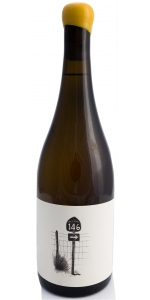
I Brand Melon de Bourgogne Chalone is made from Melon de Bourgogne.
The Graff Family began working in Chalone in the early 60s, with Dick Graff as the driving force behind the Chalone Vineyard, building, with the support of his brothers and a gaggle of stockholders, the original 1919 planting to international fame. After selling the Chalone group and Dick’s untimely death in a plane crash, the family’s land holdings have shrunk progressively to just this 160 acre parcel, owned by Dave Graff and his children. On those 160 acres is a small 3 acre vineyard planted in 1989 to Syrah, Mourvédre and Melon de Bourgogne. The site has depleted, granitic soils. The Melon de Bourgogne in Chalone was originally thought to be Pinot Blanc. Dick Graff distributed cuttings of these vines as far as Oregon. In the 1970s, a visiting ampelographer correctly identified the vines as Melon de Bourgogne. These vines were selected from the older ‘Pinot Blanc’ planting and can legally be labeled as either (but we like accuracy).
The wine comes from a tiny parcel of 30+ year old Melon planted on depleted granitic soils. The warm days and cold nights of the Chalone AVA produce a perfect balance of concentration and acidity, which Ian Brand amplifies with a few days of skin contact. The pure aromas of light peach, pear and gardenia are slightly toasty on the nose. The palate is defined by lemon-skin and grapefruit-pith grip, with a touch of baked apple in the midpalate.
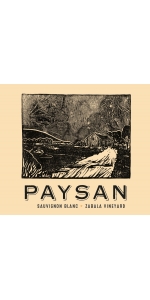
Paysan Sauvignon Blanc Zabala Vineyard is made from 100% Sauvignon Blanc.
Paysan Sauvignon Blanc comes from Zabala Vineyard - located on a large holding on the Arroyo Seco floodplains that was part of land granted to the Zabala family before California’s statehood. It was first planted in the 1970s and has grown to encompass over 1000 acres. Zabala Vineyard is one of the rockiest vineyard I Brand works with, full of what is locally known as ‘Greenfield Potatoes’, which are the rather inedible round river stones that dominate the soil and have been collected into piles and walls at every property in the basin. This vineyard is located directly in the path of the daily Salinas Valley winds, which control sugar development and retain natural acidity. Certified organic grapes.
Tasting Notes: Light-bodied. Aromatic explosion on the nose. Lime, gooseberry, green melon, grapefruit, white peach, passion fruit. Crisp, tart, clean with bright acidity on the palate. Neutral oak ageing provides subtle creaminess, while still exhibiting trademark green notes.
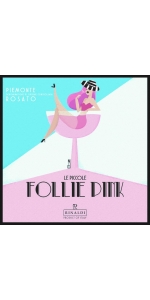
Rinaldi Follie Pink is made from 50 % Dolcetto, 45 % Merlot, and 5 % Brachetto.
Fresh, fruity with hints of Strawberry and Cherry.
This is a great wine for Aperitif.
Review:
"Here’s a delightful aperitif wine to brighten your spirits as you prepare dinner or relax on the patio. Flavors of strawberries and raspberries throw a party in your glass and will bring a smile to your face. The blend is dolcetto and merlot, with a little brachetto. - Dave McIntyre"
- Washington Post (May 2020), Exceptional *** - Great Value
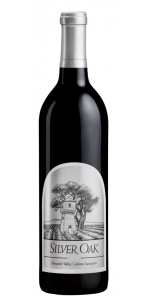
Silver Oak Alexander Valley Cabernet Sauvignon is made from 95.2% Cabernet Sauvignon, 2.5% Cabernet Franc, 1.9% Merlot, 0.4% Petit Verdot
The Silver Oak Alexander Valley Cabernet Sauvignon 2019 has notes of red cherry, raspberry, blackberry, iris, vanilla and clove. Ruby in color, this elegant wine has great acidity and lift on the mid-palate. Black currant and warm baking spices linger with a deep and fruity finish. It will provide drinking pleasure through 2047 given proper cellaring.
Review:
Silver Oak's 2020 releases of Napa and Alexander Valley Cabernets are downright impressive. Tasted four years after the fires, in September of 2024 at the Alexander Valley winery, neither wine showed any sign of the hardened tannic structure or overwrought fruit often associated with the vintage. Instead, these wines remain true to Silver Oak’s signature style, with blackcurrant, fig, and plum fruits layered with white pepper, sweet cedar, and coriander spice. Medium-bodied, with sculpted tannins that persist through the lengthy finish, the Alexander Valley Cabernet in particular retains all the hallmarks of a balanced, inviting, and vibrant Silver Oak red.
-Decanter 94 Points
Truly gorgeous, fruity, velvety and enjoyable for a full-bodied cabernet. It is rich in blueberries, cherry cream, black cherries and raspberries on the palate, with very smooth, layered tannins and a soothing mouthfeel. So easy to drink now, but it will age well, too.
-James Suckling 94 Points
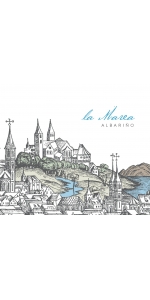
Marea Albarino is made from 100% Albariño
This 100% Albarino is produced from fruits grown in Kristy Vineyard, on the western bench overlooking the Salinas River on broken sediment of ancient sea beds. Kristy is special because Albarino in the vineyard reaches full phenological ripeness at low potential alcohol and natural, bright acidity. Cold fermented in stainless steel for aromatic intensity.
Bright, fresh and crisp with notes of lemon curd and tangerine. On the palate it shows elegant texture and bright acidity on the finish.
Picked under 22 brix, 2/3 whole cluster pressed, 1/3 destemmed and left on skins for two days. Aged on the lees for four months and then sterile filtered.
Pairs with oysters, grilled fish, spicy cuisines.
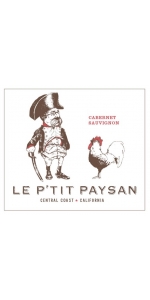
Ptit Paysan Cabernet Sauvignon is made from 91% Cabernet Sauvignon, 6% Petite Verdot, 3% Cabernet Pfeffer.
Oak: 11 months on lees in neutral barrels
The Cabernet Sauvignon is sourced from a vineyard at the foot of the Santa Cruz Mountains west of Morgan Hill, which grows in a mix of granitic and volcanic soils, and a 25-year-old vineyard east of Gilroy, which grows in deep, extremely sandy soils against the foothills of the Diablo Range. The Petite Verdot is sourced from the Paicines AVA and grows in rocky alluvial deposits above the Tres Piños Arroyo. All three vineyards experience the warm days and cold nights typical of the Central Coast, allowing these late ripening Bordeaux varieties to be picked at high acidity and moderate sugars.
Le P'tit Paysan offers intense blackberry, dark cherry aromas, chocolate, herbaceous and toasty notes on the palate. Medium-bodied, well-balanced with moderate and integrated tannins that give structure and liveliness to the wine.
Pairs well with steak, duck, game, hearty stews, ribs, and dark, rich sauces.
Cardinale Napa Valley Cabernet Sauvignon is made from 91% Cabernet Sauvignon, 9% Merlot.
Super structured and with minerality to spare, this Cabernet Sauvignon offers a real presence on the palate from start to finish. Generous notes of dark chocolate balance beautifully with a blue and black fruit flavor explosion, finishing with a subtle whisper of rose petal.
Reviews:
- James Suckling 98 Points
Laurent-Perrier Grand Siecle No. 27 is a blend of 60% Chardonnay, 40% Pinot Noir.
Grand Siècle was born from the vision of Bernard de Nonancourt: to recreate the perfect year, one that nature alone could never deliver. Iteration N°27 embodies this idea, crafted from a masterful blend of three outstanding years – 2015, 2013, and 2012 – with a predominance of Chardonnay complemented by Pinot Noir, sourced from eight Grand Cru vineyards.
After at least 10 years of aging on the lees, the result is a wine of rare aromatic complexity, combining freshness, energy, and timeless elegance. Grand Siècle is never tied to a single vintage but represents a higher concept: the pursuit of absolute balance between intensity, finesse and harmony. Since 1959, it has been revealed only 27 times in bottle and 24 times in magnum, affirming its place among the most exclusive and refined champagnes.
Vintage in Champagne is usually synonymous with excellence for Prestige Cuvées. Contrarily, Laurent‑Perrier believes that only the art of assemblage can offer what nature can never provide, that is, the perfect year.
The expression of the perfect year is that of a great champagne wine that has long ageing potential and over time develops depth, intensity and aromatic complexity yet retains its freshness and vibrancy.
Since 1959, Grand Siècle has been revealed only 26 times in bottle format and 23 times in magnum.
The « Grand Siècle » (Great Century) is the name given to one of the most prosperous periods (17th century) in the history of France known for the capacity of man, through his works, to create what nature cannot. Louis XIVth, known as the « Sun King », by creating the « Château de Versailles » and its gardens, was the architect of this model of harmony, balance and perfection.
The symmetry and perspective of the « Jardins à la française », the capacity to grow Mediterranean fruits (especially Oranges inside the « Orangerie ») in such a Northern climate, creating the Grand Canal, the fountains and ponds with no nearby rivers are many illustrations of this ability of man to sublimate natural elements. The name of Grand Siècle was chosen for Laurent‑Perrier’s Prestige Cuvée based on this common vision to reach a perfection that Nature, on its own, cannot provide.
Review:
Impressively aromatic, showing honeysuckle, violets and lavender with bread dough and just a hint of light caramel as well as dried apples, cooked pears and tarte tatin. Reductive with graphite, stone and iodine. Some chalk too. Full-bodied but not at all heavy, turning almost weightless. Nine years on the lees and 7 g/L dosage give energy, length and form. Goes on for minutes. This will age beautifully but is already fascinating, evolving in the glass. Drink or hold.
James Suckling 99 Points



