
" We don't sell the wine without touching the vine "
| Country: | United States |
| Region: | California |
| Winery: | I. Brand and Family |
| Grape Type: | Sauvignon Blanc |
| Organic: | Yes |
| Vintage: | 2024 |
| Bottle Size: | 750 ml |
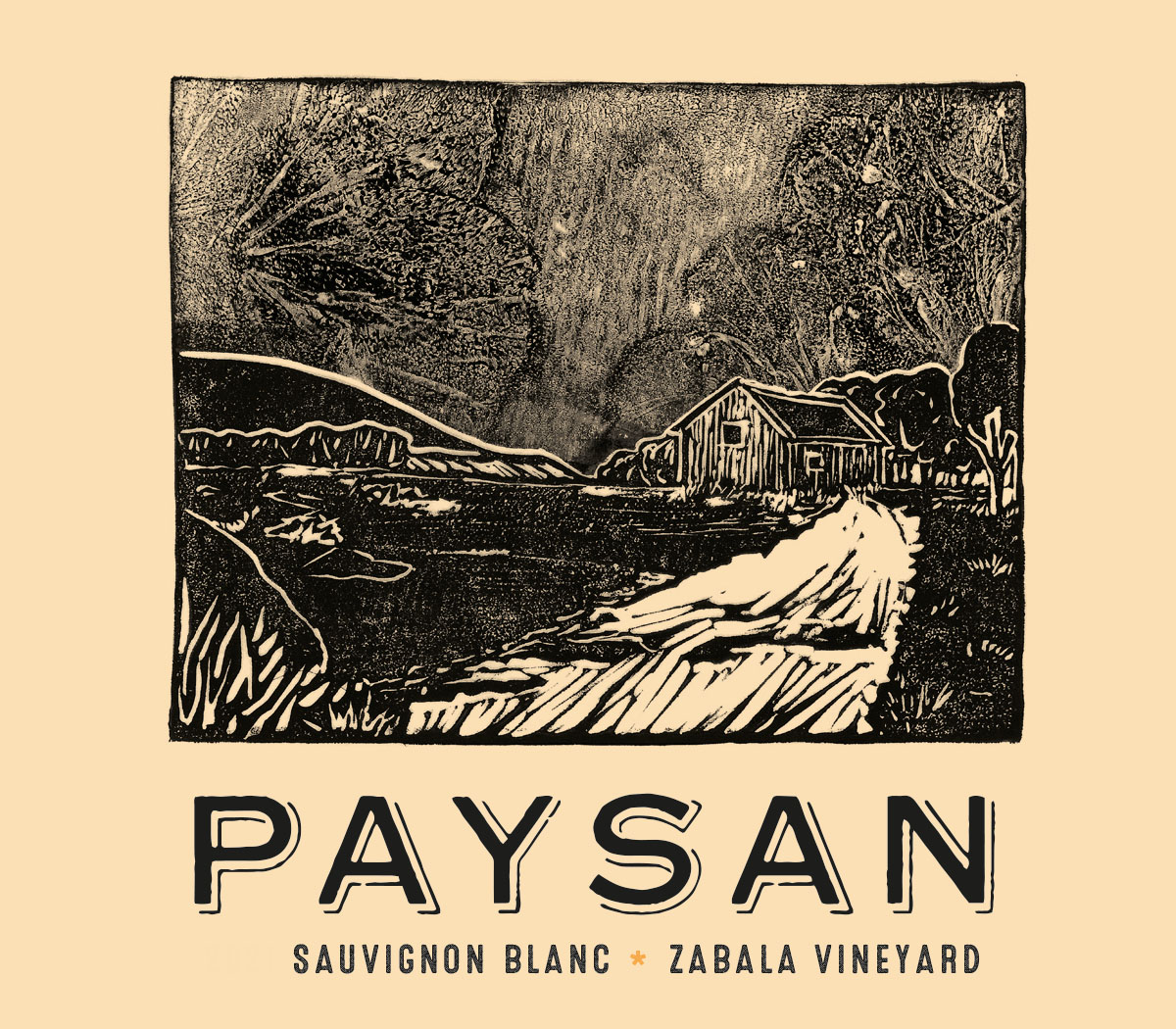
Paysan Sauvignon Blanc Zabala Vineyard is made from 100% Sauvignon Blanc.
Paysan Sauvignon Blanc comes from Zabala Vineyard - located on a large holding on the Arroyo Seco floodplains that was part of land granted to the Zabala family before California’s statehood. It was first planted in the 1970s and has grown to encompass over 1000 acres. Zabala Vineyard is one of the rockiest vineyard I Brand works with, full of what is locally known as ‘Greenfield Potatoes’, which are the rather inedible round river stones that dominate the soil and have been collected into piles and walls at every property in the basin. This vineyard is located directly in the path of the daily Salinas Valley winds, which control sugar development and retain natural acidity. Certified organic grapes.
Tasting Notes: Light-bodied. Aromatic explosion on the nose. Lime, gooseberry, green melon, grapefruit, white peach, passion fruit. Crisp, tart, clean with bright acidity on the palate. Neutral oak ageing provides subtle creaminess, while still exhibiting trademark green notes.
They did not set out to make these wines. They discovered great vineyards at the edge of sensible farming and decided to bring them to light.
The farther they looked, the more they found – remote, challenging vineyards, with hard depleted soils, and intense sunlight tempered only by the coastal breeze. Vineyards capable of producing only the most idiosyncratic wines. Their goal as winemakers is to lightly polish the roughest edges and leave the idiosyncrasy intact. It is here in the back country, filled with individual character, where Le P’tit Paysan comes to life.
Ian Brand's first winery job was in the lab and cellar at Bonny Doon Winery in Santa Cruz. Ian was Vineyard Manager and Assistant Winemaker at Big Basin Vineyards in the Santa Cruz Mountains for four years before he and Heather began their own project.
In the growing sites I Brand Family Winery looks for shallow, rocky soils, good site selection and proper varietal match with the soil and climate. The often overlooked greater Monterey Bay Area has a plethora of underappreciated, rocky vineyards.
Vineyard names:
Fellom Ranch, Bates Ranch, Besson, Summers, Wheeler, Brigantino, Bayly Ranch, Enz, Brosseau, Spur Ranch, Kristy, Quail Run, La Belle Rose, Cedar Lane, Mission Ranch, Escolle, Arroyo Seco Canyon, Los Ositos.
Farming:
Brosseau (cert organic)
Enz (practicing organic, dry farmed)
Besson (dry farmed)
Bates (dry farmed)
Sustainable: Kristy, Bayly, Quail Run, Los Ositos.

I feel this wine expresses the greatness of California and its hidden pockets where Cabernet can excel. The cold Pacific Ocean running the entire length of the state presents maritime influences – and with each small distance eastward the climate warms. Stony soils, south facing slopes and moderately warm conditions are the keys to producing dark, rich and good tasting Cabernet.
A small release from Caymus Vineyards, this wine is a California-appellation Cabernet Sauvignon – supple, dark and rich, bearing the signature hallmarks of Caymus. It is sourced from sites throughout the state which feature climatic conditions, soils and topography that are ideally suited to Cabernet. This project stems from excitement over California's diverse vineyard land, often in lesser-known areas, with the potential to produce exceptional Cabernet.

This classy and poised Pinot Noir displays an array of dark berry notes, including raspberry, blackberry, blueberry, and ripe cherry, along with a hint of baking spices. Balanced tension and refined tannins on the palate make the wine both elegant and effortlessly delicious, with subtle flavors of cedar and cassis lingering on the finish.
Review:
Bright and perfumed aromas of raspberries, potpourri and orange peel. The palate is medium-bodied with fine tannins and bright acidity, giving notes of blackberry bush, dried herbs and earth. Balanced and fresh.
- James Suckling 93 Points

Ptit Paysan Cabernet Sauvignon is made from 91% Cabernet Sauvignon, 6% Petite Verdot, 3% Cabernet Pfeffer.
Oak: 11 months on lees in neutral barrels
The Cabernet Sauvignon is sourced from a vineyard at the foot of the Santa Cruz Mountains west of Morgan Hill, which grows in a mix of granitic and volcanic soils, and a 25-year-old vineyard east of Gilroy, which grows in deep, extremely sandy soils against the foothills of the Diablo Range. The Petite Verdot is sourced from the Paicines AVA and grows in rocky alluvial deposits above the Tres Piños Arroyo. All three vineyards experience the warm days and cold nights typical of the Central Coast, allowing these late ripening Bordeaux varieties to be picked at high acidity and moderate sugars.
Le P'tit Paysan offers intense blackberry, dark cherry aromas, chocolate, herbaceous and toasty notes on the palate. Medium-bodied, well-balanced with moderate and integrated tannins that give structure and liveliness to the wine.
Pairs well with steak, duck, game, hearty stews, ribs, and dark, rich sauces.

Ptit Paysan Chardonnay Jackss Hill is made from 100% Chardonnay
Oak: Combination of neutral oak (2% new French) and stainless tanks
This wine comes from a few vineyards at the base of Jack's Hill, planted on the distinct iron oxide granite that dominates the east side of Salinas Valley, directly east of Sleepy Hollow North.
Bright, crisp and clean with orchard fruit giving way to an intense minerality.

Le P'tit Paysan Le Ptit Pape is made from 62% Grenache, 19% Syrah, 14% Mourvedre, 3% Counoise, 2% Cinsault
Oak: Mixture of one and twice used barrels for 11 months and puncheons
Playful interpretaion of a domestic, baby, Chateauneuf-du-Pape.
Cherry blossoms, dusty road, red plums, herb de Provence. Rosewater and red cherry on the palate, nimble with medium body. Grippy finish with firm Grenache tannins and hints of olive and sagebrush.
Fermented in several lots ranging from 0-50% whole cluster. Fermeted to dryness on skins.
Aged in neutral barrels for 11 months. From limestone rich soils

I Brand Melon de Bourgogne Chalone is made from Melon de Bourgogne.
The Graff Family began working in Chalone in the early 60s, with Dick Graff as the driving force behind the Chalone Vineyard, building, with the support of his brothers and a gaggle of stockholders, the original 1919 planting to international fame. After selling the Chalone group and Dick’s untimely death in a plane crash, the family’s land holdings have shrunk progressively to just this 160 acre parcel, owned by Dave Graff and his children. On those 160 acres is a small 3 acre vineyard planted in 1989 to Syrah, Mourvédre and Melon de Bourgogne. The site has depleted, granitic soils. The Melon de Bourgogne in Chalone was originally thought to be Pinot Blanc. Dick Graff distributed cuttings of these vines as far as Oregon. In the 1970s, a visiting ampelographer correctly identified the vines as Melon de Bourgogne. These vines were selected from the older ‘Pinot Blanc’ planting and can legally be labeled as either (but we like accuracy).
The wine comes from a tiny parcel of 30+ year old Melon planted on depleted granitic soils. The warm days and cold nights of the Chalone AVA produce a perfect balance of concentration and acidity, which Ian Brand amplifies with a few days of skin contact. The pure aromas of light peach, pear and gardenia are slightly toasty on the nose. The palate is defined by lemon-skin and grapefruit-pith grip, with a touch of baked apple in the midpalate.

Laird Sauvignon Blanc Napa Valley is made from 100 percent Sauvignon Blanc
Vineyard: 100% Big Ranch Road
Appellation: Oak Knoll District of Napa Valley and Rutherford
Varietal: 100% Sauvignon Blanc
15% of Big Ranch fermented in Neutral Oak barrels + 2% of Smith Ranch fermented in Neutral Oak Barrels.
This lively and prolific varietal thrives in alluvial deposits composed of gravelly sand and gravelly loam, with good water retention and moderate fertility. Our Napa Valley Sauvignon Blanc is crafted in an approachable, fruit-forward style that is typical of the varietal and expressive of its terroir.
Tasting Notes: Translucent gold color leads to notes of juicy ripe pineapple, jasmine, Kaffir lime and Juicy Fruit gum entice the nose. Balanced, yet vibrant body of acidity tantalizes the palate with pineapple, passion fruit and Charentais Melon; a refreshing layer of minerality hits your mid-palate. The elegant, floral finish opens into a complex balance of white peaches, nectarines.

Rinaldi Eramare Piemonte Cortese is 90% Cortese and 10% Sauvignon Blanc.
The Cortese grapes are coming from the Estate's vineyard located at the best exposures between Ricaldone and Maranzana at about 220 meters above sea level.
A salty and tasty white wine; fresh, simple and juicy.
After the alcoholic fermentation the wine refines on yeast for 4 months just to have a better color and taste.
A lot of minerality and notes of grapefruit.
Ideal for an aperitif, or with seafood appetizers, fish first courses, grilled fish, and vegetable pies.

Avennia Sestina Cabernet Sauvignon is made from 77% Cabernet Sauvignon, 17% Merlot, 6% Cabernet Franc.
The story of this wine - The Sestina is an ancient form of poetry from Medieval France. Just as a modern poet can fill this form with new expressions, Avennia uses the traditional Bordeaux blend to express Washington. Sestina is their vision for an old vine, complex blend where all of the components complement each other. This wine is designed for the cellar, so the emphasis is on structure, balance, and complexity.
Winemaker Tasting Notes - “Good deep ruby/garnet color, with aromas of black cherry, fresh black currant, dark mocha, cigar box, and graphite. The palate is lively and dense with mountain berries, mocha, vanilla honey, damp earth, and wildflowers. The finish shows a distinct chalky minerality and beautiful tension. This is a classically balanced and ageworthy Sestina. Drink 2025-2040.” - Chris Peterson, Winemaker
Review:
"The Cabernet Sauvignon-dominated release from Peterson, the 2017 Sestina comes from the Red Willow, Bacchus, and Dionysus vineyards. Rocking levels of crème de cassis, sappy herbs, violets, and cedar pencil all flow to a full-bodied, incredibly pure, polished 2017 that offers flawless balance, ripe tannins, and a great, great finish. It's more approachable than normal yet is still going to evolve for 15 to 20 years. The blend is 77% Cabernet Sauvignon, 17% Merlot, and the rest Cabernet Franc, all raised 20 months in 50% new French oak."
- Jeb Dunnuck (April 2020), 95 pts

Shirley & David Maudry Pouilly-Fume Cuvee Prestige is made from 100 percent Sauvignon Blanc.
Delicate nose of vanilla dominated by citrus fruits such as grapefruit and pineapple. In the mouth, this wine has a nice balance between fruit, minerality and acidity with a long finish.
RS: <1g/L
TA: 4.5g/L
Pairing: Aperitif, fish, seafood, oysters, white meats, spicy dishes and Asian cuisine.



