
" We don't sell the wine without touching the vine "
| BUY MORE! SAVE MORE! | ||||||||||||||||||||
|
| Country: | United States |
| Regions: | California California (Sonoma County) |
| Winery: | Duckhorn |
| Grape Type: | Pinot Noir |
| Vintage: | 2022 |
| Bottle Size: | 750 ml |
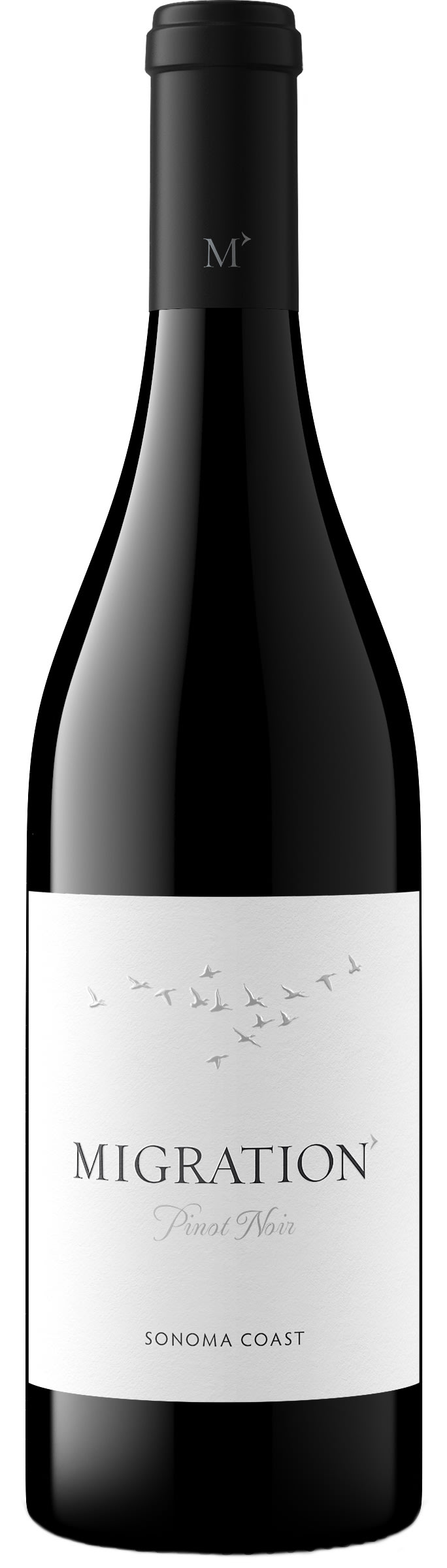
This classy and poised Pinot Noir displays an array of dark berry notes, including raspberry, blackberry, blueberry, and ripe cherry, along with a hint of baking spices. Balanced tension and refined tannins on the palate make the wine both elegant and effortlessly delicious, with subtle flavors of cedar and cassis lingering on the finish.
Review:
-James Suckling 93 Points
-Jeb Dunnuck 94 Points
Co-founded by Dan and Margaret Duckhorn in 1976, Duckhorn Vineyards has spent forty years establishing itself as one of North America’s premier producers of Napa Valley wines. From its modest inaugural vintage of 800 cases of Cabernet Sauvignon and 800 cases of Merlot in 1978, to its addition of Sauvignon Blanc in 1982, Duckhorn Vineyards has crafted a tradition of quality and excellence that continues today.
1981: Alex Ryan begins working at Duckhorn Vineyards during summer vacations from high school. After university, Alex joins the winery fulltime and comes up through the ranks in the vineyards and production before ultimately becoming CEO and president.
1982: Building on Dan and Margaret’s early passion for Bordeaux-varietal wines, and their desire to make an elegant and enticing white wine, Duckhorn Vineyards produces our first vintage of Napa Valley Sauvignon Blanc using grapes from Marlee’s Vineyard, and a handful of other top winegrowing sites.
1989: Recognizing that the great emerging Napa Valley mountain vineyards are producing wines of exceptional character and quality, we produce our first Howell Mountain appellation-designated wine.
1999: After 20 years of only being open for by-appointment tastings, we break ground on our Duckhorn Vineyards Estate House and Tasting Room adjacent to Marlee’s Vineyard in St. Helena.
2003: Renée Ary joins the Duckhorn Vineyards team under then winemaker, Mark Beringer. Throughout her first decade at Duckhorn Vineyards, Renée learns every detail of production moving from lab manager to enologist to assistant winemaker to associate winemaker in charge of Duckhorn’s Sauvignon Blanc and Monitor Ledge Vineyard wines.
2006: Duckhorn Vineyards crafts its debut vintage of The Discussion. Embodying the depth and complexity of our world-renowned Estate program, The Discussion represents the pinnacle of the Duckhorn Vineyards portfolio and our belief in the timeless union of Cabernet Sauvignon and Merlo
2014: After more than a decade of mastering the Duckhorn Vineyards style, Renée Ary is named the fourth winemaker in the four-decade history of Duckhorn Vineyards. In the years to follow, Renée is recognized for making some of the finest wines in the history of Duckhorn Vineyards.
2015: After four decades of working with its sought-after fruit, we acquire Three Palms Vineyard. Widely recognized as the finest Merlot vineyard in North America, Three Palms becomes the crown jewel of our Estate program.
2017: Duckhorn Vineyards celebrates the milestone of our 40th harvest in Napa Valley with an array of events, and a special 40th Anniversary Harvest logo adorning all 2017 vintage Duckhorn Vineyards wines.

Bavencoff Bourgogne Pinot Noir is made from 100 percent Pinot Noir.
Color of medium intensity, purplish in its youth at present, changing to ruby then garnet, after several years in the bottle.
The nose offers intense aromas of cherries, kirsch and fresh strawberry. The palate is the perfectly balanced between round tannins and an elegant freshness. It is harmonious and medium-bodied with a silky and elegant texture and a delicious lingering finish.
Alcoholic fermentation in stainless tanks for 3 weeks. Malolactic fermentation : 80% in stainless tank and 20% in one year old casks (Allier).Manual harvest.
Produced from 100% Pinot Noir planted on clay and limestone soils.
Grilled or boiled red meats, roasts, mild game, soft cheeses like Camembert and Brie.

Twomey Russian River Valley Pinot Noir is made from Pinot Noir.
From the Duncan family of Silver Oak, Twomey's Russian River Valley bottling draws on some of Sonoma County's most celebrated cool-climate sites, where coastal fog and long, even growing seasons give Pinot Noir its signature red-fruit lift and silky texture. The 2023 was fermented with a small proportion of whole clusters and aged about ten months in roughly a quarter new French oak — a restrained, Burgundian approach that keeps the fruit front and center.
The result is a fragrant, medium-bodied Pinot of crunchy cherry and raspberry fruit, woven with cedar, baking spice, and a floral note of rose petal and violet, carried by bright acidity and fine, supple tannins.
Review:
Savory and spicy aromas of ripe wild strawberries and dark cherries precede a lovely medium-bodied palate whose silky texture provides ballast for blood oranges, mixed berries, almond cake and dried flowers. Perky acidity and scrubby herbs add further detail. Drink or hold.
-James Suckling 93 Points
"Incredibly consistent year to year, this is a cherry- and raspberry-fruited Pinot Noir with nuances of pine forest and elegant cedarwood. Medium-bodied on the palate, a core of crunchy red fruits is lifted by apple-skin tannins and bright acidity, which gradually softens to reveal a creamier mid-palate beneath a canopy of vanilla-scented rose petals. A lovely and fragrant vintage for this wine."
— Jonathan Cristaldi, 93 Points

EnRoute Winery Les Pommiers Pinot Noir is made from 100 percent Pinot Noir.
Aromas of fresh raspberry compote are complemented by notes of baking spice, and fresh rain on a forest floor. Generous-yet-soft strawberry preserve flavors expand on the palate, with elegant, silky tannins. A mouthwatering acidity glides across the finish.
Review:
This is a lovely, complex Pinot Noir from a premium Russian River Valley venue that is surprisingly priced more reasonably than lesser wines from the region. It is slightly gamey on the nose and on the palate in the varietal style with dark Bing cherry flavors, and is smooth and almost creamy in texture and taste with mild tannins and a long, haunting finish. In the cellar, it profited from two weeks of skin contact and received a modest oak treatment — standard with many California Pinots — of about 10 months in oak, 30% of it new.
-Roger Morris Wine Review Online 94 Point
Wonderful aromas of wild berries, fresh rose petals and herbs de Provence. Bright and fresh on the palate, with flavors of cranberries, Bing cherries and delicate sweet and savory spices. Medium-bodied with a long, aromatic finish and gentle tannins.
-James Suckling 93 Points

Mascot is a small-production label founded by Will Harlan in Napa Valley. The wines under this label are made from the younger vines of Harlan Estate, BOND, and Promontory, but The Mascot bottles share an exclusive preview at the development of their estates. Founded as an initial experiment to see what the young vines were capable of producing, the wines were initially only shared with close friends and family. By 2008, Will officially released the first vintage to the public since production had increased significantly. They create just one wine made from Cabernet Sauvignon, and the bottle is aged for five years before release. Assembled into a single, youthful expression, this wine shares a glimpse into the evolution and pedigree of its parent estates.
Tasting Notes:
A mild winter with scant rainfall introduced the 2020 growing season. Conditions remained pleasantly even-keeled throughout the spring, except for some light precipitation in March. It is worth noting that decades of research and steady viticultural progress have enabled our vines to begin achieving tannin and textural ripeness earlier in the season, and this fact—along with the drought conditions experienced in preceding years—led to one of the earliest picking windows in our history. This development proved crucial to the 2020 vintage, when we were fortunate to have fully completed our harvest before the Glass Fire began in late September. A vibrant purity manifests within this vintage’s generosity, which advances without excess of weight or volume. Aromas of gentle red fruit give way, eventually, to a savory darkness and finely wrought core. An effortless, structural tension transforms into a silky softness on the palate that envelopes The Mascot’s inner depth and dimension. The 2020 vintage resonates rather than roars: its intricate threads of tannin, acidity, and nuance interweave to form a complete expression that shimmers with sensory detail.

Matthews Cabernet Sauvignon Columbia Valley is made from 76% Cabernet Sauvignon, 15%Merlot, 6% Cabernet Franc, 2% Petit Verdot, 1% Malbec.
The 2021 Columbia Valley Cabernet Sauvignon is deep ruby in the glass with purple hues. The rich bouquet of spiced black plum and cocoa nib are balanced with aromas of fresh earth and crushed flint. Intense and opulent flavors of ripe blackberry, cedar, mocha, and black currant coat the broad and balanced palate and the ripe tannin creates a perfect frame for the lush fruit expression. Cherry cordial and cola linger on the long, quenching finish.
Review:
-Decanter 94 Points
-Owen Bargreen 94 Points
-Wine Spectator 93 Points
-Vinous 93 Points
-Jeb Dunnuck 93 Points

WINERY SALE!
COLOR Deep, dark brick red to blood plum
AROMAS A seamless blend of crème de cassis, hazelnut, cocoa, blackberry preserves, a charry meat toastiness, dark fruits and blackberry pie along with suggestions of dark licorice, stewed rhubarb, strawberry, spice and vanillin.
PALATE Rich and satisfying with chocolate brownie, yogurt, molasses, brown sugar and rhubarb notes presented in perfect balance with higher-toned fruit emphasis.
STRUCTURE The wine’s weight is first felt on the front of the palate but then coats the entire mouth with placating tannin and a light, pleasing grittiness. This weight, ideally counterpoised alongside the acid, leaves the mouth watering. Great persistence on the finish.
Dark ruby red in the glass, with rich notes of chocolate, black currant, ripe blackberry, and marionberry with hints of toasted oak and dark cherry on the nose. The palate is rich and complex with flavors of ripe dark fruits, chocolate cherry, plum, toffee, and blackberry pie. This wine has a lingering fruit-forward finish with firm acidity and smooth velvety tannins. A classic yet complex Napa Valley Cabernet Sauvignon.
Review:
Silky and streamlined, rich and approachable, with cigar leaf, roast coffee, and dark chocolate. The refined mouthfeel is graced with black currant and a touch of oak mingled with anise and notably balanced acidity.
Tasting Panel 94 Points

Merryvale Pinot Noir Sonoma Coast 2022 is made from Pinot Noir.
From the cool, fog-swept vineyards of the Sonoma Coast — including fruit from the celebrated Durell and Sunchase sites — this is Merryvale's elegant, Burgundian-minded take on California Pinot Noir. A mix of Dijon and heritage clones (667, Pommard, 777 and 828) was largely destemmed, fermented with native yeasts, and aged about ten months in roughly 40% new French oak — restraint that lets the fruit lead. Expect a perfumed, silky glass: black cherry, raspberry and dark berry lifted by forest floor, cola spice and a whisper of graham cracker, with bright acidity and fine, polished tannins carrying a long finish. Lovely now and over the next decade.
Winery Info: Merryvale Vineyards was founded in 1983 and makes its home in the historic Sunny St. Helena winery on Main Street — a stone landmark built in 1933 as the first winery raised in the Napa Valley after Prohibition, and the cellar where Robert and Peter Mondavi first made wine with their father, Cesare. The Schlatter family has owned and run Merryvale since the 1990s, today led by René Schlatter. At its heart lies the Historic Cask Room, where two stories of century-old 2,000-gallon oak casks line the walls. Four decades on, Merryvale remains a quintessential St. Helena house.
Review:
A wonderful interplay of brightness and savoriness captures the elegance of wines from the Sonoma Coast. Aromas of crushed red raspberries, sauteed mushrooms and wild blackberries. On the palate there’s red fruit and black pepper, with bright, crunchy acidity and taut tannins. The finish is long, with umami flavors. Medium-bodied. Drink or hold.
-James Suckling 94 Points

Ferren Pinot Noir Sonoma Coast is made from 100 percent Pinot Noir.
100% native fermentation (primary and secondary), long cool fermentations often lasting up to a full year, minimal lees stirring, no additions of any kind (commercial yeast, water, acid, enzymes, etc., never any fining or filtration). Aged 18 months in 15% new French oak (Francois Freres, Vosges, Troncais Forrests)
Review:
-Audrey Frick (Jeb Dunnuck) 98 Points
-Erin Brooks (Robert Parker) 96 Points

Kosta Browne Sonoma Coast Pinot Noir is made from 100 percent Pinot Noir.
Dark cherry, raspberry, and elderberry intertwine with intriguing hints of fresh basil, and pomegranate. Decadent fruit flavors unfold, showcasing remarkable acidity with dynamic structure and an enduring finish.
Our Appellation Series wines embody our unwavering commitment to exploration and the artistry of crafting soulful, thought-provoking wines that pay homage to the world’s extraordinary terroirs.
The Sonoma Coast is the largest appellation in Sonoma County, strongly influenced by its proximity to the ocean and heavy rainfall—producing more than twice the annual amount of its inland neighbors.
Our Sonoma Coast vineyards span the northern true coastal zone and the southern edge of the appellation. This distinctive blend is made from 11 different clones, fermented in predominantly stainless steel, and aged for 16 months in 38% new oak. The resulting wine has an energetic acidity with cascading layers of black cherry and elderberry, followed by a lasting finish.
Fact of Note: This Sonoma Coast blend was the longest to ferment in stainless steel from our Appellation Series.
Review:
-Decanter World Wine Awards 94 Points

Paul Hobbs West Sonoma Coast Pinot Noir is made from 100 percent Pinot Noir.
Hailing from the newly established West Sonoma Coast AVA,.
Lovely ruby red shades catch the eye, while exotic notes of tart Morello cherry and pungent pine forest swirl with fresh raspberry. Bright, pure fruit carries through on the palate, layered with earthy hints of damp loam and rocky salinity, all backed by the elegant, fine-grained tannins and stylish grip that cool West Sonoma Coast offers at its best.
Review:
-Tasting Panel 97 Points

Cattail Creek Pinot Noir Sonoma Coast is made from 100 percent Pinot Noir.
The cool maritime influence of the Sonoma Coast appellation is on full display in this elegant Pinot Noir. Aromas of fresh cherry, raspberry, and violet give way to a silky, medium-bodied palate with layers of red fruit, subtle earthy notes, and gentle spice. The wine's bright natural acidity and fine-grained tannins create a beautifully balanced structure, making it a versatile companion at the table. Enjoy now or cellar for 3-5 years.

The Sonoma Coast AVA is becoming known as the top source for cool climate Pinot Noir. Flanagan Pinot Noir is founded in letting each site and each vintage express itself. They do not have a dogmatic approach to wine-making. Pinot Noir, more than any other grape variety, is made in the vineyard.
The nose is reminiscent of Chambord with rich raspberry notes. The palate has great depth of fruit and notes of Christmas spices like clove and nutmeg. The wine displays vibrant acidity and has a very clean finish. Our Flanagan Pinot Noir Sonoma Coast pairs beautifully with duck, salmon, pork and game; like pheasant, venison, and elk.
Review:
-Wine Enthusiast Magazine 94 Points

Jean-Michel Sorbe Quincy Blanc is made from 100 percent Sauvingon Blanc.
The first nose is expressive and opens up to notes of acacia, citrus (lemon, grapefruit). Full on the palate with lovely freshness. This wine boasts nice balance and good length.
The vines are 15 to 20 years old and are located on the left bank of the Cher River, southwest of Quincy. This vineyard enjoys good exposure to the sun and overlies hillocks composed of sandy alluvial deposits and gravel dating back to the Quaternary Period. Each terroir is managed with minimal intervention in an environmentally friendly approach. Vinification: Slow pressing. Fermentation took place under controlled temperatures (18°C).The wine was aged on fine lees for a minimum of 4 months. It was filtered only once before being bottled.
Pair with crustaceans, asparagus, or goat's cheeses.
After pouring, allow the wine to breathe for a few moments in the glass before enjoying so that it may fully release all of its aromas.

From the Adrianna Vineyard — Catena Zapata’s crown jewel, planted at nearly 5,000 feet in Gualtallary, high in the Tupungato district of Mendoza’s Uco Valley, and one of the highest-altitude vineyards in all of Argentina. Nicolás Catena named it for his youngest daughter, and the wine world has come to call it the Grand Cru of South America.
White Stones is a single parcel within Adrianna — a Vino de Parcela, a wine of one plot — named for the round, white calcareous river stones that litter its alluvial soil. Those stones, the thin mountain air and the cold Andean nights give this Chardonnay its signature: taut, saline and mineral-driven, with laser acidity and a long, chalky, almost Chablis-like finish. It is a wine of place before it is anything else.
Region
Mendoza is the heart of Argentine wine, a high desert in the rain shadow of the Andes where the vines live on Andean snowmelt and ripen under intense sunlight and wide day-to-night temperature swings. The Uco Valley is its coolest, highest and most exciting frontier, and Gualtallary — a rocky, limestone-rich zone above Tupungato — sits near its upper edge. The combination of altitude, poor stony soils and cold nights preserves a freshness and tension that lower, warmer sites simply cannot match.
Winery Info
Founded in 1902, Bodega Catena Zapata is one of Argentina’s founding wine families. It was Nicolás Catena Zapata who, through the 1980s and ’90s, bet that world-class wine could be grown at extreme altitude in the Andean foothills — a conviction that reshaped Mendoza and restored Malbec as a fine-wine grape. Today his daughter, Laura Catena — a physician who founded the Catena Institute of Wine — leads the family’s relentless research into high-altitude terroir. The Adrianna Vineyard is the fullest expression of that life’s work.
Review:
-James Suckling 99 Points



