
" We don't sell the wine without touching the vine "
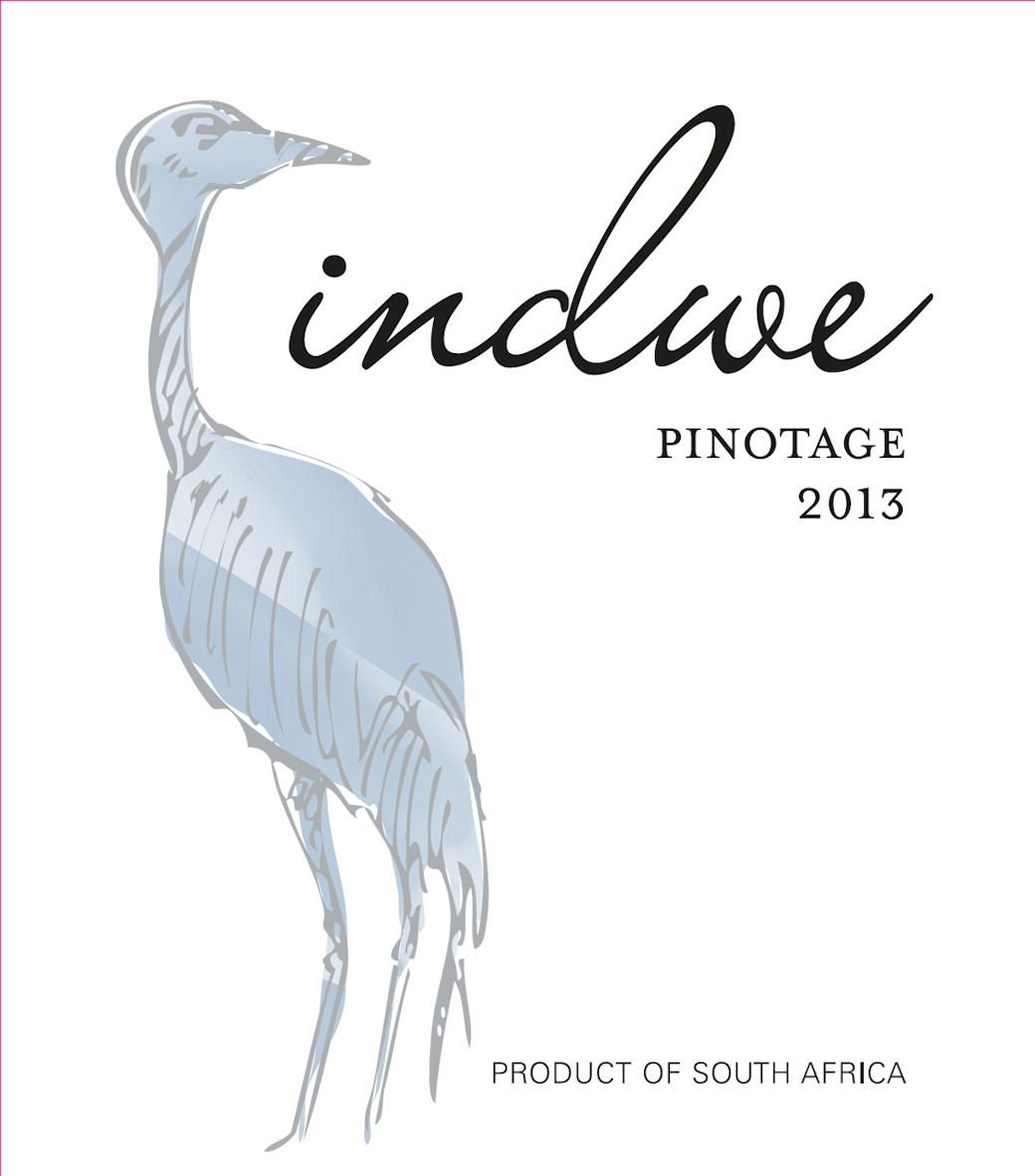
| Country: | South Africa |
| Region: | Elim |
| Winery: | Indwe |
| Grape Type: | Pinotage |
| Organic: | Yes |
| Vintage: | 2015 |
| Bottle Size: | 750 ml |
Indwe Pinotage Coastal Region is made from 100 percent Pinotage.
Pinotage is a true South African grape variety, Our signature grape smilar to the Blue Crane being our national bird. Indwe Pinotage grapes are meticulously sourced from our grape producers along the Coastal region of the Western Cape ensuring complexity, depth and purity of fruit. The wine is layered with sweet cherry notes, and subtle hints of mocha and vanilla flavors.
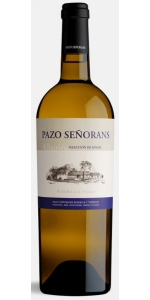
Pazo de Senorans Seleccion de Anada Albarino is made from 100 percent Albarino.
Straw yellow with greenish tints, vivid and brilliant. High intensity and very expressive. Profusion of aromas with traces of mineral. Great volume and ample body leaving a lasting impression from beginning to end.
Reviews:
The 2015 Albariño Selección de Añada is nothing short of phenomenal. For some reason, I hadn't tasted the young 2015 Albariño at the time it was released. It comes from the Los Bancales vineyard planted some 50 years ago and fermented with indigenous yeasts but without malolactic fermentation. It has a bright, almost fluorescent color and a complex, subtle and nuanced, elegant and expressive nose, with notes of sea shells and sea breeze, grass and white flowers. It's very clean, and the palate shows great balance and even feels a bit young. It has remarkable acidity and freshness (seven grams of tartaric acid) with good ripeness and 13% alcohol. This matured in tank with lees for over 30 months and was bottled in June 2024. It feels more serious and less exotic than earlier vintages. 18,000 bottles produced. This is the finest vintage that I can remember. Bravo!
-Wine Advocate 97 Points
Tech:
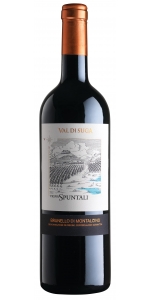
This is a 6 pack with 2 bottles each from vintages from 2013, 2015, and 2016.
***Tenimenti Angelini Val di Suga Vigna Spuntali Brunello di Montalcino 2016:
The 2016 Vigna Spuntali Brunello di Montalcino is the most brooding of the lineup from Val di Suga and is sourced from the southwest of the region on sandy soils. There are aromatics of black raspberry, licorice, menthol, sage, cinnamon, and iron-rich earth. Its Mediterranean influence is felt on the palate with ripe black cherry, dried herbs, and sun-baked earth. This is the fullest bodied and most savory of the Val di Suga lineup, with more roundness and grip. Its structure will benefit from cellaring for several years and will be great drinking over the next 20 years or more. 2026-2040.
-Jeb Dunnuck 96 Points
***Tenimenti Angelini Val di Suga Vigna Spuntali Brunello di Montalcino 2015:
The 2015 Vigna Spuntali Brunello di Montalcino is more introverted on first opening, with notes of black plum, licorice, dried Mediterranean herb, and sun-baked earth. On the palate, it offers a tart dried fruit character, with a building tannin structure that finishes with tomato leaf, and bitter herbs. The most rustic and burly of the wines in the lineup of the 2015 Val di Suga vintage, it will benefit from allowing some time in cellar to see how this matures and its tarriness develops. Drink 2026-2036
-Jeb Dunnuck 94 Points
***Tenimenti Angelini Val di Suga Vigna Spuntali Brunello di Montalcino 2013:
Plenty of spices and fresh herbs on the nose, such as dried rosemary and nutmeg, to match the underlying dried redcurrants and cranberries. Full-bodied with plenty of concentration, but still shows a very sturdy, tannin backbone and punchy acidity, to drive this through to a long finish. Drink in 2021.
-James Suckling 94 Points
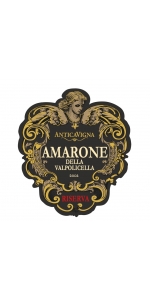
Antica Vigna Amarone della Valpolicella Riserva is made from 65% Corvina, 20% Rondinella, 10% Corvinone, 5% Merlot.
Amarone DOCG has maintained unchanged its typicality, so that “the essence of the territory” of Valle di Mezzane and Cazzano di Tramigna powerfully emerges. Rich in color, firmly structured but with fresh notes.
WINEMAKING AND AGING:
Manual harvest early October with selection of the best bunches.
Drying: natural drying in fruit cellar for 3/4 months with a sharp drop in weight of around 30%.
Vinification: soft crushing of destemmed grapes in the months of January and February.
Fermentation: at a controlled temperature of 18/21°C. Fermentation time: about 30 days
Aging:· 80% in oak barrels for 30 months of which 2/3 in American and French barriques, half of which are used for the second and third time, 1/3 in large
THE TERRITORY:
Geographical location: Tenuta di Mezzane, Tenuta di Cazzano di Tramigna
Height: 350/400 meters asl
Exposure: south
Soil type: limestone
Vineyard training system: guyot and pergola
Vine planting year: from 1972 to 2009
Vine density: 4,000 to 5,400 vines per hectare Vineyard management: sustainable agriculture and great attention to natural
cycles
Pairs well with grilled and roasted meats, as well as cheese.
Timeless Notes:
Dark cherry in color, firm on the palate with a vibrant acidity underbelly. Thought lush on the palate the flavors are complex and elegant from entry to mid-palate with hints of currant and wild berries. The finish brings in a touch of tobacco and leather notes ,classic examples of this region, with more ripe fruit flavors that linger on long strain tannin finish. Complex with depth and elegance on the palate. This one is drinking now, but can handle more time in the cellar with ease. An excellent value in the Riserva category.
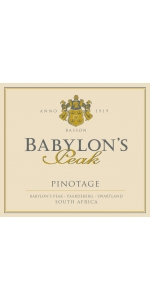
Babylons Peak Pinotage is made from 100 percent Pinotage.
Babylon's Peak winery, situated on the highest weathered granite slopes of the Paardeberg Mountain, is privately owned by the Basson family who has passed down the tradition, passion and art of winemaking over four generations. Predominantly low-yield dryland bushvines are selected to produce these excellent wines with distinctive character.
Dark red color, with ripe plums and mocha on the nose. Dark fruit followed by spice on the palate. A well balanced wine with smooth integrated tannins.
The Pinotage is dryland bushvines, planted on the highest south-east facing granite slopes on the farm. Due to its unique terroir, this vineyard ripens slowly over a very long period. This results in very dark color, soft tannins and good flavor compounds. The baboons normally harvest their quantity first and we pick the rest.
The grapes were harvested by hand at 25,6°B.and destalked only. No crushing was done. Cold maceration was done before fermentation started in open fermenters. The grapes fermented between 24-26°C for 5-7 days, after which the wine was taken to barrels where it went through malolactic fermentation. After malolactic fermentation was completed, the wine spent 12 months in 225 liter French oak barrels until bottling.
Pairs with lamb, bobotie and braaied red meat.
Babylons Peak Pinotage is made from 100 percent Pinotage.
Babylon's Peak winery, situated on the highest weathered granite slopes of the Paardeberg Mountain, is privately owned by the Basson family who has passed down the tradition, passion and art of winemaking over four generations. Predominantly low-yield dryland bushvines are selected to produce these excellent wines with distinctive character.
Dark red color, with ripe plums and mocha on the nose. Dark fruit followed by spice on the palate. A well balanced wine with smooth integrated tannins.
The Pinotage is dryland bushvines, planted on the highest south-east facing granite slopes on the farm. Due to its unique terroir, this vineyard ripens slowly over a very long period. This results in very dark color, soft tannins and good flavor compounds. The baboons normally harvest their quantity first and we pick the rest.
The grapes were harvested by hand at 25,6°B.and destalked only. No crushing was done. Cold maceration was done before fermentation started in open fermenters. The grapes fermented between 24-26°C for 5-7 days, after which the wine was taken to barrels where it went through malolactic fermentation. After malolactic fermentation was completed, the wine spent 12 months in 225 liter French oak barrels until bottling.
Pairs with lamb, bobotie and braaied red meat.
Pinotage is a true South African grape variety, Our signature grape smilar to the Blue Crane being our national bird. Indwe Pinotage grapes are meticulously sourced from our grape producers along the Coastal region of the Western Cape ensuring complexity, depth and purity of fruit. The wine is layered with sweet cherry notes, and subtle hints of mocha and vanilla flavors.
The Indwe Estate
At the southern-most tip of Africa, where the Atlantic and Indian Oceans meet, one finds the ‘Cape of Storms’, or more commonly, Cape Agulhas. On this peninsula lies the Elim ward and Overberg region, where we source the grapes for Indwe Sauvignon Blanc. Indwe is the Xhosa name for the Blue Crane, South Africa’s national bird. It is an endangered species and endemic to South Africa, particularly the Overberg region. The Blue Crane is very special to the amaXhosa and amaZulu, often associated with warriors and royalty.
Owner and Winemaker is Trizanne Barnard. During her productive vinous career, she has seized every possible opportunity to broaden her knowledge and experience, pressing them for every drop of goodness they offered, enriching her life, her work and her wine. With a B.Sc Agric under her belt she stepped into the real world of wine, completing harvests in Western Australia, Alsace, Bordeaux, Rhone and Douro Valley.
Back on home soil, after a year at Klein Constantia she was challenged with setting up a winery in the Helderberg. After four successful years,she decided it was time to venture on my own, creating her own project.
The Indwe Estate
At the southern-most tip of Africa, where the Atlantic and Indian Oceans meet, one finds the ‘Cape of Storms’, or more commonly, Cape Agulhas. On this peninsula lies the Elim ward and Overberg region, where we source the grapes for Indwe Sauvignon Blanc. Indwe is the Xhosa name for the Blue Crane, South Africa’s national bird. It is an endangered species and endemic to South Africa, particularly the Overberg region. The Blue Crane is very special to the amaXhosa and amaZulu, often associated with warriors and royalty.
Owner and Winemaker is Trizanne Barnard. During her productive vinous career, she has seized every possible opportunity to broaden her knowledge and experience, pressing them for every drop of goodness they offered, enriching her life, her work and her wine. With a B.Sc Agric under her belt she stepped into the real world of wine, completing harvests in Western Australia, Alsace, Bordeaux, Rhone and Douro Valley.
Back on home soil, after a year at Klein Constantia she was challenged with setting up a winery in the Helderberg. After four successful years,she decided it was time to venture on my own, creating her own project.
The Vineyards
The historic mission settlement of Elim on the Agulhas Plain comprises 6 500 hectares of land.  Half of this land is under agriculture and for the past one hundred years has been cultivated and the remaining + 3 000 hectares of Elim ferricrete fynbos is managed by the Moravian Church and the community at the Elim mission station.
Elim was established in 1824 by Moravian missionaries and sacramental wine was required for church services, and the first vineyard planting in this region subsequently occurred over 100 years ago however viticulture didn’t really establish until 1997 when it resumed again.
First Vineyard plantings: 1996 – Lands End. After Lands End, The Berrio planted the next vineyards in 1997.
Producers in Elim:
Total hectares of vineyards 129.16 Ha = 319.161 Acres
White grape varietals found on Elim: approximately 80% Sauvignon Blanc, 15% Semillon and the rest is small parcels of Viognier, Nouvelle.
Pago de Carraovejas Ribera Del Duero is made from 90% Tempranillo, 6% Cabernet Sauvignon and 4% Merlot
The most honest interpretation of the Carraovejas Valley.
Body, structure and balance with a vibrant background. Delicacy, harmony and passion for detail are perceived in a wine that reflects the unique character of the valley in an outstanding way.
The 2022 vintage was characterized by cool winter months and extremely low rainfall, reaching limits that had not been observed for years. Due to the good rainfall of the previous year, the vines had good accumulated water reserves, which allowed the vineyard to have a good phenological cycle and normal development. Budding and flowering were perfectly developed in each of the varieties worked, and a homogeneous and balanced development of the plants was achieved. The summer was excessively hot, with several episodes of heat waves, which were mitigated by drip irrigation. Veraison, which was slower than in previous years, and ripening began in early August and the berries developed very uniformly. Harvest began on September 12 and ended on September 28.
Pago de Carraovejas 2022 is the most honest reflection of the valley to which it owes its name. An environment in which the vines climb the slopes to form a unique landscape. On the surface, its tertiary soil of limestone marl, clay and sandstone outcrops force the vines to self-regulate and give their best. Plots that converge in an orography marked by its unique mesoclimate. The vineyards are distributed from the middle zones to the moors that exceed 900 meters in altitude; from the gentle undulation that descends towards the stream, to the plots that exceed 30% slope. South- and north facing slopes, each with its own personality, create the profile of the Carraovejas Valley.
The grapes for Pago de Carraovejas 2022 were harvested by hand after an initial selection of bunches in the vineyard. Subsequently, in the winery, a double selection was made: first by cluster then by berry. Gravity must production allows maximum respect for the raw material. During the fermentation process, indigenous yeasts and lactic bacteria from our own estate were used. The wine was aged in French and American oak barrels for 12 months. The entire process was marked by precision and care in every detail. For greater protection, the wine contains sulfites. Finally it was clarified with natural egg white and bottle in spring of 2024.
Review:
A concentrated, dense Ribera del Duero, but there is a lot to like if you enjoy plushness, with its lush blackberry fruit and dark chocolate. Fine-grained and full-bodied on the palate, but fresh and still pretty tense, with chalky tannins. Drink from 2025.
-James Suckling 93 Points
Maringer-Reif Piesporter Michelsberg (liter) is 100 percent Riesling.
This Mosel-Riesling is fruity and semi-sweet. It is easy to drink on the evening of a hot summer day. It's got a hint of lemon flavor and a very good minerality.



