
" We don't sell the wine without touching the vine "
| Country: | United States |
| Regions: | California California (Napa) |
| Winery: | Inglenook |
| Grape Type: | Zinfandel |
| Vintage: | 2018 |
| Bottle Size: | 750 ml |
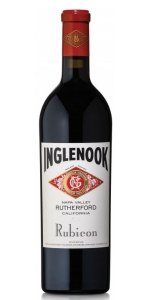
Inglenook Rubicon is made from 88% Cabernet Sauvignon, 8% Merlot, 3% Cabernet Franc, 1% Petit Verdot
Since its inaugural vintage in 1978, Rubicon has been the Estate's premier red wine, reflecting the soul of the property and expressing Francis Coppola's wish to create a Bordeaux-styled grand wine, that is, "a wine that can please contemporary taste, but with a historical aspect [that defines] our vineyards at their zenith."
Rubicon was named after the small river crossed by Julius Caesar in 49 B.C., declaring his intention to gain control of Rome, thereby launching a civil war among opposing factions. Over time the phrase "crossing the Rubicon" has come to signify any irreversible action with revolutionary intent or the outcome of which holds great risk. True to its uncommon depth, Inglenook's Rubicon continues to be a testament to the finely tuned rendering of a risk well-taken.
Strikingly rich in color and extract, the 2018 Rubicon is unquestionably a precocious, hedonistic wine. The exotic, well-knit aromas and flavors include ripe cassis, allspice, star anise, vanilla and black licorice. Upon entry, this full-bodied wine envelops the palate with its luxurious concentration and supple, silky tannins, supported by vibrant freshness from the balanced acidity, and perfectly-integrated French oak. Very long and expansive in the finish, the 2018 Rubicon will be memorable for decades to come.
Review:
Subtle and complex red with blackberry, black truffle, sweet tobacco and mahogany. Highlights of lavender and violets. Full-bodied and very tight with finesse and tension. Very polished, fine tannins. Long finish. Delicious already, but best after 2022.
-James Suckling 97 Points
Grace Town Old Vine Zinfandel Lodi is amde from 98% Old VIne Zinfandel + 2% Cabernet Sauvignon.
Ruby red in color, with red fruit, raspberry, and spice on the nose. This wine is medium in body, with notes of ripe cherry, cedar box, cinnamon, anise, black pepper, and hint of smoke on the palate. It has a long, silky finish.
Kinsella Estates Spencer Zinfandel is made from 100 percent Zinfandel.
A complex amalgamation of tart blueberries, baked plums, warm earth, fresh black cherries, anise, pie crust, brown sugar and a slight note of sweet confectionary candy. On the palate, the wine is plush with great depth and an expansive roundness that seems to push outward with power. The complex flavor mirrors the nose, with a savory/spicy finish and a slightly sticky/resinous grip of the tannins.
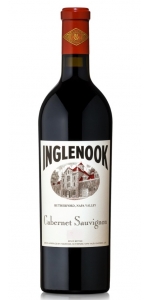
Inglenook Rutherford Cabernet Sauvignon is made from 96% Cabernet Sauvignon, 4% Cabernet Franc.
Stunningly deep ruby in color, the 2019 Cabernet Sauvignon opens with heady aromas of brambly black cherry, vanilla, warm brioche, and crème de cassis. As the wine warms on the palate, notes of red cherry, graphite and fennel emerge, as very polished, refined tannins carry the wine into a long, fragrant finish. Layered flavors, good tension, and a perfect integration of wine and oak interact to create this classic expression of Inglenook Cabernet Sauvignon.
Review:
This shows notes of ripe blackberries and blackcurrants with hints of licorice, cloves, walnuts and chocolate. It has full body and a velvety tannin structure. Juicy and vibrant fruit on the palate with a touch of earthiness. Smooth and delicious. Long, fruity finish. Very pure fruit. Try after 2024.
-James Suckling 95 points
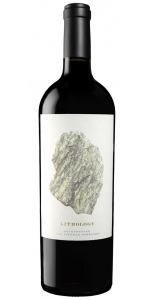
Alejandro Bulgheroni Lithology Beckstoffer Las Piedras Cabernet Sauvignon is made from 100 percent Cabernet Sauvignon.
From a St. Helena vineyard planted by early Napa settler Edward Bale more than 150 years ago, and later serving as the estate vineyard for the area’s first winery built by Henry Pellet in 1860, the Las Piedras site always gives us our prettiest wine. When placed next to Dr. Crane and To-Kalon wines, the Las Piedras show a certain elegance, with a very graceful entry and finely detailed complexity. We produce it with at least 75% new French oak, so there is a floral, spicy, and vanilla accent to the intense red and black fruits, cassis, and black cherry liqueur. What distinguishes this bottling is the beautifully fine tannins, delicate texture, and stunning purity. (Less than 100 cases made.)
Fermentation 70% Oak, 24% Concrete, 6% Puncheon
Review:
"The 2018 Cabernet Sauvignon Lithology Beckstoffer Las Piedras Vineyard comes from a world-class site outside of St. Helena and is all Cabernet that spent 20 months in 80% new oak. It offers a touch more red fruit as well ample cassis, spring flowers, loamy earth, and spice-like aromas and flavors. It has a wonderful sense of minerality, ultra-fine tannins, a dense, layered texture, and incredibly purity of fruit. It’s another just about off the charts release from this estate."
- Jeb Dunnuck 98 Points
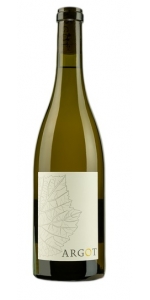
Argot Chardonnay Sonoma County is made from 100 percent Chardonnay.
Pouring a green-tinted gold, our Sonoma County Chardonnay is a beautiful wine from word go. Radiating from within, a blast of apple/pear fruit informs this wine both aromatically, and on the palate. As flavors unfurl, a progression of orange blossom, pineapple, white peach, and hazlenut are followed by a finish dominated by ginger, baked apple, with a trailing kiss of mint’s freshness. A stunning wine — wholly informed by the perfection of 2018’s growing season — defined by its dichotomy of massively intense flavors, and superb acidity and freshness.
Raised by minimalistic methods, often associated with the classic Chardonnay winemaking techniques of Meursault. With a focus on the coolest Chardonnay region in Sonoma County, 2018’s long, even growing season favored our vineyards’ moderate climate, old vines and deep volcanic soils. These grapes were allowed an extended ripening period on the vine, resulting in perfect balance and concentrated flavors.
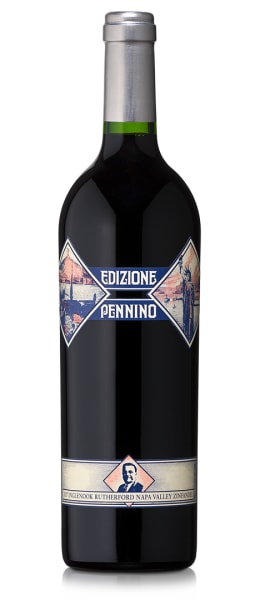
Deep garnet in color, the 2018 Pennino Zinfandel is immediately appealing, with aromas of warm strawberry-rhubarb pie, clove, and ripe boysenberry. In the mouth, the wine is dense, with good weight and fine, rounded tannins. Refreshing acidity and sweet oak support the elongated finish.
Inglenook covers approximately 1,700 contiguous acres with nearly 235 acres dedicated to vineyards. The variations in the Estate's topography reflect the great diversity of Napa Valley itself–-from the loamy, well-drained soils at its rear to an expanse of vineyards with deeper, but finer soils located in front of the Chateau–-and contribute to the singularity of Inglenook's terroir, a complex term incorporating the natural growing conditions of the specific site as well as the winemaker's signature––with some ineffable quality arising from the two–-which distinguish the wine's personality as unique.
Francis Ford Coppola is best known as the six-time Academy Award-winning director of such epic films as The Godfather trilogy and Apocalypse Now. As a writer, director, and producer, he has been a central figure in contributing to the shape of contemporary American cinema. His creative pursuits run wide, however, and he is one of those rare individuals who can turn his dreams into viable realities, perhaps because of his clarity in seeing life as being full of all the possible ways to tell stories wanting to be told.
The whole of the 1970s was an extraordinary time in his career—writing, directing, and/or producing The Godfather (1972), American Graffiti (1973), The Godfather Part II (1974), The Conversation (1974), and Apocalypse Now (1979), a bevy of films earning him 12 Academy Award nominations, five Academy Awards, and two Palme d'Or awards from the Cannes Film Festival. It was during this same period that Francis embarked on an entirely different venture, to tell an entirely different story that would further develop the course of one of America's most venerable wine estates—Inglenook.
Ever since 1975, when he purchased the major portion of what was then under corporate ownership, Francis vowed to reunite Inglenook's land, the land to its name, and Inglenook's name to its former integrity. He established his own estate winery of Niebaum-Coppola that same year, and produced the first vintage of his flagship red wine, Rubicon, in 1978. More wines were to follow under the Niebaum-Coppola Estate label, with Francis steadily working towards his ultimate goal of "restoring Inglenook to its rightful place in history." In 1995 he bought the remaining part of the original Inglenook property, renovating its Chateau—which had stopped making wine—in both aesthetic appearance and function as a winemaking facility. And then in 2011, after nearly 40-years worth of committed resources and resolve, he acquired Inglenook's name and trademark, making it whole once again—in presence and spirit—with a winemaking approach that now honors its present and future welfare.
An inveterate traveler, Francis always looks to new experiences as sources of insight and, as a way of sharing his delight in exploring foreign sensations—sights, sounds, tastes—has opened several luxury hideaways in Central America, Argentina, and the exceptional Palazzo Margherita in southern Italy. He launched Zoetrope: All-Story, a quarterly magazine of short fiction and one-act plays, in 1997, and is the best-selling author of The Godfather Notebook (2016). Fascinated with the potential of combining theater, film, and television into one art form, he most recently authored Live Cinema and Its Techniques (2017), a book filled with descriptions and discussions of the methods involved in instantaneously broadcasting performance-based productions that retain the spontaneity of a live event. He is presently working on a cycle of screenplays that he intends to produce in this experimental medium.
Aalto P.S. Pagos Seleccionados Tinto is made from 100 percent Tempranillo.
Climatic conditions
The farming year began with a mild autumn and little precipitation. A very dry winter started with -9ºC reaching at the end higher temperatures than normal for that time of the year. Spring and summer characterized by little rain, only some rain showers in July and late August avoided the hydric stress of the vines. The vegetative cycle of the vine developed with big variations of temperatures, alternating warm and atypical low temperatures of 4ºC for mid-June. The ripening of the grapes happened under very good conditions and the harvest started on 24th September 2019.
100% Tinto Fino (Tempranillo) primarily from very old vines – 60 to 90 years old – from selected plots in La Horra and La Aguilera. The harvest was done by hand, in small boxes of 15 kilos that are thoroughly inspected, bunch by bunch, on the selection table.
Tasting notes
Review:
Lots of depth here, with ripe blackberries and some nicely baked black cherries, roasted herbs, incense, dark spices, mussels and a balsamic tinge. An admirably fine dollop of tannins on the palate, which are immaculate and juicy, as they thoroughly dunk into the black fruit, melting into a persistent finish that lasts for over a minute. Very impressive. Drink or hold.
-James Suckling 96 Points
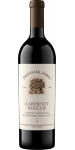
Freemark Abbey Bosche Cabernet Sauvignon is made from 93% Cabernet Sauvignon, 7% Merlot.
Nestled in the heart of the Rutherford Bench, the Bosché Vineyard has the ideal terroir for growing elegant and balanced Cabernet. The 2019 vintage opens with aromas of chocolate covered cherry, blueberry, graphite, and forest floor. The palate is rich and supple with notes of forest fruit compote, cigar box, mocha, and carob. The tannins are already silky and integrated which means it drinks wonderfully now and will age gracefully for decades. .
Review:
From a valley floor site and a blend of 90% Cabernet Sauvignon and 10% Merlot, the 2019 Cabernet Sauvignon Bosche offers a great bouquet of both red and black fruits as well as notes of herbes de Provence, loamy earth, and spicy oak. Brought up in two-thirds new French oak, it’s medium to full-bodied, has ultra-fine tannins, and beautiful overall balance. A brilliant 2019, it will evolve for 20+ year
Jeb Dunnuck 96 Points



