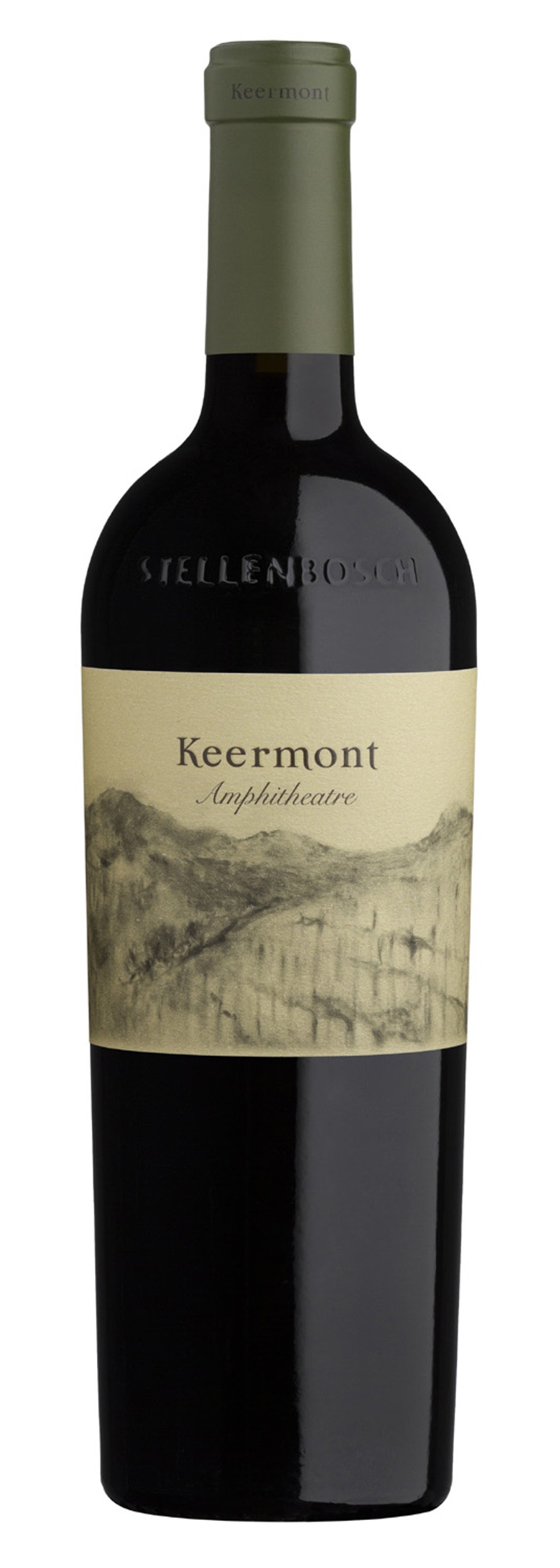
" We don't sell the wine without touching the vine "
| Country: | South Africa |
| Region: | Stellenbosch |
| Winery: | Keermont Vineyards |
| Grape Type: | Cabernet Sauvignon |
| Organic: | Yes |
| Vintage: | 2015 |
| Bottle Size: | 1500 ml |
Dominus Napa Valley Red Blend is made from 88% Cabernet Sauvignon, 7% Cabernet Franc, 5% Petit Verdot.
The historic Napanook Vineyard, a 124-acre site west of Yountville, was planted in 1838. This vineyard was the source of fruit for some of the finest Napa Valley wines. Estate-bottled in the spirit of the Bordeaux châteaux, Dominus Estate is dry-farmed to allow natural stress and good concentration of fruit. Grape clusters are crop-thinned to allow sun and air to pass in between, helping to achieve full maturation and soften the tannins. Only 20% to 40% new French oak barrels are used in order to limit the extraction of oak notes. To express the unique terroir, the classic Bordeaux grape varietals of Cabernet Sauvignon, Merlot, Cabernet Franc and Petit Verdot are planted with different root stocks best suited for the varying soil composition of gravel, heavy clay and loam.
Reviews:
One of the legendary Dominus, the 2021 Cabernet Sauvignon is unquestionably in the same league as the 2018, 2016, 2015, 2013, 2010, and 1991, and to my mind, wine simply doesn't get any better. Sporting a dense purple hue as well as an incredible perfume of blackcurrants, crushed stone, cedar pencil, smoke tobacco, and baking spices, it s rich, full-bodied, and voluptuously textured, with ripe yet building tannins. It reminds me slightly of the 2010 (maybe the 2013), and I suspect it will have a similar evolution. Hide bottles for 7-8 years, and it will evolve gracefully for 30+ years. Hats off to the team of Christian Moueix and director Tod Mostero.
Jeb Dunnuck 100 Points
Pazo de Senorans Seleccion de Anada Albarino is made from 100 percent Albarino.
Straw yellow with greenish tints, vivid and brilliant. High intensity and very expressive. Profusion of aromas with traces of mineral. Great volume and ample body leaving a lasting impression from beginning to end.
Reviews:
The 2015 Albariño Selección de Añada is nothing short of phenomenal. For some reason, I hadn't tasted the young 2015 Albariño at the time it was released. It comes from the Los Bancales vineyard planted some 50 years ago and fermented with indigenous yeasts but without malolactic fermentation. It has a bright, almost fluorescent color and a complex, subtle and nuanced, elegant and expressive nose, with notes of sea shells and sea breeze, grass and white flowers. It's very clean, and the palate shows great balance and even feels a bit young. It has remarkable acidity and freshness (seven grams of tartaric acid) with good ripeness and 13% alcohol. This matured in tank with lees for over 30 months and was bottled in June 2024. It feels more serious and less exotic than earlier vintages. 18,000 bottles produced. This is the finest vintage that I can remember. Bravo!
-Wine Advocate 97 Points
Tech:
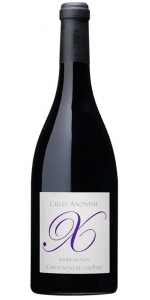
Xavier Vignon Chateauneuf-du-Pape Rouge Cuvee Anonyme 2019 is made from 60% Grenache, 15% Mourvedre, 10% Syrah and the rest is "field blend" with the following grapes : grenache, vaccarese, counoise, mourvèdre, terret noir and muscardin.
One of Xavier Vignon's first almost anonymous blends only in MAGNUMS !
The grapes come from "collection vines", where many grape varieties are planted together, making it difficult to identify the exact share of each variety: grenache, vaccarese, counoise, mourvèdre, terret noir and muscardin.
Partially destemmed and vinified in a mix of demi-muids and tank, it offers a beautifully pure, vibrant bouquet of black raspberries, white and black pepper, candied orange, and violets. Complex, layered, and nuanced, this beauty is medium to full-bodied, has a seamless texture, and a great finish. It has both elegance and richness, and will keep for 15+ years.
Pairing: Duck in sauce with olives. Ravioli with porcini mushrooms, cream of parsnip and bacon crisps. Partridge leg confit with olive oil.
Review:
"The flagship from Xavier is the 2019 Châteauneuf Du Pape Cuvee Anonyme, and in 2019 it’s 60% Grenache, 15% Mourvèdre, 10% Syrah, and the balance a mix of permitted varieties. Partially destemmed and brought up in a mix of demi-muids and tank, it offers a beautifully pure, vibrant bouquet of black raspberries, white and black pepper, candied orange, and violets. Complex, layered, and nuanced, this beauty is medium to full-bodied, has a seamless texture, and a great finish. It has both elegance and richness, and will keep for 15+ years."
- Jeb Dunnuck (October 2020), 95-97 pt

Avennia Red Willow Cabernet Sauvignon is made from 100% Cabernet Sauvignon.
The Red Willow Cabernet is a true blockbuster.
Coming from one specific block of 30 year old vines at this iconic vineyard, then strictly barrel selected, this is the essence of powerful, old vine Washington Cabernet. After all of our efforts promoting the idea of the Bordeaux blend, it would take a pretty compelling argument to suspend that idea and make a 100% varietal Cabernet. In 2016 Red Willow provided us with just that. Each time we tasted it in the barrel, the belief grew that this was something special. Something we can't make every year. In the end we were won over, and decided to make a limited amount of this wine. But don't be fooled, as this too is a blend and a selection. Each year as we are tasting the grapes as harvest approaches, we notice that the vines near the bottom of this long, steep west-facing slope, are a little different. The vines at the bottom are in a little richer soil, and get a little more water, so we pick them separately, sometimes even a week or ten days apart, and keep them separate in barrel.
This wine is all from the top of the vineyard, with its lower yield and poorer soils giving more concentration and interest. Then further, nearly every combination of new and used French oak barrels were trialed to find the best blend. It's not enough just to use the four best barrels, but to trial each combination to see how they complement each other. For a wine with this much mass, 100% new French oak was used for the first time at Avennia. It is a wine that needs a little cellaring to start, but should last a very long time.
Review:
"The 2016 Cabernet Sauvignon Red Willow Vineyard is 100% Red Willow Cabernet Sauvignon that will spend roughly 20 months in close to 100% new French oak. Blackcurrants, smoked herbs, chocolate, and graphite notes all give way to a full-bodied, plump, rich, concentrated effort that's going to be better with short-term cellaring and keep for two decades."
- Jeb Dunnuck (April 2018), 94-96 pts
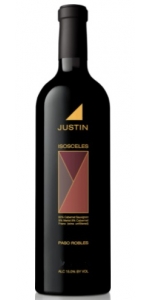
Justin Isosceles Proprietary Red Paso Robles is made from 83% Cabernet Sauvignon, 9% Merlot, 8% Cabernet Franc.
In 1987, we made our first vintage of a wine styled after the famous First Growth producers of Bordeaux, created with the same uncompromising care as the Grands Vins of those venerable chateaux. For more than 30 vintages, ISOSCELES has been our flagship wine and quality benchmark for this style of wine here on the Central Coast of California. A blend based on Cabernet Sauvignon supported by Cabernet Franc and Merlot, the 2018 ISOSCELES shows why Paso Robles is such a great place to grow these varieties.
Full-bodied, with ripe black fruit, complex baking spice and amazingly ready to drink right out of the gate, you can try a bottle or two now, but make sure to save a few to enjoy this wine as it continues to evolve after some time in the cellar.
Appearance: Deep ruby/purple core with black secondary color, lighter toward the rim with moderate plus viscosity and slow forming, moderately stained tears.
Aroma: Very aromatic and complex with ripe black cherry and cassis fruit, vanilla, cinnamon and licorice spice with sweet tobacco, cedar, leather and camphor notes.
Palate: Full-bodied with ripe black cherry and blackcurrant fruit complemented with baking spice and oak notes on entry. Sustained fruit and spice are joined by savory autumn leaf, cedar and leather on the mid-palate with mouth filling, fine tannins that lead into a long, complex and balanced finish with attractive fruit, spice, cedar and subtle camphor notes.
Try it with a classic herb crusted roasted rack of lamb, a grilled prime ribeye steak, or the exquisite cheeseburgers with tomato, arugula, bacon jam and chive aioli from The Restaurant at JUSTIN.
Review:
A stunning Bordeaux blend with smooth, intense flavors of plum, toast, and chocolate. Dense, layered, and balanced, with a long, concen- trated finish.
-Tasting Panel 95 Points
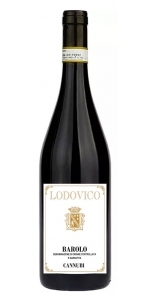
Lodovico Barolo Cannubi is made from 100% Nebbiolo.
With a ruby-red color, the Barolo Cannubi has a rich bouquet which gradually recalls the scents of roses flowers, truffles and wood spice. The palate is at first elegant and refined, then is begins to gain in complexity with a little breathing or decanting.
Vine: Nebbiolo, sub-variety Lampia and Michet
Grapes provenance: Cannubi Boschis vineyard in the village of Barolo
Soil: composed mainly of large clayey limestone marls and sands
Vineyards: South-est facing with Guyot pruning (6-8 buds / vine)
N° Vines / hectare: 5000
Yield / hectare: 50-55 q / Ha
Plant year: 1970
Size of the vineyard: 1.3 hectare (3.21 acres) in the family since 1996 out of 40 hectares (98.8 acres) total for Cannubi.
Average height: 250-260 mt
Nebbiolo is a native black grape variety of Piedmont that gives birth also Barolo and Barbaresco. The name ‘Nebbiolo’ derives from the word ‘fog’ and there could be two reasons. The first hypothesis traces the name of Nebbiolo back to the obscured, almost clouded appearance of the grape, covered with abundant bloom. The second hypothesis, more suggestive, is linked to the very late ripening of the grapes: the Nebbiolo grape harvest often takes place in late October, when the vineyards are enveloped in morning mists.
Pairs with aged cheeses, red meat, rich/earthy dishes, truffle risotto, pasta with sausages and mushrooms. Braised or roasted meats.
Keermont Amphitheatre Red is made from 32% Cabernet Sauvignon, 23% Cabernet Franc, 22% Merlot, 17% Petit Verdot, 5% Malbec and 1% Syrah.
Starting with the 2015 vintage, this new cuvée replaces the Keermont Estate Reserve. It is now the winery's flagship red blend. With this blend they aim to bring to life the nuances of both the terroir at Keermont Vineyards and the particularity of each vintage. Venetian red in color, this wine exudes complex aromas of dusty, ripe strawberry complimented by hints of baked pudding, vanilla, and sweet citrus blossom.
Review:
"The maiden 2015 Amphitheatre has an intense bouquet of dark cherries, star anise, camphor and wild heather scents, all well defined and expressive. The palate is medium-bodied with supple tannins and fleshy ripe red fruit laced with white pepper and sage, fanning out wonderfully toward the finish. This is a beautiful maiden release, exuding breeding and class, from Alex Starey at Keermont. - Neal Martin"
- Antonio Galloni's Vinous (November 2021), 95 pts
The Keermont Estate and Vineyards
Located just beyond Stellenbosch, Keermont Vineyards is nestled in farm land in the beautiful valleys of South Africa. Keermont uses their name to honor the former farm, Keerweder, that once occupied their land. The word “keerweder” means a dead end in a valley. The literal translation is “blocked again”, which is in reference to the early settlers being blocked by the terrain when trying to pass through the valley.
The Keermont winery building and vineyards actually lie in the shadow of Guardian Peak, or “Suurberg”. This location is ideal for Keermont, as the fruit on this mountain is often compared to the grapes of Napa Valley’s famous Howell Mountain AVA.
In 1694, Jan Jac Van Dyk founded the land in the Blaawklippen Valley that is the location of present day Keermont. Other wineries such as Waterford, Dornier, and Stellenzicht are also on the land once owned by Van Dyk. The earliest account of a European landowner utilizing the area for agricultural use are Van Dyk’s records. Afterwards, the potential and beauty of the Blaawklippen Valley attracted many other landowners to the area and the land was divided into individual farms.
Mark and Monica Wraith bought into this land by purchasing the Fleurfontein and Keerweder III farms in 2003. They combined the two farms into the Keermont Vineyards Estate. The couple still live on the Keermont land with their family. Alex Starey is the Keermont winemaker. In 2005, Keermont began a major vineyard planting program and it now holds 27 ha under vine. In 2007, Keermont releases its first vintage, from a crop of only 5 barrels or 108 cases. In 2010, the physical Keermont winery building, complete with offices, processing facilities, barrel rooms, and a tasting room, was converted from the former spring water bottling plant that had once resided on the Fleurfontein farm. The total farm acreage for Keermont Vineyards is 157 hectares or 388 acres, with 27 hectares under vine. 18 hectares produce red varietals such as Cabernet Savignon, Merlot, and Syrah. 9 hectares hold the white varietals like Chenin Blanc, Chardonnay, and Viognier. Keermont also boasts Chenin Blanc vines that are over forty years old and used by De Trafford winery. Keermont aims to create wines that reflect their beautiful land and the particular year’s vintage condition. Keermont focuses on using minimal chemical fertilizers, few pesticides, and irrigate as little as possible. No fining or filtration is practiced on the Keermont Estate. Keermont desires a natural, harmonious vineyard that will in the long run produce better quality wines.
The goal of this estate is to make superior blends. The wines to be produced, but not written in stone, are:
Keermont Red – 40 % Cabernet Sauvignon, 40% Merlot, 20% Syrah.
Keermont White – 70% Chenin Blanc, 30% Viognier and Chardonnay
Dessert wine in exceptional vintages
Keermont Syrah – Syrah, Mourvedre, Viognier
Some wines from Keermont Winery:
Any Keermont wines we have in stock are listed below, if you don’t see the wine you are looking for please don’t hesitate to ask for it.
Gaja Sperss is made from 100 percent Nebbiolo.
Vibrant and intense notes of herbs and spices such as thyme, cloves and black pepper. On the palate the wine is tense, loaded with energy that will need serious ageing to fully develop although extremely approachable in its youth. Impressive fruit concentration, with dark and ripe fruits – prunes and black cherries. Acidity and tannins lift this wine to its freshest expression.
Nebbiolo based wines have not only complexity and structure but also great elegance and finesse. The distinctive silky tannins of the Nebbiolo make it the right wine to drink with meat. Usually a young vintage goes very well with richer dishes because of the stronger tannins; mature Barolos are more suitable with delicate white meat courses or braised meat courses with sauces or concentrated red wines reductions.
Review:
The 2019 Barolo Sperss is rich with dark mineral earth, black cherry, and Earl Grey tea. Long and mouthwatering, it has a powerful structure while retaining finesse. It is fantastically balanced, with gripping tannins, fresh acidity, and notes of forested earth and ripe red berries. A wine for the long haul, this is another great and noble wine to drink over the coming three decades.
-Jeb Dunnuck 99 Points

Segries Tavel Rose is made from 50% Grenache, 30% Cinsault, 15% Clairette, 5% Syrah.
The age of the vines is 30 years. Traditional vinification at low temperature, "vin de saignée" with a maceration during one night in cement vat.
This is large for a Rose...structured and focused, with the color of dark ruby. The nose is loaded up with fresh fruit. Strawberry, blackcurrant, and raspberry beam from the glass. On the palate, the mouth-feel is ripe and succulent. It has strength, but maintains its fresh and crisp expression. The finish is filled with Asian spice and slight hints of smoke. Drink this juice now or over the next year or two.