" We don't sell the wine without touching the vine "
| Country: | South Africa |
| Region: | Stellenbosch |
| Winery: | Keermont Vineyards |
| Grape Type: | Cabernet Sauvignon |
| Organic: | Yes |
| Vintage: | 2016 |
| Bottle Size: | 1500 ml |

Avennia Red Willow Cabernet Sauvignon is made from 100% Cabernet Sauvignon.
The Red Willow Cabernet is a true blockbuster.
Coming from one specific block of 30 year old vines at this iconic vineyard, then strictly barrel selected, this is the essence of powerful, old vine Washington Cabernet. After all of our efforts promoting the idea of the Bordeaux blend, it would take a pretty compelling argument to suspend that idea and make a 100% varietal Cabernet. In 2016 Red Willow provided us with just that. Each time we tasted it in the barrel, the belief grew that this was something special. Something we can't make every year. In the end we were won over, and decided to make a limited amount of this wine. But don't be fooled, as this too is a blend and a selection. Each year as we are tasting the grapes as harvest approaches, we notice that the vines near the bottom of this long, steep west-facing slope, are a little different. The vines at the bottom are in a little richer soil, and get a little more water, so we pick them separately, sometimes even a week or ten days apart, and keep them separate in barrel.
This wine is all from the top of the vineyard, with its lower yield and poorer soils giving more concentration and interest. Then further, nearly every combination of new and used French oak barrels were trialed to find the best blend. It's not enough just to use the four best barrels, but to trial each combination to see how they complement each other. For a wine with this much mass, 100% new French oak was used for the first time at Avennia. It is a wine that needs a little cellaring to start, but should last a very long time.
Review:
"The 2016 Cabernet Sauvignon Red Willow Vineyard is 100% Red Willow Cabernet Sauvignon that will spend roughly 20 months in close to 100% new French oak. Blackcurrants, smoked herbs, chocolate, and graphite notes all give way to a full-bodied, plump, rich, concentrated effort that's going to be better with short-term cellaring and keep for two decades."
- Jeb Dunnuck (April 2018), 94-96 pts
Avennia Justine Red Blend 56% Grenache, 31% Mourvèdre, 13% Syrah
Justine reflects our belief that Washington is capable of producing world class blends of grape varieties traditional to the Southern Rhone region of France. The name is inspired by one of the great heroines of recent literature, who also sprung from the imagination of the Mediterranean. Dark, seductive, complex, with a chasm of depth: The Justine is a great reflection of Avennia's mission of expression, and Washington's generous terroir.
Tasting Note: Big black cherry, blackberry, hints of orange peel, fresh herbs and loam on the nose. Plush and round on the palate. Dark earthy fruits from the Mourvedre, along with citrus high notes, mountain flowers, jasmine, and savory herbs. Balanced and complex without forgetting its hedonistic roots in the Southern Rhone.
Review:
A blend of 56% Grenache, 31% Mourvèdre, 13% Syrah brought up all in older oak, the 2016 Justine offers a great core of black fruits as well as lots of peppery herbs, earth, and classic meatiness. It looks to be a great vintage for this cuvée."
- Jeb Dunnuck (April 2018), 92-94 pts
Avennia Valery Red Blend is made from 86% Merlot and 14% Cabernet Franc
Valery is named for the patron saint of wine in the St. Emilion region that inspired it.
We started with old vine Merlot from a stony block in the heart of the Yakima Valley and added complex, aromatic Cabernet Franc from the Horse Heaven Hills. The result is a balanced, complex wine with the elegance and ethereal perfume that this blend of two of Washington’s best varietals are known for.
The nose on this wine is very perfumed, almost exotic with notes of fresh violets, red plum, winter mint, fresh herbs and crushed limestone qualities. The palate is poised and balanced, with red fruits and mocha powder encapsulated in limestone. The finish lingers delicately, with the Cabernet Franc asserting a light tobacco and herb note, giving depth. A compelling wine that will continue to unwind for 7-10 years in the cellar.
Review:
"Brought up in 30% new French oak, the 2016 Valery (70/30 Merlot and Cabernet Franc) offers more black cherry and earthy, herbal notes as well as a medium-bodied, seamless, beautifully balanced style. It too shows a vibrant, fresh, yet concentrated style that has a Bordeaux feel in its weight and texture."
- Jeb Dunnuck (April 2019), 93 pts
"Good medium-dark red. Aromas of blueberry, mocha, licorice and violet are a bit darker than those of the 2015 version. Dense and penetrating, with wild flavors of dark berries, licorice and game given lift by rocky minerality and a minty nuance. Chris Peterson slightly acidified his Cabernet Franc from Champoux Vineyard, which he added to the wine for richness. This beauty may yet tighten up in the bottle.- Stephen Tanzer"
- Antonio Galloni's Vinous (November 2018), 92+ pts
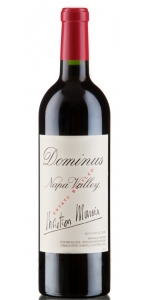
Dominus Napa Valley Red Blend is made from 88% Cabernet Sauvignon, 7% Cabernet Franc, 5% Petit Verdot.
The historic Napanook Vineyard, a 124-acre site west of Yountville, was planted in 1838. This vineyard was the source of fruit for some of the finest Napa Valley wines. Estate-bottled in the spirit of the Bordeaux châteaux, Dominus Estate is dry-farmed to allow natural stress and good concentration of fruit. Grape clusters are crop-thinned to allow sun and air to pass in between, helping to achieve full maturation and soften the tannins. Only 20% to 40% new French oak barrels are used in order to limit the extraction of oak notes. To express the unique terroir, the classic Bordeaux grape varietals of Cabernet Sauvignon, Merlot, Cabernet Franc and Petit Verdot are planted with different root stocks best suited for the varying soil composition of gravel, heavy clay and loam.
Reviews:
One of the legendary Dominus, the 2021 Cabernet Sauvignon is unquestionably in the same league as the 2018, 2016, 2015, 2013, 2010, and 1991, and to my mind, wine simply doesn't get any better. Sporting a dense purple hue as well as an incredible perfume of blackcurrants, crushed stone, cedar pencil, smoke tobacco, and baking spices, it s rich, full-bodied, and voluptuously textured, with ripe yet building tannins. It reminds me slightly of the 2010 (maybe the 2013), and I suspect it will have a similar evolution. Hide bottles for 7-8 years, and it will evolve gracefully for 30+ years. Hats off to the team of Christian Moueix and director Tod Mostero.
Jeb Dunnuck 100 Points
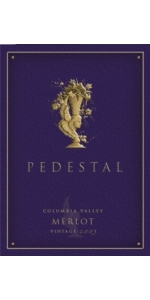
Long Shadows Pedestal Merlot 2016 is made from 75% Merlot, 21% Cabernet Sauvignon, and the rest Petit Verdot.
Michel Rolland, Pomerol vintner and consultant to many of the world's top wineries, teamed with Washington State wine visionary Allen Shoup to produce this limited release wine.
With its intense color and inviting aromas of dark berries, licorice, baking spice and a hint of smoke, the Pedestal is a bold wine that leaves a lasting impression. Dark fruit flavors integrated with sweetness from the barrel and richness from the tannins come together seamlessly, lingering across a structured mid-palate and lengthy finish.
Winemaking: Hand-harvested grapes were double-sorted to remove green material that might impart harsh tannins, then most of the lots were cold soaked to build richness and flavor before undergoing whole-berry fermentation in 55L upright French wood tanks. This, combined with gentle pump-overs throughout fermentation, enhanced the wine’s color, texture and mouthfeel. The finished wine was aged 22 months in 85% new French oak barrels.
Review:
"The 2016 Pedestal from Michel Rolland checks in as a blend of 75% Merlot, 21% Cabernet Sauvignon, and the rest Petit Verdot that spent 22 months in 85% new French oak. It has a rocking bouquet of smoked black fruits, espresso, chocolate, and tobacco that gives way to a full-bodied, plump, incredibly sexy red that does everything right. It's one serious mouthful of Merlot and should keep for 10-12 years." - Jeb Dunnuck (April 2019), 95 pts
"The 2016 Pedestal Merlot has a precise nose of dusty plum, red flowers and soft oak tones with an elegant aroma of pencil lead fluttering about. The medium to full-bodied palate is clean and correct, with plush dark red fruit, dusty tannins, purple flowers and soft oak spices of vanilla, cardamom and nutmeg. The wine ends with a long, thoughtful, well-balanced finish that delivers complexity and pleasure simultaneously. Michel Rolland made this beauty of a bottle. - Anthony Mueller"
- Robert Parker's Wine Advocate (Issue #246, December 2019), 94 pts
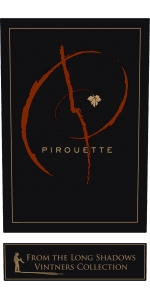
Long Shadows Pirouette Meritage is made from 68% Cabernet Sauvignon 15% Merlot 8% Petit Verdot 6% Cabernet Franc 3% Malbec
Philippe Melka, named one of the top nine winemakers in the world by Robert Parker, used small lots from Washington State's finest vineyards to craft this enticing red blend.
Like the last several growing seasons, 2016 was another hot year that required extra care in the vineyards. Building on the success of our canopy managment program over the last few vintages, we worked with growers throughout the season to encourage growth of the canes and outside foliage to protect against the sun while opening up the fruit zone for even maturation. Warm temperatures in the fall hastened ripening, but the Columbia Valley's cool autumn nights protected the grapes' acidity, yielding bright, vibrant wines that will drink well in their youth but also promise to bring enjoyement to those who cellar.
A variety of fermentation methods were used to enhance complexity and richness in this classic Bordeaux blend. Hand-harvested Cabernet was fermented in 400L French oak barrels that were gently rolled throughout fermentation to integrate the oak with refined, dark fruit flavors and give the wine its silky mouthfeel. All other varieties were fermented in traditional stainless steel tanks, with select lots enjoying longer skin contact to enhance the wine's dark color and mid-palate. The finished wine was aged 22 months in French oak barrels (75% new) before bottling unfiltered and unfined.
Review:
"The 2016 Pirouette is made by Philippe Melka and it's a total blockbuster based on 68% Cabernet Sauvignon, 15% Merlot, and the palate Petit Verdot, Cabernet Franc, and Malbec that was fermented in barrel and aged 22 months in 75% new oak. Crème de cassis, blackberries, toasted spices, cedar, and forest floor notes all emerge from this deep, rich, opulent red that has sweet tannins, a thrilling texture, no hard edges, and a monster finish. This is another best-to-date from this estate and it's an awesome wine." -Jeb Dunnuck 97 Points
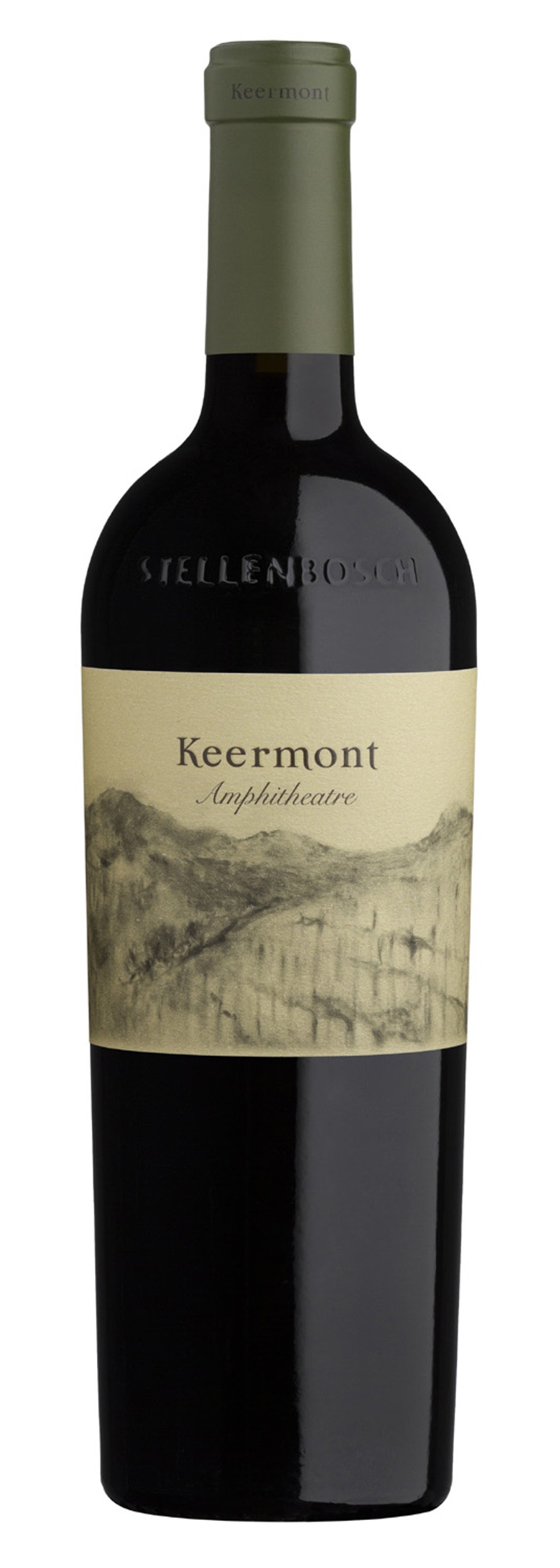
Keermont Amphitheatre Red is made from 32% Cabernet Sauvignon, 23% Cabernet Franc, 22% Merlot, 17% Petit Verdot, 5% Malbec and 1% Syrah.
Starting with the 2015 vintage, this new cuvée replaces the Keermont Estate Reserve. It is now the winery's flagship red blend. With this blend they aim to bring to life the nuances of both the terroir at Keermont Vineyards and the particularity of each vintage. Venetian red in color, this wine exudes complex aromas of dusty, ripe strawberry complimented by hints of baked pudding, vanilla, and sweet citrus blossom.
The Keermont Estate and Vineyards
Located just beyond Stellenbosch, Keermont Vineyards is nestled in farm land in the beautiful valleys of South Africa. Keermont uses their name to honor the former farm, Keerweder, that once occupied their land. The word “keerweder” means a dead end in a valley. The literal translation is “blocked again”, which is in reference to the early settlers being blocked by the terrain when trying to pass through the valley.
The Keermont winery building and vineyards actually lie in the shadow of Guardian Peak, or “Suurberg”. This location is ideal for Keermont, as the fruit on this mountain is often compared to the grapes of Napa Valley’s famous Howell Mountain AVA.
In 1694, Jan Jac Van Dyk founded the land in the Blaawklippen Valley that is the location of present day Keermont. Other wineries such as Waterford, Dornier, and Stellenzicht are also on the land once owned by Van Dyk. The earliest account of a European landowner utilizing the area for agricultural use are Van Dyk’s records. Afterwards, the potential and beauty of the Blaawklippen Valley attracted many other landowners to the area and the land was divided into individual farms.
Mark and Monica Wraith bought into this land by purchasing the Fleurfontein and Keerweder III farms in 2003. They combined the two farms into the Keermont Vineyards Estate. The couple still live on the Keermont land with their family. Alex Starey is the Keermont winemaker. In 2005, Keermont began a major vineyard planting program and it now holds 27 ha under vine. In 2007, Keermont releases its first vintage, from a crop of only 5 barrels or 108 cases. In 2010, the physical Keermont winery building, complete with offices, processing facilities, barrel rooms, and a tasting room, was converted from the former spring water bottling plant that had once resided on the Fleurfontein farm. The total farm acreage for Keermont Vineyards is 157 hectares or 388 acres, with 27 hectares under vine. 18 hectares produce red varietals such as Cabernet Savignon, Merlot, and Syrah. 9 hectares hold the white varietals like Chenin Blanc, Chardonnay, and Viognier. Keermont also boasts Chenin Blanc vines that are over forty years old and used by De Trafford winery. Keermont aims to create wines that reflect their beautiful land and the particular year’s vintage condition. Keermont focuses on using minimal chemical fertilizers, few pesticides, and irrigate as little as possible. No fining or filtration is practiced on the Keermont Estate. Keermont desires a natural, harmonious vineyard that will in the long run produce better quality wines.
The goal of this estate is to make superior blends. The wines to be produced, but not written in stone, are:
Keermont Red – 40 % Cabernet Sauvignon, 40% Merlot, 20% Syrah.
Keermont White – 70% Chenin Blanc, 30% Viognier and Chardonnay
Dessert wine in exceptional vintages
Keermont Syrah – Syrah, Mourvedre, Viognier
Some wines from Keermont Winery:
Any Keermont wines we have in stock are listed below, if you don’t see the wine you are looking for please don’t hesitate to ask for it.
Paul Hobbs Beckstoffer Dr. Crane Vineyard Cabernet Sauvignon is made from 100 percent Cabernet Sauvignon.
Grown on the west side of St. Helena, this distinctive cabernet sauvignon clearly displays its origins with a rich garnet hue and sophisticated aromas of cacao bean, crème de cassis, and sweet tobacco on the nose. Layered, with a superb structure, the wine offers impressions of blueberry coulis, black raspberry, and savory herbs like Herbs de Provence. The weighty mid-palate unveils anise spice and a graphite mineral note that combines with a fresh acidity that extends the long finish.
Review:
Needing plenty of air to show at its best, the 2019 Cabernet Sauvignon Beckstoffer Dr. Crane Vineyard is a sensational, gorgeous Napa Valley Cabernet that delivers the goods like only this region can. Pure Cabernet magic on the nose, with deep blackcurrants, smoked tobacco, lead pencil, and a kiss of spring flowers as well as a beautiful Pessac-Leognan-like scorched earth character, it hits the palate with full-bodied richness, silky tannins, no hard edges, and a great, great finish. It's one of those wines that builds incrementally on the palate and it's only after the second or third sip that you realize how special this wine is. It also offers that rare mix of power and elegance that's the hallmark of all great wines. It needs a couple of hours in the decanter if drinking any time soon. Hats off to Paul Hobbs for an incredible Napa Valley Cabernet Sauvignon.
-Jeb Dunnuck 100 Points
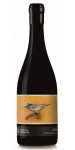
Ferrata Etna Bianco Veni is 100% Carricante
Straw yellow colored with hints of almonds, vanilla and ripe fruit notes on the nose. On the taste, it is very rich in savoriness and freshness.
No irrigation. Hand harvest at the end of october.
Selection of the best grapes made by hand.
Destemming and soft pressing into a pneumatic press (Extraction of the 60% of the Juice, Mosto Fiore).
60% of the juice was fermented in stainless steel tanks and 40% was fermented in French Oak barriques (no new oak, only second use barrels).
No ML Fermentation.
Batonnage in Oak.
Ageing in Oak and Stainless steel for 12-14 months, plus an additional 6 months minimum in the bottle.
Ideal with shellfish, raw fish or preparation with more intense flavors.
Also delicious with fresh and semi-matured cheeses.