
" We don't sell the wine without touching the vine "
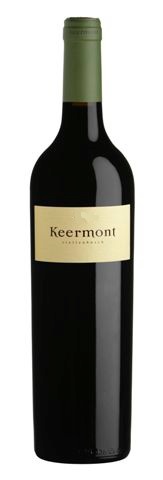
| Country: | South Africa |
| Region: | Franschhoek |
| Winery: | Keermont Vineyards |
| Grape Type: | Merlot |
| Organic: | Yes |
| Vintage: | 2012 |
| Bottle Size: | 750 ml |
The Prisoner Wine Company The Prisoner Red Blend is made from a blend of Zinfandel, Cabernet Sauvignon, Petite Sirah, Syrah, and Charbono.
Bright aromas of ripe raspberry, vanilla, and coconut give way to flavors of fresh and dried blackberry, pomegranate, and vanilla, which linger harmoniously for a smooth and luscious finish.The Prisoner Red Blend was inspired by the wines first made by the Italian immigrants who originally settled in Napa Valley. The Prisoner is now the most recognized red blend, leading the resurgence of interesting blends by incorporating Zinfandel with the unlikely mix of Cabernet Sauvignon, Petite Sirah, Syrah, and Charbono.
On the nose, dried blackberry, dried açai berries, and hints of cedar and tobacco leaf are accented by sweet spices of clove, cinnamon, and nutmeg. Flavors of ripe dark cherry, blackberry coulis, and hints of anise linger harmoniously for a soft, vibrant finish balanced by ripe tannins.
Chef Brett recommends pairing The Prisoner Red Blend with Kalbi Short Ribs or Chicken Mole Tostada.
Vineyards: When you outgrow winemaking tradition, you must forge your own path. And we did. The Prisoner exists because of the collaboration with our growers, many of which have been with us since the very beginning—from the Solari Family Vineyard in Calistoga, where old school sensibilities meet new techniques, to the Korte Ranch in St. Helena, a vineyard whose diligence outlasted the Prohibition and has sustained four generations.
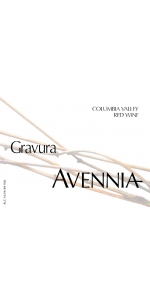
Avennia Gravura Red Blend is made from 48% Cabernet Sauvignon, 41% Merlot, 11% Cabernet Franc
Gravura is our ode to the Graves AOC of Bordeaux, emphasizing a harmony of Cabernet Sauvignon and Merlot. The name is a play on an artisan printing technique, and on the Bordeaux region of Graves, which features similar blends. Featuring more Merlot and with the addition of Red Mountain fruit, this wine is designed to be more generous and voluptuous in style, while still remaining complex and balanced.
Gravura Tasting Notes: Beautiful nose of red and black fruits, some savory leaf notes, mocha, pencil shavings. The palate is elegant and balanced, almost pretty: raspberry, black and red currants, milk chocolate and caressing tannins. Finish medium-long and ethereal.
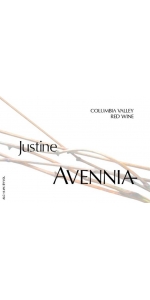
Avennia Justine Red Blend 56% Grenache, 31% Mourvèdre, 13% Syrah
Justine reflects our belief that Washington is capable of producing world class blends of grape varieties traditional to the Southern Rhone region of France. The name is inspired by one of the great heroines of recent literature, who also sprung from the imagination of the Mediterranean. Dark, seductive, complex, with a chasm of depth: The Justine is a great reflection of Avennia's mission of expression, and Washington's generous terroir.
Tasting Note: Big black cherry, blackberry, hints of orange peel, fresh herbs and loam on the nose. Plush and round on the palate. Dark earthy fruits from the Mourvedre, along with citrus high notes, mountain flowers, jasmine, and savory herbs. Balanced and complex without forgetting its hedonistic roots in the Southern Rhone.
Review:
A blend of 56% Grenache, 31% Mourvèdre, 13% Syrah brought up all in older oak, the 2016 Justine offers a great core of black fruits as well as lots of peppery herbs, earth, and classic meatiness. It looks to be a great vintage for this cuvée."
- Jeb Dunnuck (April 2018), 92-94 pts
Avennia Justine Red Blend 61% Grenache, 21% Mourvèdre, and 18% Syrah.
Justine reflects our belief that Washington is capable of producing world class blends of grape varieties traditional to the Southern Rhone region of France. The name is inspired by one of the great heroines of recent literature, who also sprung from the imagination of the Mediterranean. Dark, seductive, complex, with a chasm of depth: The Justine is a great reflection of Avennia's mission of expression, and Washington's generous terroir.
Tasting Note: Big black cherry, blackberry, hints of orange peel, fresh herbs and loam on the nose. Plush and round on the palate. Dark earthy fruits from the Mourvedre, along with citrus high notes, mountain flowers, jasmine, and savory herbs. Balanced and complex without forgetting its hedonistic roots in the Southern Rhone.
Review:
-Owen Bargreen 95 Points
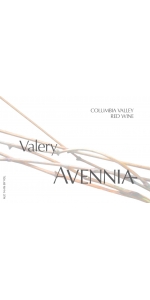
Avennia Valery Red Blend is made from 86% Merlot and 14% Cabernet Franc
Valery is named for the patron saint of wine in the St. Emilion region that inspired it.
We started with old vine Merlot from a stony block in the heart of the Yakima Valley and added complex, aromatic Cabernet Franc from the Horse Heaven Hills. The result is a balanced, complex wine with the elegance and ethereal perfume that this blend of two of Washington’s best varietals are known for.
The nose on this wine is very perfumed, almost exotic with notes of fresh violets, red plum, winter mint, fresh herbs and crushed limestone qualities. The palate is poised and balanced, with red fruits and mocha powder encapsulated in limestone. The finish lingers delicately, with the Cabernet Franc asserting a light tobacco and herb note, giving depth. A compelling wine that will continue to unwind for 7-10 years in the cellar.
Review:
"Brought up in 30% new French oak, the 2016 Valery (70/30 Merlot and Cabernet Franc) offers more black cherry and earthy, herbal notes as well as a medium-bodied, seamless, beautifully balanced style. It too shows a vibrant, fresh, yet concentrated style that has a Bordeaux feel in its weight and texture."
- Jeb Dunnuck (April 2019), 93 pts
"Good medium-dark red. Aromas of blueberry, mocha, licorice and violet are a bit darker than those of the 2015 version. Dense and penetrating, with wild flavors of dark berries, licorice and game given lift by rocky minerality and a minty nuance. Chris Peterson slightly acidified his Cabernet Franc from Champoux Vineyard, which he added to the wine for richness. This beauty may yet tighten up in the bottle.- Stephen Tanzer"
- Antonio Galloni's Vinous (November 2018), 92+ pts
Avennia Valery Red Blend is made from 88% Merlot and 12% Cabernet Franc
Valery is named for the patron saint of wine in the St. Emilion region that inspired it.
We started with old vine Merlot from a stony block in the heart of the Yakima Valley and added complex, aromatic Cabernet Franc from the Horse Heaven Hills. The result is a balanced, complex wine with the elegance and ethereal perfume that this blend of two of Washington’s best varietals are known for.
The nose on this wine is very perfumed, almost exotic with notes of fresh violets, red plum, winter mint, fresh herbs and crushed limestone qualities. The palate is poised and balanced, with red fruits and mocha powder encapsulated in limestone. The finish lingers delicately, with the Cabernet Franc asserting a light tobacco and herb note, giving depth. A compelling wine that will continue to unwind for 7-10 years in the cellar.
Review:
"This Merlot dominant blend is made in the style of Bordeaux's Right Bank. Still, it offers a brilliant complexity sourced from two of Washington's most important sites, with old-vine Merlot that comes from a rocky section of Boushey Vineyard and Cabernet Franc from the Horse Heaven Hills standard bearer Champoux Vineyard. The resulting wine is dazzling, complex and refined. Elegance in the floral tones of dark violets and dried lavender mingle with smoky clove and a savoury saline pique. The palate offers intensity, rich red fruits, savoury dried anise and hints of wild desert sage. There's a core of dark chocolate and a streak of pencil lead into the finish."
- Decanter 96 Points
Keermont Red Blend 2012 is made from 37% Merlot 29% Cabernet Sauvignon and the remainder Cabernet Franc, Syrah and Malbec
Venetian red in colour, this wine exudes complex aromas of ripe cherry, wild berries, and dusty 'fynbos'. The palate has an array of ripe berries, cherry sherbet, crushed herbs and spices. Elegant but firm tannin affords the wine a long dry succulent finish. Drink 2015-2025.
The Keermont Estate and Vineyards
Located just beyond Stellenbosch, Keermont Vineyards is nestled in farm land in the beautiful valleys of South Africa. Keermont uses their name to honor the former farm, Keerweder, that once occupied their land. The word “keerweder” means a dead end in a valley. The literal translation is “blocked again”, which is in reference to the early settlers being blocked by the terrain when trying to pass through the valley.
The Keermont winery building and vineyards actually lie in the shadow of Guardian Peak, or “Suurberg”. This location is ideal for Keermont, as the fruit on this mountain is often compared to the grapes of Napa Valley’s famous Howell Mountain AVA.
In 1694, Jan Jac Van Dyk founded the land in the Blaawklippen Valley that is the location of present day Keermont. Other wineries such as Waterford, Dornier, and Stellenzicht are also on the land once owned by Van Dyk. The earliest account of a European landowner utilizing the area for agricultural use are Van Dyk’s records. Afterwards, the potential and beauty of the Blaawklippen Valley attracted many other landowners to the area and the land was divided into individual farms.
Mark and Monica Wraith bought into this land by purchasing the Fleurfontein and Keerweder III farms in 2003. They combined the two farms into the Keermont Vineyards Estate. The couple still live on the Keermont land with their family. Alex Starey is the Keermont winemaker. In 2005, Keermont began a major vineyard planting program and it now holds 27 ha under vine. In 2007, Keermont releases its first vintage, from a crop of only 5 barrels or 108 cases. In 2010, the physical Keermont winery building, complete with offices, processing facilities, barrel rooms, and a tasting room, was converted from the former spring water bottling plant that had once resided on the Fleurfontein farm. The total farm acreage for Keermont Vineyards is 157 hectares or 388 acres, with 27 hectares under vine. 18 hectares produce red varietals such as Cabernet Savignon, Merlot, and Syrah. 9 hectares hold the white varietals like Chenin Blanc, Chardonnay, and Viognier. Keermont also boasts Chenin Blanc vines that are over forty years old and used by De Trafford winery. Keermont aims to create wines that reflect their beautiful land and the particular year’s vintage condition. Keermont focuses on using minimal chemical fertilizers, few pesticides, and irrigate as little as possible. No fining or filtration is practiced on the Keermont Estate. Keermont desires a natural, harmonious vineyard that will in the long run produce better quality wines.
The goal of this estate is to make superior blends. The wines to be produced, but not written in stone, are:
Keermont Red – 40 % Cabernet Sauvignon, 40% Merlot, 20% Syrah.
Keermont White – 70% Chenin Blanc, 30% Viognier and Chardonnay
Dessert wine in exceptional vintages
Keermont Syrah – Syrah, Mourvedre, Viognier
Some wines from Keermont Winery:
Any Keermont wines we have in stock are listed below, if you don’t see the wine you are looking for please don’t hesitate to ask for it.
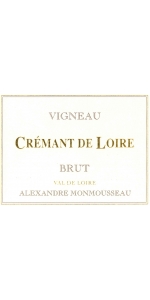
Made from 50% chenin blanc and 50% chardonnay
It is an interesting experience as a sparkling wine for people who want to have a fine and elegant wine comparable to Champagne for a very good price.
This methode traditionnelle sparkling wine is aged for minimum 18-24 months in cave before disgorging. The dosage is 12 g/l residual sugar and the wine is aged for minimum 3 months after disgorging .
Review:
"The two sparkling wines should not be missed. They're both terrific examples of how good sparkling Vouvray can be. Both are 100% Chenin Blanc cuvees. Even better is the slightly richer, more honey and lemon-scented and flavored non-vintage Cremant de Loire. A blend of equal parts Chenin Blanc and Chardonnay aged for a minimum of 18 to 24 months in their cellars before disgorgement, this is a real beauty and a superb wine. Unfortunately, just under 100 cases are imported to the United States." -Wine Advocate 92 pts

All older vintage wines have been purchased from a single collectors cellar. Pictures can be requested before shipment.
Obsidian Vineyard Syrah is bathed in terroir. The vines experience severe stress, pushing the roots ever deeper through rock in search of water, producing miniature clusters of intense power. Given the wine’s natural propensity for tannin, we take extreme care in the cellar to chisel/whittle its rough edges and leave room for richness to flatter its distinctive scaffold. The mid-palate supports flavors of roasted coffee beans, sarsaparilla, and dark chocolate. The finish marches on long after most wines have tired.
Our estate vineyard — the six-acre Obsidian Vineyard in the Knights Valley AVA — has an incredibly complex soil structure. It takes its name from a layer of volcanic obsidian rock that was discovered when we drilled for water.
Chocolate ganache, black currants, fig, graphite, and an expansive mouthfeel.
Review:
"Joe Donelan believes his Obsidian Vineyard is one of the world’s greatest sites for Syrah. I’ve visited the site twice, and can say candidly it certainly sits among the most striking vineyards I've ever laid eyes on within the U.S. It sits like a rock on a promontory—two switchbacks to reach the top—and the stones under the top soil, quite literally, never stop emerging from the ground. The place has an ancient, almost sacred, temple-like feel. It is consistently swept by afternoon breezes. The vineyard was replanted in 2017 after fires ravaged it. Winemaker David Milner laid out the site at denser spacing than before, at 2,000 vines per acre to keep yields per vine low while still achieving sensible tonnage, averaging around three tonnes per acre. Viognier was planted for co-fermentations, alongside some Cabernet Sauvignon, for a single vineyard bottling of that grape. ‘God put on his viticultural hat when he designed this site,’ says Milner. The vineyard is planted with ENTA 174, 877, and Alban 1 clones, along with Donelan Heritage selections certified virus-free. The wine, the 2023 vintage release (the first from the new vines), was aged for 21 months in 36% new oak and co-fermented with 1.8% Viognier, using 32% whole clusters. And it is positively gorgeous: composed of nine different blocks, each fermented separately, then assembled through sequential blending, with no racking until bottling. From just five-year-old vines, this wine is utterly extraordinary—something oddly achievable from young vines on rare occasion. I tasted this wine from the same bottle over three days. While the high-toned espresso-bean and cedar accents are present at first pull of the cork, they mellow out a day later, and the fruit profile is so vibrant. This is the sign of an excellent wine. I first tasted wines from the Donelan’s Obsidian Vineyard years ago at Tasting Panel Magazine in the late, great Anthony Dias Blue’s office. Cushing Donelan showed the wines, and to this day, I recall the first moment I put my nose into a glass of Obsidian Syrah. In early January of 2026, as I nosed this brand new release of Obsidian Syrah, I was transported straight back to that tasting twelve years ago. What’s remarkable is that the aromatics are unmistakably the same, yet from these new, more densely planted vines, the aromas are more refined—precision-farmed wines from young vines delivering a level of detail and poise that feels beyond their years. So what’s in the glass? Pure red, black, and blue fruit nuances layered with tobacco, white truffle character, violet pastille, and an intoxicating perfume. White pepper notes emerge on the medium- to full-bodied palate, framed by velvety tannins. Iron-like and crushed slate minerality underpins dazzling black cherry and blackberry fruit, brown spices, and blood orange richness. There’s a velvety, iron-fist quality here that exudes polish, complexity, and undeniable quality. You want to drink it now—and you absolutely can—but it will also reward time in the cellar. Either way, you’ll be utterly wowed. And when you realise the price is under £100, the achievement becomes even more staggering. As these vines mature, what will become of them in subsequent vintages? I suspect that as the vines mature, they'll go in and out of phases, but so long as Mother Nature cooperates, I expect this wine to continue to dazzle each vintage. - Jonathan CRISTALDI"
Decanter (January 5th 2026), 100 points
This is the first vintage of the Obsidian Syrah after wildfires torched the vineyard in 2017, leading to significant redevelopment. Throughout all those years, the Donelans have exhibited remarkable patience and a clear sense of purpose. This is their reward: a truly magnificent, towering wine of the highest level.
Knights Valley is one of the most magical grape-growing districts in the United States, but it is not very well known because only a few estate wineries are located there.
The 2023 Syria Obsidian Estate is one of the most profound, moving wines I have tasted in Sonoma County. Blackberry, gravel, incense, chocolate, lavender, and dried herbs race out of the glass. Delicate yet powerful, the 2023 is spectacular. It is also very fairly priced in today’s market.
Vinous 100 Points



