" We don't sell the wine without touching the vine "
| Country: | South Africa |
| Region: | Swartland Region |
| Winery: | Keermont Vineyards |
| Grape Type: | Chenin Blanc |
| Organic: | Yes |
| Vintage: | 2016 |
| Bottle Size: | 750 ml |
Avennia Justine Red Blend 56% Grenache, 31% Mourvèdre, 13% Syrah
Justine reflects our belief that Washington is capable of producing world class blends of grape varieties traditional to the Southern Rhone region of France. The name is inspired by one of the great heroines of recent literature, who also sprung from the imagination of the Mediterranean. Dark, seductive, complex, with a chasm of depth: The Justine is a great reflection of Avennia's mission of expression, and Washington's generous terroir.
Tasting Note: Big black cherry, blackberry, hints of orange peel, fresh herbs and loam on the nose. Plush and round on the palate. Dark earthy fruits from the Mourvedre, along with citrus high notes, mountain flowers, jasmine, and savory herbs. Balanced and complex without forgetting its hedonistic roots in the Southern Rhone.
Review:
A blend of 56% Grenache, 31% Mourvèdre, 13% Syrah brought up all in older oak, the 2016 Justine offers a great core of black fruits as well as lots of peppery herbs, earth, and classic meatiness. It looks to be a great vintage for this cuvée."
- Jeb Dunnuck (April 2018), 92-94 pts
Avennia Valery Red Blend is made from 86% Merlot and 14% Cabernet Franc
Valery is named for the patron saint of wine in the St. Emilion region that inspired it.
We started with old vine Merlot from a stony block in the heart of the Yakima Valley and added complex, aromatic Cabernet Franc from the Horse Heaven Hills. The result is a balanced, complex wine with the elegance and ethereal perfume that this blend of two of Washington’s best varietals are known for.
The nose on this wine is very perfumed, almost exotic with notes of fresh violets, red plum, winter mint, fresh herbs and crushed limestone qualities. The palate is poised and balanced, with red fruits and mocha powder encapsulated in limestone. The finish lingers delicately, with the Cabernet Franc asserting a light tobacco and herb note, giving depth. A compelling wine that will continue to unwind for 7-10 years in the cellar.
Review:
"Brought up in 30% new French oak, the 2016 Valery (70/30 Merlot and Cabernet Franc) offers more black cherry and earthy, herbal notes as well as a medium-bodied, seamless, beautifully balanced style. It too shows a vibrant, fresh, yet concentrated style that has a Bordeaux feel in its weight and texture."
- Jeb Dunnuck (April 2019), 93 pts
"Good medium-dark red. Aromas of blueberry, mocha, licorice and violet are a bit darker than those of the 2015 version. Dense and penetrating, with wild flavors of dark berries, licorice and game given lift by rocky minerality and a minty nuance. Chris Peterson slightly acidified his Cabernet Franc from Champoux Vineyard, which he added to the wine for richness. This beauty may yet tighten up in the bottle.- Stephen Tanzer"
- Antonio Galloni's Vinous (November 2018), 92+ pts
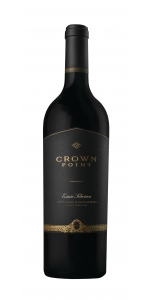
Crown Point Estate Selection is made from 75% Cabernet Sauvignon, 10% Merlot, 6% Petit Verdot, 6% Cabernet Franc, 3% Malbec.
The 2016 Crown Point Estate Selection exhibits a heady aromatic array of baking spices, ripe red and black fruits, with deep intonations of earth and minerals. The palate is elegant and bright, with appealing acids and nuanced notes of savory mocha and dried herbs. Polished and seamless, the tannins finish with a comet-like trail of textural opulence highlighted by glossy flavors of baked berry pie and warm toast. Recommended drinking window: now through 2030s.The 2016 Estate Selection is representative of all five red Bordeaux varieties. The selection process starts in the vineyard and continues on through the winemaking process: only the best lots make the final blend. All blocks were harvested & fermented separately. The individual components were blended after 12 months in barrel. Total time in 225 liter French oak barrels was 26 months.
Review:
Deeply colored, the 2016 Estate Selection checks in as 75% Cabernet Sauvignon, 10% Merlot, 6% Petit Verdot, 6% Cabernet Franc, 3% Malbec that was brought up 26 months in 75% new French oak. Deeply colored, it has a smoking good bouquet of crème de cassis, smoke tobacco, lead pencil, camphor, and hints of chocolate. This gives way to a powerful, opulent Cabernet Sauvignon that has plenty of sweet tannins, a layered, multi-dimensional texture, no hard edges, and an awesome finish. I’d happily put this beauty in a lineup of top Napa Valley Cabernet Sauvignon and blends.
-Wine Enthusiast 97 Points
There’s an impressive amount of complexity on the nose of this bottling by winemaker Adam Henkel, from crushed graphite and concentrated black strawberry to cinnamon pastry, licorice and a brush of herbs. The sip is intense, with leathery but chiseled tannins presenting flavors of charred black currant, licorice, black olive, dried flower and white pepper
-Jeb Dunnuck 97 Points
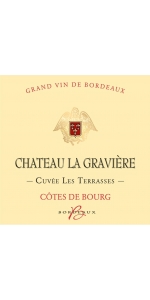
Graviere La Rouge Cuvee les Terrasses is made of 70% Merlot and 30% Cabernet Sauvignon
Deep red color with a narrow purple rim. Attractive aromas of ripe, juicy cherry and blackberry over spice, integrated toasted aromas. The palate is balanced and full-bodied with supple tannins, displaying rich cherry flavors combined with gentle toasting characters and a touch of spice. The finish is lasting with a bitter almond aftertaste.
Average age of the vines is 25 years.
Upon arrival at the winery, only the best grapes were selected using a sorting table.
Skin contact maceration during 2 weeks in temperature controlled vats.
75% of the final wine was aged in stainless steel tanks with French oak staves and blended with 25% of wine aged in barrels.
Serve with red, white meats, poultry and fine cheeses.

Avennia Red Willow Cabernet Sauvignon is made from 100% Cabernet Sauvignon.
The Red Willow Cabernet is a true blockbuster.
Coming from one specific block of 30 year old vines at this iconic vineyard, then strictly barrel selected, this is the essence of powerful, old vine Washington Cabernet. After all of our efforts promoting the idea of the Bordeaux blend, it would take a pretty compelling argument to suspend that idea and make a 100% varietal Cabernet. In 2016 Red Willow provided us with just that. Each time we tasted it in the barrel, the belief grew that this was something special. Something we can't make every year. In the end we were won over, and decided to make a limited amount of this wine. But don't be fooled, as this too is a blend and a selection. Each year as we are tasting the grapes as harvest approaches, we notice that the vines near the bottom of this long, steep west-facing slope, are a little different. The vines at the bottom are in a little richer soil, and get a little more water, so we pick them separately, sometimes even a week or ten days apart, and keep them separate in barrel.
This wine is all from the top of the vineyard, with its lower yield and poorer soils giving more concentration and interest. Then further, nearly every combination of new and used French oak barrels were trialed to find the best blend. It's not enough just to use the four best barrels, but to trial each combination to see how they complement each other. For a wine with this much mass, 100% new French oak was used for the first time at Avennia. It is a wine that needs a little cellaring to start, but should last a very long time.
Review:
"The 2016 Cabernet Sauvignon Red Willow Vineyard is 100% Red Willow Cabernet Sauvignon that will spend roughly 20 months in close to 100% new French oak. Blackcurrants, smoked herbs, chocolate, and graphite notes all give way to a full-bodied, plump, rich, concentrated effort that's going to be better with short-term cellaring and keep for two decades."
- Jeb Dunnuck (April 2018), 94-96 pts
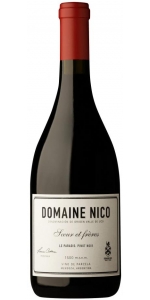
Domaine Nico le Paradis Pinot Noir is made from 100 percent Pinot Noir.
The cool climate vineyard that belongs to Laura and her sister Adrianna Catena feels like paradise itself to Laura. It is lined by trees and fruit orchards, with majestic views of the Andes. Inside the 12 Hectare vineyard, there is a little house with two tiny bedrooms and a kitchen, where Laura dreams of spending a whole month reading books-Laura's version of paradise. The little house is affectionately named Chateau Laura. About the Vineyard The tiny parcel where Le Paradis is grown was planted in 2011 with Dijon 667 Clones over two acres. Wine Production The grapes from this small parcel were elaborated in 15 separate microvinifications.
All the microvinifications were fermented with indigenous yeast. 20% of the microvinifications were fermented with 100% whole clusters in oak roll-fermentor of 600L and low temp (22 Celcius degrees). 40% were fermented with 20% whole cluster in small vats of 800L and 40% fermented in small vats of 800L without sulfites until 4%V/V of alcohol.
Review:
From soils rich in calcium carbonate and sand, in a vineyard 1,600 meters above sea level, this wine comes from a selection of 2.7 hectares that produced very little fruit in 2016, just barely enough to fill 800 bottles. But watch out for this white, with its edge, its minerality, those saline notes that are so characteristic of chardonnay from the chalky Gualtallary soils. The wine was aged for a year in used barrels, and it has some of the toast, but here it’s the deep minerality that dominates.
Patricio Tapia - Descorchados 96 Points
A polished light yellow gold color, this wine has a bouquet of citrus blossom with hazelnut, lemon grass and butterscotch undertones. The wine has a soft sweet entry with a racy linear acidity. Ripe citrus and stone fruit flavours evolve into a lovely lingering dry earthy finish. This is a textured white wine with layers of flavour.
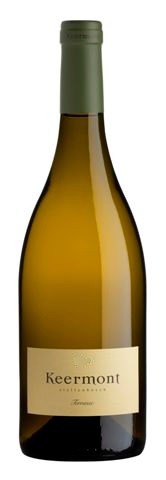
"The 2016 Keermont Terrasse underwent a little skin contact and was barrel-fermented in 225- and 500-liter barrels with around 10% new oak for 12 months. It has a fresh bouquet of white peach, honeysuckle and a touch of melted candle wax. The palate is well balanced, considering that Alex Starey said it was the first vintage that endured drought problems (hence the higher percentage of Sauvignon Blanc), offering grass clipping, gooseberry and nettle toward the finish. Very fine. - Neal Martin"
- Vinous (August 28th 2018), 90 pts
"Always a crowd pleaser, the Terrasse shows very appealing white stone fruit, lemon curd and floral scents. Softly textured with good backbone and firm acidity complementing riper stone fruit and citrus flavors. A blend of 39% Chenin Blanc, 34% Sauvignon blanc, 14% Viognier and 13% Chardonnay fermented and aged in used 500L barrels for 12 months. Lees stirred only during fermentation then left to sit on the lees.13% alc."
- International Wine Review (January 2019), 91 pts
The Keermont Estate and Vineyards
Located just beyond Stellenbosch, Keermont Vineyards is nestled in farm land in the beautiful valleys of South Africa. Keermont uses their name to honor the former farm, Keerweder, that once occupied their land. The word “keerweder” means a dead end in a valley. The literal translation is “blocked again”, which is in reference to the early settlers being blocked by the terrain when trying to pass through the valley.
The Keermont winery building and vineyards actually lie in the shadow of Guardian Peak, or “Suurberg”. This location is ideal for Keermont, as the fruit on this mountain is often compared to the grapes of Napa Valley’s famous Howell Mountain AVA.
In 1694, Jan Jac Van Dyk founded the land in the Blaawklippen Valley that is the location of present day Keermont. Other wineries such as Waterford, Dornier, and Stellenzicht are also on the land once owned by Van Dyk. The earliest account of a European landowner utilizing the area for agricultural use are Van Dyk’s records. Afterwards, the potential and beauty of the Blaawklippen Valley attracted many other landowners to the area and the land was divided into individual farms.
Mark and Monica Wraith bought into this land by purchasing the Fleurfontein and Keerweder III farms in 2003. They combined the two farms into the Keermont Vineyards Estate. The couple still live on the Keermont land with their family. Alex Starey is the Keermont winemaker. In 2005, Keermont began a major vineyard planting program and it now holds 27 ha under vine. In 2007, Keermont releases its first vintage, from a crop of only 5 barrels or 108 cases. In 2010, the physical Keermont winery building, complete with offices, processing facilities, barrel rooms, and a tasting room, was converted from the former spring water bottling plant that had once resided on the Fleurfontein farm. The total farm acreage for Keermont Vineyards is 157 hectares or 388 acres, with 27 hectares under vine. 18 hectares produce red varietals such as Cabernet Savignon, Merlot, and Syrah. 9 hectares hold the white varietals like Chenin Blanc, Chardonnay, and Viognier. Keermont also boasts Chenin Blanc vines that are over forty years old and used by De Trafford winery. Keermont aims to create wines that reflect their beautiful land and the particular year’s vintage condition. Keermont focuses on using minimal chemical fertilizers, few pesticides, and irrigate as little as possible. No fining or filtration is practiced on the Keermont Estate. Keermont desires a natural, harmonious vineyard that will in the long run produce better quality wines.
The goal of this estate is to make superior blends. The wines to be produced, but not written in stone, are:
Keermont Red – 40 % Cabernet Sauvignon, 40% Merlot, 20% Syrah.
Keermont White – 70% Chenin Blanc, 30% Viognier and Chardonnay
Dessert wine in exceptional vintages
Keermont Syrah – Syrah, Mourvedre, Viognier
Some wines from Keermont Winery:
Any Keermont wines we have in stock are listed below, if you don’t see the wine you are looking for please don’t hesitate to ask for it.
My Favorite Neighbor Cabernet Sauvignon is made from 79% Cabernet Sauvignon, 8% Malbec, 6% Syrah, 4% Petite Sirah, 3% Petit Verdot.
A homage to Stephan Asseo of L’Aventure Winery became an obsession. Sourced from exceptional vineyard sites around Paso Robles, San Luis Obispo and south to Edna Valley, this wine is cultivated meticulously by the farmers who have become My Favorite Neighbors. With their dedication to the land, we are able to craft a world class wine without any shortcuts or compromises. Welcome to our Neighborhood.
The 2022 My Favorite Neighbor is everything you’ve come to expect from our flagship Cabernet Sauvignon, sourced from our favorite Paso Robles growers who lend their neighborly spirit to the wine. Effusive aromas of raspberry and currant reveal notes of blue fruit and purple flower. On the palate, juicy red fruits are interwoven with hints of black cherry, cinnamon and toasted oak. Structured tannins carry into a long, chewy finish. Whether it’s a casual backyard barbecue or a fine celebratory meal, this versatile wine has you covered for summer and beyond.

Dog Bone is a serious wine with a fun label!
We wanted to make a great wine at a fair price and help dogs across the country. 10% of all profits will go to Humane Societies in places we sell Dog Bone. Sales of this wine are also helping North Coast Grape farmers by finding a home for their excess grapes.
The nose has classic Cabernet notes of Graphite, Blackberry Blossom, and Black Olive Tapenade. The palate has loads of tannin structure, Blackberry, and Almond Wood. The wine is very structured and will age beautifully. It drinks like a young Pauillac from a classic vintage like 2005 or 2009. This is a balanced wine with great purity.
We make our Cabernets with structure and balance. We source from hillside sites that are cooler and allow us to make wines with beautiful fruit and good acidity.
pH: 5.7g/L
TA: 3.80
ABV: 14.5%