
" We don't sell the wine without touching the vine "
| BUY MORE! SAVE MORE! | ||||||||||||||||||||
|
| Country: | South Africa |
| Region: | Franschhoek |
| Winery: | La Motte |
| Grape Type: | Merlot |
| Vintage: | 2019 |
| Bottle Size: | 750 ml |
La Motte Merlot is made from 100 percent Merlot.
La Motte Merlot offers a bouquet of red currants, cherries and spicy oakiness. It is an elegant, well-balanced and juicy wine with an underlying, refreshing quality.
Excellent with lamb, roasts or casseroles.
Review:
"Medium garnet color. Aromas and flavors of smoked meat, toast, leather, grilled plum, baked cherry tart, cracked black pepper, and myrrh with a round, lively, dry medium body and a smooth, interesting, medium-long finish with notes of chocolate-covered pecans with well-integrated, fine, firm tannins and light oak flavor. A savory and juicy Merlot with a strong sense of place; try with most meat dishes."
- Beverage Testing Institute (April 2021), 90 pts
The La Motte Estate
Situated in the beautiful Franschhoek Valley in South Africa’s Cape winelands, La Motte is home to some of South Africa’s finest wines, recognized internationally for their exceptional quality. In harmony with the production of wines, La Motte has also ventured into flower cultivation and the production of ethereal oils. True to its philosophy of a culture of excellence, La Motte maintains a programme of consistent quality improvement, reaching beyond wine production. The estate has a strong commitment to historic and cultural preservation, as well as the active socio-economic upliftment of its workers and their families. With its picturesque setting, historic buildings and rural atmosphere, La Motte is an enchanting destination for visitors to the winelands of the Cape.
La Motte is synonymous with the highest quality in wines. To carry the La Motte label, each wine has to reflect the greatest expertise in viticulture, combined with experience, passion and a creative flair in wine-making.
Annually a total of 1 000 tons of grapes are processed in La Motte's modern cellars, where old-world wine-making methods are combined with state-of-the-art technology.
History:
In 1695 a piece of land in the Franschhoek Valley was granted to German immigrant Hans Hattingh. In 1709 French Huguenot Pierre Joubert purchased the land and named it after the village of his birth in Provence, La Motte d’Aigues. With the planting of 4 000 vines in 1752, viticulture was established on La Motte by Huguenot descendant Gabriel du Toit. The farm passed through several owners before being acquired by the Rupert family in 1970.
Today, La Motte owner Hanneli Rupert-Koegelenberg and her husband Hein Koegelenberg, CEO of La Motte, oversee La Motte’s making of exceptional wines as well as diversifying La Motte's operations into flower and ethereal oil farming.
The La Motte Vineyards
The unique charm of La Motte’s wines can be attributed to particular soil types, a moderate climate as well as a team of dedicated experts who keep abreast of international viticultural and vinicultural practices.
Viticulturist Pietie le Roux, who majored in viticulture, viniculture and pomology at South Africa’s leading agricultural training institution, has been in charge of La Motte’s vineyards since 1986, assisted by a highly motivated workforce.
“Fine grapes make fine wines”, says Pietie, “therefore we constantly try to improve our harvest results and apply findings obtained from ongoing research and developments in viticulture”.
The most modern practices are employed in the selection of vineyard sites, rootstock and clones, grape varieties planted, vineyard facings and vine spacing. Through extra high trellis poles, a bigger canopy of leaves is created, allowing more leaves to absorb the sunshine, enhancing early ripening and the formation of prominent aromas. The bigger canopy also protects the grapes against direct sunshine. Vine growth is restricted, to limit grape size and promote a high-quality extract, ideal for the production of elegant, complex wines.
These practices are further refined by the precision of science. The latest technology is applied, including GIS (Geographical Information Systems), by which the farm is scanned by satellite, monitoring and controlling the effects of slopes, radiation, micro and macro climates and soil classification.
Through infrared scanning, vine conditions such as stress and irrigation demands can be pinpointed by vineyard block in order to be addressed accurately. In specified vineyards on the La Motte Nabot farm in the Walker Bay region – from where grapes for La Motte wines are obtained – SGS-certified organic farming is practised, totally eliminating the use of chemicals and insecticides, thus promoting health benefits.
Furthermore, La Motte is equipped with a weather station and temperature monitoring system – loggers in vineyards determine humidity, moist conditions and temperatures in zones where grape bunches are formed.
Conscious of the effects of agriculture on the natural habitat, La Motte is accredited to the Biodiversity & Wine Initiative (BWI), a partnership between the South African wine industry and the conservation sector. The objective is to help keep biodiversity intact so that species and ecosystems are able to adapt to changes in the environment and to recover more readily from disturbances in their natural growth system.
Grapes are sourced from the Elgin (34%), Franschhoek (20%), Walker Bay (20%), Nieuwoudtville (9%), Darling and West Coast (8%), Durbanville (5%) and Elim (4%).
Grapes from Franschhoek and Walker Bay are organically grown.
Bourdieu Blaye Cotes de Bordeaux is made from 87% Merlot, 10% Cabernet Sauvignon and 3% Cabernet Franc.
Chateau Bourdieu Blaye Cotes de Bordeaux offers a beautiful red ruby color deep and intense. It exhales red fruits and blackcurrant aromas, completed by notes of redcurrant. The mouthfeel is round and juicy, with a smooth, well integrated tannins that offers a nice structure and a long finish.
Perfect with a magret de canard (duck breast) or a filet of beef.
Review:
"Brooding blackcurrant, black cherry and cassis combine beautifully with fine tobacco and cedar notes. Persistent and concentrated with satin tannins and supporting acidity. Long and finessed."
-Decanter, (July 2024), Gold Medal - 95 points
James Goddard was an ancestor of the Clarke family. Born in West Sussex, England in 1823, James spent his 74 years as a sailor, a whaler, a bullock driver, farmer, prospector, miner and hotel keeper. From an illiterate runaway living rough on the streets of London, he became a rich, successful and admired pillar of South Australian society.
James arrived in Adelaide in 1839 as a 16-year-old sailor. Twelve years later, his life changed forever with the news of gold findings. For the next 20 years, James roamed the country learning the geology that improved his chances of prospecting.
James Goddard Shiraz is made from 100 percent Shiraz.
In 1870, he tried his luck near his farm in the Barossa Valley and discovered the region’s first gold deposits, creating the prosperous Lady Alice Mine. The Lady Alice Mine, though it is no longer operational, was & still is the most successful gold mine in South Australia. From these roots, the Thorn-Clarke family has been connected to the region for the last 150 years.
James Goddard Shiraz is a blend Shiraz sourced from the Milton Park vineyard in the north of Eden Valley, and the St Kitts vineyard in the far northern area of the Barossa. Fruit is harvested in the cool of the night to maintain maximum flavour and freshness and it is fermented for 8 days. The ferment is pumped over twice daily to extract the colour and flavour from the fruit. Once finished fermentation the wine was then matured in a blend of French and American oak for a period of 10 to 12 months depending on the vintage.
Deep vibrant red with purple hues to the rim. The nose shows lifted plums, vibrant purple berries and a delicate spice note. The palate has concentrated satsuma plum, blackberry with lovely charry oak in the background. Long, juicy and even with plush fruit on the finish.
Review:
“Blended from two estate vineyards, St. Kitts and Milton Park, this shiraz offers its richness without any aggression or overt perfume. It’s just lush and delicious, a friendly embrace of firm tannins and purple-red fruit. The texture and flavor combine in a saturated meatiness, for Korean barbecue.”
- Wine & Spirits Magazine, 92 points
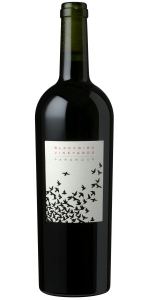
60% Cabernet Franc, 29% Cabernet Sauvignon, 11% Merlot
The 2019 Paramour entices with notes of blueberry, iris, leather, chocolate cake, and cigar on the nose. A rich attack of layers of flavor include cherry, plum, coffee, and chocolate with bright acidity. Soft and silky tannins lead to a long finish, with cherry, blueberry, plum, and currant lingering on the palate.
Review:
A blend of 60% Cabernet Franc, 29% Cabernet Sauvignon and 11% Merlot, the 2019 Paramour Proprietary Red was sourced from the Schifflet, Hudson and Stagecoach Vineyards. Blessed with floral notes, licorice and black cherries on the nose, this looks like the pick of the litter and is one reason why Napa Cabernet Franc prices are what they are. This is full-bodied and rich yet seemingly weightless, despite being concentrated, long and velvety. This is just lovely stuff.
Robert Parker's Wine Advocate 97 Points
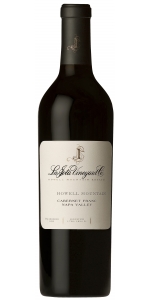
La Jota Howell Mountain Cabernet Franc is made from 100% Cabernet Franc.
The 2019 Cabernet Franc opens with aromas of cassis and graphite when poured in the glass. The firm tannins set the stage on the palate melded with rich flavors of boysenberry and pain de grille with a silky mouthfeel and lingering finish.
Review:
Savory in black pepper, smoked meat and cigar box, this wine is high-toned aromatically, with lovely hints of violet and dried herb, sage and bay leaf. Mountain-sturdy tannins give it structure, power and room to age, with lasting acidity to keep it fresh. Enjoy best from 2029–2039
.-Wine Enthusiast 95 Points
Laird Jillians Red Blend is made from 65% Cabernet Sauvignon, 18% Syrah, 10% Merlot, 5% Malbec and 2% Petit Verdot
21 months in 75% French Oak and 25% American Oak (40% new and 60% neutral)
Vineyard: Cabernet Sauvignon (60% Mast Ranch + 40% Linda Vista Ranch), Syrah (100% Eagle Vines Ranch), Merlot (100% Big Ranch), Malbec (100% Flat Rock Ranch) and Petit Verdot (100% Flat Rock Ranch).
Appellation: Napa Valley
Our family has been proudly growing grapes in Napa Valley for two generations; this unique fusion of four varietals honors the youngest member of the third generation in our farming family, our daughter Jillian. This Left Bank Bordeaux-style blend with a twist of Rhone is structured, but easy to drink. Jillian’s is the only blend we make and it’s our most popular red wine.
Tasting Notes: Complex and precocious just like the real Jillian. Its deep, ruby red appearance accompanied by viscous legs leads the way to a seductive bouquet of toasted oak, lavender and ripe strawberries. A medium bodied palate, with delicate tannins and acidity, leads the way to tart dusty cherries and boysenberries that dance across your palate, while flavors of clove, vanilla and blueberry custard unfold on the finish.

All older vintage wines have been purchased from a single collectors cellar. Pictures can be requested before shipment.
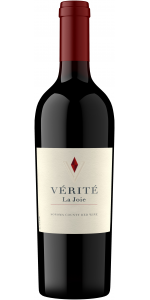
Verite La Joie Red is made from 84% Cabernet Sauvignon, 7% Merlot, 5% Cabernet Franc, and 4% Petit Verdot, .
The 2018 La Joie displays a brilliant violet core with a thin rim of bright ruby. Generous fruit-for- ward aromas of ripe black currant and black cherry are followed by earthy notes of fresh conifer, dried mushroom, black olive, dusty clay, anise and clove. The palate is rich and structured; possessing similar flavors of the nose, refined tannins, well-balanced acidity and a complex, luscious finish.
Review:
A blend of 84% Cabernet Sauvignon, 7% Merlot, 5% Cabernet Franc, and 4% Petit Verdot, the 2019 La Joie is deep garnet-purple in color. It has a wonderfully flashy and flamboyant nose of blackcurrant cordial, redcurrant jelly, plum preserves, and potpourri with hints of chocolate mint, tilled soil, chalk dust, and forest floor. The medium to full-bodied palate is very taut and muscular with tons of bright, crunchy black fruits and wonderful tension, finishing with tons of earthy nuances. 2,500 cases were made.
-The Wine Independent 100 Points
The 2019 La Joie is an elegant expression that offers power, freshness and expressive, floral character. A blend of 84% Cabernet Sauvignon, 7% Merlot, 5% Cabernet Franc and 4% Petit Verdot, it has a deep ruby color and opens slowly from black cherries and blueberries to accents of violets, ground coffee and licorice. The full-bodied palate has generous, grainy tannins, detailed, perfumed flavors and bright acidity, finishing with an alluring iron character.
Robert Parker 99 Points
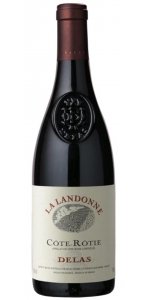
Delas Freres Cote Rotie La Landonne Rouge is made from 100 percent Syrah.
This very ancient region dates back to the Roman Era and is located on the right bank of the Rhône. It is said that during the Middle Ages, “The Seigneur de Maugiron” gave a hillside to each of his two daughters - one was brunette and the other fair - thus, were born the names of “Côte Brune” and “Côte Blonde.” Wines from the Côte Blonde tend to be more delicate and lighter in character than the fuller wines of the Côte Brune. Together, they make a wine of style and substance. This cuvée is a vineyard plot selection. The grapes come exclusively from a plot within the named slope of “La Landonne.”
This cuvée‘s first vintage was 1997. The wine is only made in the very best years. Its highly limited production never exceeds 2,500 bottles per year.
The steep, terraced hillsides along the river produce wines that are among the "biggest" reds of France. The Delas Côte-Rôtie is primarily Syrah with an addition of up to 10 to 20% of Viognier grapes in the crop. The soils of the northern part of the Côte Brune vineyard consists of extremely steep, terraced slopes of ferruginous mica schists which are covered with schist sand (arzel). The Côte Blonde has a varied geology with gneiss and granite predominating at the most southern side of the appellation. The area has dry, hot summers with regular rainfalls during other seasons. The grapes for the “La Landonne” cuvée are picked by hand at maximum maturity. Fermentation takes place in traditional open-topped concrete tanks, following three days of pre-fermentation cold maceration. Before fermentation, the maceration process continues under controlled temperatures of 82°F to 86°F. Daily cap pushing down and pumping over are carried out for about 10 days with total vatting time of up to 20 days. The wine is aged for 14 to 16 months in new or one year old oak casks. The barrels are topped up regularly.
Food Pairing: This wine pairs wonderfully with fine meats, roasted beef, water games, truffles and spicy stews. The bottle should be opened 1 to 3 hours before drinking. This wine needs at least 3 years cellaring before it can open up its complexity. In such case it is strongly recommended to decant before serving.
Tasting Notes: The wine‘s deep color is underscored by plummy hues. A complex nose shows deep, fruity aromas with hints of licorice and roasted coffee. Endowed with a dense and silky tannic structure, this is a full, fleshy wine that provides an ample and generous palate. Its lasting finish speaks of considerable ageing potential.
Reviews:
This is dark and still a bit reticent, with a cast iron cloak around the core of dark currant, plum and blackberry paste flavors, showing lots of sweet bay leaf, anise and singed apple wood notes in the background. There's serious grip through the finish. For the cellar.
-Wine Spectator 96 Points
Very open, spicy and fresh on the nose, you could almost open this now. Struck flint notes assist in teasing out notes of leaf tea, tobacco, rosemary and rose. Very full-bodied, generous but powerful on the palate, tense and mineral. Mouthcoating ripe, sweet tannin and robust amounts of sweet baking spices, along with more tobacco and black fruit on the palate. Has depth, length, power and impressive balance despite the high alcohol. Drink from now into 2022, or from 2031 to 2040. Lieu-dit La Landonne, from the Brune side (mica schist bedrock). Matured in new and one-year-old barrels for 14 months.
-Decanter 96 Points
The 2019 Côte Rôtie La Landonne comes from one of the greatest sites for Syrah in the world, the La Landonne lieu-dit located close to the center of the appellation, on the Côte Brune side. It reveals a deeper purple hue (it's slightly more opaque than the Seigneur de Maugiron) and offers a brilliant nose of ripe cassis, black raspberries, scorched earth, smoked herbs, and seared meat. Full-bodied and powerful on the palate, this is a deep, spicy, concentrated Côte Rôtie with a plush, layered mouthfeel, sweet tannins, beautiful balance, and a great, great finish. This puppy brings the fruit, opulence, and texture of the vintage yet still has a classic Côte Rôtie character.
-Jeb Dunnuck 96 Points
Fresh aromatic layers of mint sit atop crushed red cherries and wild strawberries, with light clove and thyme on the nose. The palate is rich and enticing with black cherries, plums, rhubarb, pomegranate seeds, black olives and freshly picked rosemary leaves. Tremendous texture, structure, and refreshing acidity carry this wine to a robust finish of orange zest and black tea leaves. Maisons Marques & Domaines USA.
- Wine Enthusiast 96 Points
This very ancient region dates back to the Roman Era and is located on the right bank of the Rhône. It is said that during the Middle Ages, “The Seigneur de Maugiron” gave a hillside to each of his two daughters - one was brunette and the other fair - thus, were born the names of “Côte Brune” and “Côte Blonde.” Wines from the Côte Blonde tend to be more delicate and lighter in character than the fuller wines of the Côte Brune. Together, they make a wine of style and substance. This cuvée is a vineyard plot selection. The grapes come exclusively from a plot within the named slope of “La Landonne.”
This cuvée‘s first vintage was 1997. The wine is only made in the very best years. Its highly limited production never exceeds 2,500 bottles per year.
The steep, terraced hillsides along the river produce wines that are among the "biggest" reds of France. The Delas Côte-Rôtie is primarily Syrah with an addition of up to 10 to 20% of Viognier grapes in the crop. The soils of the northern part of the Côte Brune vineyard consists of extremely steep, terraced slopes of ferruginous mica schists which are covered with schist sand (arzel). The Côte Blonde has a varied geology with gneiss and granite predominating at the most southern side of the appellation. The area has dry, hot summers with regular rainfalls during other seasons. The grapes for the “La Landonne” cuvée are picked by hand at maximum maturity. Fermentation takes place in traditional open-topped concrete tanks, following three days of pre-fermentation cold maceration. Before fermentation, the maceration process continues under controlled temperatures of 82°F to 86°F. Daily cap pushing down and pumping over are carried out for about 10 days with total vatting time of up to 20 days. The wine is aged for 14 to 16 months in new or one year old oak casks. The barrels are topped up regularly.
Tasting Notes
The wine‘s deep color is underscored by plummy hues. A complex nose shows deep, fruity aromas with hints of licorice and roasted coffee. Endowed with a dense and silky tannic structure, this is a full, fleshy wine that provides an ample and generous palate. Its lasting finish speaks of considerable ageing potential.
Food Pairing
This wine pairs wonderfully with fine meats, roasted beef, water games, truffles and spicy stews. The bottle should be opened 1 to 3 hours before drinking. This wine needs at least 3 years cellaring before it can open up its complexity. In such case it is strongly recommended to decant before serving.
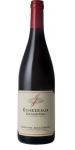
Domaine Jean Grivot Echezeaux Grand Cru is made from 100 percent Pinot Noir.
Domaine Jean Grivot is among the great names in Burgundian wine. Étienne Grivot and his wife Marielle took over from Étienne’s father Jean Grivot in 1987. The vineyards are densely planted and farmed organically “sans certification” while the aim in the cellar is for balance and clear expression of terroir.
Jean Grivot’s 15.5 hectares spread across 22 appellations with vineyards in the communes of Vosne-Romanée, Vougeot, Chambolle-Musigny, and Nuits-Saint-Georges. Besides the three grand crus, there are 8 premier crus including the much lauded Les Beaux Monts and Suchots in Vosne-Romanée. The grapes are completely de-stemmed and fermentation is spontaneous.
About the Vineyard:
Echézeaux grand cru is a large vineyard of 38 hectares divided into 11 individual climats. Grivot’s parcel is in the climat of Les Cruots and lies at the southern end of Echézeaux near the premier cru of Les Suchots. A good Echézeaux should have rich fruit, considerable earthiness, and be very complete on the palate.
Tasting Notes:
The wine shows aromas and flavors of red berries, herbs, and purple flowers. The palate is rich with ripe fruit and medium weight with bright acidity and fine tannins. Aging in 40-70% new Burgundian pièce brings notes of vanilla, toast, and baking spices.
Food Pairing:
Red Burgundy might be the world’s most flexible food wine. The wine’s high acidity, medium body, medium alcohol, and low tannins make it very food-friendly. Red Burgundy, with its earthy and sometimes gamey character, is a classic partner to roasted game birds, grilled duck breast, and dishes that feature mushrooms, black truffles, or are rich in umami.
Review:
A very elegant expression of Echezeaux, with a velvety black plum and rose petal fruit. There is a lovely freshness and so much finesse that the tannin and structure might surprise you at the end. This has the substance to age for decades. Produced from a 0.84ha parcel in Cruots next to Comte Liger-Belair. The vines were planted in 1954 and the destemmed fruit was gently fermented.
This is pure, racy and enticing, hosting aromas and flavors of black currant, blackberry, violet and iron. This is about finesse, grace and precision balance, with saturated fruit flavors persisting on the superlong aftertaste. Needs a decade in the cellar.
-Wine Spectator 97 Points
Maringer-Reif Piesporter Michelsberg (liter) is 100 percent Riesling.
This Mosel-Riesling is fruity and semi-sweet. It is easy to drink on the evening of a hot summer day. It's got a hint of lemon flavor and a very good minerality.



