
" We don't sell the wine without touching the vine "
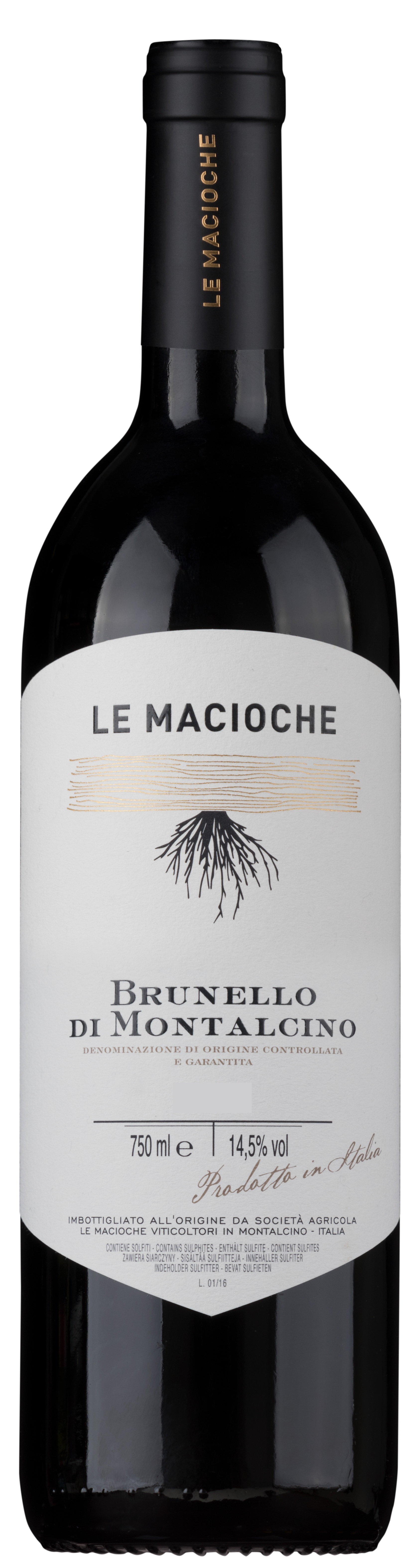
| Country: | Italy |
| Regions: | Tuscany Brunello di Montalcino |
| Winery: | Famiglia Cotarella |
| Grape Type: | Sangiovese |
| Organic: | Yes |
| Vintage: | 2017 |
| Bottle Size: | 750 ml |
Collemattoni Brunello di Montalcino is made from 100 percent Sangiovese.
Color: brilliant red with burgundy reflects; Bouquet: penetrating with memories of wild black fruits, black cherry and noble wood; Taste: warm, dry and persistent
Coming from a parcel with 10-15 year old vines planted in sandy clay and marl soils.
Harvest is 100% destemmed with a soft pressing, fermentation in stainless steel tanks at controlled temperature of 28-30°C, pumping over for the first week of maceration followed by skin-contact maceration for 20-25 days with rack and return technique (delestage).
Malolactic fermentation completed.
Wine is slightly filtered before bottling.
Review:
This is a really balanced and pretty young Brunello with dark-cherry and citrus character on both the nose and palate. It’s medium-bodied with integrated tannins and a beautiful, succulent finish. Nicely done. Drinkable now, but better in two or three years.
-James Suckling 95 Points
Collemattoni Brunello di Montalcino Riserva is made from 100 percent Sangiovese.
Intense ruby red with brilliant burgundy reflects in color. Reminiscent of wild black fruits, vanilla and spices on the nose and dry, warm, slightly austere but velvety in the palate.
This wine comes from the oldest vineyard of Collemattoni: Fontelontano. Less than half hectare. It's one of the few Single Vineyard Brunello di Montalcino riserva.
Coming from a parcel with 15-18 year old vines planted in sandy clay and marl soils.
Harvest is 100% destemmed with a soft pressing, fermentation in stainless steel tanks at controlled temperature of 28-30°C, pumping over for the first week of maceration following by skin-contact maceration for 20-25 days with rack and return technique (delestage).
Malolactic fermentation completed. The delestage and the pumping over are then spaced out along the process.
Wine is slightly filtered before bottling.
Review:
This is intense with aromas of dried cherries, sweet licorice, cloves, crushed walnuts and hints of chocolate and undergrowth. Full-bodied, deep and structured with taut, tightly packed tannins. Long and persistent. Drink or hold.
-James Suckling 94 Points
Poggio San Polo Podernovi Brunello di Montalcino is made from Sangiovese.
Intense ruby red in color with garnet hues, clear and glossy. The bouquet exhibits typical aromas of violets and small red berries. Subtle nuances of forest undergrowth, aromatic wood, a touch of vanilla and jammy mixed fruit then give way to subtle hints of coffee. This Brunello is intense, persistent, broad and heady. Full-bodied and warm on the palate, with a densely-woven texture and robust body, it has a persistent finish with well-rounded tannins. The particular features of the terroir at San Polo produce a Brunello with a capacity for lengthy aging, while patient cellaring enhances the wine during ageing in the bottle.
Review:
Lovely purity of fruit with ultra fine tannins and depth, finesse and complexity. Black cherries, cedar and some flowers. It’s full-bodied with very fine tannins that drive the finish. Give it a year or two to open more, but already so enticing. Drink or hold.
-James Suckling 96 Points
The San Polo 2015 Brunello di Montalcino Riserva (with 8,000 bottles produced) is a textured wine with hearty fruit and touches of smoked meat and spice. At its core, the wine offers dark fruit, blackberry and ripe plum. The rich fruitiness of the wine cedes to campfire ash, mahogany and furniture wax. These results are sultry and even a bit flashy, with distant background tones of teriyaki and plum sauce. The wine is fermented in cylindrical oak fermenters and aged in oak for three years. We'll see this bottle hitting the market sometime after February 2021.
-Wine Advocate 95 Points
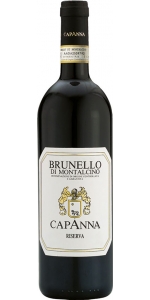
Capanna Brunello di Montalcino Riserva is made from 100 percent Sangiovese.
TYPE: DOCG
BLEND: 100% Sangiovese carefully selected in the oldest vineyards and only of the best harvests.
VINIFICATION:
Alcoholic fermentation with maceration of the skins (30-35 days) at a controlled temperature and spontaneous malolactic fermentation, both in truncated cone-shaped Slavonian oak vats.
AGEING:
In Slavonian oak casks of 10 to 25 hl for over 40 months; followed by ageing in bottles for at least 15 months.
NOTES:
Colour: deep ruby red, strong, lively.
Bouquet: very intense and complex, fruity and spicy, with red fruit, jam and liquorice shades; great prospects of future development.
Taste: great structure in the acid-tannin components, well supported by the soft ones; extremely persistent.
Food pairings: roast red meats, game and very aged cheeses.
Review:
Bright ruby in the glass. First impact is low key, with red cherry, leather, tobacco, fresh violet and balsamic notes. The attack is velvety, with a full body, lifted acidity and dense, ripe tannins. Character emerges from the glass, meaty and bloody. Thick, dry finish that’s fierce. Drink or hold
-James Suckling 95 Points
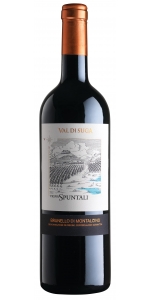
This is a 6 pack with 2 bottles each from vintages from 2013, 2015, and 2016.
***Tenimenti Angelini Val di Suga Vigna Spuntali Brunello di Montalcino 2016:
The 2016 Vigna Spuntali Brunello di Montalcino is the most brooding of the lineup from Val di Suga and is sourced from the southwest of the region on sandy soils. There are aromatics of black raspberry, licorice, menthol, sage, cinnamon, and iron-rich earth. Its Mediterranean influence is felt on the palate with ripe black cherry, dried herbs, and sun-baked earth. This is the fullest bodied and most savory of the Val di Suga lineup, with more roundness and grip. Its structure will benefit from cellaring for several years and will be great drinking over the next 20 years or more. 2026-2040.
-Jeb Dunnuck 96 Points
***Tenimenti Angelini Val di Suga Vigna Spuntali Brunello di Montalcino 2015:
The 2015 Vigna Spuntali Brunello di Montalcino is more introverted on first opening, with notes of black plum, licorice, dried Mediterranean herb, and sun-baked earth. On the palate, it offers a tart dried fruit character, with a building tannin structure that finishes with tomato leaf, and bitter herbs. The most rustic and burly of the wines in the lineup of the 2015 Val di Suga vintage, it will benefit from allowing some time in cellar to see how this matures and its tarriness develops. Drink 2026-2036
-Jeb Dunnuck 94 Points
***Tenimenti Angelini Val di Suga Vigna Spuntali Brunello di Montalcino 2013:
Plenty of spices and fresh herbs on the nose, such as dried rosemary and nutmeg, to match the underlying dried redcurrants and cranberries. Full-bodied with plenty of concentration, but still shows a very sturdy, tannin backbone and punchy acidity, to drive this through to a long finish. Drink in 2021.
-James Suckling 94 Points
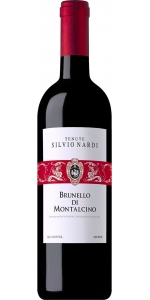
Tenute Silvio Nardi Brunello di Montalcino is made from 100 percent Sangiovese.
Quite intense ruby red color with garnet highlights. Intense and complex aromas at the nose, rich in ripe fruits, spices and toasted notes. Smooth and bodied at the palate, with great persistence, elegant and wide concentration. Tannins are dense and velvety.
Reviews:
Blackberry, black-truffle and black-cherry aromas follow through to a medium body with juicy fruit and a long, flavorful finish. Polished, pretty tannins here. Nicely crafted. Drink after 2026.
-James Suckling 94 Points
In the bottle with the burgundy-colored label, the Tenute Silvio Nardi 2019 Brunello di Montalcino is a layered and generous wine with black fruit, cherry, spice and a hint of Provençal mixed herbs on black olive. There are further hints of underbrush, crushed slate, petrichor from schistic soils, and toasted almond that adds some sweetness from French oak. The tannins are velvety and soft, but this wine is regularly balanced throughout. It's well made in an ample production of 150,000 bottles.
- Robert Parker's Wine Advocate 94 Points
A spicy version, whose black pepper and Szechuan peppercorn notes highlight the core cherry and strawberry flavors. Underbrush and iron accents also enter the mix, while this stays balanced and long as the tannins leave their grip on the finish.
-Wine Spectator 94 Points
Le Macioche Brunello di Montalcino DOCG is made from 100 percent Sangiovese.
Sitting at 450 metres, Le Macioche is located just southeast of the town of Montalcino. Half of the estate’s six hectares of vineyards are registered for Brunello production. The 2017 vintage represents the first under ownership of the Cotarella family. An appealing mix of cocoa and balsamic herbs greets the nose. Mid-weight and juicy, the palate takes on accents of underbrush and there is great fruit purity and firmness of structure. The finish is savoury with just a hint of those drying tannins that mark the vintage.
-Decanter 93 Points
Le Macioche is a beautiful but small wine estate in the heart of the Montalcino winemaking zone. Of the estate’s six hectares, only three are planted to vineyards producing Brunello di Montalcino with another one hectare devoted to olive groves. Le Macioche derives its name from the Sienese Macioca or Strawberry Tree, which is the primary type of tree found in the woods surrounding the estate. After being purchased and renovated by a young couple in the 1980’s, Cantina Le Macioche became known throughout the area for producing a wine of considerable power, but with significantly more elegance than its immediate neighbors. It was this unique character that first drew the Cotarella family to follow the Brunello wines of Le Macioche. Then in 2017, shortly after leadership of Famiglia Cotarella was passed to next generation—Dominga, Marta, and Enrica—the opportunity for this dynamic Italian winemaking family to enter Montalcino arrived. Although this change represents an exciting new chapter for both the Cotarella family and Le Macioche, the traditions and character of both will serve as the basis for this next generation.
Le Macioche sits in the center of the Montalcino appellation, just about 5 minutes due southeast from Montalcino. Nestled in a prestigious neighborhood among such prominent addresses as San Polo and Fattoria dei Barbi, Le Macioche is unique in that its four sections of Brunello vineyard, spread over 7.5 acres, are all exposed to the Southwest. This, along with the elevation of roughly 1,400 feet above sea level, ensures both exceptional ripening and constant ventilation throughout each growing season. Such auspicious conditions have enabled Le Macioche to safely exercise organic farming practices with the 2018 vintage marking the estate’s full organic certification.
Le Macioche has always held a reputation for producing wines that display a degree of elegance and finesse. Winemaking at the estate is intended to provide this unique terroir the best possible opportunity to express itself clearly. Fermentations are carried out by yeasts indigenous to the property in temperature-controlled stainless-steel tanks. The wine is then transferred, according to tradition, into large casks of Slavonian oak where it undergoes the malolactic conversion and further refinement. The wine experiences a brief fining with Bentonite clay, but is always bottled unfiltered to preserve character. With the estate’s 2017 purchase by the Cotarella family, winemaking remains highly faithful to the estate’s past. Minor updates, like a pre-fermentation cold-soak, are intended to enhance the components of elegance for which the wine has always been known without altering its character.
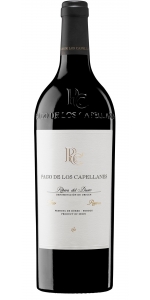
In 2007, production was just less than 5000 kg per hectare. This wine is prepared with Tempranillo 100% grapes from our vineyards.
The grapes are initially subjected to a six-day pre-fermentation cold maceration below 14ºC. They then undergo 30 days of alcoholic fermentation at a controlled temperature of 28ºC, after which the wine is removed from the tanks without pressing the grape skins. The malolactic fermentation is slow and relaxed at a temperature of 20 ºC for 28 days without the addition of bacteria.
The wine is aged for18 months in new French oak barrels and is decanted into new barrels every six months. At the end of this period, the wine is blended and bottled without undergoing any type of filtration, clarification or cold treatment.
Prepared with Tempranillo grapes (100%), this wine has a ruby red colour with very pure, intense garnet tones.
Its bouquet has fine complexity with tones of ripened fruit, especially cherries, blue berries and black currants, which are in harmony with tones of good wood, spices (vanilla and coconut) and a liquorice undertone.
In the mouth, this wine displays great balance, proving pleasing to the taste, sweet due to the maturity of its tannins and exuberant on account of its pleasant level of acidity.
Vineyard:
Pago de los Capellanes, Pedrosa de Duero.
Variety composition:
100% Tempranillo.
Type of soil:
Clayey and chalky.
Aging:
18 months in barrel and remainder on rack.
Type of oak:
100% French oak, medium toast.
Serving:
Uncork and decant one hour before serving at a temperature of 16-18 ºC.
The 2019 Ribera del Duero Reserva is also terrific, with gorgeous aromatics of black and blue fruits supported by Asian spices, lead pencils, cedarwood, and violets. It's beautifully textured, medium to full-bodied, has a concentrated, powerful mouthfeel, and ripe, integrated tannins.
-Jeb Dunnuck 95 Points
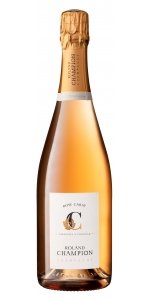
Roland Champion Champagne Brut Rose Grand Cru NV is the blend of 33% Chardonnay, 33% Pinot Meunier and 33% Pinot Noir.
The Champagne rose shows an orange salmon color coming from the red wine base. The pinot meunier brings red fruit aromas of strawberry and raspberry with hints of spices. The palate is juicy and harmonious with good depth and minerality. A delicate balance between Chardonnay, Pinot Meunier and Pinot Noir.
It is a blend of 93% White juice (made from 33% Chardonnay, 33% Pinot Meunier and 33% Pinot Noir) and 7% Pinot Noir red wine. The grapes used to produce the Coteaux Champenois red wine are coming from their vineyards near the Village of Verneuil.
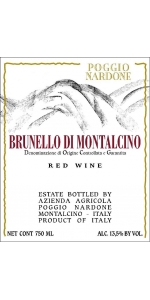
Poggio Nardone Brunello di Montalcino is made from 100 percent Sangiovese Grosso.
The rich nose displays scents of spices combined with aromas of small red ripe fruits, blackberry and blueberry.
Well structured, determined and elegant, with round and silky tannins. Very nice finish.
Alcoholic fermentation was done in tank, maloactic fermentation in oak barrels. Wine was then aged for 3 years in French oak barrels.
Review:
Noble and decidedly balsamic in the primary profile alternating notes of peppermint, eucalyptus, green tea leaves and guaranà. A lot of very delicate dried cherries are housed in the background giving brilliance and crunchiness. Medium bodied, well extracted mature tannins and a finale which squeezes from the centre palate onwards. Better from 2025.
- WinesCritic.com 93 Points
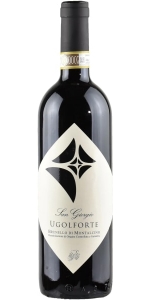
San Giorgio Ugolforte presents a dark core of red and black berry fruit layered with earth, leather, smoke, and herbs. Complex and elegant, the wine is full on the palate and firm in tannin structure. Refreshing acidity frames a graceful finish. Classic Brunello di Montalcino.
This red is marked by cherry, plum, thyme, sage and loam aromas and flavors. Lively and firmly structured, featuring a saline undercurrent. An open-knit version, with nice equilibrium, fine energy and a long, resonant finish.
-Jeb Dunnuck 94 Points
-Wine Spectator 94 Points
Visual aspect: Straw yellow color with persistent mousse.
Aromas: Fruity notes of delicious Golden apple and Kaiser pear with a pleasant citrus background.
Mouthfeel: The wine is well balanced with a nice acidity and minerality, combined with freshness and complexity.
The finish is long and very pleasant.
Area of origin: Valdobbiadene, Conegliano, Vittorio Veneto.
Soil: calcareous clayey
Varietal: Glera (known as Prosecco)
Harvest: manual harvest with grape selection
Winemaking: off skins by gentle pressing.
Primary fermentation with controlled temperature by selected yeats.
Refinement :Stainless Steel tanks
Foaming: secondary fermentation in "autoclave" (cuve close) at a controlled temperature with selected fermentation as long as a 5 bar pressure is reached.
Fining: 60 days
Training system: autochthonous called "capuccina modificata"
Bottling: isobaric bottling after sterile filtration.
It is ideal for important occasions and as an aperitif. It is also excellent with risotto and noble meat.
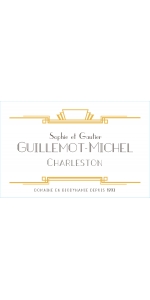
Guillemot-Michel Vire-Clesse Charleston is made from 100 percent Chardonnay.
This cuvée is produced from hundred-year old vines that the great-grandfather planted after he returned from World War I. The family wanted to honor his memory and vinify these vines the same way he did, in old demi-muids.
Charleston is a deep and complex wine that gently express itself in the glass, offering juicy white fruit flavors and a lengthy finish.
Charleston is vinified and aged for one year in demi-muids of over 10 years old. During the following harvest, the wine is racked and placed in vats for another 6 months of aging before bottling.
Fish in white sauce, poultry in creamy sauce, hard cheeses.
Review:
The 2020 Viré-Clessé Charleston is the most structured, concentrated wine in the range, mingling notions of crisp orchard and stone fruit with scents of clear honey, white flowers, beeswax and mint in an inviting bouquet. Medium to full-bodied ample and satiny, it's layered and multidimensional, with impressive depth at the core, racy acids and chalky grip. Derived from the Guillemot family's oldest parcel of vines (dating back to 1918), it's built to age.
-Wine Advocate 94 Points
DAOU Vineyards Reserve Cabernet Sauvignon is made from 77% Cabernet Sauvignon, 23% Petit Verdot.
The 2021 DAOU Reserve Cabernet Sauvignon is emblematic of Paso Robles as a world-class region for Bordeaux-style wines. Intense purple-red hues foreshadow deep aromas of black fruit, pomegranate, tobacco, mocha, and bay leaf. Trailing notes of clove, nutmeg, and vanilla emerge as the wine opens up in the glass. Opulent textures expand across the palate with flavors of red fruit, blueberry, and chocolate-covered raspberry. The overall experience is fresh and rich, concluding with velvety tannins and impressive length.
Review:
Dark and focused aromas of cherry, clove and caramel meet with creamy milk chocolate and mahogany on the layered nose of this bottling. Showing a deft mastery of tannins, which is the Daou hallmark, the palate is silky and yet structured, offering rich fruit and lightly bitter walnut flavors.
-Wine Enthusiast 95 Points
Bernard Cote Rotie Cote Brune is made from 100% Syrah. Wine was aged in French oak barrels for 16 months (25% new)
Like its little sister (Côte Rôzier) the Côte Brune is a 100% Syrah with a beautiful dark and brilliant color. The nose shows grilled and toasted notes and is completed by small red and black fruits. It is a wine with a very good length, nice complexity, finesse, and firm tannins. Its ageing in barrels for 16 months, 25% of which are new, brings a real balance to this wine. A very pleasant, elegant and modern wine that can be cellared for many years.
Pair with roasts, white meat with wine sauce, game, red meat and dark chocolate. To be served between 16 and 18°C. (60-64°F)



