
" We don't sell the wine without touching the vine "
| Country: | France |
| Regions: | Burgundy Chablis |
| Winery: | Louis Moreau |
| Grape Type: | Chardonnay |
| Organic: | Yes |
| Vintage: | 2020 |
| Bottle Size: | 750 ml |
Domaine Louis Moreau Chablis Vaillons Premier Cru is made from 100 percent Chardonnay.
Chablis achieves its highly distinctive mineral character due to its cool northerly climate and its highly calcareous soil. The Domaine Louis Moreau Chablis Vaillons Premier Cru is a generous, fleshy and lively wine that displays a beautiful balance of minerality, fruitiness and elegance.
Chablis, with its steely character and fresh citrus flavor, pairs well with white fish and shellfish and its naturally high acidity can counterbalance cream-based sauces. Unoaked Chablis lends itself well to vegetables, starches, Comté, or fresh goat cheese.
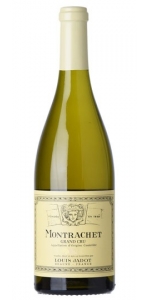
Louis Jadot Montrachet Grand Cru is made from 100 percent Chardonnay.
Le Montrachet is situated to the south of the Côte de Beaune, on both villages of Puligny Montrachet and Chassagne Montrachet (like the Batard Montrachet Grand Cru).
The terroir is extremely chalky with a lot of stones, perfectly drained and easy to overheat with south-south-eastern exposition.
The Montrachet is produced with Chardonnay
Grapes are harvested by hand and put in small cases in order not to damage the fruits. Grapes are pressed softly, they ferment in oak barrels produced by our cooperage. 1/3 are new barrels. Aging usually lasts 15 months on fine lies before bottling.
Review:
Aromas of buttered toast, honeyed peaches, white flowers and mint introduce the 2019 Montrachet Grand Cru (Maison Louis Jadot), a full-bodied, layered and enveloping wine that's satiny and sumptuous, with lively acids and fine depth at the core. While I'd give the nod to the stunning Demoiselles as Jadot's best white wine this year, this Montrachet—purchased from the Chassagne-Montrachet side, from the house's usual source—is undeniably promising.
-Wine Advocate 94-96 Points
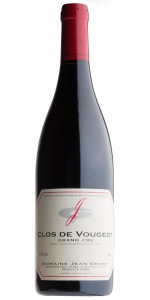
Domaine Jean Grivot Clos de Vougeot Grand Cru is made from 100 percent Pinot Noir.
Domaine Jean Grivot is among the great names in Burgundian wine. Étienne Grivot and his wife Marielle took over from Étienne’s father Jean Grivot in 1987. The vineyards are densely planted and farmed organically “sans certification” while the aim in the cellar is for balance and clear expression of terroir.
Jean Grivot’s 38.3 acres spread across 22 appellations with vineyards in the communes of Vosne-Romanée, Vougeot, Chambolle-Musigny, and Nuits-Saint-Georges. Besides the three grand crus, there are 8 premier crus including the much lauded Les Beaux Monts and Suchots in Vosne-Romanée. The grapes are completely de-stemmed and fermentation is spontaneous.
About the Vineyard:
Clos de Vougeot grand cru was acquired by Étienne’s grandfather, Gaston Grivot, in 1919. The total holding is 4.6 acres from the middle of the vineyard to the lower wall and the average vine age is 40 years old. A good Clos de Vougeot should be a complete wine without any one feature standing out. It is a perfect balance of power, aroma, and flavor.
Wine Production:
The grapes are destemmed and maceration à froid usually lasts just a day or two. The alcoholic fermentation is spontaneous and malolactic fermentation occurs in barrel. Depending on the vintage, the proportion of new oak is around 40-70% percent for the grands crus.
Tasting Notes:
The wine shows aromas and flavors of red berries, herbs, and purple flowers. The palate is rich with ripe fruit and medium weight with bright acidity and fine tannins. Aging in 40-70% new Burgundian pièce brings notes of vanilla, toast, and baking spices.
Food Pairing:
Red Burgundy might be the world’s most flexible food wine. The wine’s high acidity, medium body, medium alcohol, and low tannins make it very food-friendly. Red Burgundy, with its earthy and sometimes gamey character, is a classic partner to roasted game birds, grilled duck breast, and dishes that feature mushrooms, black truffles, or are rich in umami.
Review:
This round version is packed with ripe black cherry, violet, graphite and tobacco flavors. The silky texture and vibrant acidity work in tandem, while refined tannins provide support without getting in the way. There are a few edges to be worked out, yet this is long and concentrated.
-Wine Spectator 95 Points
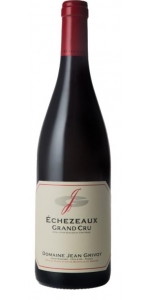
Domaine Jean Grivot Echezeaux Grand Cru is made from 100 percent Pinot Noir.
Domaine Jean Grivot is among the great names in Burgundian wine. Étienne Grivot and his wife Marielle took over from Étienne’s father Jean Grivot in 1987. The vineyards are densely planted and farmed organically “sans certification” while the aim in the cellar is for balance and clear expression of terroir.
Jean Grivot’s 15.5 hectares spread across 22 appellations with vineyards in the communes of Vosne-Romanée, Vougeot, Chambolle-Musigny, and Nuits-Saint-Georges. Besides the three grand crus, there are 8 premier crus including the much lauded Les Beaux Monts and Suchots in Vosne-Romanée. The grapes are completely de-stemmed and fermentation is spontaneous.
About the Vineyard:
Echézeaux grand cru is a large vineyard of 38 hectares divided into 11 individual climats. Grivot’s parcel is in the climat of Les Cruots and lies at the southern end of Echézeaux near the premier cru of Les Suchots. A good Echézeaux should have rich fruit, considerable earthiness, and be very complete on the palate.
Tasting Notes:
The wine shows aromas and flavors of red berries, herbs, and purple flowers. The palate is rich with ripe fruit and medium weight with bright acidity and fine tannins. Aging in 40-70% new Burgundian pièce brings notes of vanilla, toast, and baking spices.
Food Pairing:
Red Burgundy might be the world’s most flexible food wine. The wine’s high acidity, medium body, medium alcohol, and low tannins make it very food-friendly. Red Burgundy, with its earthy and sometimes gamey character, is a classic partner to roasted game birds, grilled duck breast, and dishes that feature mushrooms, black truffles, or are rich in umami.
Review:
A very elegant expression of Echezeaux, with a velvety black plum and rose petal fruit. There is a lovely freshness and so much finesse that the tannin and structure might surprise you at the end. This has the substance to age for decades. Produced from a 0.84ha parcel in Cruots next to Comte Liger-Belair. The vines were planted in 1954 and the destemmed fruit was gently fermented.
This is pure, racy and enticing, hosting aromas and flavors of black currant, blackberry, violet and iron. This is about finesse, grace and precision balance, with saturated fruit flavors persisting on the superlong aftertaste. Needs a decade in the cellar.
-Wine Spectator 97 Points
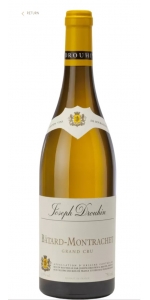
Joseph Drouhin Batard-Montrachet Grand Cru is made from 100 percent Chardonnay.
Producing communes: Puligny-Montrachet and Chassagne-Montrachet.
Site: Bâtard-Montrachet straddles Puligny and Chassagne. It lies right below the famous Montrachet vineyard. Bâtard is one of the greatest white wines of the Côte de Beaune.
History & tradition: according to the often told story, the lord of Puligny in the Middle Ages divided his estate between his children: the eldest was the « chevalier » (knight), the daughters were the « pucelles » (young virgins) and the son born out of wedlock was the « bâtard ».
Soil: located on a mild slope, the soil is a brownish limestone mixed with gravel. The secret of this exceptional terroir comes from the unique interaction between the deep layers of limestone and the roots of the vines.
Tasting a wine of this stature is always cause for emotion. The golden colour has bright reflections. After some aeration, the aromas reveal their rich intensity: grilled bread, almond, honey, exotic wood...What is striking is the structure of the wine, its « monumental » grandeur. There is even a touch of tannin that provides an added dimension. A voluptuous finale, seemingly without end, with precious notes of preserved and ripe fruit..
Supply: this wine comes from grapes harvested on some parcels of the Drouhin Family Properties as well as from grapes and musts purchased from supply partners according to rigorous specifications.
Harvest: grapes harvested by hands in open-work crates. If necessary, a careful sorting is proceeded.
Vinification: slow pressing in a pneumatic press. The juice of the last press is separated from the free run-juice. The juice is transferred into wine barrel after a little settling.
Ageing: the alcoholic fermentation as the malolactic and the ageing are being processed in oak barrels. The proportion of new barrels is around 30%.
The ageing lasts between 18 to 21 months.
Origin of the wood: oak grown in French high forest.
Throughout the ageing process, decisions are taken only after careful tasting evaluation. The data obtained is completed through technical analysis. As with every other Joseph Drouhin wine, absolute priority is given to the true expression of terroir and character of the vintage.
Grand Veneur Chateauneuf-du-Pape Rouge Les Origines is made from 50% Grenache, 30% Mourvedre and 20% Syrah
Matured in vats (grenache) and in oak casks (syrah and mourvèdre).
Deep and brilliant, purple-red colour. An exciting nose with aromas of black fruit (blackcurrant, cherry) spices and vanilla. This great aromatic complexity is found on the palate : the spices and ripe fruit appear with an elegant woodiness and harmonious tannins. The finish has good aromatic length and introduces a touch of liquorice and pepper.
A terrific Châteauneuf du Pape with great concentration and finesse.
Best between 2 and 20 years. Best to decant if young (less than 5 years old).
Soil type Extreme north of Châteauneuf du Pape. This plateau is made with a high quantity of red clay mixed with rocks. This area is considerated to be one of the best to produce rich and powerful red wines. By definition, LES ORIGINES will always deliver a great complexity and ageing potential. Winemaking & ageing Harvest is sorted by hand, destemmed and crushed. Fermentation temperature is controlled at 30°C. Vatting period of 18 to 20 days. Matured in vats (grenache) and in oak casks (syrah and mourvèdre).
Review:
"The huge nose of violet pastilles, mulberries, smoked bacon and a touch of hot asphalt pulls you into this expansive but beautifully balanced Chateauneuf that’s packed with fine, powdery tannin. So much bitter-chocolate character, but this exactly matches the deep fruit and, at the long crescendo finish, there are fascinating balsamic and hot dry-earth touches. Drinkable now, but best from 2025."
- James Suckling (March 2022), 94 pts
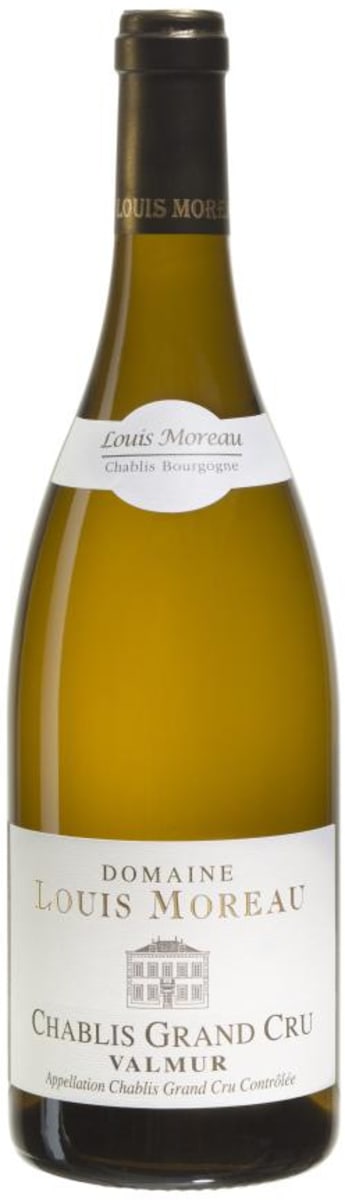
Chablis achieves its highly distinctive mineral character due to its cool northerly climate and its highly calcareous soil. The Domaine Louis Moreau Chablis Valmur Grand Cru is robust and powerful, vinified in the style of Côte de Beaune with some oak aging.
Review:
"A combination of fruit from the two sides of the Valmur valley, there is a lot of wine in this wine. It is engaging, sophisticated and has good heft with equally solid refreshment. Tasting of nectarines and pear core with a touch of earthiness, there's a gentle, dry tug on the lingering finish. This will certainly compensate the patient wine lover."
-Tim Atkins 95 Points
The Moreau family has been settled in Chablis since 1814 and today, Louis represents the 6th generation.
After he graduated in oenology-viticulture at Fresno State University (California) and worked for several wineries in California, Louis came back to Chablis and succeeded his father.
Based on his academic background and keen on passing a vineyard respectful of the environment to the future generations, Louis practices sustainable viticulture in the parcels. He always seeks for the most natural solution to preserve the quality of his vines and his grapes.
Domaine Louis Moreau Chablis Vaillons Premier Cru is made from 100 percent Chardonnay.
Chablis achieves its highly distinctive mineral character due to its cool northerly climate and its highly calcareous soil. The Domaine Louis Moreau Chablis Vaillons Premier Cru is a generous, fleshy and lively wine that displays a beautiful balance of minerality, fruitiness and elegance.
Chablis, with its steely character and fresh citrus flavor, pairs well with white fish and shellfish and its naturally high acidity can counterbalance cream-based sauces. Unoaked Chablis lends itself well to vegetables, starches, Comté, or fresh goat cheese.
Leindl Gruner Veltliner Seeberg Kamptal is made form 100 percent Gruner Veltiner. Medium yellow green. Fine yellow apple fruit, delicate hint of quince and honey, candied orange zest, highly attractive bouquet. Juicy, good complexity, extract core sweet, silky texture, fine acidity bow, fine and salty minerality, great length, secure aging potential, a very finesse Veltliner-style.
Review:
“Inviting nose, with layers of quince and elegant, aromatic herb leading through to a richly textured palate of opulent fruit and a fine acidity.”
- Decanter World Wine Awards 2023, 96 pts
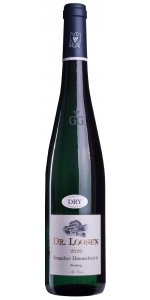
A heavenly, full-bodied dry Riesling with forceful minerality from 100-year-old vines grown in the blue slate soil of Graach.
Graach is a small village in the Mosel valley. It’s steep slate slopes produce wines that combine elegance with rustic strength. Grosses Gewächs (GG) is the designation for an estate’s best dry wine from a Grosse Lage (grand cru) vineyard. This limited-production wine was fermented with indigenous yeasts and kept in the barrel, on the full lees, for a year before bottling. The extended maturation time allows the wine to develop greater texture and a deeper natural harmony. This is a fully ripe wine, with vibrant aromatics and a pronounced acidity that gives it a brilliant structural precision.
Review:
Convincing proof that 2020 is an excellent vintage for dry GG on the Mosel! Cool and stony with delicate white-peach and white-currant aromas. Really takes off at the intensely slatey and racy finish.
-James Suckling 95-96 Points
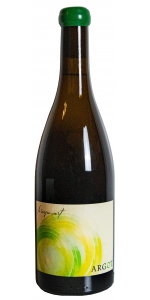
Argot Le Rayon Vert Chardonnay is made from 100 percent Chardonnay.
"Le Rayon Vert", the phenomenon which occurs as the sun dips below the horizon, and a brilliant green flash occurs when sunlight prisms through Earth's atmosphere. Jules Verne wrote "a green which no artist could ever obtain on his palette”, akin to the ethereal, green halo all truly pedigreed Chardonnays radiate from the glass.
Wafting from the glass like a freshly opened stick of Wrigley's gum. Both intense and vibrant, the full-bodied palate delivers Granny Smith apple and stone fruits; confections of custard and sticky vanilla bean; animated by bursts of spearmint and pine forest.
Review:
The 2019 Chardonnay Le Rayon Vert comes from fruit grown on Sonoma Mountain. It slides out of the glass with graceful notes of lemon tart, lime leaves, and fresh grapefruit, leading to suggestions of almond croissant, sea spray, honeysuckle, and aniseed. The medium-bodied palate is fantastically tight-knit with gorgeous tension and layer upon layer of citrus and mineral flavors, finishing very long and chalky. This is amazing.
-The Wine Independent 97 Points
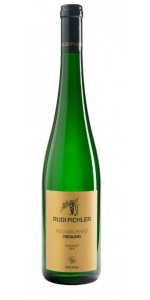
Wachau Riesling is dry and often defined by high levels of dry extract (due to a lengthy ripening period) and a pleasing freshness (due to dramatic temperature swings between day and night). Sedimentary soils of sand and stone give Kirchweg Riesling a dense mineral texture and fine fruity flavors.
Review:
Welcome to the dark side of Wachau dry riesling! Deep and delicately spicy nose that’s full of mystery. Incredible concentration and massive wet stone character on the very precise medium-bodied palate. Radical mineral energy and garden herb freshness at the enormously long and tightly-focused finish.
-James Suckling 98 Points
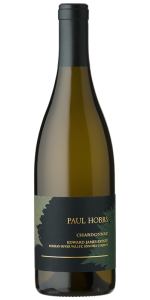
Paul Hobbs Edward James Estate Chardonnay Russian River Valley is made from 100 percent Chardonnay.
This small five-acre estate named after Paul's great-grandfather, Edward James, rewards us with a chardonnay that is pale straw in color with inviting aromas of lemon zest, red apple skin, gardenia, and honeysuckle. A creamy mouthfeel on the palate evolves into poached pear, ginger spice, and brioche that come together with a crunchy acidity and lively finish.
Review:
The 2022 Chardonnay Edward James Estate was named after Paul’s grandparents on his father’s side and originates in a vineyard planted entirely to Hyde Wente clone of Chardonnay. It was raised in French oak for 18 months on the lees. In the glass, it’s highly expressive and layered with aromas of toasted spice, incense, honeysuckle, quince, and preserved citrus. Medium to full-bodied, it has a fantastic, long, supple texture with a linear, crystalline feel, great, evenly fresh acidity, and a salty, mouthwatering finish. This is my favorite of the white wines at this tasting. Drink 2025-2037.
-Jeb Dunnuck 97 Points

All older vintage wines have been purchased from a single collectors cellar. Pictures can be requested before shipment.
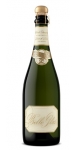
Copper Cane Wine & Spirits proudly introduces two new additions to its Belle Glos collection: Sparkling Blanc de Blanc and Sparkling Rosé. Crafted by fifth-generation winemaker Joe Wagner, these sparkling wines represent a bold expansion into the world of traditional method sparkling wines. The release marks a pivotal moment for Belle Glos, a brand known for its meticulous craftsmanship, as it explores the refined, celebratory nature of sparkling varietals.
Zero Dosage Sparkling Wines Reflect Terroir, Tradition, and Russian River Valley Purity
Rooted in the Russian River Valley’s unique microclimate, these wines are made in a zero-dosage style—meaning no added sugar after fermentation. This style highlights the vineyard’s terroir and natural acidity without relying on sweetness to balance the profile. Through traditional methods, including aging in French oak barrels, malolactic fermentation, and multi-vintage blending, Wagner crafts wines that exhibit purity, depth, and complexity, while maintaining a youthful brightness and firm minerality.
Review:
This clean and focused zero dosage Blanc de Blancs brings aromas of bright lemon, green apple, citrus blossom and grapefruit pith on the nose. The palate is dry, acidic and lively, with flavors of pithy lime, toasted hazelnut, green apple and lemon balm mingling across the finish. It's oyster time, people!
-Wine Enthusiast 93 Points



