
" We don't sell the wine without touching the vine "
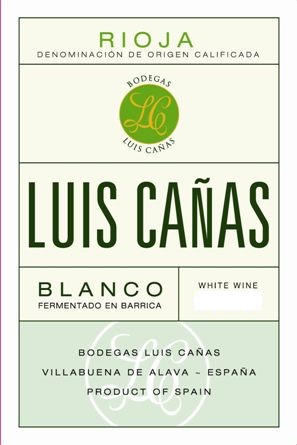
| Country: | Spain |
| Region: | Rioja |
| Winery: | Luis Canas |
| Grape Types: | Malvasia Viura |
| Vintage: | 2013 |
| Bottle Size: | 750 ml |
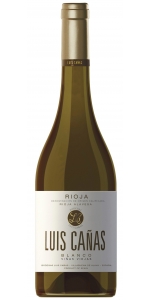
Luis Canas Rioja Blanco is made from 90% Viura and 10% Malvasia (60+ years old vines)
Barrel fermented for 3.5 months in new French oak barrels.
Alcohol: 13,5º
Total acidity: 6,5 g./l.
Volatile acidity: 0,25 g./l.
PH: 3,40
Free SO2: 25 mg./l.
Grapes harvested in small boxes to be selected manually on the table, bunch by bunch.
Beautiful golden yellow, with bright lemony highly-luminous reflections. The nose is fine, with great elegance, combined with floral and fruity tones.
The palate is dry with a crisp acidity that gives its freshness and vivacity, a structured and tasty finish of ripe fruit.
We recommend that you taste it at 8°C.
It is appropriate to accompany shellfish, crustaceans and grilled white fish or fish stews. It also blends elegantly with rice, soft cheeses, blue cheeses, all kinds of mushrooms and fresh fruit.
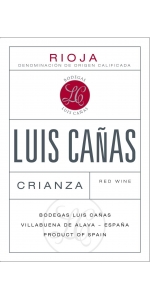
Luis Canas Rioja Crianza is made from 95% Tempranillo and 5% Garnacha
A classic style Rioja from one of the regions most enduring family run wineries.. The hillside terraced vineyards are sheltered by the Sierra Cantabria Mountains to the north from harsh weather extremes. Small plot production is utilized in this region of infertile chalky clay soil to produce clusters of excellent quality. Almost 900 plots are needed to complete the approximately 400 hectares of estate-owned or cellar-controlled vineyards, some with vines more than 100 years in age.
Tasting notes
Made from 95% Tempranillo, 5% Garnacha of 30 years of age, the wine shows a ruby red color, a clean nose with nuances of balsamic, plum and cedar. The palate is smooth and velvety, complex and structured, with fruit, spice flavors with toasted oak. A pleasant finish with red fruits and hints of eucalyptus.
The harvest
This year in Rioja Alavesa the weather has been especially cold, the summer short and dry, and there has been plenty of rain in early September. This has produced wines with great aromatic notes, particularly those coming from high altitude areas, very fragrant and with great structure.
Winemaking and aging
Upon entering the bodega and passing the selection table, the grapes are de-stemmed and crushed before undergoing fermentation and then maceration in stainless steel tanks for a total of 8 days, obtaining better color extraction as well as much more complex wines, suitable for prolonged aging. The wine is clarified with vegetable gelatines and follows anicrobic filtration.
It is ideal to pair with meats; red meat, poultry, small game, oily fish, semi-cured cheeses, spicy dishes and hot dishes such as beans or potatoes Rioja style.
After its primary fermentation, the wine is placed in barrels where it undergoes malolactic fermentation and is aged for a minimum of 12 months. It is then bottled for at least another 12 months.
Review:
"Juicy Bing cherries, peppery herbs, leather, and cedarwood notes all emerge from the 2021 Rioja Crianza, a medium-bodied, concentrated, round, layered red that has supple tannins, beautiful fruit, and a great finish. This classic Rioja has tons to love."
- Jeb Dunnuck (Importer Highlight: Fran Kysela ; July 2024), 91 pts
Luis Canas Rioja Crianza is made from 95% Tempranillo and 5% Garnacha
A classic style Rioja from one of the regions most enduring family run wineries.. The hillside terraced vineyards are sheltered by the Sierra Cantabria Mountains to the north from harsh weather extremes. Small plot production is utilized in this region of infertile chalky clay soil to produce clusters of excellent quality. Almost 900 plots are needed to complete the approximately 400 hectares of estate-owned or cellar-controlled vineyards, some with vines more than 100 years in age.
Tasting notes
Made from 95% Tempranillo, 5% Garnacha of 30 years of age, the wine shows a ruby red color, a clean nose with nuances of balsamic, plum and cedar. The palate is smooth and velvety, complex and structured, with fruit, spice flavors with toasted oak. A pleasant finish with red fruits and hints of eucalyptus.
The harvest
This year in Rioja Alavesa the weather has been especially cold, the summer short and dry, and there has been plenty of rain in early September. This has produced wines with great aromatic notes, particularly those coming from high altitude areas, very fragrant and with great structure.
Winemaking and aging
Upon entering the bodega and passing the selection table, the grapes are de-stemmed and crushed before undergoing fermentation and then maceration in stainless steel tanks for a total of 8 days, obtaining better color extraction as well as much more complex wines, suitable for prolonged aging. The wine is clarified with vegetable gelatines and follows anicrobic filtration.
It is ideal to pair with meats; red meat, poultry, small game, oily fish, semi-cured cheeses, spicy dishes and hot dishes such as beans or potatoes Rioja style.
After its primary fermentation, the wine is placed in barrels where it undergoes malolactic fermentation and is aged for a minimum of 12 months. It is then bottled for at least another 12 months.
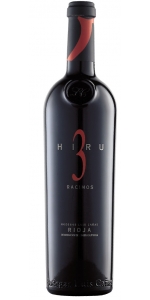
Luis Canas Rioja Hiru 3 Racimos is 100% Tempranillo
60 years old vines
Alcohol: 14,5º
Total acidity: 6,0 gr/l
Volatile acidity: 0,50 gr/l
PH: 3,47
Free SO2: 25 mg/l
Reducing sugars: 1,8 gr/l
This wine is a response to our quest to find the perfect wine, one that combines structure, complexity and balance. It is the result of a careful selection of grapes not from the vines but from the appropriate clusters, those that naturally produce three or less clusters and which are 60 or more years of age. Vines situated on slopes and terraces of limestone and clay soil, well exposed to the sun. These grapes are harvested in small boxes at the very best moment, then inspected on the selection table and vinified in small groups at a controlled temperature. After alcoholic fermentation they are macerated to extract their full potential. The resulting most is then settled in new French and American oak barrels to undergo malolactic fermentation. This second fermentation ensures the wine gains in complexity and aromatic intensity, it also stabilises its colour.
Fully ripened and concentrated fruit aromas with balsamic and spicy mineral nuances, notes of blackberry and blueberry preserve wrapped in creamy oak, caramel and milky coffee tones. The palate is concentrated, unctuous in the centre, balanced, sweet, with fine tannins. Very long finish, expressive, clearly marked with the character of the soil.
Hiru 3 racimos is a complex wine and so is its pairing with food. We must consider two options, either drink it in light sips so that the wine itself is the star of the feast, or serve with solid dishes that can match its vigour. An Iberian pork loin with roasted peppers, steak with mushrooms and plums, wild boar stew or pheasant in port are dishes that blend incredibly with this characterful wine.
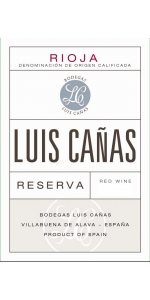
Luis Canas Rioja Reserva is made from 100 percent 95% Tempranillo and 5% Graciano
A classic style Rioja Reserva from one of the regions most enduring family run wineries. The hillside terraced vineyards are sheltered by the Sierra Cantabria Mountains to the north from harsh weather extremes. Small plot production is utilized in this region of infertile chalky clay soil to produce clusters of excellent quality. Almost 900 plots are needed to complete the approximately 400 hectares of estate-owned or cellar-controlled vineyards, some with vines more than 100 years in age.
Tasting notes
Rich color. Very pleasant on the nose, subtle and elegant, complex, with aromas of fine wood, ripe fruit, coffee. Thick, unctuous and round on the palate with solid structure and juicy tannins. The second nose shows spiced nuances and black ripe fruit aromas.
Winemaking and aging
Upon entering the bodega, bunches undergo a manual selection and then individual grapes are sorted based on their weight. Following this double selection process, they are de-stemmed and crushed before undergoing fermentation and then aceration in stainless steel tanks for a total of 8 days, obtaining better color extraction as well as much more complex and tannic wines, suitable for prolonged aging.
After its primary fermentation, the wine is placed in barrels where it undergoes malolactic fermentation and is aged for 18 months in French (70%) and American (30%) oak barrels, then aged minimum 18 months in bottle before release.
Total acidity: 5 g./l. Volatile acidity: 0,6 g./l. PH: 3,59 Free SO2: 25 mg./l. Residual sugar: 1,9 g./l.
Excellent with red or white meats, all types of game, roasts, oily fish, rice with meat and cheese. Within Rioja cuisine it is perfection accompanying peppers stuffed with cod, artichokes with ham, migas pastoriles and trotters
Luis Canas Rioja Reserva is made from 100 percent 95% Tempranillo and 5% Graciano
A classic style Rioja Reserva from one of the regions most enduring family run wineries. The hillside terraced vineyards are sheltered by the Sierra Cantabria Mountains to the north from harsh weather extremes. Small plot production is utilized in this region of infertile chalky clay soil to produce clusters of excellent quality. Almost 900 plots are needed to complete the approximately 400 hectares of estate-owned or cellar-controlled vineyards, some with vines more than 100 years in age.
Tasting notes
Rich color. Very pleasant on the nose, subtle and elegant, complex, with aromas of fine wood, ripe fruit, coffee. Thick, unctuous and round on the palate with solid structure and juicy tannins. The second nose shows spiced nuances and black ripe fruit aromas.
Winemaking and aging
Upon entering the bodega, bunches undergo a manual selection and then individual grapes are sorted based on their weight. Following this double selection process, they are de-stemmed and crushed before undergoing fermentation and then aceration in stainless steel tanks for a total of 8 days, obtaining better color extraction as well as much more complex and tannic wines, suitable for prolonged aging.
After its primary fermentation, the wine is placed in barrels where it undergoes malolactic fermentation and is aged for 18 months in French (70%) and American (30%) oak barrels, then aged minimum 18 months in bottle before release.
Total acidity: 5 g./l. Volatile acidity: 0,6 g./l. PH: 3,59 Free SO2: 25 mg./l. Residual sugar: 1,9 g./l.
Excellent with red or white meats, all types of game, roasts, oily fish, rice with meat and cheese. Within Rioja cuisine it is perfection accompanying peppers stuffed with cod, artichokes with ham, migas pastoriles and trotters
Review:
Elegant and driven, pairing muscularity with drive and nuance. Fresh pink citrus, pomegranate and cranberry dominate the palate, with energy and detail. The tannins are at once savoury and zesty and the wine lingers forever with detailed notes of oregano, thyme, tarragon and curry leaf.
-Decanter 95 Points
Luis Canas Rioja Blanco 2013 is made from 90% Viura and 10% Malvasia (60+ years old vines)
Barrel fermented for 3.5 months in new French oak barrels.
Alcohol: 13,5º
Total acidity: 6,5 g./l.
Volatile acidity: 0,25 g./l.
PH: 3,40
Free SO2: 25 mg./l.
Grapes harvested in small boxes to be selected manually on the table, bunch by bunch.
Beautiful golden yellow, with bright lemony highly-luminous reflections. The nose is fine, with great elegance, combined with floral and fruity tones.
The palate is dry with a crisp acidity that gives its freshness and vivacity, a structured and tasty finish of ripe fruit.
We recommend that you taste it at 8°C.
It is appropriate to accompany shellfish, crustaceans and grilled white fish or fish stews. It also blends elegantly with rice, soft cheeses, blue cheeses, all kinds of mushrooms and fresh fruit.
The Luis Canas & Amaren Estate
Bodega Luis Cañas is a family winery which for more than two centuries has devoted itself to viticulture and winemaking. However, it was not until 1970 when Luis Cañas first hit the market selling its young bottled wine which until then it had sold only in bulk. From this date onwards, it begins to experience a rise in sales and what is today one of the leading wineries in the Rioja Alavesa begins to take shape.
1989 marks a new milestone in the winery’s transformation when Juan Luis Cañas, the only son of Mr Luis Cañas takes charge of the same. Aged 33 , he brings fresh ideas to the table and begins to develop new wines at the same time as he promotes increasingly aged wines, beginning to lay the foundations of what would later become the new winery.
The Region
-The Climate: Fundamentally Atlantic, which thanks to the protection that the Sierra Cantabria provides from the coldest northern winds as well as Continental and Mediterranean influence.
The average annual temperature oscillates between 12.6º and the 13.2º. There are large fluctuations in the temperature between the morning and the night at harvest time, which is very positive for the quality of the grapes.
Average rainfall is around 400 mm. and 600 mm
- The Soil: The soil is poor and of a clay loam or chalky clay type, ideal for obtaining grapes of an extraordinary quality.
- Altitude: Our vineyards are located between 450 and 600 meters in altitude.
- Grape Varietals:
TEMPRANILLO: The most important indigenous red variety in the D.O. RIOJA. And one of the biggest varieties in the world. It produces wines for length ageing, very balanced in their alcoholic degrees, color and acidity.
GRACIANO: An indigenous red variety with a great future in Rioja and so its surface area is increasing. It produces wines with considerable acidity and polyphonelic content, ideal for growing, whose aroma is superior in intensity to the rest of the Rioja verities. A perfect complement to the Tempranillo for ageing.
VIURA: The most extensive white variety in Rioja. It produces fruity wines, with a floral aroma and a notable degree of acidity, ideal for preparing both young white and vintage wines.
MALVASÍA: A White variety that produces wines of great oiliness and aromatic intensity.
The Luis Canas & Amaren Estate
Bodega Luis Cañas is a family winery which for more than two centuries has devoted itself to viticulture and winemaking. However, it was not until 1970 when Luis Cañas first hit the market selling its young bottled wine which until then it had sold only in bulk. From this date onwards, it begins to experience a rise in sales and what is today one of the leading wineries in the Rioja Alavesa begins to take shape.
1989 marks a new milestone in the winery’s transformation when Juan Luis Cañas, the only son of Mr Luis Cañas takes charge of the same. Aged 33 , he brings fresh ideas to the table and begins to develop new wines at the same time as he promotes increasingly aged wines, beginning to lay the foundations of what would later become the new winery.
The Region
-The Climate: Fundamentally Atlantic, which thanks to the protection that the Sierra Cantabria provides from the coldest northern winds as well as Continental and Mediterranean influence.
The average annual temperature oscillates between 12.6º and the 13.2º. There are large fluctuations in the temperature between the morning and the night at harvest time, which is very positive for the quality of the grapes.
Average rainfall is around 400 mm. and 600 mm
- The Soil: The soil is poor and of a clay loam or chalky clay type, ideal for obtaining grapes of an extraordinary quality.
- Altitude: Our vineyards are located between 450 and 600 meters in altitude.
- Grape Varietals:
TEMPRANILLO: The most important indigenous red variety in the D.O. RIOJA. And one of the biggest varieties in the world. It produces wines for length ageing, very balanced in their alcoholic degrees, color and acidity.
GRACIANO: An indigenous red variety with a great future in Rioja and so its surface area is increasing. It produces wines with considerable acidity and polyphonelic content, ideal for growing, whose aroma is superior in intensity to the rest of the Rioja verities. A perfect complement to the Tempranillo for ageing.
VIURA: The most extensive white variety in Rioja. It produces fruity wines, with a floral aroma and a notable degree of acidity, ideal for preparing both young white and vintage wines.
MALVASÍA: A White variety that produces wines of great oiliness and aromatic intensity.
The Luis Canas & Amaren Vineyards
The vineyard is the star of a landscape where the plots of land, mainly located on slopes and terraces, being protected to the north by the imposing presence of the Sierra Cantabria.
Villabuena is a town located to the south of the province of Álava, where the city of the vineyard and the preparation of wines is practically the sole activity that is carried on.
It is in this region of Rioja Alavesa where the most suitable conditions arise for obtaining large vineyards of a superior quality.
22 hectares of vines of over 60 years of age and 30 hectares of between 30 and 60 years make up a vineyard which is the strongest indication of the wine cellar.
The old vineyards achieve a perfect balance given their low production level, having very deep roots that offer the wines complexity, minerality and personality as well as making them more resistant to drought.
Vines that are checked and run by the agronomic engineers from our field department in which rational wine-growing that is respectful of the environment.
All of the forms of treatment that are carried on at the vineyard are restricted to minimally aggressive products and methods which include amongst others, the prohibition against the use of herbicides and the use of fertilizers that are always organic.
The purpose is to make use of a vineyard with a powerful defensive system that is capable of being defended from external threats with no need for artificial assistance. In this way we achieve complete respect for the land. The native soil is a fundamental part of the distinguishing personality of each region. We also manage to make the vines healthier.
22 hectares of vines of over 60 years of age and 30 hectares of between 30 and 60 years make up a vineyard which is the strongest indication of the wine cellar.
The old vineyards achieve a perfect balance given their low production level, having very deep roots that offer the wines complexity, minerality and personality as well as making them more resistant to drought.
Vines that are checked and run by the agronomic engineers from our field department in which rational wine-growing that is respectful of the environment.
All of the forms of treatment that are carried on at the vineyard are restricted to minimally aggressive products and methods which include amongst others, the prohibition against the use of herbicides and the use of fertilizers that are always organic.
The purpose is to make use of a vineyard with a powerful defensive system that is capable of being defended from external threats with no need for artificial assistance. In this way we achieve complete respect for the land. The native soil is a fundamental part of the distinguishing personality of each region. We also manage to make the vines healthier.
Paul Hobbs Coombsville Cabernet Sauvignon is made fro 85% Cabernet Sauvignon, 7% Cabernet Franc, 6% Petit Verdot, 2% Merlot.
Since our inaugural release last year, this wine has quickly become one of the most compelling in their portfolio. Offering a gorgeous deep purple hue, our 2019 captivates with a bouquet of crushed blueberry, summer savory spice, and a delicate tobacco leaf note. The palate is remarkably balanced with well-integrated
tannins and fresh acidity that wraps around boysenberry and black fig along subtle notes of rosemary and a crush rock minerality, which lends tension through the long finish.
Review:
A delicious, layered, chocolate- and cherry-scented wine that entices you from the first sniff and pulls you through a rich palate and a lingering finish. So luscious, balanced, vivid and deep, showing the silky tannins and cool fruit notes of this southern Napa district. Contains 6% petit verdot, 2% cabernet franc and 4% merlot. Aged in 53% new French oak.
-James Suckling 96 Points
A delicious, layered, chocolate- and cherry-scented wine that entices you from the first sniff and pulls you through a rich palate and a lingering finish. So luscious, balanced, vivid and deep, showing the silky tannins and cool fruit notes of this southern Napa district. Contains 6% petit verdot, 2% cabernet franc and 4% merlot. Aged in 53% new French oak. Drinkable now, but best from 2030.
-PinotReport 96 Points
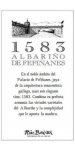
Fefinanes Albarino de 1583 Albarino is made from 100% Albarino.
Aged for 5 months in oak barrels (a combination of fine-grained American and French Allier barrels).
1583 is the birth date of the Viscount of Fefinanes, Gonzalo Sarmiento Valladares, builder of the Castle of Fefinanes, in Cambados.
They wanted to pay tribute to their ancestor with this wine that managed to reach a perfect harmony between the fruitiness of the Albarino grape and the complexity brought by the oak aging.
Lovely straw yellow color, clean and bright. The nose is reminiscent of ripe crystallized fruit and spices. The palate is elegant, round and well balanced, with a silky texture.
Excellent with shellfish, grilled or stewed fish, white meats, poultry.



