" We don't sell the wine without touching the vine "
| BUY MORE! SAVE MORE! | ||||||||||||||||||||
|
| Country: | Italy |
| Region: | Marche |
| Winery: | Mancinelli |
| Grape Type: | Lacrima di Morro d’Alba |
| Organic: | Yes |
| Vintage: | 2023 |
| Bottle Size: | 750 ml |
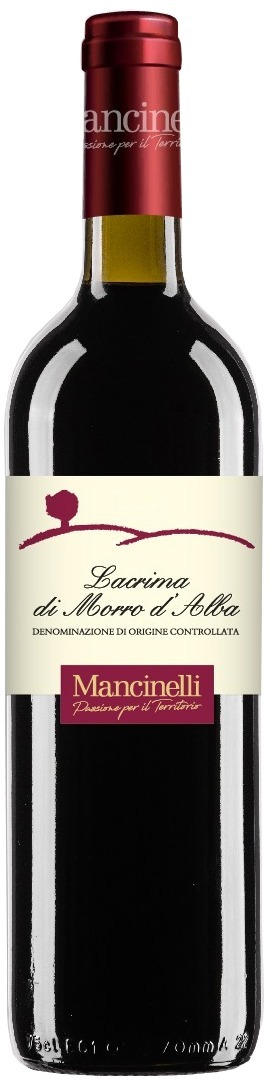
Mancinelli Lacrima di Morro d'Alba is 100% Lacrima di Morro d’Alba
Lacrima di Morro d’Alba takes its name from an unusual grape which was named for the town around which it is grown. Morro comes from “Mur” or “Muro” (wall) and not “Moro” (Moor) or black. The name Alba refers not to the town in Alba in Piedmont but to “Altura” which means “rise or high ground” . Il Muro in Alto or the wall on high which was how this walled Medieval walled Borgo (town) was referred to in Medieval times.
Deep dark ruby red with violet reflections. Intense bouquet full of roses, violets and red berries. Vinous and dry with soft fruit and a velvety body.
Pairs with salami, grilled and roasted meats, mushroom dishes, lasagne, gorgonzola and sharp cheeses.
In the early 1980s a young Stefano Mancinelli recognized the amazing potential of a local red grape that was all but extinct. Its tendency to develop fissures in the skin and drip precious juice when it is optimally ripe earned it the name lacrima (tears) it also earned it the disdain of the local growers who could not be bothered with this difficult grape. Stefano is specialized in Lacrima di Morro d’Alba and has a outside laboratory certify that his Lacrimas are 100%. A little Lacrima goes a long way and more unscrupulous growers are adding 15% into their Montepulciano or Sangiovese and marketing it as 100%.
But not Stefano who makes several versions of Lacrima di Morro d’Alba, all of them deeply colored ruby red wines with exotic bouquets of rose petal and violets.
Stefano Mancinelli, together with his son, Luca, insists on having complete control of his production from the vines and olive trees to the bottle. He takes complete responsibility for the quality of the bottles that bear his name.

Blanc de Noirs (white from black) is the counterpart to Blanc de Blancs (white from white). Made primarily from the red grape Pinot Noir, this is a complex, medium-bodied, brut sparkling wine that is aged on the yeast lees in the bottle for two to three years prior to disgorgement.
Reviews:
"Lively and refined but festive, with pretty accents of strawberry, lemon, apple and graham cracker that sail on the crisp yet supple finish."
— Wine Spectator 93 Points

Maison du Midi Chateauneuf du Pape Rouge is made from 84% Grenache, 11% Syrah and 5% Mourvèdre.
Maison du Midi Chateauneuf-du-Pape is designed to be a very fruity and fresh CDP with structure. Different flavors of red and black fruits with a hint of pepper and spice notes.
Review:
"The 2023 Châteauneuf du Pape comes from the Brotte family (where the fruit is sourced) and is 90% Grenache and 5% each Syrah and Mourvèdre. Already bottled, it has a juicy, upfront, undeniably delicious style that brings both red and black fruits, some peppery, herbes de Provence-like nuances, medium to full body, and an upfront, ready-to-go style."
- Jeb Dunnuck (Importer Highlight: Fran Kysela ; July 2024), 91 pts

Obsidian Vineyard Syrah is bathed in terroir. The vines experience severe stress, pushing the roots ever deeper through rock in search of water, producing miniature clusters of intense power. Given the wine’s natural propensity for tannin, we take extreme care in the cellar to chisel/whittle its rough edges and leave room for richness to flatter its distinctive scaffold. The mid-palate supports flavors of roasted coffee beans, sarsaparilla, and dark chocolate. The finish marches on long after most wines have tired.
Our estate vineyard — the six-acre Obsidian Vineyard in the Knights Valley AVA — has an incredibly complex soil structure. It takes its name from a layer of volcanic obsidian rock that was discovered when we drilled for water.
Chocolate ganache, black currants, fig, graphite, and an expansive mouthfeel.
Review:
"Joe Donelan believes his Obsidian Vineyard is one of the world’s greatest sites for Syrah. I’ve visited the site twice, and can say candidly it certainly sits among the most striking vineyards I've ever laid eyes on within the U.S. It sits like a rock on a promontory—two switchbacks to reach the top—and the stones under the top soil, quite literally, never stop emerging from the ground. The place has an ancient, almost sacred, temple-like feel. It is consistently swept by afternoon breezes. The vineyard was replanted in 2017 after fires ravaged it. Winemaker David Milner laid out the site at denser spacing than before, at 2,000 vines per acre to keep yields per vine low while still achieving sensible tonnage, averaging around three tonnes per acre. Viognier was planted for co-fermentations, alongside some Cabernet Sauvignon, for a single vineyard bottling of that grape. ‘God put on his viticultural hat when he designed this site,’ says Milner. The vineyard is planted with ENTA 174, 877, and Alban 1 clones, along with Donelan Heritage selections certified virus-free. The wine, the 2023 vintage release (the first from the new vines), was aged for 21 months in 36% new oak and co-fermented with 1.8% Viognier, using 32% whole clusters. And it is positively gorgeous: composed of nine different blocks, each fermented separately, then assembled through sequential blending, with no racking until bottling. From just five-year-old vines, this wine is utterly extraordinary—something oddly achievable from young vines on rare occasion. I tasted this wine from the same bottle over three days. While the high-toned espresso-bean and cedar accents are present at first pull of the cork, they mellow out a day later, and the fruit profile is so vibrant. This is the sign of an excellent wine. I first tasted wines from the Donelan’s Obsidian Vineyard years ago at Tasting Panel Magazine in the late, great Anthony Dias Blue’s office. Cushing Donelan showed the wines, and to this day, I recall the first moment I put my nose into a glass of Obsidian Syrah. In early January of 2026, as I nosed this brand new release of Obsidian Syrah, I was transported straight back to that tasting twelve years ago. What’s remarkable is that the aromatics are unmistakably the same, yet from these new, more densely planted vines, the aromas are more refined—precision-farmed wines from young vines delivering a level of detail and poise that feels beyond their years. So what’s in the glass? Pure red, black, and blue fruit nuances layered with tobacco, white truffle character, violet pastille, and an intoxicating perfume. White pepper notes emerge on the medium- to full-bodied palate, framed by velvety tannins. Iron-like and crushed slate minerality underpins dazzling black cherry and blackberry fruit, brown spices, and blood orange richness. There’s a velvety, iron-fist quality here that exudes polish, complexity, and undeniable quality. You want to drink it now—and you absolutely can—but it will also reward time in the cellar. Either way, you’ll be utterly wowed. And when you realise the price is under £100, the achievement becomes even more staggering. As these vines mature, what will become of them in subsequent vintages? I suspect that as the vines mature, they'll go in and out of phases, but so long as Mother Nature cooperates, I expect this wine to continue to dazzle each vintage. - Jonathan CRISTALDI"
Decanter (January 5th 2026), 100 points
This is the first vintage of the Obsidian Syrah after wildfires torched the vineyard in 2017, leading to significant redevelopment. Throughout all those years, the Donelans have exhibited remarkable patience and a clear sense of purpose. This is their reward: a truly magnificent, towering wine of the highest level.
Knights Valley is one of the most magical grape-growing districts in the United States, but it is not very well known because only a few estate wineries are located there.
The 2023 Syria Obsidian Estate is one of the most profound, moving wines I have tasted in Sonoma County. Blackberry, gravel, incense, chocolate, lavender, and dried herbs race out of the glass. Delicate yet powerful, the 2023 is spectacular. It is also very fairly priced in today’s market.
Vinous 100 Points
-150x300.jpg "Bernardins Muscat Beaumes Venise VDN 2023")
Bernardins Muscat Beaumes Venise VDN 100% Muscat petits grains (75% Blanc, 25% Red)
Copper/rose hue and ripe soft aromas of orange, spice and flowers. The wine is full bodied with the texture of silk and flavors of orange custard, white peach, pear, apricot, toffee and orange peel.
The vineyards and their terroir are the essence of our wines. This is where everything starts and where we focus our efforts throughout the year. You can’t make great wine without great grapes.
The viticulture is essentially done by hand. Five people work full-time in the vineyards. They are supplemented by seasonal employees who work during bunch thinning and the harvest in order to bring out the very best in our vines. Working by hand and the attention each vine gets are fundamental. Pruning, de-budding, trellising, leaf removal and picking are thus carried out by hand with the utmost care.
We prepare the soil by using good old-fashioned ploughing. Organic compost is made from grape marc (the discarded stalks and skins).
As a way of protecting the plants, we only use phytosanitary products when necessary and within strict guidelines by staggering the treatments appropriately, to minimise the amount of chemicals used. We prefer to use as much as possible manual and organic techniques . Leaving natural grass cover, removing buds and leaves from the vines, preserving biodiversity around the vineyard: olive, almond and cypress trees, wild rosemary and capers.
In the spirit of respecting traditional techniques and the best elements of modern technology, cellar manager Andrew Hall and his winemaker son Romain Hall take family traditions very seriously.
When making our wines, the Muscat de Beaumes de Venise plays a central role and requires great care. After picking the grapes by hand, we press them straightaway to ferment the juice without skins. We don’t add any yeasts and keep the alcoholic fermentation in check by temperature control. Vin Doux Naturel winemaking involves stopping fermentation to preserve the grapes’ natural sweetness. During vinification, we watch the vats day and night and add the fortifying spirit just at the right moment. At this stage, the wine’s final balance is at stake. The wine is then aged in stainless steel tanks for 6 months before bottling.
Review:
"Butterscotch and apricot jam aromas. A lighter vintage of this cuvée, but very fresh and drinkable, and the best Muscat of the vintage by far. 110g/L residual sugar. In conversion to organic. - Matt WALLS"
- Decanter (November 2024), 91 pts

Bourdieu Blaye Cotes de Bordeaux is made from 87% Merlot, 10% Cabernet Sauvignon and 3% Cabernet Franc.
Chateau Bourdieu Blaye Cotes de Bordeaux offers a beautiful red ruby color deep and intense. It exhales red fruits and blackcurrant aromas, completed by notes of redcurrant. The mouthfeel is round and juicy, with a smooth, well integrated tannins that offers a nice structure and a long finish.
Perfect with a magret de canard (duck breast) or a filet of beef.
Review:
"Brooding blackcurrant, black cherry and cassis combine beautifully with fine tobacco and cedar notes. Persistent and concentrated with satin tannins and supporting acidity. Long and finessed."
-Decanter, (July 2024), Gold Medal - 95 points

Codirosso Chianti is made from 90% Sangiovese, 7% Canaiolo, 3% Colorino.
Vinification: fermentation in stainless steel at controlled temperatures for 7 to 8 days with an additional 7 to 8 days on the skins. The juice is pumped over daily for 10 days at the beginning of the fermentation. The wine is then racked and goes through malolactic.
Ruby red color with purple reflections. Intense vinous bouquet with hints of violets and dark cherry fruit.The flavor is full of ripe fruit and a hint of spice. It is well balanced and dry. The finish is persistent and satisfying.
Food pairing: grilled, braised or roasted meats

Finca las Divas Cabernet Franc Reserve Gualtallary is 100% Cabernet Franc.
Named in honor of different divas because of the detailed attention to each varietal and plot, consequence of the terroir, origin of the Andes slopes.
Deep violet red in color. Its aromas are intense and concentrated, with hints of black and red fruits with smoky touches obtained during its oak aging.
In the mouth it is persistent, full of juicy yet firm tannins and balanced acidity. It is frank and expressive, modern and of great personality.
Pairs with red meat, pasta with tomato sauce and hard cheeses.

Pulled from a Gentleman's cellar, all wines from this cellar have been purchased by the owner either from the importer or direct from winery. They stayed in his cellar until being moved to the Timeless Wines warehouse.

Lima Xisto (Schist) Vinho Verde is made from 100 percent Loureiro.
his special project from the Adega Ponte de Lima highlights the diverse soils of the Vinho Verde region. Made from 100% Loureiro grapes, both the Granite and Schist varieties boast a crisp acidity and expressive minerality.
Lima Schist Vinho Verde displays subtle yet more complex aromas. Full bodied, persistent and engaging.
Sushi, fish, seafood, cheeses and salads.