
" We don't sell the wine without touching the vine "
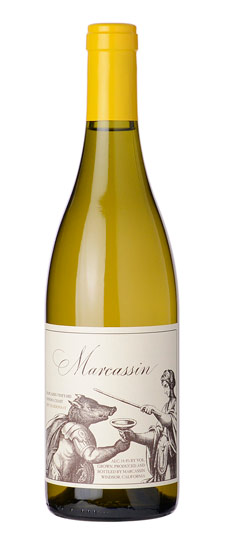
| Country: | United States |
| Regions: | California California (Sonoma County) |
| Winery: | Marcassin |
| Grape Types: | Pinot Noir Chardonnay |
| Vintage: | 2011 |
| Bottle Size: | 750 ml |
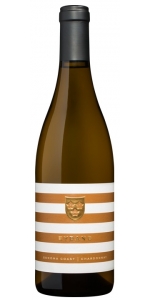
Bydand Chardonnay Sonoma Coast is made from 100% Chardonnay
Aged for 16 months in 30% new French oak, 70% neutral French oak
Farmed by one of California’s most respected and longest operating grape-growing families, the Roberts Road Vineyard is located in the Petaluma Gap. Sitting on well draining gravel soils, coastal winds allow for a long, slow and even growing season. Planted in 1998 these Dijon 95 grapes provide minerality and vibrancy to a full-bodied wine with impressive purity of flavor and mouth-feel. French oak barrels add subtle toast to aromas of pear, stone fruits and white citrus.
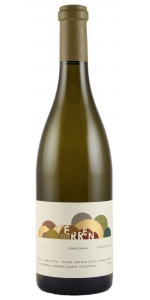
Ferren Chardonnay Sonoma Coast is made from 100 percent Chardonnay.
The Sonoma Coast bottling is a blend of barrels from Ferren's single vineyard offerings; Lancel Creek, Silver Eagle, Volpert, and Frei Road Vineyards. The wine is always somewhat more approachable early in its life as less new oak is used in the blend. Pure and translucent fruit is the hallmark of this cuvée. Citrus, quince, sea spray, and minerals are buoyed by refreshing acidity and a seamless finish.
Ferren Chardonnay Sonoma Coast is made from 100 percent Chardonnay.
The Sonoma Coast bottling is a blend of barrels from Ferren's single vineyard offerings; Lancel Creek, Silver Eagle, Volpert, and Frei Road Vineyards. The wine is always somewhat more approachable early in its life as less new oak is used in the blend. Pure and translucent fruit is the hallmark of this cuvée. Citrus, quince, sea spray, and minerals are buoyed by refreshing acidity and a seamless finish.
Review:
"Love the salted butter, sliced cooked apple and oyster shell character. Hints of uncooked pie crust. Medium- to full-bodied. So much subtle and intense flavor with some nuttiness. Drink now or hold.”
- - James Suckling (February 17th 2024), 97 pts
Ferren Chardonnay Sonoma Coast is made from 100 percent Chardonnay.
The Sonoma Coast bottling is a blend of barrels from Ferren's single vineyard offerings; Lancel Creek, Silver Eagle, Volpert, and Frei Road Vineyards. The wine is always somewhat more approachable early in its life as less new oak is used in the blend. Pure and translucent fruit is the hallmark of this cuvée. Citrus, quince, sea spray, and minerals are buoyed by refreshing acidity and a seamless finish.
Review:
A nuanced, tangy, mouthwatering and approachable wine that is both complex and very drinkable. The aromas are delicate, lifted and fresh, with oyster shells, lime zest, white flowers and chamomile. The palate is super fresh, layering salinity, richness and a long finish. Medium- to full-bodied. Drink or hold
-James Suckling 98 Points
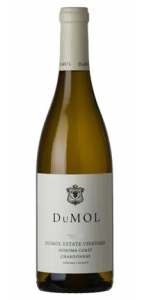
Our organically farmed high-density Estate parcel sits at the top of the ridge amongst the diverse coastal forest. Although the soil is sandy, there’s a vein of clay in the subsoil that holds winter rain and allows us to dry-farm the vines. The tight spacing keeps the clusters and soil shaded during the summer heat, which allows the fruit to retain all the nuance of the site. The wine produced here has a character - a signature - all to itself and cannot be replicated elsewhere; it's the antithesis of fruity, forward, easy-to-understand Californian Chardonnay. The grapes are small with thick skins, producing a high level of fruit extract, which translates to deep texture and structure in the wine itself. Concentration allied to freshness is the essence of this wine, and it ages beautifully in bottle for ten to twelve years.
The wine’s aromas and flavors are incredibly complex and diverse, akin to citrus oil, preserved lemon, sage, fennel and caraway. The wine is deep, powerful, and layered with oyster shell freshness cutting through the natural density. Lemongrass, spearmint, and grapefruit power the finish, which pulsates with intensity. You could decant this for an hour before serving to hasten its development. Drink between 2025 and 2030. Serve no cooler than 55º F.
Review:
From a site surrounded by dense forest on two sides, the 2022 Chardonnay DuMOL Estate Vineyard is a bright straw hue and has a more vibrant aromatic nose of fresh mint, bright lime, flint, crushed stones, and white peach. Medium to full-bodied, it boasts a remarkably firm structure with a bit of tannin, a chalky texture, and a savory slanting profile, and it’s long and persistent on the finish. It has an assertive but crystalline feel and a crunchy brightness. It demands a bit of time. Drink 2025-2035.
-Jeb Dunnuck 96 Points
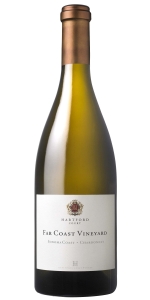
Hartford Court Far Coast Vineyard Chardonnay is made from 100 percent Chardonnay.
The 2019 Far Coast Vineyard Chardonnay exhibits aromas of orange zest, yellow apple, dried fruits, and spice. The flavors of tangerine, mandarin orange, and quince are followed by a long textural finish of minerals and delicate fruit.
Review:
This vineyard is located on a mountain ridge north of Fort Ross on the Sonoma Coast at 700 feet elevation, and the wine was aged for 14 months in 39% new French oak. The 2019 Chardonnay Far Coast Vineyard offers more lime citrus, saline minerality, and white peach, and the palate is fresh, energetic, and consistent with the nose. Texture-wise, it is markedly different, with more focused structure and tension.
-Jeb Dunnuck 96 Points
The 2011 is a great Chardonnay Marcassin Vineyard from a much-maligned and sometimes excessively criticized vintage. 2011 has its low points, but there are many producers who got it right, and survived the challenging growing and harvest conditions. This wine has phenomenal intensity, with plenty of crushed rock, pineapple, honeysuckle, orange and tangerine blossom in an elegant, medium to full-bodied style, with terrific intensity, good acidity and freshness. This is more evolved than either the 2009 or 2010, and probably will be a candidate for 7-8 years of aging, rather than 10 or more.
There is no doubt that Marcassin is the most difficult appointment for people to schedule, to sit down and taste wine with owners Helen Turley and John Wetlaufer. The legacy they have created in California wine is immense. They are in their early seventies, and have decided to completely dedicate themselves to their own vineyard on the Sonoma Coast. I saw them recently, and tasted through these current and upcoming releases of both the Estate Chardonnay and Estate Pinot Noir. The Chardonnay, of course, comes from very low-yielding old Wente clones of Chardonnay planted on the slopes of the Sonoma coastline hillsides. This clone is believed to have been brought over from Burgundy’s grand cru vineyard, Corton-Charlemagne, decades ago.
Marcassin Chardonnay
Here are the notes on the bottled 2009, 2010, 2011, 2012 and barrel samples of the 2013 and 2014. As readers know, this is probably one of the most Burgundian-styled Chardonnays ever made in California, and it has attracted many imitators. It goes through full malolactic fermentation, and sees a good dosage of new oak, but the tiny yields and meticulous winemaking are brilliant, and the wines, by and large, have aged very well, with the first Estate Chardonnays from 1996, 1997 and 1998 still going strong. The same can be said for some of Helen Turleys first Chardonnays from purchased fruit, particularly from the Lorenzo Vineyard, Hudson Vineyard and Gauer Vineyard/Upper Barn (now owned by the Jackson family, and known as their Alexander Valley Mountain Estate).
-Robert Parker Wine Advocate. 97 Points
Marcassin (French for ‘young wild boar’) is a distinctive Sonoma Coast, California winery owned by renowned winemaker Helen Turley and her husband John Wetlaufer, a viticulturalist. Helen Turley has worked as a consultant for numerous acclaimed wineries, but she now focuses mainly on her Marcassin wines.
Helen & John (a viticulturalist) produce around 2,500 cases of Chardonnay and Pinot Noir annually. The wines are highly sought after: 90% of the wine is sold via mailing list, and eager connoisseurs can wait years for the chance to be allocated a bottle.
Marcassin’s limited yield 20-acre estate vineyard is located on the Sonoma Coast and planted 2/3 Pinot Noir & 1/3 Chardonnay. It is meticulously farmed with densely planted vines. Fruit for their other vineyard-designated wines are sourced from neighboring Sonoma Coast vineyards.
Helen crafts unique, complex, and highly extolled expressions of Sonoma Coast wines following traditional Burgundian style, fermenting with natural yeast, primarily new oak and extended time on lees. The wines are bottled without fining, filtering or cold stabilization and are typically aged five years prior to release.
This is a 9 liter imperial also called a Salmanazar .
Roland Champion Champagne Blanc de Blanc Grand Cru 2014 is made from 100% Grand Cru Chardonnay from the chalky soils of Chouilly.
This Champagne is full of elegance and finesse. Very complex nose, with a bouquet of aromas dominated by honey, brioche and notes of dried fruits, hazelnuts and sweets. Perfectly matured.
Manual harvest; then pressing immediately to avoid oxidation & preserve quality. Free run juice only. Aged six years on the lees.
It matches magnificently with foie gras!
Review:
"Based in Chouilly on the Côte des Blancs, it is obvious this producer will have a Blanc de Blancs Champagne. And very good it is, with some age after six years on lees while still having freshness, crisp acidity and a tight, steely edge. The bottling will benefit from further aging, and it will be at its best from 2022. - ROGER VOSS"
- Wine Enthusiast (December 2020), 92 pt
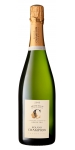
Roland Champion Champagne Blanc de Blancs Grand Cru Vintage Brut Grand Eclat is 100% Grand Cru Chardonnay from the chalky soils of Chouilly.
This Champagne is full of elegance and finesse. Very complex nose, with a bouquet of aromas dominated by honey, brioche and notes of dried fruits, hazelnuts and sweets. Perfectly matured.



