
" We don't sell the wine without touching the vine "
| BUY MORE! SAVE MORE! | ||||||||||||||||||||
|
| Country: | France |
| Region: | Champagne |
| Winery: | Fleur de Miraval |
| Grape Type: | Chardonnay |
| Vintage: | NV |
| Bottle Size: | 750 ml |
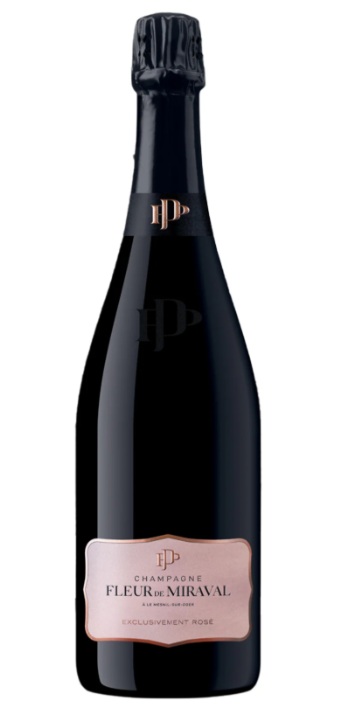
ER2 is characterized by the intensity that is the signature of the grand crus of the Côte des Blancs and by the complexity of its perpetual reserve. A delicate, slightly coppery, pink.
The wine is aged on lees in the dark in our cellars for three years.
Chardonnay 75% – Pinot Noir 25%. This edition has been made from a base of the 2017 vintage. Disgorged in April 2021. Dosage: 4.5 G/L.
This second edition made up of 75% of Chardonnays of different ages benefits from the richness of the 2012 vintage and the perfect balance of the 2014 vintage that occupy a large place in the heart of an intensified perpetual reserve.
The remaining 25% of young Pinot Noirs from the terroir of Vertus energize the delicate mineral, saline and iodized expression of the Chardonnay and heighten the wine’s aromatic expression.
Review:
"This graceful rosé Champagne layers a rich base of roasted almond, toast and smoke accents with nectarine and pureed raspberry fruit, oyster shell, blood orange zest and chalk notes. Fresh and fluid on the palate, with a creamy mousse consisting of fine, pinprick-sized bubbles. Long, rich finish. Chardonnay and Pinot Noir. Drink now through 2030." Wine Spectator 95 Points
Fleur de Miraval was born out of the shared passion and convictions of three families united around one simple idea… that of creating the rosé champagne they had dreamed of, but that did not yet exist.
So they sat down together to experiment, to blind taste, to debate with and challenge each other. Eventually they reached a natural consensus, giving shape to their definition of a unique rosé champagne. The Fleur de Miraval Champagne House came into being when the Pitt and Perrin families, representing the worlds of the Arts and Wine, joined forces with a family who had had their roots in Champagne for many generations: the Péters.
Together, they chose to give free rein to their creativity, with no holds barred, no limits, entertaining instead all possibilities, to make a stunning rosé the likes of which no-one had ever seen before.
Perrin Family:
Château de Beaucastel, birthplace of the Perrin family success story and a jewel of French viticulture in the terroir of the Châteauneuf-du-Pape appellation, was founded in 1549.
Over five generations the Perrin family have managed its vineyards, guided by their shared values: absolute respect for the earth and the terroir and the pursuit of truth, balance and elegance.
Today, their mastery of the saignée technique to bring out the energy and purity of fine rosé is their passion – and something for which they are renowned worldwide.
Peters Family:
The Péters family has been established at Mesnil-sur-Oger for six generations and making champagne from their own grapes since 1919.
Rodolphe Péters is now at the head of 50 acres, 40 of which are Grand Cru mainly around Mesnil-sur-Oger in the Côte des Blancs.
His champagnes of worldwide renown delight all lovers of great Chardonnays.
Pitt Family:
Brad Pitt explains: “For me, champagne conjures up feelings of celebration, quality, prestige and luxury. But rosé champagne is still relatively unknown. I wanted us to try to create the defining brand of rosé champagne, focusing all our efforts on just this one color. The result is spectacular and I’m very proud of it.”
ER3 is the very essence of balance and delicacy – the intensity of Côte des Blancs grand crus and the complexity of its perpetual reserve are combined with immense finesse.
ER3 reveals an extremely delicate, blush pink hue. The nose is superb, with a beautifully complex and delicate aromatic palette that offers up aromas of white flowers, redcurrant, and wild strawberry, before unveiling slightly smoky notes. With a particularly fine and ethereal effervescence, the mouth is fresh and vibrant with superb white fruit and citrus evolving into more complex notes of candied fruit, soft spices, and toasted almonds. The finish is incredibly persistent, underpinned by a magnificent chalky minerality.
The wine is aged on lees in the dark in our cellars for three years.
Chardonnay 75% – Pinot Noir 25% / This edition has been made from a base of the 2018 vintage. / Disgorged in May 2022. / Dosage: 4.5 G/L.
Review:
"This graceful rosé Champagne layers a rich base of roasted almond, toast and smoke accents with nectarine and pureed raspberry fruit, oyster shell, blood orange zest and chalk notes. Fresh and fluid on the palate, with a creamy mousse consisting of fine, pinprick-sized bubbles. Long, rich finish. Chardonnay and Pinot Noir. Drink now through 2030. 750 cases made."
-Wine Spectator 95 Points
After working with the fruit for over a decade, Turkey is proud to present the first single-vineyard bottling for Turley from the Del Barba Vineyard. Contra Costa is a delta where the San Joaquin and Sacramento rivers meet, and these head-trained vines are planted in deep dehli blow sand, made up of decomposed granite coming down from the Sierra Mountains. The resulting wine embodies the best the delta has to offer: silken textures, ultra fine tannin, and dark saline fruits.
Review:
"The 2023 Zinfandel del Barba is ripe, boisterous and super-expressive. Floral overtones and bright acids run through a core of red/purplish fruit. Sandy soils confer lovely aromatic presence to this pure Zinfandel. This is an especially accessible offering from Turley."
-Vinous 91-93 Points
This is a 9 liter imperial also called a Salmanazar .
Roland Champion Champagne Blanc de Blanc Grand Cru 2014 is made from 100% Grand Cru Chardonnay from the chalky soils of Chouilly.
This Champagne is full of elegance and finesse. Very complex nose, with a bouquet of aromas dominated by honey, brioche and notes of dried fruits, hazelnuts and sweets. Perfectly matured.
Manual harvest; then pressing immediately to avoid oxidation & preserve quality. Free run juice only. Aged six years on the lees.
It matches magnificently with foie gras!
Review:
"Based in Chouilly on the Côte des Blancs, it is obvious this producer will have a Blanc de Blancs Champagne. And very good it is, with some age after six years on lees while still having freshness, crisp acidity and a tight, steely edge. The bottling will benefit from further aging, and it will be at its best from 2022. - ROGER VOSS"
- Wine Enthusiast (December 2020), 92 pt
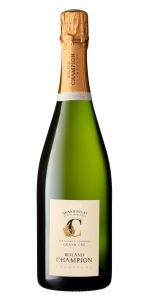
Roland Champion Champagne Blanc de Blancs Grand Cru Vintage Brut Grand Eclat is 100% Grand Cru Chardonnay from the chalky soils of Chouilly.
This Champagne is full of elegance and finesse. Very complex nose, with a bouquet of aromas dominated by honey, brioche and notes of dried fruits, hazelnuts and sweets. Perfectly matured.
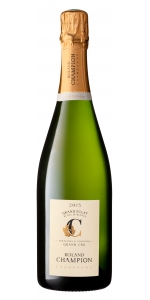
Roland Champion Champagne Blanc de Blancs Grand Cru Vintage Brut Grand Eclat is 100% Grand Cru Chardonnay from the chalky soils of Chouilly.
This Champagne is full of elegance and finesse. Very complex nose, with a bouquet of aromas dominated by honey, brioche and notes of dried fruits, hazelnuts and sweets. Perfectly matured.
Roland Champion Champagne Blanc de Blancs NV is aged for minimum 30 months (the minimum for NV is 15 months). This cuvee is made from 100% Chardonnay and is produced from the free run juice only. The current release is the result of the blend of the 2005, the 2006 and the 2007 vintage.
Fresh and delicate, its fine bubbles and wide range of aromas will be perfect as an aperitif. This Champagne will also match very well with seafood and shellfish.
dosage : 8 grams per liter
ageing : 30 months on laths
Even if it doesn't say on the label, 100% of the production is RD (Recently Disgorged)
Total Production for this Cuvée : 1,500 cases (9 liter equivalent) per year
Reviews:
"Golden yellow color. Lively, fruity, toasty leesy aromas of honeyed brioche and apple tart with a satiny, tangy, dry-yet-fruity medium body and a sleek, interesting, snappy lemon curd, nougat, and chalk finish with silky, soft, fruit tannins. A classic example of blanc de blanc champagne, delicious."
- Beverage Testing institute , 93 pts
"Spiced with ground anise and ginger accents, this offers notes of poached pear, lemon meringue pie, hazelnut and stony mineral. Very elegant and well-meshed throughout, with a silky finish. Tasted twice, with consistent notes. 1,500 cases made. –AN"
- Wine Spectator 92 pts
"This cuvée made from 100% Chardonnay offers a fresh aromatic nose of light toast, dried yellow fruit and nuances of yeast. On the palate it has a creamy mouth feel of toasted nuts and rich autolytic notes. This is a beautiful wine, rich and complex."
International Wine review 92+ pts
"Small grower. Autumn fruits dominate the aromas of this wine, which is blatantly more like a wine than we normally expect a champagne to be. Some may find that unexpected and even off-putting, while others will find it intriguingly delicious."
- Washington Post - EXCELLENT
"Roland Champion is a small family-owned producer, now with the fourth generation, in the village of Chouilly (”shoo-ee”), which has only Grand Cru vineyards. Made from 100 percent chardonnay grapes, this Champagne offers ethereal grace and poise and harmony; if I were fighting a duel tonight, I would ask for this Champagne as my last beverage. The nose here is about the richness of warm biscuits and hazelnuts, dried fruit and spice, like a Platonic, ineffably light fruitcake; in the mouth, however, it’s about a structure that encompasses an incredible marriage of power and elegance, like the delicacy and strength of the finest bone china. And there’s something porcelain-like about this Champagne, in its notable crisp, lively character, its transparency and its slightly chalky, shale-like mineral elements. Forget the Champagnes that come on with heavy toasty, caramel qualities; here, instead, is a wealth of subtlety and nuance touched with a racy, dynamic edge. Exceptional."
Biggerthanyourhead.net
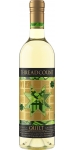
• 100% pure Sauvignon Blanc, crafted from grapes grown in the most notable and warmer regions of California’s coastal hills. Each block contributes a distinct element to the blend, resulting in a layered and complex style.
• The harvest dates were determined by physiological maturity, which varied widely in the 2023 vintage due to the wet winter leading to a cool summer. Nevertheless, the extended hang time reduced grapes with low sugar, firm acid, minimal pyrazines, and intense flavor expressions.
• Upon arrival at the winery, the whole clusters underwent a gentle pressing, and the juice underwent a cold settling process for two days. Subsequently, it was racked off the heavy lees into stainless steel tanks, where it underwent a chill fermentation with native yeast – which contributed to the balanced mouthfeel, set against a backdrop of minerality and acidity.
• Following fermentation, the wines remained in tank, with the lees being stirred weekly for nearly four months before the final blend was assembled. No malolactic fermentation was allowed, preserving the vibrant fruit and floral notes, alongside the natural tension characteristics of this blend.
Color:
Medium yellow straw hue.
Aroma:
Asian pear, honeysuckle, passionfruit,
green melon, and a citrus bouquet.
Palate:
Refreshing stone fruit, grapefruit, and tropical flower. This wine has a well-balanced mouthfeel with bright and lively acidity.
Food Pairing:
Oysters on the half shell with mignonette sauce,
niçoise salad, a blue cheese pear tart and crab cakes.
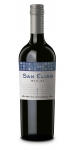
Siegel San Elias Merlot is 100 percent Merlot
Soft, rich and concentrated with juicy plum and blackberry fruits, soft tannins and a velvety texture.
Try with hearty stews, pasta and roast red meats.



