
" We don't sell the wine without touching the vine "
| Country: | Italy |
| Regions: | Tuscany Chianti |
| Grape Type: | Sangiovese |
| Vintage: | 2017 |
| Bottle Size: | 750 ml |

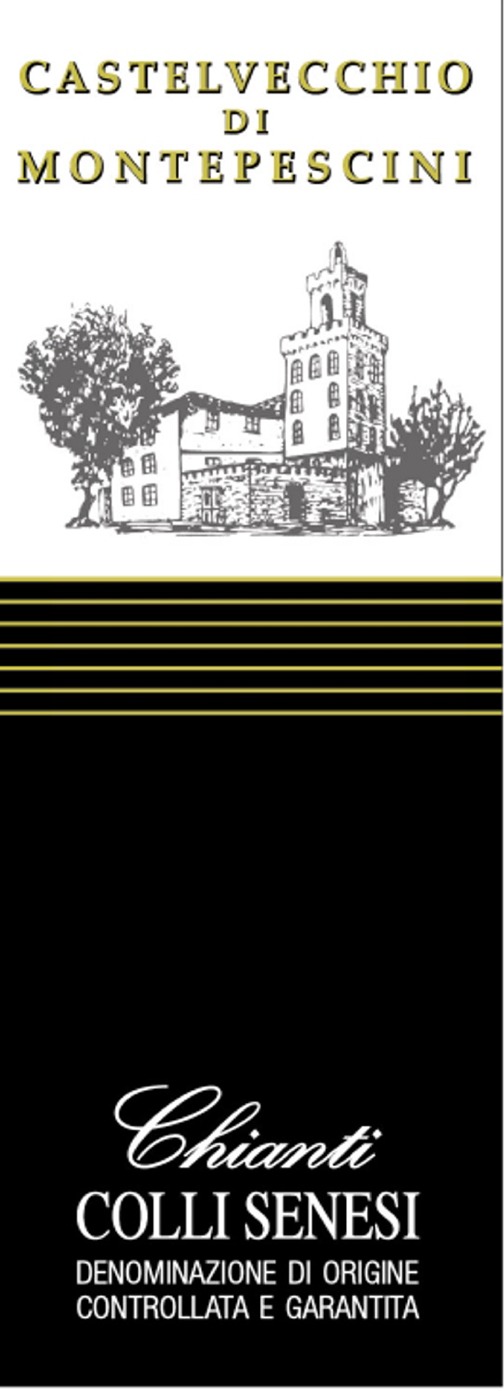
Montepescini Chianti Colli Senesi is made from 90% Sangiovese and 10% Canaiolo.
Deep ruby red in the glass with an intense nose holding blackberry and violet notes. On the palate it is rounded and robust with hints of wild berries, dark cherry and spice. This Chianti has excellent acidity and a long and satisfying finish.
Alcohol: 14.0%
Aging: 8 months in French oak barrels and an additional 3 months in bottle
Vinification: 13 to 15 days of skin contact maceration.
Vineyards: south sun exposure at 350 meters of altitude (1150 feet)
Grapes: 90% Sangiovese and 10% Canaiolo
Pairs well with roasted red and white meats, aged cheeses, dishes with rosemary and garlic or mushrooms.

Salvadori Chianti Riserva DOCG 2017 is made from Sangiovese 90% , Merlot 10

Intense ruby red color. Hints of spices, fruit and flowers, a bouquet that reflects the soil on which it is born, rich in Alberese. In the mouth it is soft, with a pleasant acidity that makes the wine fresh and lively. Sweet and ripe tannins give the wine a pleasant persistence. Riserva dei Colli is an excellent expression of the Estate's Sangiovese, so much so that it bears its name.
Review:
Bordering on opulent, this red features blackberry, black currant, plum, iron and spice aromas and flavors, matched to a velvety texture. Firms up as the resonant tannins emerge, yet remains harmonious and long. Drink now through 2032. 1,700 cases made, 570 cases imported.
-Wine Spectator 93 Points

Collier Creek Big Rooster Cabernet Sauvignon is made from 90% Cabernet Sauvignon and 10% Teroldego.
Nestled in the heart of the Lodi Appellation, where farmland ran as far as the eye could see, Collier Creek is a place that reminds us of simpler times. With notes of dark fruit, vanilla and full bodied, we're cocky about how good this Cabernet is. The Big Rooster lands in dry and fruit forward on the finish.
RS: 4.3 g/L
TA: 6.8 g/L
Pair with red meat and stews, or hard cheeses like cheddar.

Collier Creek Crafty Fox Merlot is made from 93% Merlot and 7% Teroldego.
Nestled in the heart of the Lodi Appellation, where farmland ran as far as the eye could see, Collier Creek is a place that reminds us of simpler times. Make like a Crafty Fox and fill your den with Merlot that digs into notes of dark fruit and vanilla with a velvet mouthfeel and dry finish.
RS: 3 g/L
TA: 5.5 g/L
Pair with grilled tri-tip, veal scallopini, burger w/ gorgonzola & caramelized onions, classic baked lasagna.

Collier Creek Front Coach Chardonnay is made from 100 percent Chardonnay.
Nestled in the heart of the Lodi Appellation, where farmland ran as far as the eye could see, Collier Creek is a place that reminds us of simpler times. A first class wine for the price of coach, this stainless steel fermented Chardonnay is driven by notes of pear and citrus, rolling out with a dry, refreshing finish.
RS: 3.75 g/L
TA: 6.2 g/L
Pair with grilled chicken, goat cheese, fish tacos w/ citrus slaw.
Montepescini Chianti Colli Senesi is made from 90% Sangiovese and 10% Canaiolo.
Deep ruby red in the glass with an intense nose holding blackberry and violet notes. On the palate it is rounded and robust with hints of wild berries, dark cherry and spice. This Chianti has excellent acidity and a long and satisfying finish.
Alcohol: 14.0%
Aging: 8 months in French oak barrels and an additional 3 months in bottle
Vinification: 13 to 15 days of skin contact maceration.
Vineyards: south sun exposure at 350 meters of altitude (1150 feet)
Grapes: 90% Sangiovese and 10% Canaiolo
Pairs well with roasted red and white meats, aged cheeses, dishes with rosemary and garlic or mushrooms.

James Goddard was an ancestor of the Clarke family. Born in West Sussex, England in 1823, James spent his 74 years as a sailor, a whaler, a bullock driver, farmer, prospector, miner and hotel keeper. From an illiterate runaway living rough on the streets of London, he became a rich, successful and admired pillar of South Australian society.
James arrived in Adelaide in 1839 as a 16-year-old sailor. Twelve years later, his life changed forever with the news of gold findings. For the next 20 years, James roamed the country learning the geology that improved his chances of prospecting.
James Goddard Shiraz is made from 100 percent Shiraz.
In 1870, he tried his luck near his farm in the Barossa Valley and discovered the region’s first gold deposits, creating the prosperous Lady Alice Mine. The Lady Alice Mine, though it is no longer operational, was & still is the most successful gold mine in South Australia. From these roots, the Thorn-Clarke family has been connected to the region for the last 150 years.
James Goddard Shiraz is a blend Shiraz sourced from the Milton Park vineyard in the north of Eden Valley, and the St Kitts vineyard in the far northern area of the Barossa. Fruit is harvested in the cool of the night to maintain maximum flavour and freshness and it is fermented for 8 days. The ferment is pumped over twice daily to extract the colour and flavour from the fruit. Once finished fermentation the wine was then matured in a blend of French and American oak for a period of 10 to 12 months depending on the vintage.
Deep vibrant red with purple hues to the rim. The nose shows lifted plums, vibrant purple berries and a delicate spice note. The palate has concentrated satsuma plum, blackberry with lovely charry oak in the background. Long, juicy and even with plush fruit on the finish.
Review:
“Blended from two estate vineyards, St. Kitts and Milton Park, this shiraz offers its richness without any aggression or overt perfume. It’s just lush and delicious, a friendly embrace of firm tannins and purple-red fruit. The texture and flavor combine in a saturated meatiness, for Korean barbecue.”
- Wine & Spirits Magazine, 92 points

Robert Mondavi The Reserve Cabernet Sauvignon To Kalon Vineyard is made from 94% Cabernet Sauvignon, 3% Cabernet Franc, 3% Petit Verdot.
The story of Robert Mondavi Winery begins here, with the To Kalon Reserve. This tier represents the pinnacle of the wines produced by the winery. The 2021 vintage offers fresh black fruit with dark chocolate, dried herbs, and hints of vanilla and violet. Flavors of black plum and blackberry with red fruit and a hint of graphite on the finish. Elegant and plush with sweet, beautifully integrated tannins and a lengthy finish.
Review:
2021 Robert Mondavi The Reserve To Kalon Vineyard Cabernet Sauvignon is a beautifully crafted wine with impressive intensity, depth, and a balanced structure that carries the day. From the To Kalon Vineyard in Oakville, the portion owned by Constellation, comes this blend of 94% Cabernet Sauvignon, 3% Cabernet Franc, and 3% Petit Verdot. Pure blackberry fruit, cassis, graphite, and violet aromas leap from the glass, nuanced by fragrant, toasty new cedar wood. Full-bodied, framed by an array of plush dark black fruit notes, currants, crème de cassis, and polished tannins that are firm and elongated, with ironstone mineral accents. Dynamic in its length and texture, it is utterly intriguing, with a beckoning quality that lingers after each sip. You want to know precisely where this wine is going—demanding your attention.
- Decanter 98 Points

Obsidian Vineyard Syrah is bathed in terroir. The vines experience severe stress, pushing the roots ever deeper through rock in search of water, producing miniature clusters of intense power. Given the wine’s natural propensity for tannin, we take extreme care in the cellar to chisel/whittle its rough edges and leave room for richness to flatter its distinctive scaffold. The mid-palate supports flavors of roasted coffee beans, sarsaparilla, and dark chocolate. The finish marches on long after most wines have tired.
Our estate vineyard — the six-acre Obsidian Vineyard in the Knights Valley AVA — has an incredibly complex soil structure. It takes its name from a layer of volcanic obsidian rock that was discovered when we drilled for water.
Chocolate ganache, black currants, fig, graphite, and an expansive mouthfeel.
Review:
"Joe Donelan believes his Obsidian Vineyard is one of the world’s greatest sites for Syrah. I’ve visited the site twice, and can say candidly it certainly sits among the most striking vineyards I've ever laid eyes on within the U.S. It sits like a rock on a promontory—two switchbacks to reach the top—and the stones under the top soil, quite literally, never stop emerging from the ground. The place has an ancient, almost sacred, temple-like feel. It is consistently swept by afternoon breezes. The vineyard was replanted in 2017 after fires ravaged it. Winemaker David Milner laid out the site at denser spacing than before, at 2,000 vines per acre to keep yields per vine low while still achieving sensible tonnage, averaging around three tonnes per acre. Viognier was planted for co-fermentations, alongside some Cabernet Sauvignon, for a single vineyard bottling of that grape. ‘God put on his viticultural hat when he designed this site,’ says Milner. The vineyard is planted with ENTA 174, 877, and Alban 1 clones, along with Donelan Heritage selections certified virus-free. The wine, the 2023 vintage release (the first from the new vines), was aged for 21 months in 36% new oak and co-fermented with 1.8% Viognier, using 32% whole clusters. And it is positively gorgeous: composed of nine different blocks, each fermented separately, then assembled through sequential blending, with no racking until bottling. From just five-year-old vines, this wine is utterly extraordinary—something oddly achievable from young vines on rare occasion. I tasted this wine from the same bottle over three days. While the high-toned espresso-bean and cedar accents are present at first pull of the cork, they mellow out a day later, and the fruit profile is so vibrant. This is the sign of an excellent wine. I first tasted wines from the Donelan’s Obsidian Vineyard years ago at Tasting Panel Magazine in the late, great Anthony Dias Blue’s office. Cushing Donelan showed the wines, and to this day, I recall the first moment I put my nose into a glass of Obsidian Syrah. In early January of 2026, as I nosed this brand new release of Obsidian Syrah, I was transported straight back to that tasting twelve years ago. What’s remarkable is that the aromatics are unmistakably the same, yet from these new, more densely planted vines, the aromas are more refined—precision-farmed wines from young vines delivering a level of detail and poise that feels beyond their years. So what’s in the glass? Pure red, black, and blue fruit nuances layered with tobacco, white truffle character, violet pastille, and an intoxicating perfume. White pepper notes emerge on the medium- to full-bodied palate, framed by velvety tannins. Iron-like and crushed slate minerality underpins dazzling black cherry and blackberry fruit, brown spices, and blood orange richness. There’s a velvety, iron-fist quality here that exudes polish, complexity, and undeniable quality. You want to drink it now—and you absolutely can—but it will also reward time in the cellar. Either way, you’ll be utterly wowed. And when you realise the price is under £100, the achievement becomes even more staggering. As these vines mature, what will become of them in subsequent vintages? I suspect that as the vines mature, they'll go in and out of phases, but so long as Mother Nature cooperates, I expect this wine to continue to dazzle each vintage. - Jonathan CRISTALDI"
Decanter (January 5th 2026), 100 points
This is the first vintage of the Obsidian Syrah after wildfires torched the vineyard in 2017, leading to significant redevelopment. Throughout all those years, the Donelans have exhibited remarkable patience and a clear sense of purpose. This is their reward: a truly magnificent, towering wine of the highest level.
Knights Valley is one of the most magical grape-growing districts in the United States, but it is not very well known because only a few estate wineries are located there.
The 2023 Syria Obsidian Estate is one of the most profound, moving wines I have tasted in Sonoma County. Blackberry, gravel, incense, chocolate, lavender, and dried herbs race out of the glass. Delicate yet powerful, the 2023 is spectacular. It is also very fairly priced in today’s market.
Vinous 100 Points




