" We don't sell the wine without touching the vine "
| Country: | Spain |
| Region: | Rueda |
| Winery: | Ossian Vides y Vinos |
| Grape Type: | Verdejo |
| Organic: | Yes |
| Vintage: | 2013 |
| Bottle Size: | 750 ml |
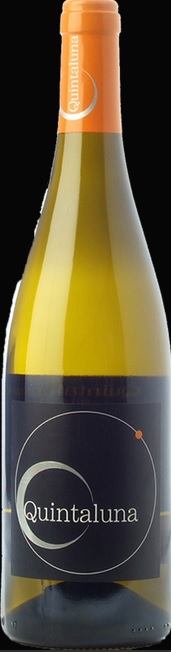
Ossian Quintaluna Verdejo is made from 100% Verdejo
Quintaluna is a young wine that is made exclusively from Verdejo in the province of Segovia. 60% is very old grape: pre-phylloxera (ungrafted). 40% is made of very young grapes on trellises, grown certified organic, with low yields. The key to success for the Verdejo grape is held in the soil. Ideal soil has a high content of sand and pebbles of different sizes. Some have higher proportions of clay and others have significant proportions of clay and limestone. As the pebbles and sand allow for good drainage, the clay holds enough moisture to allow the vines to thrive.
The color is a straw yellow with greenish reflections. On the nose, you will find aromas of white flowers, stone fruit (peach), and citrus (lemon, mandarin). It also displays tropical fruit aromas. The palate is complex. Natural acidity is evident in the freshness and length on the palate. Almond and ripe fruit flavors are found in the mid-palate with fresh grass and citrus on the finish.
It pairs wells with all kinds of appetizers, entrees and salads.
Review:
"Light, bright straw. Fresh pear, orange pith and a suggestion of pungent flowers on the powerfully scented nose, along with a building mineral nuance. Juicy and incisive in the mouth, offering Meyer lemon, pear and quince flavors accented by a spicy ginger flourish. Silky and focused on the finish, which shows powerful floral lift, minerally cut and impressive persistence. - Josh Raynolds"
- Antonio Galloni's Vinous (February 2021), 92 pts
Ossian Quintaluna Verdejo is made from 100% Verdejo
Quintaluna is a young wine that is made exclusively from Verdejo in the province of Segovia. 60% is very old grape: pre-phylloxera (ungrafted). 40% is made of very young grapes on trellises, grown certified organic, with low yields. The key to success for the Verdejo grape is held in the soil. Ideal soil has a high content of sand and pebbles of different sizes. Some have higher proportions of clay and others have significant proportions of clay and limestone. As the pebbles and sand allow for good drainage, the clay holds enough moisture to allow the vines to thrive.
The color is a straw yellow with greenish reflections. On the nose, you will find aromas of white flowers, stone fruit (peach), and citrus (lemon, mandarin). It also displays tropical fruit aromas. The palate is complex. Natural acidity is evident in the freshness and length on the palate. Almond and ripe fruit flavors are found in the mid-palate with fresh grass and citrus on the finish.
It pairs wells with all kinds of appetizers, entrees and salads.
Review:
"The 2020 Quintaluna is pure Verdejo from small plots on sandy soils in the province of Segovia, fermented in stainless steel with indigenous yeasts. They still use grapes from external suppliers but are working toward using 100% their own grapes (which they might achieve in 2023); therefore, the wine is not certified organic, because some of the vineyards from the growers are not certified. It has a balsamic nose reminiscent of bay leaf, dried yellow flowers, chamomile and pollen intermixed with pit fruit. It has a dry palate and a chalky texture, with balance and finesse, with moderate ripeness and 13.5% alcohol. 110,000 bottles. - Luis GUTIERREZ"
- Robert Parker's Wine Advocate (January 31st 2023), 92 pts
Ossian Capitel Verdejo is made from 100% Verdejo.
Ossian Capital represents a particular expression of very old Verdejo vines, taking its potential far finesse, elegance and longevity. It is made in selected years with a selection of extraordinary grapes.
Color: Old golden yellow color with greenish reflections.
Aromas: Surprisingly nuanced and profound.
Flavors: Fresh, full and very light.
Review:
"The 2020 Capitel is pure Verdejo from the oldest vines from the Peña Aguda vineyard in the village of Nieva on slate soils. This is the last vineyard to be bottled and has higher alcohol (14%) than the rest of the vineyards despite now harvesting earlier. The wine has a different aromatic profile but getting closer to the style of Ossian, less opulent than in the past, with more energy, quite fruit-driven with some exotic notes reminiscent of banana skin. The whole clusters were pressed and the juice put to ferment in barrel where the wine matured with the lees and, starting this year, without bâtonnage, because they feel the wines have enough volume and stirring the lees can bring more oxidation to the wine. 2,500 bottles produced. - Luis GUTIERREZ"
- Robert Parker's Wine Advocate (January 31st 2023), 93+ pts
Ossian Capitel Verdejo is made from 100% Verdejo.
Ossian Capital represents a particular expression of very old Verdejo vines, taking its potential far finesse, elegance and longevity. It is made in selected years with a selection of extraordinary grapes.
Color: Old golden yellow color with greenish reflections.
Aromas: Surprisingly nuanced and profound.
Flavors: Fresh, full and very light.
Review:
Color: bright yellow. Aroma: ripe fruit, spicy, white fruit, citrus fruit. Flavour: balanced, fresh. Style: taut. Color: bright yellow. Aroma: powerful, creamy oak, ripe fruit, spicy. Flavour: rich, good structure, long, toasty, fine bitter notes.
-Guia Penin 96 Points
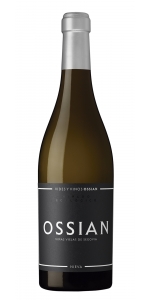
A barrel fermented, old vines Verdejo made in a style different from what we typically see in this white varietal. It has a remarkable complexity, resulting in the smoothness and depth of a high-end white. Very suitable for cellaring.
Golden yellow color with greenish reflections. Complex, toasty aromas of nuts & dried fruit. Large, creamy, spicy, balanced and voluminous.
Rice with fish, cooked seafood, grilled seafood, baked white fish.
"The eponymous 2020 Ossian was produced with Verdejo grapes from old, organically farmed vines around the village of Nieva (Segovia), a zone where phylloxera didn't reach. They consider 2020 their finest vintage to date, with a big change from 2018 and when they have achieved a much better understanding of their vineyards. It has notes of pit fruit and sweet spices, with good weight on the palate, moderate alcohol (13.5%) and ripeness and good freshness and balance. It's serious and with potential to develop in bottle. 80,000 bottles produced. - Luis GUTIERREZ"
- Robert Parker's Wine Advocate (January 31st 2023), 94 pts
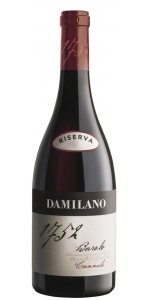
“1752” is the name of the Damilano Barolo Cannubi Riserva, in honor of the year in which the historic bottle was first marked “Cannubi”. It still exists today perfectly conserved by the Manzone family in Bra, close to Barolo. The bottle is clearly marked as being of “1752” vintage, indicating that Cannubi historically precedes Barolo.
About the Vineyard:
The Cannubi Cru is in found within one of the 6 core zones which comprise a UNESCO heritage site in Italy. A mixture of Tortonian and Helvetian calcareous marl gives the grapes intense aromas of cherry, plum and tobacco, rose and violet in sequence. Its low potassium and high calcium/magnesium content offer the wine a fine and polished touch. The vineyard is located at about 270 m. a.s.l. and has a south-east sun exposure. Barolo Riserva Cannubi 1752 It is a small plot of about 2 hectares of Nebbiolo vines, currently between 30 and 50 years of age.
Tasting Notes:
Garnet ruby red in color, the bouquet is intense and balanced, with notes of violet, red fruit, cherry and plum, spices, liquorice, cocoa, leather and tobacco. Dry, robust, full-bodied, very persistent, rich and velvety
Food Pairing:
This wine is excellent with typical piedmontes pasta (tajarin, ravioli); perfect with red meat, braised and roast meat, game and absolutely ideal with all types of cheeses.
Review:
The purity of this wine is pretty phenomenal with blackberries, strawberries, fresh flowers and licorice. Hints of tar. It’s full-bodied, yet composed and compact with ultra fine tannins and a long, flavorful finish. Very structured. Try after 2024.
-James Suckling 97 Points
Ossian Quintaluna Verdejo 2013 is made from 100% Verdejo
Quintaluna is a young wine that is made exclusively from Verdejo in the province of Segovia. 60% is very old grape: pre-phylloxera (ungrafted). 40% is made of very young grapes on trellises, grown certified organic, with low yields. The key to success for the Verdejo grape is held in the soil. Ideal soil has a high content of sand and pebbles of different sizes. Some have higher proportions of clay and others have significant proportions of clay and limestone. As the pebbles and sand allow for good drainage, the clay holds enough moisture to allow the vines to thrive.
The color is a straw yellow with greenish reflections. On the nose, you will find aromas of white flowers, stone fruit (peach), and citrus (lemon, mandarin). It also displays tropical fruit aromas. The palate is complex. Natural acidity is evident in the freshness and length on the palate. Almond and ripe fruit flavors are found in the mid-palate with fresh grass and citrus on the finish.
It pairs wells with all kinds of appetizers, entrees and salads.
Review:
"Light yellow. Spicy nectarine, melon, pear skin and honeysuckle aromas are energetic and bright. Fleshy and seamless on the palate, with fresh honeydew and pit fruit flavors brightened by a spicy, gingery quality. Finishes very long and precise, with refreshing mineral cut and lingering floral character. A standout wine in a difficult vintage and a great value to boot. The Ossian vineyards lie within the Rueda D.O. but the owners prefer not to be overseen by regulatory agencies so they forgo the appellation designation in favor of the generic Vino do la Tierra de Castilla y Leon moniker."
- Stephen Tanzer's International Wine Cellar (September/October 2014), 91 pts
Ossian Vides y Vinos Estate
With raw material of similar quality, Javier Zaccagnini and Ishmael Gozalo traveled to Burgundy in search of a good winemaker. There they found Pierre Millemann, which already had a strong reputation and long experience in developing large Burgundian whites. Pierre accepted the challenge and he is now in charge of the design and supervision of what this wine should be.
Under his guidance began the project with the 2005 harvest, were making two different cuvées, and fermenting the juice in Burgundian 228-liter barrels manufactured by four different coopers (all from Burgundy), with oak from three different forests, with 2 different roast. All this was intended to investigate what wood is best suited to the Verdejo grape, and endowed the wine more complexity.
The vineyards are located in the town of Nieva (Segovia). The cellar in which the project started is a small facility that is part of the old Monastery of El Parral, the twelfth century, opposite the Church, Mudejar Romanesque style, from the same era.
In short this is an old project 100% grape Verdejo 100%, 100% ungrafted, 100% organically grown, 100% fermented in oak barrels, 100% Burgundian philosophy.
The first vintage, 2005 Ossian, was bottled on October 25, 2006, yielding 12,000 bottles were put on the market in December of that year, after nine months of barrel aging and 2 months of bottle aging. Sold out in three weeks and they were awarded a 93 point score in the Penin Guide.
The project was founded on an absolutely exceptional vineyards: 9 hectares of venerable vineyards between 100 and 200 years old. This is a pre-phylloxera Verdejo since that escaped the plague because of its sandy soils.
Ossian Vides y Vinos Vineyard
The vineyards are located in the town of Nieva (Segovia province), the highest in altitude among of all the villages that are included in the D.O. Rueda, between 840 and 930 meters above sea level (150 meters in the area near the Duero River). This causes a specific climate, with higher thermal oscillations between day and night in the valley, delaying the harvest date and, finally, improving the quality of wine.
Moreover, Ossian has been certified Organic for more than seven years. The winery does not get a single chemical synthesis, or fertilizer, herbicides or fungicides of any kind. It is the oldest registered and certified organic vineyard in the D.O. Rueda.
Avennia Sestina Cabernet Sauvignon is made from 77% Cabernet Sauvignon, 17% Merlot, 6% Cabernet Franc.
The story of this wine - The Sestina is an ancient form of poetry from Medieval France. Just as a modern poet can fill this form with new expressions, Avennia uses the traditional Bordeaux blend to express Washington. Sestina is their vision for an old vine, complex blend where all of the components complement each other. This wine is designed for the cellar, so the emphasis is on structure, balance, and complexity.
Winemaker Tasting Notes - “Good deep ruby/garnet color, with aromas of black cherry, fresh black currant, dark mocha, cigar box, and graphite. The palate is lively and dense with mountain berries, mocha, vanilla honey, damp earth, and wildflowers. The finish shows a distinct chalky minerality and beautiful tension. This is a classically balanced and ageworthy Sestina. Drink 2025-2040.” - Chris Peterson, Winemaker
Review:
"The Cabernet Sauvignon-dominated release from Peterson, the 2017 Sestina comes from the Red Willow, Bacchus, and Dionysus vineyards. Rocking levels of crème de cassis, sappy herbs, violets, and cedar pencil all flow to a full-bodied, incredibly pure, polished 2017 that offers flawless balance, ripe tannins, and a great, great finish. It's more approachable than normal yet is still going to evolve for 15 to 20 years. The blend is 77% Cabernet Sauvignon, 17% Merlot, and the rest Cabernet Franc, all raised 20 months in 50% new French oak."
- Jeb Dunnuck (April 2020), 95 pts
Fragrant aromas of yellow peach and ripe melon are found on the nose, interspersed with bright citrus notes. These continue on the palate with notes of creamy vanilla and buttery nuances on the long finish. Rombauer's signature bright acidity is evident throughout each sip, balancing the softness of the midpalate.
Pairings for this wine include crab cakes, barley risotto, and strawberry shortcake.