" We don't sell the wine without touching the vine "
| BUY MORE! SAVE MORE! | ||||||||||||||||||||
|
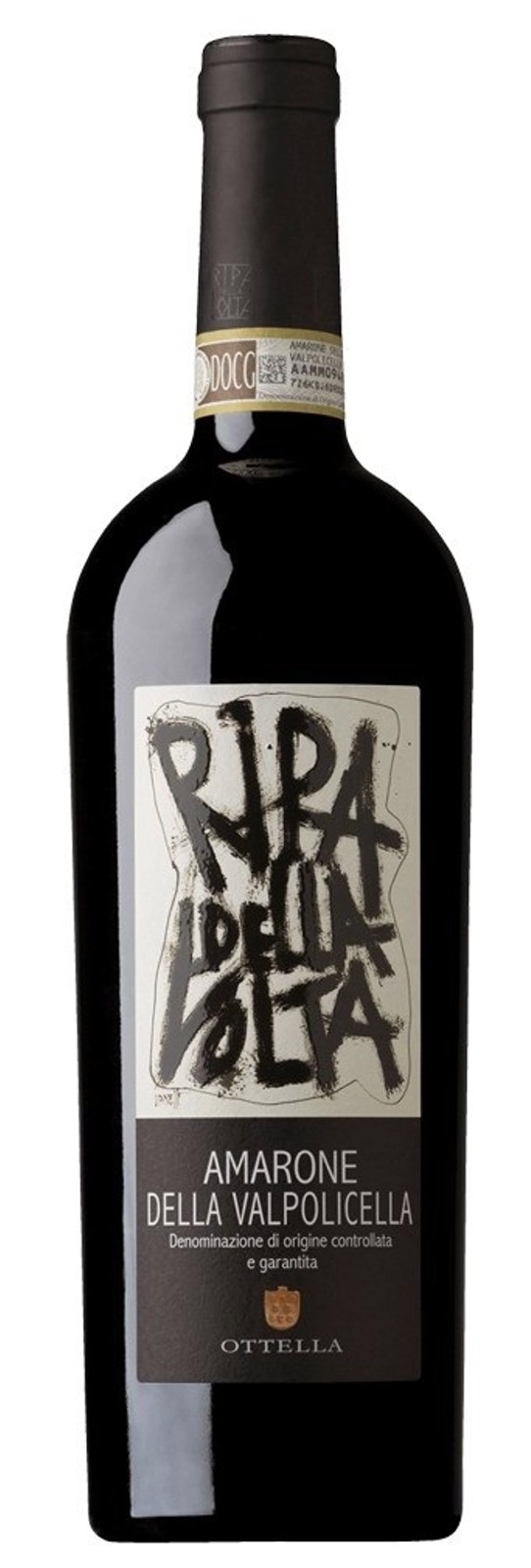
Ripa Della Volta Amarone della Valpolicella 70% Corvina, 20% Corvinone, 5% Oseleta and 5% Spigamonte.
The vineyards are located at an elevation of 300-600 metres above sea level, with a south-southwesterly exposure. Training system: Guyot.
It features an intense red color with garnet highlights. The nose offers up a rich variety of aromas with fruity notes of cherries, morello cherries and plums, spices and hints of chocolate. It is round and caressing with soft, mellow tannins balanced by excellent acidity that enhances its drinkability and ageing potential.
It is a wine with a marked personality, great finesse, elegance, and extraordinary longevity.
It pairs well with main dishes such as game and roasts, but also cured meats and mature cheese.
Review:
Strong, dark ruby with a light garnet edge. Intense and very clearly defined nose with notes of ripe plums, dark forest raspberries and some tobacco in the background. Round on the palate with plenty of supple tannin, pleasantly dry, firm pressure in the finish.
-Falstaff 92 Points
The Otella Estate
Azienda Agricola Ottella was founded in 1880 and the Montresor family has been grape growers for many generations at the Southern end of Lake Garda, near Peschiera del Garda in the D.O.C. (northwest Italy).
The winery is named after a legend that says some octuplets were born at the farm in the 16th century, and the family had immortalized the tradition naming the winery "Ottella".
The Otella Vineyard
The family owns 25 hectares (61.75 acres) of vines planted on a very typical clayey soil, and favorably influenced by the proximity of the Lake Garda. The family also owns a small parcel called "Le Creete", planted on a white chalky soil that gives the wine its exceptional character.
Rubus Special Edition Barossa Shiraz is made from 100 percent
The Rubus Project was created by Fran Kysela as a way to source & sell incredible wines at value prices. All wines in this international project are hand-selected by Fran Kysela. Rubus wines are fruit driven, true-to-type values that over deliver - a true representation of quality for the consumer at an excellent price.
Deep red with a slight purple hue on release. The wine has a rich mix of dark chocolate infused with coffee bean and black liquorice, then scents of tar, aniseed, raw (pure) soy and black olive on the nose. The palate is expansive, and yet balanced and finessed. An amalgam of dark berried flavors and textural sensations. The 100% new oak is completely absorbed, meshed with ripe tannins, completing a palate of impressive length and youthfulness.
Sourced from Thorn-Clarke’s St Kitts vineyard (Block 7) in the far north of the Barossa, the Rubus Reserve demonstrates both the strengths of the region and the unique characters of the vineyard.
A thin layer of topsoil over weathered marble, schist and shale mean the vines work hard to source water and nutrients. The result is naturally low yields concentrating the power and density of the fruit. Diurnal temperature variation is another important aspect of St. Kitts. Warm daytime temperatures are followed by cool nights with variations of up to 30°C (55°F) from the peak during the day into the cool night minimums.
Review:
“Earthy detail develops in this sleek and juicy shiraz, a tarry streak under fresh plum and bruised strawberry. The tannins have gravity and precision, their bracing intensity and concentration integrated into what panelist David Hawkins described as “a big, powerful wine with great liveliness.” While suited to aging, this is accessible now if you’re grilling meats to serve with it.”
- Wine & Spirits (February 2023), 94 pts
"Made by Thorn-Clarke for the US market, this has a rich and vivid nose with blueberry, violet, dark plum and subtle oak spice in play. The palate has a succulent feel with plenty of rich, open-knit blackberry and blueberry flavor. Smoothly delivered tannins carry long and even. Drink over the next decade."
- James Suckling (November 2021), 94 pts
Antica Vigna Amarone della Valpolicella Riserva is made from 65% Corvina, 20% Rondinella, 10% Corvinone, 5% Merlot.
Amarone DOCG has maintained unchanged its typicality, so that “the essence of the territory” of Valle di Mezzane and Cazzano di Tramigna powerfully emerges. Rich in color, firmly structured but with fresh notes.
WINEMAKING AND AGING:
Manual harvest early October with selection of the best bunches.
Drying: natural drying in fruit cellar for 3/4 months with a sharp drop in weight of around 30%.
Vinification: soft crushing of destemmed grapes in the months of January and February.
Fermentation: at a controlled temperature of 18/21°C. Fermentation time: about 30 days
Aging:· 80% in oak barrels for 30 months of which 2/3 in American and French barriques, half of which are used for the second and third time, 1/3 in large
THE TERRITORY:
Geographical location: Tenuta di Mezzane, Tenuta di Cazzano di Tramigna
Height: 350/400 meters asl
Exposure: south
Soil type: limestone
Vineyard training system: guyot and pergola
Vine planting year: from 1972 to 2009
Vine density: 4,000 to 5,400 vines per hectare Vineyard management: sustainable agriculture and great attention to natural
cycles
Pairs well with grilled and roasted meats, as well as cheese.
Timeless Notes:
Dark cherry in color, firm on the palate with a vibrant acidity underbelly. Thought lush on the palate the flavors are complex and elegant from entry to mid-palate with hints of currant and wild berries. The finish brings in a touch of tobacco and leather notes ,classic examples of this region, with more ripe fruit flavors that linger on long strain tannin finish. Complex with depth and elegance on the palate. This one is drinking now, but can handle more time in the cellar with ease. An excellent value in the Riserva category.
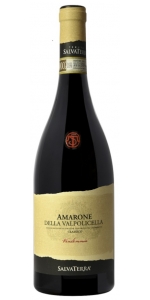
Salvaterra Amarone della Valpolicella Classico is made from 65% Corvina, 20% Corvinone, 10% Rondinella, 5% Oseleta.
Perfume of cherries, cocoa, tobacco and black pepper. On the palate it is complex and deep, elegant and robust at the same time, harmonious and with an excellent tannin.
Amarone della Valpolicella Classico is "the essence of the territory", structured but also fresh at the same time.
Pairs with red meats, aged cheese, dark chocolate, cigars.
Review:
Abundant lively red cherries, plums and mellow milk choolate with a energetic and powerful structure, an elegant frame of velvety tannins and an attractive balsamic finish.
-Decanter 96 Points
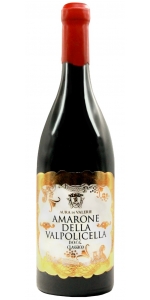
The first kosher Amarone! Amarone undergoes a very unique process prior to fermentation. In late October, grapes are harvested and allowed to dry for around 120 days. Known as the “appassimento” technique, the drying process traditionally occurs on straw mats or in temperature controlled drying chambers. This process helps concentrate the juices and increases skin contact, giving the wine a very ripe, full-bodied flavor. There is no other wine like it! The unique flavors of Amarone, including dark chocolate, coffee, dark fruit and light notes of cherry, pair beautifully with steak, stews, and bold cheeses.
The color is deep bright, ruby red with a violet edge. Powerful bouquet and intense aromas of cherry, ripe plum, toasted almond, and vanilla. A full bodied wine with round and rich flavor.
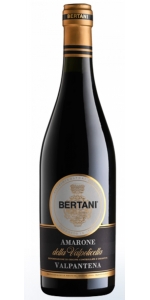
Bertani Valpantena Amarone is made from 80% Corvina Veronese, 20% Rondinella.
The best grapes are selected so that only the healthiest and ripest bunches are sent to the drying rooms in the historic winery at Grezzana, where they are laid out in single-layer crates. In mid- January, the grapes are destemmed and crushed, then fermentation starts, at first at a temperature of 39°F- 41°F, which then reaches 72°F in the final stages.
WINEMAKING
The vines are vertical-trellised and Guyot-trained, with a planting density of 2024 plants per acre. Hand harvest is carried out in the middle of September.
This amarone is produced in the Valpantena hills, north of Verona. The soils are calcareous-marl in the east and calcareous-clay in the west, rich in iron.
TERROIR & VINTAGE NOTES
Bertani’s impact on Veneto wine making, particularly in Amarone production, is so considerable that ‘Bertani’ and ‘Amarone’ are nearly synonymous. Their 150+ year history is dotted with groundbreaking initiatives and royal accreditation. While respectful of their past, Bertani strives towards innovation, using progressive techniques and equipment allied with extensive experience and a deeply felt respect for tradition to provide wines of uncompromising quality.
On the nose, marked and intense aromas of very ripe cherries, sour cherries, spicy and nutty notes typical of the Valpantena. Good follow-through of red fruits on the palate, with supple tannins to give depth. This full bodied wine pairs well with rich dishes, mature cheeses and strong-flavored meats.
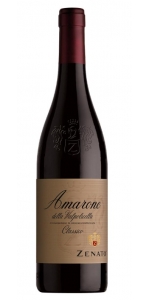
Zenato Amarone is a blend of Corvina and Rondinella, with a touch of Croatina and Oseleta. Corvina is prized not only for its intense marasca cherry flavor, but also its ability to withstand the drying process. Used in small quantities Rondinella also fares well in drying, and contributes dark color and an alluring floral note. Oseleta provides tannic structure and minerality; while Croatina is introduced to add youthful fruitiness. All this attention to detail pays off in a wine that is immediately approachable yet unmistakably ageworthy.
Ruby red in color, intoxicating aromas of dried black cherries, cassis, truffles, and chocolate fudge leap out of the glass. The resulting wine is silky, luscious, and complex, with a lingering finish.
Pair this wine with osso bucco, Bordelaise sauces, wild boar ravioli, or grilled cowboy ribeyes.
Review:
Restrained fruitiness with aromas of raspberries and earth, alongside a complex spicy blend of freshly ground black pepper, milk, mint, bay leaf and cocoa powder. Very youthful. Full-bodied, dense and balanced, with savory flavors of chocolate and cherries, super-tasty style, tight, chalky yet ripe tannins and a fresh, cleansing acidity. Toasty finish. Drinkable now, but best in a year or two.
-James Suckling 96 Points
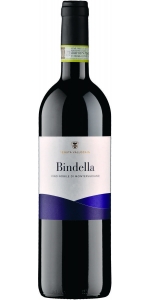
Bindella Vino Nobile di Montepulciano is made from 85% Sangiovese, 15% Colorino del Valdarno, Canaiolo nero and Mammolo.
Elegant, with typical hints of iris, rose and red berries together with balsamic notes after several years of ageing in the bottle. Balanced, pleasantly tannic and well-bodied on the palate.
A wine of great authenticity to accompany pasta with elaborate sauces, red meat, truffles and soft or mature cheeses.
Belle Glos Clark and Telephone Vineyard Pinot Noir is made from 100 percent Pinot Noir.
The Clark & Telephone Vineyard was established in 1972 and planted with “own root” Martini clone vines. Located just 13 miles from the ocean and situated on a west-facing slope, this vineyard experiences weather patterns that pull from west to east to bring cool fog and coastal breezes inland until August when Santa Ana winds begin.
We harvested early in the morning so the fruit would arrive at the winery while the grapes were still cool to preserve their vineyard-fresh flavors. After destemming (but not crushing) the berries, we cold-soaked the must for 14 days to soften the skins and allow for ideal extraction. During fermentation in a combination of closed and open-top stainless steel fermenters, we used both punch-down and pump-over techniques to extract color and phenolics. We aged the wine in 100% French oak (60% new) for up to 12 months. After the wine underwent malolactic fermentation, we racked it twice before bottling.
Deep ruby red in color with lush aromas of ripe cherry, nutmeg, dark chocolate and holiday baking spices. Bold and complex flavors of black plum, crushed raspberry and blueberry pie linger on the palate. The texture is rich and lively, and leads into a warm and structured finish.
DAOU Vineyards Reserve Cabernet Sauvignon is made from 77% Cabernet Sauvignon, 23% Petit Verdot.
A heady nose delivers fruit-forward aromas of blackberry, raspberry and plum with traces of licorice, thyme, vanilla and cherry. The palate is beautifully balanced, showing layers of black fruit and chocolate-covered blueberry with underlying herbal, cedar and mineral complexity. Exquisitely rounded tannins imbue the finish with stature and length.
Review:
Black plum and roasted walnut aromas meet with woodspice on the nose of this bottling. The palate is tense and firm yet still brighter with blackberry, pepper and nut flavors that cling to the persistent structure. — Matt Kettmann
-Wine Enthusiast 93 Points