
" We don't sell the wine without touching the vine "

| Country: | Spain |
| Region: | Ribera del Duero |
| Winery: | Pago de Carraovejas |
| Grape Type: | Tempranillo |
| Vintage: | 2011 |
| Bottle Size: | 1500 ml |
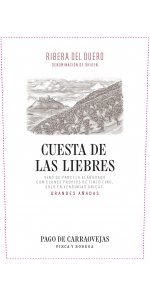
Pago de Carraovejas Cuesta Liebres is made from 100% Tinto Fino. The plot is located on a terraced hillside located at 900 m above sea level with slopes that range between inclines of 30% and 40%. Red cherry color with purple hues. Ripe fruit aromas, vanilla notes. Suave and unctuous in the mouth. A strong and noble character.
The harvest is carried out by hand using small crates and after passing through a refrigerated container it is transferred into tanks via gravity. The alcoholic and malolatic fermentation is carried out in small French “Haute Futaie” Oak casks with unique and original local yeasts and fermenting bacteria from the vineyard itself, to bring out the very best of the terroir, respecting the uniqueness of each and every vintage. Clarified with egg whites and bottled by gravity with natural cork stoppers.
Review:
"From the vineyard of the same name, the 2021 Cuesta De Las Liebres is a knockout, from a hillside vineyard of terraced vines. Aged 24 months in French oak, the first year in new, the second in second-use, all fine-grained, and bottled in June 2024, the tannins are well-integrated and dusty, nearly chalky. It’s truly a beautiful expression of variety, vintage, and site, reaching perfection in its fine-tuned, full-bodied layers of rich cassis, oak spice, and even a touch of garrigue. There’s lovely acidity throughout that brightens the palate, with beguiling notes of violet that never fade away. It’s a seamless, polished, gorgeous wine that will be hard to resist, though aging will continue to see it melt into one over the next 15-18 years. - Virginie BOONE"
- Jeb DUNNUCK (August 2025), 100 pts
Pago de Carraovejas Cuesta Liebres is made from 100% Tinto Fino. The plot is located on a terraced hillside located at 900 m above sea level with slopes that range between inclines of 30% and 40%. Red cherry color with purple hues. Ripe fruit aromas, vanilla notes. Suave and unctuous in the mouth. A strong and noble character.
The harvest is carried out by hand using small crates and after passing through a refrigerated container it is transferred into tanks via gravity. The alcoholic and malolatic fermentation is carried out in small French “Haute Futaie” Oak casks with unique and original local yeasts and fermenting bacteria from the vineyard itself, to bring out the very best of the terroir, respecting the uniqueness of each and every vintage. Clarified with egg whites and bottled by gravity with natural cork stoppers.
Review:
"From the vineyard of the same name, the 2021 Cuesta De Las Liebres is a knockout, from a hillside vineyard of terraced vines. Aged 24 months in French oak, the first year in new, the second in second-use, all fine-grained, and bottled in June 2024, the tannins are well-integrated and dusty, nearly chalky. It’s truly a beautiful expression of variety, vintage, and site, reaching perfection in its fine-tuned, full-bodied layers of rich cassis, oak spice, and even a touch of garrigue. There’s lovely acidity throughout that brightens the palate, with beguiling notes of violet that never fade away. It’s a seamless, polished, gorgeous wine that will be hard to resist, though aging will continue to see it melt into one over the next 15-18 years. - Virginie BOONE"
- Jeb DUNNUCK (August 2025), 100 pts
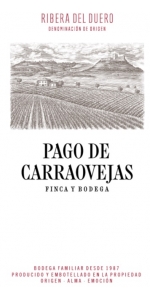
Pago de Carraovejas Ribera Del Duero is made from 92%, Cabernet Sauvignon 5% and Merlot 3%.
The Pago de Carraovejas Ribera del Duero vintage marks a turning point in the history of the winery. From now on, the Crianza and Reserva are unified in this wine that focuses on the terroir and character rather than the time of aging. Its renewed label reflects the three key elements of this red: origin, soul and emotion.
Pago de Carraovejas Ribera Del Duero is made with grapes grown in the Botijas River valley, and planted between 1988 and 2011. Our work over the last 30 years has been geared to handcrafted viniculture, that puts as much care as possible into the microclimate conditions and the details. We have placed particular attention on the maintenance of the soil by plant cover that already grows spontaneously. It allows us to develop the ecosystem of the valley, which we respect scrupulously, using organic fertilizer and sulfur as the sole basis of our viticulture.
Depending on which plot they come from and the time they enter the winery, the grapes may be deposited in cold chambers to prevent oxidation and preserve the aroma. We carry out a two-part selection: first on the vine, where we choose the bunches, and then on a belt in the winery, where we remove the grapes that do meet the necessary conditions. The grapes enter the winery and are transported with the assistance of gravity. The deposits are filled slowly and gently. Depending on the characteristics that we detected when tasting the grapes, we ferment them either in stainless steel deposits or French oak barrels. For years we have worked with our own yeast that has been isolated from the vines by our team. This work is also partly responsible for the Carraovejas character.
The wine was aged in barrels for around twelve months.
Review:
The eponymous 2021 Pago de Carraovejas comes from a cooler year when they consider the grapes had exceptional quality. The bottled wine is composed of Tinto Fino with 5% Cabernet Sauvignon and 3% Merlot with 15% alcohol but good freshness and integration of the oak after spending 12 months in 226- and 600-liter barrels. It's medium to full-bodied, with fine tannins, a juicy mouthfeel and a tasty finish. This is a more elegant Carraovejas. It was bottled in the spring of 2023.
-Wine Advocate 93+ Points
Pago de Carraovejas Ribera Del Duero is made from 92%, Cabernet Sauvignon 5% and Merlot 3%.
The Pago de Carraovejas Ribera del Duero vintage marks a turning point in the history of the winery. From now on, the Crianza and Reserva are unified in this wine that focuses on the terroir and character rather than the time of aging. Its renewed label reflects the three key elements of this red: origin, soul and emotion.
Pago de Carraovejas Ribera Del Duero is made with grapes grown in the Botijas River valley, and planted between 1988 and 2011. Our work over the last 30 years has been geared to handcrafted viniculture, that puts as much care as possible into the microclimate conditions and the details. We have placed particular attention on the maintenance of the soil by plant cover that already grows spontaneously. It allows us to develop the ecosystem of the valley, which we respect scrupulously, using organic fertilizer and sulfur as the sole basis of our viticulture.
Depending on which plot they come from and the time they enter the winery, the grapes may be deposited in cold chambers to prevent oxidation and preserve the aroma. We carry out a two-part selection: first on the vine, where we choose the bunches, and then on a belt in the winery, where we remove the grapes that do meet the necessary conditions. The grapes enter the winery and are transported with the assistance of gravity. The deposits are filled slowly and gently. Depending on the characteristics that we detected when tasting the grapes, we ferment them either in stainless steel deposits or French oak barrels. For years we have worked with our own yeast that has been isolated from the vines by our team. This work is also partly responsible for the Carraovejas character.
The wine was aged in barrels for around twelve months.
Review:
Freshly cut vanilla, dark cherries and ripe plums on the nose, with a touch of blue flowers. Medium to full body with firm, fine-grained tannins and a juicy, medium-long finish. Drink now or hold.
-James Suckling 92 Points
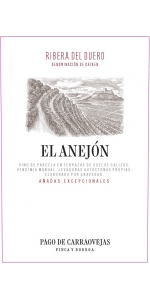
Pago de Carraovejas El Anejon is made from 93%, Cabernet Sauvignon 5% and Merlot 2%.
El Anejon vineyard is a terraced plot on a steep slope, oriented toward the sun and with great views of the Castle of Peñafiel. The soil of the narrow terraces has a compact, loamy limestone texture. The presence of the white-colored limestone calcium salts contributes to a distinctive minerality in this wine. Only made in exceptional vintages.
Review:
"A single-plot wine from the top terraces of the site from an excellent vintage, the 2021 El Anejon is powerful and truly outstanding. Tempranillo is blended with Cabernet Sauvignon and Merlot to an exceptional end, aged 12 months in larger French oak barrels after a triple selection of the grapes. Sharp red fruit has an underbelly of herbal earthiness beneath the fruit, while tight, refreshing acidity accentuates the mineral-driven texture. Bottled in June 2023, this might be the producer’s best wine of the vintage, which is saying a lot, as they’re all of outstanding quality. This will hit a high point in 5-7 years and keep going another 20. - Virginie BOONE"
- Jeb DUNNUCK (August 2°25), 98 pts
Pago de Carraovejas El Anejon is made from 93%, Cabernet Sauvignon 5% and Merlot 2%.
El Anejon vineyard is a terraced plot on a steep slope, oriented toward the sun and with great views of the Castle of Peñafiel. The soil of the narrow terraces has a compact, loamy limestone texture. The presence of the white-colored limestone calcium salts contributes to a distinctive minerality in this wine. Only made in exceptional vintages.
Pago de Carraovejas Cuesta Liebres is made from 90% Tinto Fino (Tempranillo) and 10% Cabernet Sauvignon. Following the hottest and then moved to fermenting containers where gravity aids the fermentation process. Aged 24 months in new French oak barrels. Clarified with natural egg white. Intense red cherry color with purple hues. Ripe fruit aromas, vanilla notes. Suave and unctuous in the mouth. A strong and noble character.
The vineyard is located on a hillside at 900 metres above sea level with 30%-40% slopes. Vertical Axis growing system. High minerality limestone soils, with white calcareous salts. The vineyard was planted in 1994.
Grapes are handpicked and taken to the winery in small crates . After spending a few hours in a refrigerating chamber the grapes are placed into the vats by gravity.
Both alcoholic and malolactic fermentations are carried out in small French oak Haute Futaie vats with yeasts and bacteria found at the estate ,allowing the wines to fully express the terroir and respecting each vintage ́s unique characteristics.
The wine gently flows into the extra fine-grain French oak barrels by gravity flow where it will spend 24 months.
Fined with natural egg white and bottled by gravity with selected natural cork stoppers in April 2014.
Review:
Vivid ruby. Intensely perfumed dark berry and floral pastille scents show excellent purity and lift, with a hint of white pepper and building spiciness. Supple and open-knit, offering intense raspberry, vanilla and lavender pastille flavors that put on weight with air. Clean, bright and seamless on the impressively persistent finish, with the red fruit and floral notes echoing strongly. - Vinous 93 Points
The Pago de Carraovejas Estate
The Pago de Carraovejas winery was founded in 1988 and is located in the town of Peñafiel. Pago de Carraovejas means “the place where the sheep walk by”, a loose translation. The ongoing pursuit of excellence best defines the career of José María Ruiz, Pago's founder and principal shareholder. Working his way through the restaurant trade (cook, waiter & sommelier) in his hometown of Segovia; José María, founded his own restaurant in 1982 and it soon became one of the city's top-rated venues. The winery was a logical extension of José María insistence on serving his restaurant clients the very best. Today he not only makes his own top quality house wine; but also raises heritage-breed pigs for his culinary specialty: Segovia-style roast suckling pìg. The commercial success of the Pago de Carraovejas wines has been spectacular since the first vintage (1991) hit the streets in 1993. In addition to the 100,000 bottles opened annually at the restaurant, the wines have become a must for quality restaurant wine lists in all of Spain. Every vintage is quickly sold out and allocations continue to be hard to come by.
The Pago de Carraovejas Vineyards
Pago de Carraovejas is a single vineyard wine. The Finca comprises of 140 hectares, all red grapes and planted 75% to Tempranillo and 25% to Cabernet Sauvignon. The vines are situated on the southern flank of Carraovejas ridge at 850 meters above sea level. The local micro-climate is harsh and dry: cold winters, hot summers and an annual rainfall less than 400 mm. The soils are low in nutrients with a mix of limestone, chalk and sand. Carefully metered drip irrigation controls vine stress, which along with the terrain, soils and micro-climate, produces grapes of optimum concentration and ripeness, vintage after vintage.
Pago de Carraovejas Winemaking
Production is at 50,000 cases and the winery uses a 50 - 50 combination of French (Allier) and American (Ohio and Missouri) oak of which 33% is new oak each year. They currently make Crianza, Reserva and Gran Reserva styles, no Tinto Joven here. Only 10% of their wine is exported. The maceration of the reds occurs in fat stainless steel tanks suspended off of a single plane of waffled stainless. Enologist Almudena Calvo oversees the winemaking, based on a philosophy that revolves around 4 essential points:
1) the Pago de Carraovejas hillside terrain as the only source of grapes,
2) keeping grapes as undamaged as possible as they go into the fermenters,
3) Large skin contact surface in the fermenters (unique fermentation vessels),
4) 25% of the blend is Cabernet Sauvignon.

James Goddard was an ancestor of the Clarke family. Born in West Sussex, England in 1823, James spent his 74 years as a sailor, a whaler, a bullock driver, farmer, prospector, miner and hotel keeper. From an illiterate runaway living rough on the streets of London, he became a rich, successful and admired pillar of South Australian society.
James arrived in Adelaide in 1839 as a 16-year-old sailor. Twelve years later, his life changed forever with the news of gold findings. For the next 20 years, James roamed the country learning the geology that improved his chances of prospecting.
James Goddard Shiraz is made from 100 percent Shiraz.
In 1870, he tried his luck near his farm in the Barossa Valley and discovered the region’s first gold deposits, creating the prosperous Lady Alice Mine. The Lady Alice Mine, though it is no longer operational, was & still is the most successful gold mine in South Australia. From these roots, the Thorn-Clarke family has been connected to the region for the last 150 years.
James Goddard Shiraz is a blend Shiraz sourced from the Milton Park vineyard in the north of Eden Valley, and the St Kitts vineyard in the far northern area of the Barossa. Fruit is harvested in the cool of the night to maintain maximum flavour and freshness and it is fermented for 8 days. The ferment is pumped over twice daily to extract the colour and flavour from the fruit. Once finished fermentation the wine was then matured in a blend of French and American oak for a period of 10 to 12 months depending on the vintage.
Deep vibrant red with purple hues to the rim. The nose shows lifted plums, vibrant purple berries and a delicate spice note. The palate has concentrated satsuma plum, blackberry with lovely charry oak in the background. Long, juicy and even with plush fruit on the finish.
Review:
“Blended from two estate vineyards, St. Kitts and Milton Park, this shiraz offers its richness without any aggression or overt perfume. It’s just lush and delicious, a friendly embrace of firm tannins and purple-red fruit. The texture and flavor combine in a saturated meatiness, for Korean barbecue.”
- Wine & Spirits Magazine, 92 points
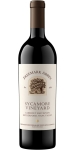
Freemark Abbey 'Sycamore' Cabernet Sauvignon is made from 95% Cabernet Sauvignon, 4% Petit Verdot, 1% Cabernet Franc.
Located on the southern end of the Rutherford Bench, Sycamore Vineyard’s proximity to the Mayacamas Mountains provides the perfect climate for growing a rich, textured Cabernet. The wine is intense in aromatic complexity, reminiscent of blackberry, pomegranate syrup, black tea, and forest floor. The palate is rich and textured with flavors of forest fruits, dark chocolate, bay leaf, and warm oak spices. The ‘Rutherford dust’ is evident in the tannin structure, giving it textures that are bold but integrated, making it lovely to drink now with the capability to age in the cellar for decades.
Primary Vineyard: Sycamore Vineyard—Rutherford (100%): Small 24-acre vineyard located about 1.2 miles south of Bosche, right up against the Mayacamas Range, this vineyard has a rich clay loam. Sycamore Vineyard produces small berries reminiscent of mountain fruit berries, with intense extract of color and flavor. The color is very dark early in the fermentation, with flavors of black currant and black berry with a forest floor complexity.
Review:
Even better, the 2019 Cabernet Sauvignon Sycamore Vineyard is jaw-dropping stuff and does everything right. More structured and tannic compared to the Bosche, it has loads of red and black fruits as well as sandalwood, camphor, bay leaf, and bouquet garni-like aromas and flavors. Full-bodied, deep, layered, and concentrated, yet still with this wonderful sense of elegance, it needs 3-5 years of bottle age and will evolve for 20-25 years as well.
-Jeb Dunnuck 97 Points



