" We don't sell the wine without touching the vine "
| Country: | Spain |
| Region: | Ribera del Duero |
| Winery: | Pago de Carraovejas |
| Grape Type: | Tempranillo |
| Vintage: | 2019 |
| Bottle Size: | 750 ml |
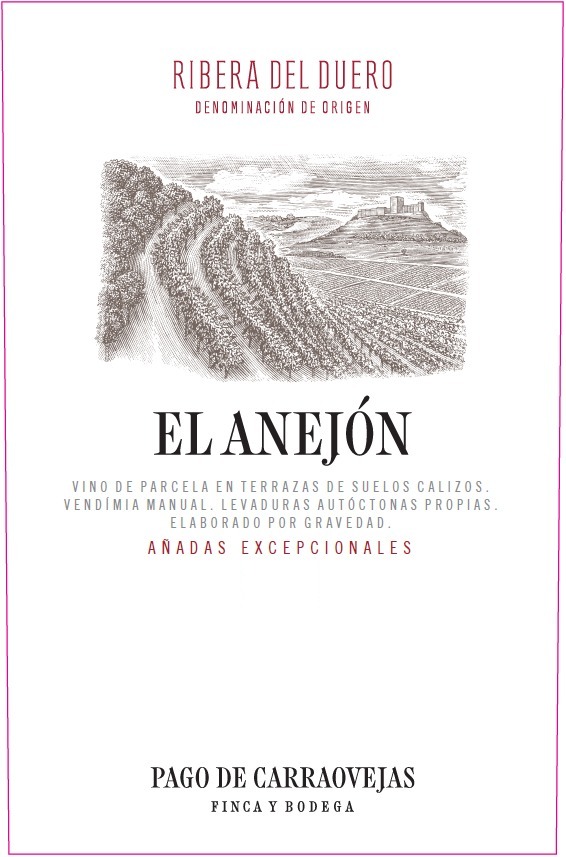
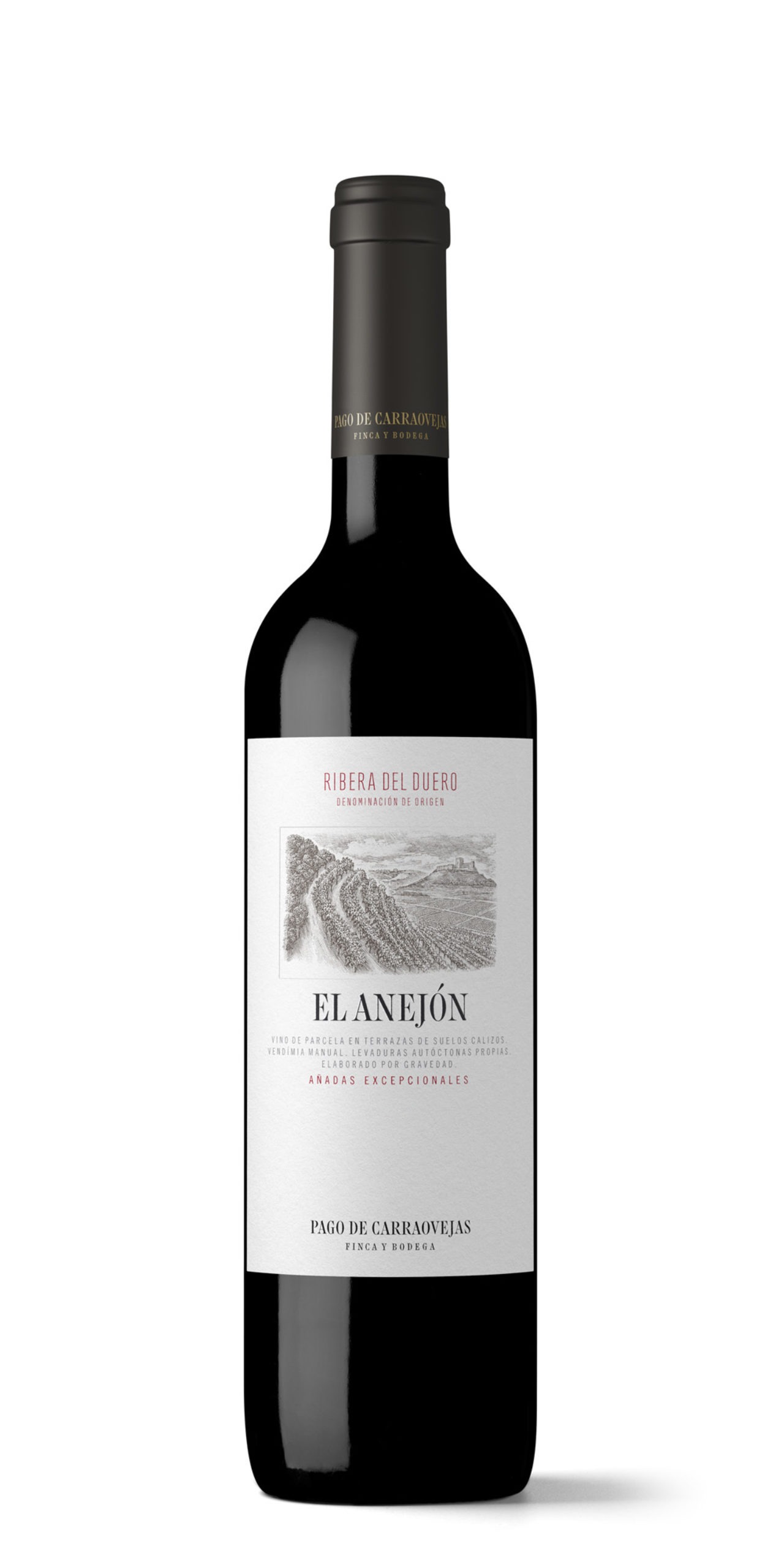
Pago de Carraovejas El Anejon is made from 93%, Cabernet Sauvignon 5% and Merlot 2%.
El Anejon vineyard is a terraced plot on a steep slope, oriented toward the sun and with great views of the Castle of Peñafiel. The soil of the narrow terraces has a compact, loamy limestone texture. The presence of the white-colored limestone calcium salts contributes to a distinctive minerality in this wine. Only made in exceptional vintages.
Review:
"A single-plot wine from the top terraces of the site from an excellent vintage, the 2021 El Anejon is powerful and truly outstanding. Tempranillo is blended with Cabernet Sauvignon and Merlot to an exceptional end, aged 12 months in larger French oak barrels after a triple selection of the grapes. Sharp red fruit has an underbelly of herbal earthiness beneath the fruit, while tight, refreshing acidity accentuates the mineral-driven texture. Bottled in June 2023, this might be the producer’s best wine of the vintage, which is saying a lot, as they’re all of outstanding quality. This will hit a high point in 5-7 years and keep going another 20. - Virginie BOONE"
- Jeb DUNNUCK (August 2°25), 98 pts
Pago de Carraovejas El Anejon is made from 93%, Cabernet Sauvignon 5% and Merlot 2%.
El Anejon vineyard is a terraced plot on a steep slope, oriented toward the sun and with great views of the Castle of Peñafiel. The soil of the narrow terraces has a compact, loamy limestone texture. The presence of the white-colored limestone calcium salts contributes to a distinctive minerality in this wine. Only made in exceptional vintages.
Review:
"A single-plot wine from the top terraces of the site from an excellent vintage, the 2021 El Anejon is powerful and truly outstanding. Tempranillo is blended with Cabernet Sauvignon and Merlot to an exceptional end, aged 12 months in larger French oak barrels after a triple selection of the grapes. Sharp red fruit has an underbelly of herbal earthiness beneath the fruit, while tight, refreshing acidity accentuates the mineral-driven texture. Bottled in June 2023, this might be the producer’s best wine of the vintage, which is saying a lot, as they’re all of outstanding quality. This will hit a high point in 5-7 years and keep going another 20. - Virginie BOONE"
- Jeb DUNNUCK (August 2°25), 98 pts
Pago de Carraovejas Ribera Del Duero is made from 92%, Cabernet Sauvignon 5% and Merlot 3%.
The Pago de Carraovejas Ribera del Duero vintage marks a turning point in the history of the winery. From now on, the Crianza and Reserva are unified in this wine that focuses on the terroir and character rather than the time of aging. Its renewed label reflects the three key elements of this red: origin, soul and emotion.
Pago de Carraovejas Ribera Del Duero is made with grapes grown in the Botijas River valley, and planted between 1988 and 2011. Our work over the last 30 years has been geared to handcrafted viniculture, that puts as much care as possible into the microclimate conditions and the details. We have placed particular attention on the maintenance of the soil by plant cover that already grows spontaneously. It allows us to develop the ecosystem of the valley, which we respect scrupulously, using organic fertilizer and sulfur as the sole basis of our viticulture.
Depending on which plot they come from and the time they enter the winery, the grapes may be deposited in cold chambers to prevent oxidation and preserve the aroma. We carry out a two-part selection: first on the vine, where we choose the bunches, and then on a belt in the winery, where we remove the grapes that do meet the necessary conditions. The grapes enter the winery and are transported with the assistance of gravity. The deposits are filled slowly and gently. Depending on the characteristics that we detected when tasting the grapes, we ferment them either in stainless steel deposits or French oak barrels. For years we have worked with our own yeast that has been isolated from the vines by our team. This work is also partly responsible for the Carraovejas character.
The wine was aged in barrels for around twelve months.
Review:
The eponymous 2021 Pago de Carraovejas comes from a cooler year when they consider the grapes had exceptional quality. The bottled wine is composed of Tinto Fino with 5% Cabernet Sauvignon and 3% Merlot with 15% alcohol but good freshness and integration of the oak after spending 12 months in 226- and 600-liter barrels. It's medium to full-bodied, with fine tannins, a juicy mouthfeel and a tasty finish. This is a more elegant Carraovejas. It was bottled in the spring of 2023.
-Wine Advocate 93+ Points
Pago de Carraovejas Ribera Del Duero is made from 90% Tempranillo, 6% Cabernet Sauvignon and 4% Merlot
The most honest interpretation of the Carraovejas Valley.
Body, structure and balance with a vibrant background. Delicacy, harmony and passion for detail are perceived in a wine that reflects the unique character of the valley in an outstanding way.
The 2022 vintage was characterized by cool winter months and extremely low rainfall, reaching limits that had not been observed for years. Due to the good rainfall of the previous year, the vines had good accumulated water reserves, which allowed the vineyard to have a good phenological cycle and normal development. Budding and flowering were perfectly developed in each of the varieties worked, and a homogeneous and balanced development of the plants was achieved. The summer was excessively hot, with several episodes of heat waves, which were mitigated by drip irrigation. Veraison, which was slower than in previous years, and ripening began in early August and the berries developed very uniformly. Harvest began on September 12 and ended on September 28.
Pago de Carraovejas 2022 is the most honest reflection of the valley to which it owes its name. An environment in which the vines climb the slopes to form a unique landscape. On the surface, its tertiary soil of limestone marl, clay and sandstone outcrops force the vines to self-regulate and give their best. Plots that converge in an orography marked by its unique mesoclimate. The vineyards are distributed from the middle zones to the moors that exceed 900 meters in altitude; from the gentle undulation that descends towards the stream, to the plots that exceed 30% slope. South- and north facing slopes, each with its own personality, create the profile of the Carraovejas Valley.
The grapes for Pago de Carraovejas 2022 were harvested by hand after an initial selection of bunches in the vineyard. Subsequently, in the winery, a double selection was made: first by cluster then by berry. Gravity must production allows maximum respect for the raw material. During the fermentation process, indigenous yeasts and lactic bacteria from our own estate were used. The wine was aged in French and American oak barrels for 12 months. The entire process was marked by precision and care in every detail. For greater protection, the wine contains sulfites. Finally it was clarified with natural egg white and bottle in spring of 2024.
Review:
A concentrated, dense Ribera del Duero, but there is a lot to like if you enjoy plushness, with its lush blackberry fruit and dark chocolate. Fine-grained and full-bodied on the palate, but fresh and still pretty tense, with chalky tannins. Drink from 2025.
-James Suckling 93 Points
Pago de Carraovejas Ribera Del Duero is made from 90% Tempranillo, 6% Cabernet Sauvignon and 4% Merlot
The most honest interpretation of the Carraovejas Valley.
Body, structure and balance with a vibrant background. Delicacy, harmony and passion for detail are perceived in a wine that reflects the unique character of the valley in an outstanding way.
The 2022 vintage was characterized by cool winter months and extremely low rainfall, reaching limits that had not been observed for years. Due to the good rainfall of the previous year, the vines had good accumulated water reserves, which allowed the vineyard to have a good phenological cycle and normal development. Budding and flowering were perfectly developed in each of the varieties worked, and a homogeneous and balanced development of the plants was achieved. The summer was excessively hot, with several episodes of heat waves, which were mitigated by drip irrigation. Veraison, which was slower than in previous years, and ripening began in early August and the berries developed very uniformly. Harvest began on September 12 and ended on September 28.
Pago de Carraovejas 2022 is the most honest reflection of the valley to which it owes its name. An environment in which the vines climb the slopes to form a unique landscape. On the surface, its tertiary soil of limestone marl, clay and sandstone outcrops force the vines to self-regulate and give their best. Plots that converge in an orography marked by its unique mesoclimate. The vineyards are distributed from the middle zones to the moors that exceed 900 meters in altitude; from the gentle undulation that descends towards the stream, to the plots that exceed 30% slope. South- and north facing slopes, each with its own personality, create the profile of the Carraovejas Valley.
The grapes for Pago de Carraovejas 2022 were harvested by hand after an initial selection of bunches in the vineyard. Subsequently, in the winery, a double selection was made: first by cluster then by berry. Gravity must production allows maximum respect for the raw material. During the fermentation process, indigenous yeasts and lactic bacteria from our own estate were used. The wine was aged in French and American oak barrels for 12 months. The entire process was marked by precision and care in every detail. For greater protection, the wine contains sulfites. Finally it was clarified with natural egg white and bottle in spring of 2024.
Review:
Freshly cut vanilla, dark cherries and ripe plums on the nose, with a touch of blue flowers. Medium to full body with firm, fine-grained tannins and a juicy, medium-long finish. Drink now or hold.
-James Suckling 92 Points
Pago de Carraovejas Ribera Del Duero is made from 92%, Cabernet Sauvignon 5% and Merlot 3%.
The Pago de Carraovejas Ribera del Duero vintage marks a turning point in the history of the winery. From now on, the Crianza and Reserva are unified in this wine that focuses on the terroir and character rather than the time of aging. Its renewed label reflects the three key elements of this red: origin, soul and emotion.
Pago de Carraovejas Ribera Del Duero is made with grapes grown in the Botijas River valley, and planted between 1988 and 2011. Our work over the last 30 years has been geared to handcrafted viniculture, that puts as much care as possible into the microclimate conditions and the details. We have placed particular attention on the maintenance of the soil by plant cover that already grows spontaneously. It allows us to develop the ecosystem of the valley, which we respect scrupulously, using organic fertilizer and sulfur as the sole basis of our viticulture.
Depending on which plot they come from and the time they enter the winery, the grapes may be deposited in cold chambers to prevent oxidation and preserve the aroma. We carry out a two-part selection: first on the vine, where we choose the bunches, and then on a belt in the winery, where we remove the grapes that do meet the necessary conditions. The grapes enter the winery and are transported with the assistance of gravity. The deposits are filled slowly and gently. Depending on the characteristics that we detected when tasting the grapes, we ferment them either in stainless steel deposits or French oak barrels. For years we have worked with our own yeast that has been isolated from the vines by our team. This work is also partly responsible for the Carraovejas character.
The wine was aged in barrels for around twelve months.
Review:
Freshly cut vanilla, dark cherries and ripe plums on the nose, with a touch of blue flowers. Medium to full body with firm, fine-grained tannins and a juicy, medium-long finish. Drink now or hold.
-James Suckling 92 Points
Pago de Carraovejas El Anejon is made from 94% Tinto Fino, 4% Merlot, 2% Cabernet Sauvignon .
El Anejon vineyard is a terraced plot on a steep slope, oriented toward the sun and with great views of the Castle of Peñafiel. The soil of the narrow terraces has a compact, loamy limestone texture. The presence of the white-colored limestone calcium salts contributes to a distinctive minerality in this wine. Only made in exceptional vintages.
Review:
This deep garnet-colored wine has aromas of slightly brambly fruits of the wood, mocha and cedar block. It is brighter on the palate than expected, offering opening notes of pomegranate and raspberry that are joined by flavors of black cherry, bittersweet chocolate, lavender and orange zest. Vigorous tannins come on strong and drift off into a chocolate-infused finish.
-Wine Enthusiast 95 Points
The Pago de Carraovejas Estate
The Pago de Carraovejas winery was founded in 1988 and is located in the town of Peñafiel. Pago de Carraovejas means “the place where the sheep walk by”, a loose translation. The ongoing pursuit of excellence best defines the career of José María Ruiz, Pago's founder and principal shareholder. Working his way through the restaurant trade (cook, waiter & sommelier) in his hometown of Segovia; José María, founded his own restaurant in 1982 and it soon became one of the city's top-rated venues. The winery was a logical extension of José María insistence on serving his restaurant clients the very best. Today he not only makes his own top quality house wine; but also raises heritage-breed pigs for his culinary specialty: Segovia-style roast suckling pìg. The commercial success of the Pago de Carraovejas wines has been spectacular since the first vintage (1991) hit the streets in 1993. In addition to the 100,000 bottles opened annually at the restaurant, the wines have become a must for quality restaurant wine lists in all of Spain. Every vintage is quickly sold out and allocations continue to be hard to come by.
The Pago de Carraovejas Vineyards
Pago de Carraovejas is a single vineyard wine. The Finca comprises of 140 hectares, all red grapes and planted 75% to Tempranillo and 25% to Cabernet Sauvignon. The vines are situated on the southern flank of Carraovejas ridge at 850 meters above sea level. The local micro-climate is harsh and dry: cold winters, hot summers and an annual rainfall less than 400 mm. The soils are low in nutrients with a mix of limestone, chalk and sand. Carefully metered drip irrigation controls vine stress, which along with the terrain, soils and micro-climate, produces grapes of optimum concentration and ripeness, vintage after vintage.
Pago de Carraovejas Winemaking
Production is at 50,000 cases and the winery uses a 50 - 50 combination of French (Allier) and American (Ohio and Missouri) oak of which 33% is new oak each year. They currently make Crianza, Reserva and Gran Reserva styles, no Tinto Joven here. Only 10% of their wine is exported. The maceration of the reds occurs in fat stainless steel tanks suspended off of a single plane of waffled stainless. Enologist Almudena Calvo oversees the winemaking, based on a philosophy that revolves around 4 essential points:
1) the Pago de Carraovejas hillside terrain as the only source of grapes,
2) keeping grapes as undamaged as possible as they go into the fermenters,
3) Large skin contact surface in the fermenters (unique fermentation vessels),
4) 25% of the blend is Cabernet Sauvignon.
Pago de Carraovejas Ribera Del Duero is made from 92%, Cabernet Sauvignon 5% and Merlot 3%.
The Pago de Carraovejas Ribera del Duero vintage marks a turning point in the history of the winery. From now on, the Crianza and Reserva are unified in this wine that focuses on the terroir and character rather than the time of aging. Its renewed label reflects the three key elements of this red: origin, soul and emotion.
Pago de Carraovejas Ribera Del Duero is made with grapes grown in the Botijas River valley, and planted between 1988 and 2011. Our work over the last 30 years has been geared to handcrafted viniculture, that puts as much care as possible into the microclimate conditions and the details. We have placed particular attention on the maintenance of the soil by plant cover that already grows spontaneously. It allows us to develop the ecosystem of the valley, which we respect scrupulously, using organic fertilizer and sulfur as the sole basis of our viticulture.
Depending on which plot they come from and the time they enter the winery, the grapes may be deposited in cold chambers to prevent oxidation and preserve the aroma. We carry out a two-part selection: first on the vine, where we choose the bunches, and then on a belt in the winery, where we remove the grapes that do meet the necessary conditions. The grapes enter the winery and are transported with the assistance of gravity. The deposits are filled slowly and gently. Depending on the characteristics that we detected when tasting the grapes, we ferment them either in stainless steel deposits or French oak barrels. For years we have worked with our own yeast that has been isolated from the vines by our team. This work is also partly responsible for the Carraovejas character.
The wine was aged in barrels for around twelve months.
Review:
The eponymous 2021 Pago de Carraovejas comes from a cooler year when they consider the grapes had exceptional quality. The bottled wine is composed of Tinto Fino with 5% Cabernet Sauvignon and 3% Merlot with 15% alcohol but good freshness and integration of the oak after spending 12 months in 226- and 600-liter barrels. It's medium to full-bodied, with fine tannins, a juicy mouthfeel and a tasty finish. This is a more elegant Carraovejas. It was bottled in the spring of 2023.
-Wine Advocate 93+ Points
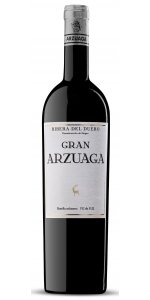
Arzuaga Gran Arzuaga Ribera del Duero is made from 92% Tinto Fino (Tempranillo) and 8% Cabernet Sauvignon.
Gran Arzuaga is a special cuvee coming from the selection of vineyards on the two banks of the Duero River. Tempranillo is planted in the Olivares de Duero area and Cabernet Sauvignon in La Planta estate that rich in limestone soils. Both areas bring richness and typical characters to the wine.
Tasting notes:
The wine has a bright cherry red color with violet rims. On the nose, it shows great aromatic complexity. In the first place, the primary aromas of red fruits such as blackberry predominate, herbaceous and floral touches that give way to tertiary aromas where balsamic and spicy aromas stand out. On the palate the wine is creamy and silky, with a fresh entry that quickly becomes meaty and unctuous as it goes through the mouth.
Perfect with Roast Lamb, Meat Stews, and even dark Chocolate.
Review:
"This wine's aromas of black cherry, caramel and violet pave the way for dark berry, clove, menthol, orange zest and rose-petal flavors. Polished tannins and a nice sense of brightness fill the mouth and recede into a finish marked with chocolate and orange zest. Drink through 2043. - Mike DeSimone"
- Wine Enthusiast (July 1st 2023), 97 pts & Cellar Selection
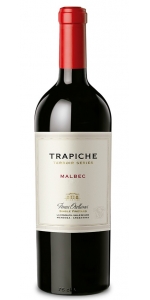
Trapiche Terroir Series Finca Orellana is made from 100 percent Malbec.
The history of Trapiche begins in 1883, in a small vineyard called El Trapiche, in the district of Godoy Cruz, Mendoza, where the grapes for the first fine wines were grown. With more than 130 years of experience, Trapiche has earned its place as a pioneering brand in the introduction of French vines, the production of varietal wines, the import of French oak barrels and the use of stainless steel tanks. True to its origins, today Trapiche is in a continuous quest for the latest best practices .Led by Daniel Pi, Director of Winemaking, Trapiche's winemaking team permanently strives to improve winemaking practices by exchanging experience and knowledge with winemakers from other wine producing countries such as France, the US, Australia and New Zealand.
With a deep garnet red color, this Malbec expresses aromas of red fruits such as cherries and currants, and intense balsamic notes with hints of fresh herbs. In the mouth, it is sweet and broad with a great concentration of fruit and soft, ripe tannins. It has a long, persistent and elegant finish.
Review:
El Peral may not be on the radar of many Argentine Malbec lovers. But if you take a look at Descorchados, you will realize that here we are fans of this area, a place of gentle hills, streams and trees. This vineyard was planted in 1946, and today it delivers deliciously liquefied fruit, with hints of cherries and cassis, but above all violets and blackberries in a long and deep body. Give it at least ten years in the bottle.
-Patricio Tapia - Descorchados 95 Points
-Tim Atkin 95 Points
Ossian Quintaluna Verdejo is made from 100% Verdejo
Quintaluna is a young wine that is made exclusively from Verdejo in the province of Segovia. 60% is very old grape: pre-phylloxera (ungrafted). 40% is made of very young grapes on trellises, grown certified organic, with low yields. The key to success for the Verdejo grape is held in the soil. Ideal soil has a high content of sand and pebbles of different sizes. Some have higher proportions of clay and others have significant proportions of clay and limestone. As the pebbles and sand allow for good drainage, the clay holds enough moisture to allow the vines to thrive.
The color is a straw yellow with greenish reflections. On the nose, you will find aromas of white flowers, stone fruit (peach), and citrus (lemon, mandarin). It also displays tropical fruit aromas. The palate is complex. Natural acidity is evident in the freshness and length on the palate. Almond and ripe fruit flavors are found in the mid-palate with fresh grass and citrus on the finish.
It pairs wells with all kinds of appetizers, entrees and salads.
Review:
"The 2020 Quintaluna is pure Verdejo from small plots on sandy soils in the province of Segovia, fermented in stainless steel with indigenous yeasts. They still use grapes from external suppliers but are working toward using 100% their own grapes (which they might achieve in 2023); therefore, the wine is not certified organic, because some of the vineyards from the growers are not certified. It has a balsamic nose reminiscent of bay leaf, dried yellow flowers, chamomile and pollen intermixed with pit fruit. It has a dry palate and a chalky texture, with balance and finesse, with moderate ripeness and 13.5% alcohol. 110,000 bottles. - Luis GUTIERREZ"
- Robert Parker's Wine Advocate (January 31st 2023), 92 pts
Ossian Capitel Verdejo is made from 100% Verdejo.
Ossian Capital represents a particular expression of very old Verdejo vines, taking its potential far finesse, elegance and longevity. It is made in selected years with a selection of extraordinary grapes.
Color: Old golden yellow color with greenish reflections.
Aromas: Surprisingly nuanced and profound.
Flavors: Fresh, full and very light.
Review:
"The 2020 Capitel is pure Verdejo from the oldest vines from the Peña Aguda vineyard in the village of Nieva on slate soils. This is the last vineyard to be bottled and has higher alcohol (14%) than the rest of the vineyards despite now harvesting earlier. The wine has a different aromatic profile but getting closer to the style of Ossian, less opulent than in the past, with more energy, quite fruit-driven with some exotic notes reminiscent of banana skin. The whole clusters were pressed and the juice put to ferment in barrel where the wine matured with the lees and, starting this year, without bâtonnage, because they feel the wines have enough volume and stirring the lees can bring more oxidation to the wine. 2,500 bottles produced. - Luis GUTIERREZ"
- Robert Parker's Wine Advocate (January 31st 2023), 93+ pts
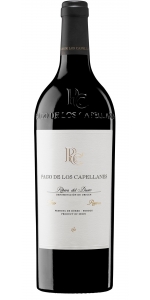
In 2007, production was just less than 5000 kg per hectare. This wine is prepared with Tempranillo 100% grapes from our vineyards.
The grapes are initially subjected to a six-day pre-fermentation cold maceration below 14ºC. They then undergo 30 days of alcoholic fermentation at a controlled temperature of 28ºC, after which the wine is removed from the tanks without pressing the grape skins. The malolactic fermentation is slow and relaxed at a temperature of 20 ºC for 28 days without the addition of bacteria.
The wine is aged for18 months in new French oak barrels and is decanted into new barrels every six months. At the end of this period, the wine is blended and bottled without undergoing any type of filtration, clarification or cold treatment.
Prepared with Tempranillo grapes (100%), this wine has a ruby red colour with very pure, intense garnet tones.
Its bouquet has fine complexity with tones of ripened fruit, especially cherries, blue berries and black currants, which are in harmony with tones of good wood, spices (vanilla and coconut) and a liquorice undertone.
In the mouth, this wine displays great balance, proving pleasing to the taste, sweet due to the maturity of its tannins and exuberant on account of its pleasant level of acidity.
Vineyard:
Pago de los Capellanes, Pedrosa de Duero.
Variety composition:
100% Tempranillo.
Type of soil:
Clayey and chalky.
Aging:
18 months in barrel and remainder on rack.
Type of oak:
100% French oak, medium toast.
Serving:
Uncork and decant one hour before serving at a temperature of 16-18 ºC.
The 2019 Ribera del Duero Reserva is also terrific, with gorgeous aromatics of black and blue fruits supported by Asian spices, lead pencils, cedarwood, and violets. It's beautifully textured, medium to full-bodied, has a concentrated, powerful mouthfeel, and ripe, integrated tannins.
-Jeb Dunnuck 95 Points
Young and present, this is an energetic and bold expression of violets, lavender, and cassis mixed with dark chocolate, cherry, plum, and graphite. A wine happy to be tucked away in the cellar, and it’s also expressing itself beautifully now.
Review:
Lovely fragrant blackberry and black cherry fruit, cassis, and rich tobacco spices with lovely fresh earth notes and a sweet kiss of new wood cedar. Incredibly concentrated dark berry fruit with fabulously angular tannins with smooth long beams with crisp edges. Purple florals, dried sagebrush, and chocolate shavings with lids of graphite and deep iron-like mineral character. And a finish of dark saturated fruit that goes and goes for days. There are purple floras too. Polished and bright, with vivacious acidity and freshness evident from the sip to the finish. Wow, this wine.
-Decanter 98-100 Points
Duckhorn Napa Valley Cabernet Sauvignon is made from 94% Cabernet Sauvignon, 5% Merlot, 1% Cabernet Franc .
True to their heritage of producing top-tier Cabernet Sauvignon, this wine showcases a seamless blend of elegance and strength. It begins with captivating aromas of dark red berries and cardamom, leading the way to a defined palate that showcases flavors of fig jam and boysenberry pie. Firm, dusty tannins provide a sturdy foundation, guiding you to a long, focused finish that denotes a harmonious blend of mountain and valley floor fruit.