
" We don't sell the wine without touching the vine "
| BUY MORE! SAVE MORE! | ||||||||||||||||||||
|
| Country: | Spain |
| Region: | Ribera del Duero |
| Winery: | Pago De Los Capellanes |
| Grape Type: | Tempranillo |
| Organic: | Yes |
| Vintage: | 2020 |
| Bottle Size: | 750 ml |
There are afternoons with indigo skies when we approach one of the oldest plots of the estate. Our stroll from the winery follows a line of cypress trees to the corner of a path. This angle gives its name to our most exceptional vineyard.
El Picón is the great symbol and the most profound reality. The sum of enigmas in a beautiful, pure fruit. The wine of silence and intimate joy, an eternal taste in which generations, labours and nature’s favors culminate.
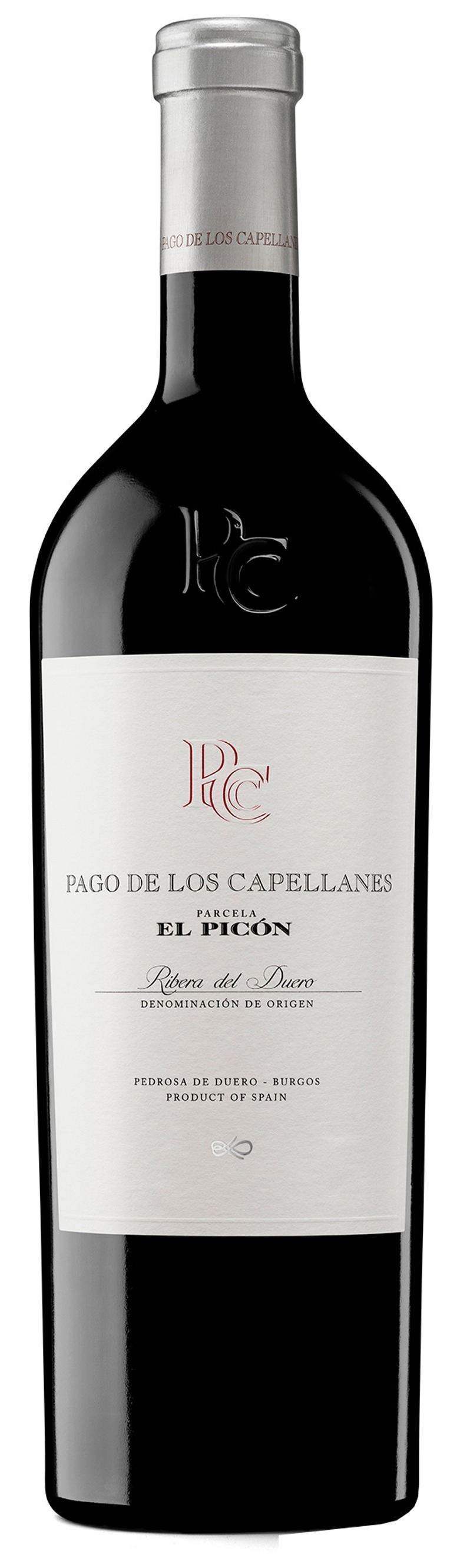
Grapes from the plot of El Picón, one of the oldest at the Pago de los Capellanes estate in Pedrosa de Duero.
22 months in 225-litre, extra-fine grain French oak barrels dried over 60 months.
Pago de los Capellanes Finca El Picón 2018 is a mature red wine with intense aromas of red and black fruit from the forest accompanied by deep balsamic notes and spicy touches provided by aging. In the mouth it is meaty, deep and very balanced. A medium to full-bodied wine with vibrant acidity and fine, velvety tannins. The finish is long and very persistent.
1.6 hectares of clay loam soil with surface gravel. Very poor fertility and very low vineyard yields.
Review:
-Antonio Galloni 93 Points
-Decanter World Wine Awards 97 Points
Pago De Los Capellanes Estate
Pago de los Capellanes is located barely a kilometre from the village of Pedrosa de Duero, nestled deep in the heart of the Ribera del Duero region of Spain.
In the 14th century, a chaplainry existed in the village of Pedrosa de Duero. The inhabitants of the village donated small parcels of land to the chaplains in appreciation for the religious duties that they performed in the area.
Over time, the chaplainry came to have a sizeable landholding.
Some 500 years later, in 1855, the properties of the church and clergy were given over to the city council as part of the Ecclesiastical Confiscations of Mendizábal. Despite this, the inhabitants of Pedrosa continued to call the area “Pago de los Capellanes” in honour of the chaplains.
The estate was home to vineyards. Vines cultivated for generations. Today, these have grown to become one of the most prestigious wineries in the Ribera del Duero region, the Rodero Villa Winery.
The fruit of their work: Pago de los Capellanes.
Pago De Los Capellanes Vineyards
The vineyards of Pago de los Capellanes only grow Tinto Fino or Tempranillo grapes, the variety indigenous to the Ribera del Duero region.
Although the winery was initially founded with just a few select vines, we have expanded year after year with plantings of our best clones.
The plants that show the best adaptation to the soil and climate are selected in the field for further plantings. This ensures ample variety of parcels in the vineyard.
Each plot receives personalised care matching its unique features, so that we can harvest the best possible fruit.

Pago de Carraovejas Ribera Del Duero is made from 90% Tempranillo, 6% Cabernet Sauvignon and 4% Merlot
The most honest interpretation of the Carraovejas Valley.
Body, structure and balance with a vibrant background. Delicacy, harmony and passion for detail are perceived in a wine that reflects the unique character of the valley in an outstanding way.
The 2022 vintage was characterized by cool winter months and extremely low rainfall, reaching limits that had not been observed for years. Due to the good rainfall of the previous year, the vines had good accumulated water reserves, which allowed the vineyard to have a good phenological cycle and normal development. Budding and flowering were perfectly developed in each of the varieties worked, and a homogeneous and balanced development of the plants was achieved. The summer was excessively hot, with several episodes of heat waves, which were mitigated by drip irrigation. Veraison, which was slower than in previous years, and ripening began in early August and the berries developed very uniformly. Harvest began on September 12 and ended on September 28.
Pago de Carraovejas 2022 is the most honest reflection of the valley to which it owes its name. An environment in which the vines climb the slopes to form a unique landscape. On the surface, its tertiary soil of limestone marl, clay and sandstone outcrops force the vines to self-regulate and give their best. Plots that converge in an orography marked by its unique mesoclimate. The vineyards are distributed from the middle zones to the moors that exceed 900 meters in altitude; from the gentle undulation that descends towards the stream, to the plots that exceed 30% slope. South- and north facing slopes, each with its own personality, create the profile of the Carraovejas Valley.
The grapes for Pago de Carraovejas 2022 were harvested by hand after an initial selection of bunches in the vineyard. Subsequently, in the winery, a double selection was made: first by cluster then by berry. Gravity must production allows maximum respect for the raw material. During the fermentation process, indigenous yeasts and lactic bacteria from our own estate were used. The wine was aged in French and American oak barrels for 12 months. The entire process was marked by precision and care in every detail. For greater protection, the wine contains sulfites. Finally it was clarified with natural egg white and bottle in spring of 2024.
Review:
"Newly bottled, the 2023 has years to go in bottle, 15 to 20 if not more. Tart, juicy red and black berry fruit drapes against rounded, expansive tannins and pronounced oak from its youthfulness. The full-bodied Tempranillo, Cabernet Sauvignon, and Merlot are destemmed and triple-selected from estate vines and then gravity flowed into stainless steel and oak vats. Large-format French and American oak come into play during the 12 months of aging. This is still a baby, but it’s already full of tremendous sophistication, delicacy, and seamless elegance. Hold it for 3-5 years and enjoy for another 25. - Virginie BOONE"-Jeb Dunnuck 95 Points

Domaine Jean Grivot Nuits-Saint-Georges Premier Cru Aux Boudots is made from 100 percent Pinot Noir.
Domaine Jean Grivot is among the great names in Burgundian wine. Étienne Grivot and his wife Marielle took over from Étienne’s father Jean Grivot in 1987. The vineyards are densely planted and farmed organically “sans certification” while the aim in the cellar is for balance and clear expression of terroir.
Jean Grivot’s 38.3 acres spread across 22 appellations with vineyards in the communes of Vosne-Romanée, Vougeot, Chambolle-Musigny, and Nuits-Saint-Georges. Besides the three grand crus, there are 8 premier crus including the much lauded Les Beaux Monts and Suchots in Vosne-Romanée. The grapes are completely de-stemmed and fermentation is spontaneous.
Nuits-Saint-Georges Aux Boudots 1er cru lies in the “Zone Vosnoise” or northern end of Nuits-Saint-Georges just below Les Damodes. It borders Vosne-Romanée Aux Malconsorts 1er just to its north. Its position slightly lower on the slope with deep soil full of pebbles results in a richer and fuller wine.
The grapes are destemmed and maceration à froid usually lasts just a day or two. The alcoholic fermentation is spontaneous and malolactic fermentation occurs in barrel. Depending on the vintage, the proportion of new oak is around 30-60% for the premier crus.
The wine shows aromas and flavors of red berries, herbs, and purple flowers. The palate is rich with ripe fruit and medium weight with bright acidity and fine tannins. Aging in 30-60% new Burgundian pièce brings notes of vanilla, toast, and baking spices.
Red Burgundy might be the world’s most flexible food wine. The wine’s high acidity, medium body, medium alcohol, and low tannins make it very food-friendly. Red Burgundy, with its earthy and sometimes gamey character, is a classic partner to roasted game birds, grilled duck breast, and dishes that feature mushrooms, black truffles, or are rich in umami.
Review:
-Jasper Morris MW 95 Points
-Neal Martin 95 Points
-Decanter 94 Points
-Burghound 92 Points

Pago de Carraovejas Cuesta Liebres is made from 100% Tinto Fino. The plot is located on a terraced hillside located at 900 m above sea level with slopes that range between inclines of 30% and 40%. Red cherry color with purple hues. Ripe fruit aromas, vanilla notes. Suave and unctuous in the mouth. A strong and noble character.
The harvest is carried out by hand using small crates and after passing through a refrigerated container it is transferred into tanks via gravity. The alcoholic and malolatic fermentation is carried out in small French “Haute Futaie” Oak casks with unique and original local yeasts and fermenting bacteria from the vineyard itself, to bring out the very best of the terroir, respecting the uniqueness of each and every vintage. Clarified with egg whites and bottled by gravity with natural cork stoppers.
Review:
-Jeb DUNNUCK 100 Points
-Wine Spectator 94 Points

Holocene The Black Square Cabernet Sauvignon is made from 100 percent Cabernet Sauvignon.
There is something ethereal about Cabernet Sauvignon grown in the cobblestone soils of the Walla Walla Valley. This region offers aromatic exuberance, elegance, finesse, a polished texture, layered complexity, and remarkable length. It is a place where one can craft a singular, stand-alone example of this varietal—unique not only in the United States but worldwide—while still echoing some of our favorite wines from Bordeaux.
In 2022, Winemaker Todd Alexander embarked on a new (yet familiar) journey that he had been patiently awaiting the perfect moment to explore. The Black Square is in its inaugural vintage, and this 2022 is 100% Cabernet Sauvignon grown in the Rocks District of Milton-Freewater, Oregon, which is part of the Walla Walla Valley.
The Black Square embodies elegance and grace framed by great structure, supple texture, and acidity to ensure longevity. It shows ample fruit with complex savory notes. This is not a heavy wine that is monolithic and dull—there are already plenty of those available. This wine offers a unique expression of Cabernet; it may be the most delicious wine Todd Alexander has ever crafted, venturing into new territory for Rocks District Cabernet Sauvignon.
Review:
-Jeb Dunnuck 99 Points
-Wine Enthusiast 98 Points
-Decanter 97 Points
-Decanter World Wine Awards 97 Points

Falletto di Bruno Giacosa Barolo is made from 100 percent Nebbiolo.
The 2020 growing season began with an early budbreak following a mild winter with regular rain and above-average temperatures. A steady, well-distributed water supply and temperatures at seasonal averages allowed the vines to move through every phenological phase evenly, and dry conditions kept fungal pressure (oidium and peronospora) firmly under control. The result is a vintage of beautifully balanced, mid-weight Barolo prized for grace, translucence and early appeal.
The fruit comes from the Falletto vineyard in the village of Serralunga d'Alba. In most vintages this is the most approachable of the Giacosa Barolos, showing the estate's sweetly fruited Nebbiolo in classic style.
Reviews:
The depth and beauty of this are so enticing and attractive that you want to drink the whole bottle. It's medium- to full-bodied with cherries, strawberries and white truffles. Juicy and precise, with a real presence and complexity as it opens. Best after 2027, but already gorgeous.
-James Suckling 97 Points

Clos Saint-Jean is a 41-hectare estate in Châteauneuf-du-Pape run by brothers Vincent and Pascal Maurel. Considered by many critics and wine-writers as the preeminent estate espousing the modern style of winemaking in Châteauneuf, this cellar is one of the oldest in the region, having been founded in 1900 by the greatgreat-grandfather of Vincent and Pascal, Edmund Tacussel. A short time after its founding and well before the AOP of Chateauneuf-du-Pape was created in 1923, Edmund began bottling estate wines in 1910.
The farming at Clos Saint-Jean is fully sustainable due to the warm and dry climate, which prevents the need for chemical inputs. Instead, Vincent and Pascal employ organic methods for pest control, mainly pheromones, to prevent pests from taking up residence in their vines, a process called amusingly enough in French, confusion sexuelle. The vines tended manually, and harvest is conducted in several passes entirely by hand.
Deus ex Machina is a literary and dramatic term for a miraculous intervention that interrupts a logical course of events in a plot or play. A suitable name for a cuvée that had it’s start in the torrid vintage of 2003 when Philippe Cambie and Vincent Maurel made the decision to harvest at the end of September, weeks after their neighbors. Deus ex Machina is a blend of old vine Grenache from La Crau, aged in tank with equally ancient Mourvedre from the sandy soils of BoisDauphin aged in demi-muid. Deus ex Machina is only made in the best vintages.
Review:
Lastly, the 2022 Châteauneuf Du Pape Deus-Ex Machina shows a similar profile to the Combes des Fous, yet it brings another level of tannins and concentration. Kirsch liqueur, white flowers, sandalwood, cured meats, and graphite notes all shine here, and it's full-bodied, has a deep, layered, powerful, yet weightless profile, lots of ripe tannins, and a blockbuster of a finish. This ripe, sexy, seamless, incredibly impressive beauty will compete with anything in the vintage. As usual, this cuvée is 60% Grenache and 40% Mourvedre, which is brought up in roughly 40% new demi-muids.
Review: Jeb Dunnuck 97 Points

There are afternoons with indigo skies when we approach one of the oldest plots of the estate. Our stroll from the winery follows a line of cypress trees to the corner of a path. This angle gives its name to our most exceptional vineyard.
El Picón is the great symbol and the most profound reality. The sum of enigmas in a beautiful, pure fruit. The wine of silence and intimate joy, an eternal taste in which generations, labours and nature’s favors culminate.
Grapes from the plot of El Picón, one of the oldest at the Pago de los Capellanes estate in Pedrosa de Duero.
22 months in 225-litre, extra-fine grain French oak barrels dried over 60 months.
Pago de los Capellanes Finca El Picón is a mature red wine with intense aromas of red and black fruit from the forest accompanied by deep balsamic notes and spicy touches provided by aging. In the mouth it is meaty, deep and very balanced. A medium to full-bodied wine with vibrant acidity and fine, velvety tannins. The finish is long and very persistent.
1.6 hectares of clay loam soil with surface gravel. Very poor fertility and very low vineyard yields.
Review:
-Ines Salpico 97 Points
Pago de los Capellanes El Picon is made from 100% Tempranillo.
There are afternoons with indigo skies when we approach one of the oldest plots of the estate. Our stroll from the winery follows a line of cypress trees to the corner of a path, and this angle gives its name to our most exceptional vineyard. El Picón is the great symbol and the most profound reality — the sum of enigmas in a beautiful, pure fruit.
The grapes come from the El Picón plot, one of the oldest at the Pago de los Capellanes estate in Pedrosa de Duero: 1.6 hectares of clay-loam soil with surface gravel, very poor fertility and very low yields. The wine is aged 22 months in 225-litre, extra-fine-grain French oak barrels dried over 60 months.
Review:
Built in a classical long-aging style, the 2021 Parcela El Picón is 100% Tempranillo from Ribera del Duero, aged 22 months in 225-liter extra-fine grain French oak barrels. Oak dominates the aromatic profile, emphasizing balsamic herbs such as bay leaf and menthol, vermouth-like tones and black fruit. Concentrated yet not tight on the palate, it combines flexible tannins, chalky texture and juicy freshness. Still very young, it promises greater nuance with time. Best approached no earlier than five years from now.
- Vinous (Joaquín Hidalgo) 96 Points
Really seductive, elegant nose with parma violet and almond blossom mingling among sage, cherry leaf and potpourri. Extremely well built, with a firm yet juicy core of plum, cherry, red apple and pomegranate. Cherry leaf poached in tea with smoky allure. Very persistent, with a long, beautiful tail of oregano, thyme, tarragon and saffron.
- Decanter 95 Points
Fresh blackberries with plums, a touch of graphite and fig undertones. The palate is focused, medium- to full-bodied, with fine-grained tannins and a clean thread of fruit to complement it. Drink or hold.
- James Suckling 94 Points

This is a single vineyard, from the parcel "El Nogal" located in the town of Mambrilla de Castrejon grown at 850 meters above sea level. (2750 feet).
A hillside of tinto fino vines red in the village of Mambrilla, a short distance from the winery. Uninterrupted views of the Duero, the wind stirring the airy branches of the large walnut tree that guards the vineyard. A place with a special gift. Its sandy, stony soils, a feeling of harmony and a special microclimate: everything seems to enhance the talent of its surroundings.
We have been vinifying the evocative grapes of this plot for the past few years to produce an endlessly charming wine. Overwhelming, powerful and exquisite. With a vitalising force.
Review:
-Tim Atkin 94 Points

Crianza is the essential wine. Balance and integrity. It displays the fine manners of experience and the grace of plethoric vine. Juicy black fruit on the palate inviting you to eat well and feel good.
But there is more. Crianza maintains an invisible pact with the landscape. An imperceptible force that brings us closer to the truth of the place. And instantly turns extreme climate vineyards into the most welcoming place in the world.
Prepared with Tempranillo grapes (100%), this wine has a very bright, intense maraschino cherry colour that fades to a Cardinal red rim.
It has a very marked aroma with a good balance of fruit and wood, where tones of vanilla intermingle with well-ripened fruit, black berries and wild fruits. There are also noticeable hints of leather and liquorice, resulting from the mingling of the French oak and the aromas inherent in this variety of grape.
In the mouth, the wine has a smooth texture but fills the palate with balanced flavours, including fine tannins, which help extend the life of the wine. The finish and aftertaste are both long and elegant.
Vineyard:
Pago de los Capellanes, Pedrosa de Duero.
Variety composition:
100% Tempranillo.
Type of soil:
Clayey and chalky.
Aging:
12 months in barrel and remainder on rack.
Type of oak:
100% French oak, medium toast.
Serving:
Uncork and decant one hour before serving at a temperature of 16-18 ºC.
Selected harvest with yields limited to 5000 kg per hectare. The harvest begins in early October, starting with the most mature parcels. Once the grapes are brought into the winery, the tanks are seeded with indigenous yeast (start culture) and the alcoholic fermentation begins. During the barrelling period, which lasts 30 days, the wine is crushed and pumped over daily, all the while controlling the density, temperature and evolution of the yeast. At the end of this fermentation, the tanks are emptied and the wine taken for malolactic fermentation.
The malolactic fermentation begins without the addition of bacteria. The temperature is held steady at 20ºC for period of 22 days, during which we monitor the levels of malic and lactic acids. When the malic acid content is less than 0.1 grams per litre, the wine is decanted to separate the lees and is transferred directly to the barrels without undergoing any type of filtration, clarification or cold treatment.
The wine is aged for twelve months in new and semi-new French oak barrels (no more than three years old). At the end of this period, it is taken to the tank for homogenisation, where it undergoes light filtration through cartridges (open pore) and is then bottled.
Review:
-Decanter 94 Points
-Jeb Dunnuck 92 Points
-Wine Spectator 91 Points
Crianza is the essential wine. Balance and integrity. It displays the fine manners of experience and the grace of plethoric vine. Juicy black fruit on the palate inviting you to eat well and feel good.
But there is more. Crianza maintains an invisible pact with the landscape. An imperceptible force that brings us closer to the truth of the place. And instantly turns extreme climate vineyards into the most welcoming place in the world.
Prepared with Tempranillo grapes (100%), this wine has a very bright, intense maraschino cherry colour that fades to a Cardinal red rim.
It has a very marked aroma with a good balance of fruit and wood, where tones of vanilla intermingle with well-ripened fruit, black berries and wild fruits. There are also noticeable hints of leather and liquorice, resulting from the mingling of the French oak and the aromas inherent in this variety of grape.
In the mouth, the wine has a smooth texture but fills the palate with balanced flavours, including fine tannins, which help extend the life of the wine. The finish and aftertaste are both long and elegant.
Vineyard:
Pago de los Capellanes, Pedrosa de Duero.
Variety composition:
100% Tempranillo.
Type of soil:
Clayey and chalky.
Aging:
12 months in barrel and remainder on rack.
Type of oak:
100% French oak, medium toast.
Serving:
Uncork and decant one hour before serving at a temperature of 16-18 ºC.
Selected harvest with yields limited to 5000 kg per hectare. The harvest begins in early October, starting with the most mature parcels. Once the grapes are brought into the winery, the tanks are seeded with indigenous yeast (start culture) and the alcoholic fermentation begins. During the barrelling period, which lasts 30 days, the wine is crushed and pumped over daily, all the while controlling the density, temperature and evolution of the yeast. At the end of this fermentation, the tanks are emptied and the wine taken for malolactic fermentation.
The malolactic fermentation begins without the addition of bacteria. The temperature is held steady at 20ºC for period of 22 days, during which we monitor the levels of malic and lactic acids. When the malic acid content is less than 0.1 grams per litre, the wine is decanted to separate the lees and is transferred directly to the barrels without undergoing any type of filtration, clarification or cold treatment.
The wine is aged for twelve months in new and semi-new French oak barrels (no more than three years old). At the end of this period, it is taken to the tank for homogenisation, where it undergoes light filtration through cartridges (open pore) and is then bottled.
Review:
-Tim Atkin 92 Points
Crianza is the essential wine. Balance and integrity. It displays the fine manners of experience and the grace of plethoric vine. Juicy black fruit on the palate inviting you to eat well and feel good.
But there is more. Crianza maintains an invisible pact with the landscape. An imperceptible force that brings us closer to the truth of the place. And instantly turns extreme climate vineyards into the most welcoming place in the world.
Prepared with Tempranillo grapes (100%), this wine has a very bright, intense maraschino cherry colour that fades to a Cardinal red rim.
It has a very marked aroma with a good balance of fruit and wood, where tones of vanilla intermingle with well-ripened fruit, black berries and wild fruits. There are also noticeable hints of leather and liquorice, resulting from the mingling of the French oak and the aromas inherent in this variety of grape.
In the mouth, the wine has a smooth texture but fills the palate with balanced flavours, including fine tannins, which help extend the life of the wine. The finish and aftertaste are both long and elegant.
Vineyard:
Pago de los Capellanes, Pedrosa de Duero.
Variety composition:
100% Tempranillo.
Type of soil:
Clayey and chalky.
Aging:
12 months in barrel and remainder on rack.
Type of oak:
100% French oak, medium toast.
Serving:
Uncork and decant one hour before serving at a temperature of 16-18 ºC.
Selected harvest with yields limited to 5000 kg per hectare. The harvest begins in early October, starting with the most mature parcels. Once the grapes are brought into the winery, the tanks are seeded with indigenous yeast (start culture) and the alcoholic fermentation begins. During the barrelling period, which lasts 30 days, the wine is crushed and pumped over daily, all the while controlling the density, temperature and evolution of the yeast. At the end of this fermentation, the tanks are emptied and the wine taken for malolactic fermentation.
The malolactic fermentation begins without the addition of bacteria. The temperature is held steady at 20ºC for period of 22 days, during which we monitor the levels of malic and lactic acids. When the malic acid content is less than 0.1 grams per litre, the wine is decanted to separate the lees and is transferred directly to the barrels without undergoing any type of filtration, clarification or cold treatment.
The wine is aged for twelve months in new and semi-new French oak barrels (no more than three years old). At the end of this period, it is taken to the tank for homogenisation, where it undergoes light filtration through cartridges (open pore) and is then bottled.
Review:
-James Suckling 91 Points

Klipsun Cabernet Sauvignon Red Mountain is made from 84% Cabernet Sauvignon, 4% Merlot, 4% Malbec and 8% Syrah.
The 2017 vintage started out with a cool, wet winter, with significantly above average snowfall in eastern Washington. Red Mountain had a 24% increase in rainfall in 2017 over the 10 year average. Going into spring, the cool trend continued. As a result, bud break at Klipsun was behind the historical average and significantly behind the most recent warm vintages of 2013 2016. Bloom was also slightly delayed. Because of the cool weather, set was lighter than usual which translated into significantly less fruit in 2017.
The early part of the summer saw average temperatures followed by above average temperatures in July and August. As a result, he at accumulation was a bit above average for the season, despite the cool start. And because of the smaller than normal yield, harvest began right on schedule, perhaps even a bit early for some of the whites. In the second half of September, when Klipsun traditionally harvests all the reds, the temperatures cooled considerably, which delayed ripening. This allowed for luxurious amounts of hang time without the threat of increased sugar accumulation, stretching harvest into the first week of October. A s a result, all fruit going into the 2017 Klipsun Cabernet Sauvignon could be picked at perfect sugars levels with great fruit maturity and flavors. Overall, the quality of t he 2017 harvest is as high as the 2016. However, the style is slightly different. The 2017 wine has a firmer structure, more spice & mocha in the nose and will take a few mo re years than the 2016 to reach a perfect balance between fruit and tannin.
Review:
The 2017 Cabernet Sauvignon Red Mountain is composed of 84% Cabernet Sauvignon, 4% Merlot, 4% Malbec and 8% Syrah, which immediately emanates with aromas of dark roasted espresso bean, toasted oak, dried tobacco and dusty black fruit tones of cassis, currant and blackberries covered in dark cocoa powder. Full-bodied, generous in complexity and still tight in the mouth, the wine unpacks layers of cedar and vanilla tones with dusty purple flowers and bitter dark chocolate across the mid-palate, giving way to fine-grained tannins that will loosen with time. As the wine sits on the palate, the 100% French oak regimen is on full display for all to see. The wine lingering long and continues to evolve in the mouth, ending with a drying finish that highlights the oak and terroir. It’s still a baby, and I would keep it in the cellar for another few years before popping the cork—this will effortlessly coast for more than a decade. The 2017 vintage marks the second release of this wine, with 6,300 bottles produced. It comes from its namesake vineyard, first planted in 1984 on Red Mountain. I’m keeping my eye on this producer. I’m impressed, and even though the oak may be a bit much at the moment, it's still delicious. - Wine Advocate 94+ Points
-Jeb Dunnuck 94 Points

Pago de los Capellanes Doroteo is made from 100% Tempranillo.
An intense, very attractive cherry-red. It shows clean, powerful aromas of very ripe black and red forest fruits (blackberry, cherry and blackcurrant) with balsamic nuances of black liquorice, and spicy notes of clove and cinnamon from the extra-fine-grain French oak. The palate is vibrant and very balanced — fresh, silky, long, intense and lively, with highly polished tannins and a real sensation of depth, like a pleasant end to a long journey. A versatile wine that pairs with all types of meat, fish and even rice.
Review:
Cedar, dark fruit, plums and tobacco. The palate is vibrant with polished tannins, medium- to full-bodied, with balanced fruit and a defined vibrant structure from the cool 2021 vintage. Drink or hold.
- James Suckling 93 Points



