
" We don't sell the wine without touching the vine "
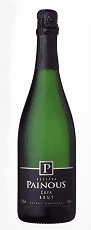
| BUY MORE! SAVE MORE! | ||||||||||||
|
| Country: | Spain |
| Region: | Cava |
| Winery: | Painous - Louis de Vernier |
| Grape Types: | Macabeo Parellada |
| Vintage: | NV |
| Bottle Size: | 750 ml |
Grape varieties: Parellada 40%, Macabeo 30% and Xarel·lo 30%.
Harvest: Occurs in 3 stages. Macabeo within the first fortnight of September, Xarello during the second fortnight in September and Parellada within the first fortnight of October.
First fermentation and vinification: This is a "Methode Traditionnelle" with
soft pressing of the grapes to obtain 60% of the must (flower must). It is decanted and fermented with controlled temperatures of 18ºC for 20 days until it fully develops the primary aromas of the grapes.
Secondary fermentation: takes place in the bottle for 40 days at a temperature of 16ºC and final ageing for 20 months. Residual sugar: 7 gr. per litre.
Color: Pale yellow with green tones. Shiny and clear.
Aromas: Powerful in the nose, clean. Ageing aromas.
Taste: Soft and well structured, long aftertaste and good balance of acidity and sugar contents.
Gastronomy: It should be served chilled between 5ºC and 7ºC. A flute type glass is recommended. Excellent with pasta, red and soft meats and white fish.Painous is unique in that it is a Cava-Joven style sparkling wine, meaning, the wine receives the minimum aging of 9 months. This allows crisp, fresh aromas and flavors to be expressed. It is delicious for aperitif.
Review:
"Golden straw color. Aromas and flavors of brown butter poached pear, marzipan, lemon and apple, and floating in the pool with the grill going with a round, crisp, finely carbonated, dry medium body and an interesting, medium-length finish manifesting notes of dried apples, apricot jam, blanched almonds, and jasmine rice with no oak flavor. Layers of flavor from fruit to earth dance on the tongue for a classic expression of sparkling wine from Catalonia."
- Beverage Testing Institute (November 2022), 91 pts - Gold Medal
The Louis de Vernier Painous Estate
It was at the turn of the century when the Masachs family started to cultivate grapes in their estate located in Vilafranca del Penedès, a wine area par excellence, where the growing of grapes had been already introduced in times of the Roman Empire. This family owned winery was founded in the 1930's. Today the third generation of Masachs (Painous is the maiden name of the current owners mother) run the operation. Currently, Masachs ranks fourth in production at 208,000 - 240,000 cases of Cava yearly. The export 15% and sell 85% in Spain. Mr. Josep Masachs Llorach, a man with strong convictions, great character and dedicated since his childhood to the growing of grapes, founded Cavas Masachs within the decade of the twenties producing cava in the best tradition of craftsmanship and with a limited production meant, basically, for his own consumption and to make it known to his closest friends. Later, his son, Mr. Josep Masachs Juvé, went on with his father´s job under the same policy of very limited production and craftsmanship combined with hard work with the aim to improve the quality of his cavas. In 1977 Josep and Joan Masachs start a new guideline and launch a new line of cava to the market based on the experience and know-how of their ancestors. Little by little, the excellent quality of the cavas made by these young producers is known both in the domestic and international market, thus rewarding their efforts and dedication. As a result of these achievements and the growth in the demand for their products, the production facilities used by their grand father become too small and outdated. This compels Masachs to set up new facilities in 1985 in the Montsarra estate, situated in the municipality of Torrelles de Foix, and provided with the ideal structure for the making of the best cavas. Nowadays, Cavas Masachs continue the production of cavas and wines in their Montsarra estate with the same enthusiasm in order to improve the quality initiated by its founders.
The Louis de Vernier Painous Vineyards
Cavas Masachs owns 43 hectares of grapes: Maccabeo, Xarel.lo, and Parellada, which they use for part of their production, about 30%.
The Catalan country of El Penedès, which breathes the Mediterranean air and spreads over the north-west towards the Montserrat mountain range that protects it from the north cold winds, is situated about 40 Km. south of Barcelona and is the cradle which holds the 42-hectare estate, in the centre of which the Masachs cellars are located.
An area which, thanks to the generosity of nature, is endowed with all the factors which favour wine-growing in the best of conditions. The characteristic of its Mediterranean location, combined with those of the soil and subsoil, an especially benign climate both in Winter and Summer and an average annual rainfall of 525 mm., make the Montsarra estate a true paradise for wine-growing. A privileged location which, year after year, allows Masachs to harvest its most prized fruit: its reputation and consideration as a great brand. The mild winters protect the vineyards in lethargy from the frost and the north cold winds, which can severally damage the grapes. The winter rains help a regular sprout of the grapes, later intensified thanks to the water retained in the subsoil. As the Summer approaches, the sunshine and the low humidity regulated by the mild winds from the Mediterranean help the balanced enrichment of sugar, acid and primary aromas, basic for the making of Cava

Collemattoni Brunello di Montalcino is made from 100 percent Sangiovese.
Color: brilliant red with burgundy reflects; Bouquet: penetrating with memories of wild black fruits, black cherry and noble wood; Taste: warm, dry and persistent
Coming from a parcel with 10-15 year old vines planted in sandy clay and marl soils.
Harvest is 100% destemmed with a soft pressing, fermentation in stainless steel tanks at controlled temperature of 28-30°C, pumping over for the first week of maceration followed by skin-contact maceration for 20-25 days with rack and return technique (delestage).
Malolactic fermentation completed.
Wine is slightly filtered before bottling.
Review:
This is a really balanced and pretty young Brunello with dark-cherry and citrus character on both the nose and palate. It’s medium-bodied with integrated tannins and a beautiful, succulent finish. Nicely done. Drinkable now, but better in two or three years.
-James Suckling 95 Points

The sage, autumnal older sister to the spring verve of the Juvenile, Old Vines encompasses everything we stand for at Turley. Teeming with dark berries, currants, baking spices, earth, and a sprinkle of petrichor on the nose. The palate is brooding yet supple, serious yet satisfying. Inherently embodies the depth, complexity, and grace that can only come from old vines.
Review:
As with the Juvenile bottling, the 2022 Zinfandel Old Vines punches above its weight in this vintage. The nose is considerably deeper, fuller and more polished, opening with aromas of crushed plums, wild berry preserves, tobacco leaves and similar autumnal accents to its younger sibling. The palate is light- to medium-bodied, carrying through the polished quality of the nose and melds it with a subtly dusty tannin structure and bright acidity. The finish is straightforward and easy to drink, offering generous layers of fruit, spice and floral notes.
- Robert Parker's Wine Advocate 92 Points
A gutsy little red, with intense yet zesty flavors of raspberry, cranberry, savory anise and black pepper that finish with briary tannins.
Wine Spectator 92 Points

Beliere Bugey-Cerdon is made from 95% Gamay, 5% Poulsard (a local grape from Jura).
Spontaneous fermentation. An altogether preferable scenario to spontaneous combustion, and A LOT more fun to drink. This pink, semi-dry bubbly was made by spontaneous fermentation, otherwise known as methode ancestrale. Grapes are picked by hand (not just any grapes, these are the local Poulsard and Gamay grown on mountainous slopes in the shadow of the Alps), and fermented in chilled vats just reaching 5 or 6 degrees alcohol. The young and light wine is then bottled, along with its active yeast and considerable unfermented sugars. Under pressure of the cork, the wine continues to ferment, gaining a few degrees of alcohol but retaining a nice amount of sweetness. The bubbles, of course, are another result of fermentation under pressure. This one is so delicious and fun to drink, with a distinctly, well, grapy aroma and a fruitiness that calls out for celebration and jubilation.
This is also wonderful served with chocolate cake!
8% ABV.
Produced from the "Ancestral method" (also used to produce Clairette de Die): Low temperature fermentation starting in the tank, light filtration that leaves active yeast in the wine, bottling of the wine with fermentation continuing in the bottle ("spontaneous fermentation in the bottle"), retaining some sugar (40 gr/liter at the end). Made from 95% Gamay, 5% Poulsard (a local grape from Jura).
Review:
"Amber color. Aromas and flavors of cranberry juice, rose petal, cherry and kiwi, and red apple with a round, bright, effervescent, fruity medium-to-full body and a delightful, medium-long finish that shows nuances of cherry, cranberry, beeswax, and rose water. Concentrated fruit flavors, creamy bubbles, and well balanced acidity will make this a splendid pairing with charcuterie." - Beverage Testing -Institute (November 2022), 92 pts - Gold Medal

SALE!
Rinaldi Joyful NV is made from 85 % Barbera, 10 % Cortese and 5 % Moscato
Straw yellow color, fruity with hints of apple and mint.
Joyful is a modern sparkling wine made using the method charmat process with the secondary fermentation made in a stainless steel tank.
Zone of production: Ricaldone’s territory on the hills called "Bricco Rioglio" and "Valmorana" and Celle.
Average altitude: 280 m above sea level, calcareous soil with tufa layers.
Training system: guyot with a cultivation density of about 3500 vines per hectare.
Vinification: manual harvest into crates, usually in September. Soft pressing. Settling in steel vats to have a natural clearing of musts. Further temperature and pressure controlled fermentation.
Joyful is great as an aperitif but also pairs very well with seafood.
Review:
"Golden yellow color. Aromas and flavors of hazelnut, cocoa, and vanilla, dried cherry multi grain bread, valencia orange, and over ripe melon with a satiny, bright, effervescent, dry light-to-medium body and a stimulating, medium-length finish with notes of fruit and nut multigrain biscuit with dried red fruits, toasted hazelnut, watermelon rind, and lime zest. Citrus forward and bright with a subtle hint of salinity makes this sparkling completely crushable yet sophisticated enough to bring to dinner."
- Beverage Testing Institute 93 pts - Gold Medal

Baron Aime Cremant de Bourgogne Brut is made from 40% Chardonnay, 30% Pinot Noir, 30% Aligote.
Light yellow with bright reflections. The nose is fresh and lemony with subtle floral aromas, apple and citrus fruits. The mouth is fresh, delicate, tight and precise with fine bubbles that stimulate the palate nicely.
A delicious aperitif and a great match with shellfish.
Review:
Golden straw color. Aromas and flavors of brioche, green and yellow apple, dried pineapple, and lemon oil with a supple, vibrant, finely carbonated, dry medium body and a smooth, engaging, medium-long finish displaying impressions of croissant with salted butter and tart pear jam, white tea, and grapefruit peel with no oak flavor. A lovely and racy apéritif that will pair splendidly with a cheese and bread course."
- Beverage Testing Institute 93 pts - GOLD MEDAL - BEST BUY

Terre dei Buth Frizzante Rose Special Cuvee NV is made from 90% Glera and 10% Raboso.
Fresh, fruity with hints of gooseberry and redcurrant.
On top of being "Certified Organic", this is also "Vegan Approved".
Glera and Raboso are blended before foaming process into what we call "Special Cuvée", for its outstanding drinkability and delicate scents. Glera, which is the variety used to make Prosecco, brings the liveliness of the most famous Italian sparkling wine to this cuvée, which reaches perfection thanks to Raboso, which is an indigenous red grape of the Venetian region, well-known for its hints of red berries and smooth taste.
The grapes are coming from vines planted on gravelly soils.
Average age of the vines is about 10 years old.
Grapes are machine-harvested, so that the grapes are pressed about 10 minutes after picking,allowing to preserve the freshness of the fruit, and avoiding micro-fermentation that would take place by leaving the grapes for too much time in the vineyard after picking.
Each grape variety is harvested and vinified individually.
After picking, grapes are soft-pressed, and the primary fermentation is completed in about 10 days. Then fermentation takes place for 5-6 months, where the cuvée reaches the appropriate level of acidity for foaming, which is performed in stainless steel tanks, thermo-conditioned, for about 20-25 days.
Pasta, pizza and summer salads.
Review:
medium-length finish displaying accents of peach gummi bear, edible flowers, dole fruit cup juice, and gooseberry. A more serious take on Glera with the body and richness to pair with diverse cuisines."
- Beverage Testing Institute 90 pts - Gold Medal - Best Buy

This 100% Chardonnay blend is made from Tête de Cuvée, or first pressing of the grapes, considered superior in quality, with a high percentage of reserve wines for extra complexity, depth and richness, and a low added dosage to preserve purity and freshness.

Alain de la Treille Symphonie Cremant de Loire Brut is made from 90% Chenin Blanc and 10% Orbois (also known as Arbois or Menu Pineau)
The wines of Alain de la Treille reflect their vineyard of origin and are produced following the estate's unique guidelines: a strict selection of terroirs and vines, elaboration according to the traditional method and long maturation “sur lattes” in order to obtain the purest and most elegant expression of the Loire terroirs.
Elegant pale yellow color. The nose is delicate and complex with an array of fruity aromas such as grapefruit and peach with a touch of brioche. The flavors are fresh with floral character and a fresh finish.
Ideal for the aperitif, with a nice seafood platter or simply your favorite dessert.
-150x300.jpg "Alexandre M Vouvray Brut Methode Traditionnelle NV")
Alexandre M Vouvray Brut Methode Traditionnelle is made from 100% Chenin Blanc.
Tasting: Nose lime tree flower and brioche.
Mouth: complex and very expressive, so fresh and balanced with a smooth touch in mouth, bubbles so small who just tease the tang, light and good length.
ZERO DOSAGE !
Aperitif, seafood, oysters, light hard sheeses, and just for fun
Baron Aime Cremant de Bourgogne Brut is made from 40% Chardonnay, 30% Pinot Noir, 30% Aligote.
Light yellow with bright reflections. The nose is fresh and lemony with subtle floral aromas, apple and citrus fruits. The mouth is fresh, delicate, tight and precise with fine bubbles that stimulate the palate nicely.
A delicious aperitif and a great match with shellfish.
Review:
Golden straw color. Aromas and flavors of brioche, green and yellow apple, dried pineapple, and lemon oil with a supple, vibrant, finely carbonated, dry medium body and a smooth, engaging, medium-long finish displaying impressions of croissant with salted butter and tart pear jam, white tea, and grapefruit peel with no oak flavor. A lovely and racy apéritif that will pair splendidly with a cheese and bread course."
- Beverage Testing Institute 93 pts - GOLD MEDAL - BEST BUY

Baron Aime Cremant de Bourgogne Brut Rose NV is made from 85% Pinot Noir & 15% Chardonnay.
Light pink color with coppery shades. The citrus notes blend subtly with aromas of strawberry, forming a fresh and delicate bouquet. The palate is lively, with notes of grapefruit and fresh bread. Together they form a rich, fresh and vibrant wine.
Review:
"Steely amber color. Aromas and flavors of strawberry, green apple, toasted oats, and creme fraiche with a satiny, lively, finely carbonated, dry light-to-medium body and a tingling, intricate, medium-length finish that presents overtones of slightly under ripe wild strawberries, apricot, warm bread dough, and lemon zest. Lively and bright for a perfect apéritif yet with just enough richness and body to carry you in seamlessly to the first course."
- Beverage Testing Institute (November 2022), 94 pts - GOLD MEDAL - BEST BUY

Boizel Grand Vintage Brut is made from 50% Chardonnay, 50% Pinot Noir.
BACKGROUND
In 1834 the Boizel House was established in Épernay, the heart of Champagne, by a family passionate about the wines of its region. Intimate knowledge of the Champagne region, passed on through the generations, and access to grapes from the finest cru sites, are the essential elements behind the Boizels’ elegant portfolio. Working with Chardonnay and Pinot Noir sourced only from Champagne’s most coveted Grands and Premiers Crus blended with the best crus of Pinot Meunier, Boizel’s intimate knowledge of each village and hillside coupled with longstanding grower relationships allows them the ability to select the finest quality grapes for their Champagnes.
TERROIR & VINTAGE NOTES
Pinot Noir and Chardonnay grapes for the production of the Grand Vintage wines are sourced from Grands and Premiers Cru vineyards within the villages of La Montagne de Reims (Pinot Noir) and the Côte des Blancs (Chardonnay). Pinot Meunier is sourced from the best sites within the Vallée de la Marne.
All wines are aged sur lie in Boizel’s historic chalk cellars beneath the Avenue de Champagne for a minimum of 3 years, climbing to 15 years and above for the best vintages.
WINEMAKING & AGEING
A unique expression of the vintage, the Grand Vintage is only produced in the best years. This cuvée is a blend of 50% Chardonnay from the Côte des Blancs (Mesnil sur Oger, Oger, Avize, Vertus) and 50% Pinot Noir from the Montagne de Reims (Mailly, Bisseuil, Chigny les Roses).
The wine was aged 8 months in stainless steel vats. Post second fermentation, the wine was aged for 8 years on its lees.
TASTING NOTES
Due to the long lees aging, almond, frangipane, candied orange and brioche aromas are rich and balanced. The palate is complex and mature, with the silky perlage supplying acidity and lift. Elegant pastry notes rounds out the finish.
Review:
Disgorged in October 2014, this smooth, now mature, wine has flavors of yeasty toastiness and a tight, mineral structure. Sliced apple and lemon zest still give freshness. Behind the fruit, crisp texture and a steely edge await. It is beautifully balanced, rich while dry and ready to drink. ROGER VOSS
-Wine Enthusiast 94 Points

Opus One is made from 78% cabernet sauvignon, 8% merlot, 7% petit verdot, 6% cabernet franc and 1% malbec .
The Opus One is remarkably elegant and bright offering sumptuous aromas of fresh red and blue fruit, baking spices and vanilla, and a delicate fragrance of spring florals. The initial bouquet is augmented by more nuanced notes of sage, rosemary, and black olive. Juicy flavors of black cherry, blackberry and cassis flood the palate and creamy, fine-grained tannins deliver a delightfully round structure. Harmonious and lively, the flavors linger to create an enduring finish with touches of dark chocolate and espresso.
Of the great European wine families, the Rothschilds are perhaps the best known. And Baron Philippe de Rothschild is perhaps the best known of this great family. At the age of 20, Baron Philippe took on the management of Château Mouton Rothschild from his father Baron Henri. Philippe’s vision changed the world of wine: he invented Château bottling, commissioned great artists to illustrate his wine labels – and, in partnership with Robert Mondavi in 1979, created Opus One.In the 1980s, after her father’s death, Baroness Philippine de Rothschild left a stage career that included the Comédie Française and the Renault-Barrault Theatre Company, bringing her own exquisite style and creativity to the design, construction, and operation of Opus One.Among great New World wine pioneers, Robert Mondavi is an international icon. Bringing a passion for excellence to everything he did, Robert Mondavi led a renaissance in California fine wine for over six decades. Among other accomplishments, he introduced temperature-controlled fermentation, French oak barrel aging, and high-density viticulture to a fledgling American wine industry. But life was not only wine for Robert Mondavi: he broadened the American cultural palate by marrying fine wine to food, music, and the arts. One of few Americans to have received the French medal of the Legion of Honor, Robert Mondavi showed extraordinary vision as co-founder of Opus One.
Review:
The purity of fruit is really something else here, with currants and fresh flowers, such as violets and roses. Flower stems as well. Fantastic length and structure to the wine, with tightness and focus. Wonderful fruit. Graceful. A blend of 78% cabernet sauvignon, 8% merlot, 7% petit verdot, 6% cabernet franc and 1% malbec. Try after 2028.
-James Suckling 99 Points

Cattail Creek Pinot Noir Sonoma Coast is made from 100 percent Pinot Noir.
The cool maritime influence of the Sonoma Coast appellation is on full display in this elegant Pinot Noir. Aromas of fresh cherry, raspberry, and violet give way to a silky, medium-bodied palate with layers of red fruit, subtle earthy notes, and gentle spice. The wine's bright natural acidity and fine-grained tannins create a beautifully balanced structure, making it a versatile companion at the table. Enjoy now or cellar for 3-5 years.



