
" We don't sell the wine without touching the vine "
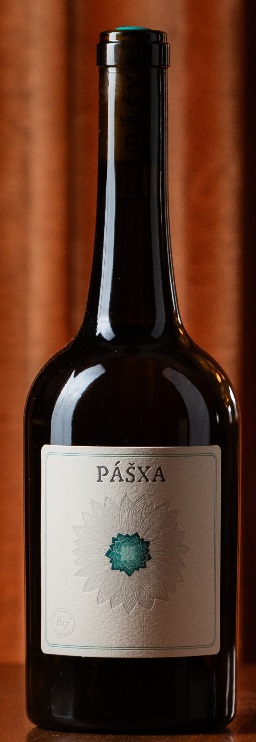
| Country: | United States |
| Region: | Washington |
| Winery: | Pasxa |
| Grape Types: | Roussanne Marsanne |
| Organic: | Yes |
| Vintage: | 2022 |
| Bottle Size: | 750 ml |
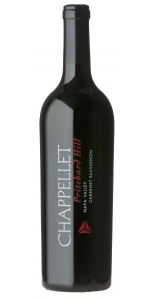
Chappellet Pritchard Hill Estate Vineyard Cabernet Sauvignon is made from 94% Cabernet Sauvignon & 6% Petit Verdot.
Chappellet's Pritchard Hill Cabernet Sauvignon has been, since the beginning of their winemaking career, the most sought after wine of their portfolio. The wine is truly a love letter to the winegrowing potential of Pritchard Hill. The wine was inspired by Bordeaux, and like most left bank Bordeaux, the wine is a blend of predominately Cabernet Sauvignon with remaining amounts other classic Bordeaux blend varieties. The vines grow upon rocky, mountainside vineyards. After harvest and fermentation, the wine was aged for 22 months in 100% new French oak barrels.
Review:
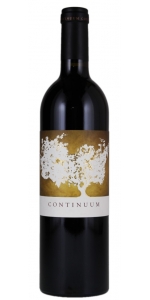
Continuum Red Blend 2022 is made from 45% Cabernet Sauvignon, 43% Cabernet Franc, 8% Petit Verdot, 4% Merlot.
2022 tells a story of subtle drama of the seasons. Aromatically effusive, 2022 Continuum is a seductive wine with an upright and regal core. Elegantly interwoven notes of black plum, black cherry, cacao, forest floor and tobacco leaf mingle with our sage mountain garrigue and volcanic minerality. Energetic and expressive, 2022 Continuum is a harmoniously integrated wine with structural complexity wrapped in a velvet robe.
WINEGROWING- Continuum is estate grown on our Sage Mountain Vineyard. It’s location, high on Pritchard Hill along the eastern ridge above Oakville, overlooks Napa Valley and the San Francisco Bay. The rocky, volcanic soils of the site focus the vine’s energy keeping yields low yielding fruit of depth and complexity. 38 acres of mature estate vineyard, planted in 1991 and 1996, with additional plantings in 2004, 2010, together comprise 38 distinct vineyard blocks. Cabernet Sauvignon, Cabernet Franc, Petit Verdot, and Merlot are grown from 1300 to 1600 feet in elevation, on western and southern facing aspects with slight northern and eastern slopes in places. This diversity of plantings on our volcanic soils are the essence of the complexity of Continuum.
PRODUCTION- Continuum is 100% estate grown, produced and bottled. All fruit is selectively hand-harvested at night. The fruit is then sorted before and after de-stemming, and gravity fed into French oak or concrete tanks. A threeday cold soak is followed by fermentation, receiving three to four pumpovers daily, and délestage two to three times in total during the most active period. The wine remains on skins in tank for 20 to 40 days. All lots are then drained, basket pressed, and transferred with lees for malolactic fermentation and aging. Continuum spent 22 months in barrel. 63 percent of French oak barrels were new and 35 percent were once used. A single concrete amphora was also used for aging. The wine clarified slowly and settled naturally in our cold barrel room, was racked sparingly and bottled without fining or filtration. Each vineyard lot was tasted and carefully considered many times to assemble the blend.
Review:
Perfumed aromas of subtle currants, roses, lavender and sage, following through to a medium body with super-fine tannins that caress the palate and leave it fresh and inspired.
- James Suckling 99 Points
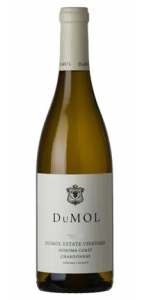
Our organically farmed high-density Estate parcel sits at the top of the ridge amongst the diverse coastal forest. Although the soil is sandy, there’s a vein of clay in the subsoil that holds winter rain and allows us to dry-farm the vines. The tight spacing keeps the clusters and soil shaded during the summer heat, which allows the fruit to retain all the nuance of the site. The wine produced here has a character - a signature - all to itself and cannot be replicated elsewhere; it's the antithesis of fruity, forward, easy-to-understand Californian Chardonnay. The grapes are small with thick skins, producing a high level of fruit extract, which translates to deep texture and structure in the wine itself. Concentration allied to freshness is the essence of this wine, and it ages beautifully in bottle for ten to twelve years.
The wine’s aromas and flavors are incredibly complex and diverse, akin to citrus oil, preserved lemon, sage, fennel and caraway. The wine is deep, powerful, and layered with oyster shell freshness cutting through the natural density. Lemongrass, spearmint, and grapefruit power the finish, which pulsates with intensity. You could decant this for an hour before serving to hasten its development. Drink between 2025 and 2030. Serve no cooler than 55º F.
Review:
From a site surrounded by dense forest on two sides, the 2022 Chardonnay DuMOL Estate Vineyard is a bright straw hue and has a more vibrant aromatic nose of fresh mint, bright lime, flint, crushed stones, and white peach. Medium to full-bodied, it boasts a remarkably firm structure with a bit of tannin, a chalky texture, and a savory slanting profile, and it’s long and persistent on the finish. It has an assertive but crystalline feel and a crunchy brightness. It demands a bit of time. Drink 2025-2035.
-Jeb Dunnuck 96 Points
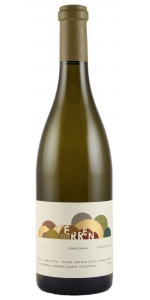
The Sonoma Coast bottling is a blend of barrels from Ferren's single vineyard offerings; Lancel Creek, Silver Eagle, Volpert, and Frei Road Vineyards. The wine is always somewhat more approachable early in its life as less new oak is used in the blend. Pure and translucent fruit is the hallmark of this cuvée. Citrus, quince, sea spray, and minerals are buoyed by refreshing acidity and a seamless finish.
12 months in barrel, then 6 months in stainless steel15% new, 85% neutral
Tronçais and Vosges forests
100% 4-year air dry stave wood
100% 228 liter François Frères French oak barrels
Review:
"Succulent and fleshy, with notes of apricot pastry, grilled peach and salted butterscotch, along with fresh acidity, plus details of lemon zest, tangerine and lime sorbet. Fresh ginger and white tea linger on the long, expressive finish alongside a touch of chewy dried mango. Drink now.—M.W.” - Wine Spectator (May 2025), 93 pts
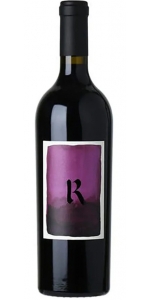
The Tempest was one of the first wines, and the first Proprietary Blend, we produced. At the time, it seemed almost uncanny that we were able to access three grape varietals at the same time from the same vineyard; it was blind luck or perhaps the proverbial “perfect storm.” The resulting wine reflected a fierce determination to brave the storm as well as a new desire to realize the possibilities of Merlot. The Tempest is still made with outstanding grapes, from vineyards such as Blair in Calistoga and cooler sites like Farella and Orchard. Predominantly Merlot with lesser amounts of Cabernet Sauvignon depending on vintage, The Tempest is a roiling cauldron of fresh red and blue fruit and silky tannins – a wine that shows what Merlot can be in the right hands, from the right vineyards.
Red fruit; silky tannins; more approachable in its youth
Review:
The 2022 The Tempest is a blend of 67% Merlot, 10% Cabernet Franc, and 23% Cabernet Sauvignon. Deep garnet-purple colored, it comes skipping out of the glass with bright, cheery notes of black raspberries, mulberries, and kirsch, leading to hints of lavender, wild sage, and aniseed. The medium to full-bodied palate delivers bright, crunchy fruit with firm, fine-grained tannins and great tension, finishing on a lingering peppery note. This was bottled in March 2024.
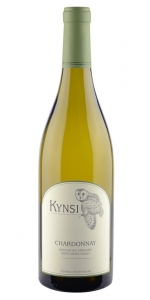
Kynsi Chardonnay Bien Nacido Vineyard is made from 100 percent Chardonnay.
A complex nose of white nectarine, marzipan, citrus peel and pineapple upside down cake with a full palate, offering nuanced flavors of Asian pear, lemon curd and Calimyrna fig.
The Bien Nacido Vineyard is located in the Santa Maria Valley on the South Central Coast of California, just east of Santa Maria. The topography of the valley features transverse ranges with an east/west orientation, opening up to the Pacific Ocean. The climate is strongly influenced by the ocean providing ideal temperate growing conditions for Chardonnay. Early spring warming, mild summer temperatures and late arriving cold fall temperatures provide a long growing season for the development of rich color along with concentrated and complex flavors.
Pasxa Rockgarden White blend is 50% Marsanne and 50% Roussanne.
This wine feels rich yet weightless, it’s texturally complex and aromatically thrilling. Roussanne brings a compelling stone fruit and floral aroma and gives the body of the wine structure. Marsanne adds an orange blossom character and a subtle waxiness to the finish.
Review:
“The 2023 ‘White Blend’ combines near equal parts Marsanne and Roussanne. This takes on awesome aromatics of apricot and green papaya with pie crust and cantaloupe notes. The palate is dense and viscous with serious nerve and marvelous stony undertones. Full-bodied and delicious, enjoy this heady Rhone-inspired wine now and over the next eight years. Drink 2025-2032”
– 96 points Owen Bargreen-WWB
The Walla Walla Valley is a very special place with a deep, rich, geological, cultural and agricultural history. It is a unique setting that has been recognized as possessing some of the greatest potential anywhere to grow a whole plethora of crops at a high degree of quality – from dryland wheat to vegetables of all kinds, to stone and pome fruits, to wine grapes.
One of the most special locations in the Valley, and the entire region in fact, is a very small geographical area within the Valley; an alluvial fan comprised of basalt cobblestones. In this place, nestled just to the west of the Blue Mountains in northern Oregon and south of the Washington state line, some of the most singular and unique expressions of wine anywhere in the world are grown. It is a place that has captured our attention, our imaginations, our senses and our motivations.
Thus, we have begun a very special endeavor to explore the terroir of this fascinating and unique place in the world through our own lens; to tell the story of this geology through top-notch grape-growing and winemaking, in our efforts to transmit the tale of this place, while also employing a commitment to sustainability, organic farming and low-impact winemaking.
When we set out to create PÁŠXA (pronounced “Pahk-sha”), we wanted to emphasize our commitment to sustainable farming and winemaking practices. We also wanted to give a nod to the history of our beautiful valley – a history that stretches back long before the land was settled by those who traveled west along the Oregon Trail. The indigenous people of the Walla Walla Valley had a name for this place that was Pášxapa or Place of the Sunflowers, as the valley was strewn with balsamroot sunflowers that grew wild here, and we wanted to pay homage to that heritage of these lands.
I feel this wine expresses the greatness of California and its hidden pockets where Cabernet can excel. The cold Pacific Ocean running the entire length of the state presents maritime influences – and with each small distance eastward the climate warms. Stony soils, south facing slopes and moderately warm conditions are the keys to producing dark, rich and good tasting Cabernet.
A small release from Caymus Vineyards, this wine is a California-appellation Cabernet Sauvignon – supple, dark and rich, bearing the signature hallmarks of Caymus. It is sourced from sites throughout the state which feature climatic conditions, soils and topography that are ideally suited to Cabernet. This project stems from excitement over California's diverse vineyard land, often in lesser-known areas, with the potential to produce exceptional Cabernet.
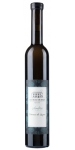
Brize Ambre Coteaux du Layon is made from 100% Chenin Blanc.
Coteaux du Layon is a prestigious sweet wine appellation in the Loire Valley, producing luscious dessert wines from late-harvested Chenin Blanc grapes. The 'Ambre' (Amber) cuvée takes its name from the beautiful amber-gold color that develops as the wine ages.
This sweet wine offers rich aromas of honey, apricot, candied fruits, and quince. On the palate, it is generous and well-balanced, with concentrated sweetness offset by bright acidity that keeps the wine fresh and elegant.
Pair with foie gras, blue cheese, fruit tarts, or enjoy as a dessert on its own.



