
" We don't sell the wine without touching the vine "
| Country: | United States |
| Regions: | Oregon Oregon (Willamette) |
| Winery: | Patton Valley Vineyard |
| Grape Type: | Pinot Noir |
| Vintage: | 2016 |
| Bottle Size: | 750 ml |

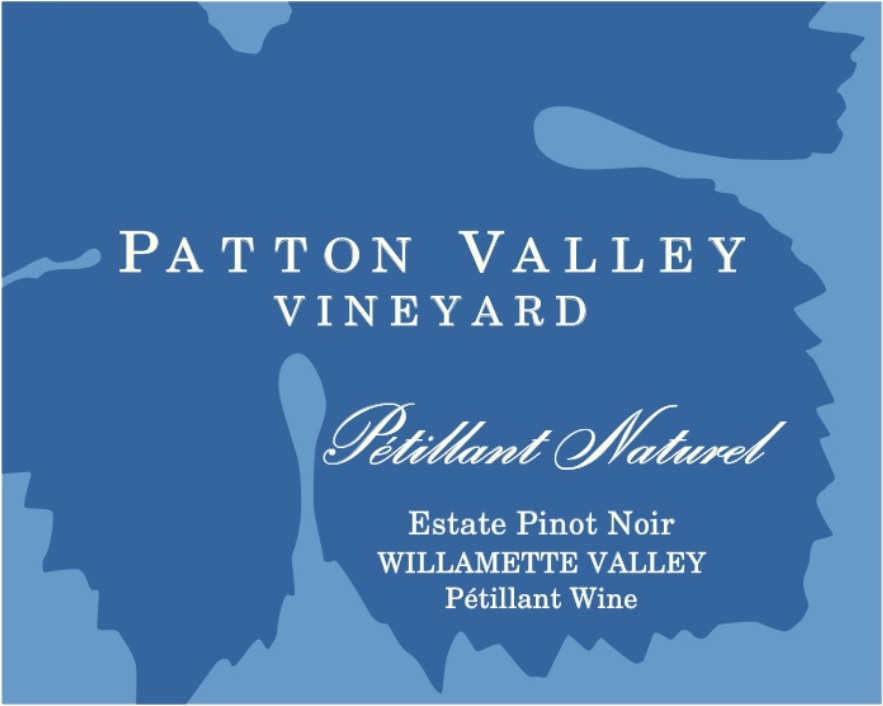
Patton Valley Petillant Naturel Riesling is made from 100 percent Riesling.
Good friends and good wine make this funny world go ‘round, right? Without those friends letting us buy some of their precious Riesling, we couldn’t make this delicious wine. Even if we did have to beg. A little.
We are using some really great vineyard sites to make this wine, and they are as diverse as they are excellent. Preserving the inherent “riesling-ness” is as important here as making this sparkle, so we’ve been extra careful to be clean, true, and simple with this. Native yeast ferments and minimal handling with fastidious cleanliness make this an absolute natural wonder. A small dosage of organic sugar kicks off the bottle ferment to make it sparkle.
This smells like apples, pears, apricot, and the sea. Not kidding. The palate is fizzy, fun, and fresh with an appley bite and pear - almond lushness. All angles and elbows, the lees and sediment widen the palate with pleasing breadth.
VINEYARDS:
25% Norris McKinley, Ribbon Ridge AVA - LIVE
50% Windridge, Chehalem Mountains AVA - LIVE
25% Wascher, Dundee Hills AVA - USDA Organic
pH: 3.04

The nose here is brilliantly red fruited, with layer upon layer of subtle spice, bright floral notes, herbs, and stone. Its not all poetry and pageantry, though, and the first impression of the wine was simply, “oh that’s goooood.” A fair assessment, and sometimes that it all one requires. Further tastes show fine tannin throughout, a juicy, vibrant mouthfeel that is very likeable, and deft, long-developing layers of fruit that reveal themselves severally.
Patton Valley's flagship wine, The Estate is the most comprehensive expression of their vineyard site, and the wine that truly defines their place in a given vintage.
Review:
"Glistening red. Vibrant red fruit, floral and spice scents show very good clarity that picks up subtle hints of succulent herbs and smoky minerals with air. Juicy and energetic in the mouth, the 2017 offers gently sweet cherry raspberry and rose pastille flavors and a touch of spicecake. Smooth, well-integrated tannins make a late appearance on a long, floral-tinged finish that shows no rough edges.
- Josh Raynolds" - Antonio Galloni's Vinous (August 2020), 92 pts

The contrast between our 10 Acre and West Block Pinot noirs exemplifies how slight geographical differences can have significant influence on the flavor profile of a wine. Planted in 1997, The 10 Acre block of Pinot noir is the oldest planting on the Patton Valley Estate Vineyard. Located on the east-facing slope of our vineyard, this area gets full sun in the cool morning hours, leading to a slower, more gradual ripening process and a wine that is typically elegant and lighter in body with prevailing red fruit character.
The 2011 10 Acre Pinot noir shows abundant aromatics, immediately woodsy but overwhelmingly fresh with lavender and red plum, sweet caramel and malt. The palate is lush and broad with sweet cherry, cigar box, and the faintest hint of peat smoke. Soft and very subtle tannins give this wine a solid backbone. A great acid profile makes this wine likely to offer boundless enjoyment when consumed in the short term, or if given some time to rest, the distinct potential of becoming something much more profound. Drink now or cellar 5-8 years.

Alexandre M Mon Mouss Petillant Naturel NV is made from 100% Chenin Blanc.
Mon Mouss is my nick name at school. Monmousseau = Mon Mouss.
Mousseux means bubbly ... Mon Mouss is also a play of word meaning MY BUBBLY.
The wine is a Pet'nat' produced using a Methode Ancestrale. Lime tree and litchi with apple and pear flavors.
Serve as Aperitif or with seafood, oysters, light hard cheeses, and just for fun, by itself.

description: This is a Pét-Nat Prosecco.
Pét-Nat is short for Pétillant Naturel (French for Naturally Sparkling).
It is the same vinification method as "Methode Ancestrale" used in Bugey Cerdon.
The wine is bottled before the end of the first alcoholic fermentation. Unlike Champagne method (in which the base wine completes his first fermentation in tank and only the secondary fermentation takes place in the bottle adding sugar and yeast also known as liqueur de tirage, which will requires the wine to be disgorged), Pét-Nat method doesn't imply the wine will be filtered or disgorged upon fermentation.
This gives Pét-Nat its light and fizzy mouthfeel, generally with a little sweetness and low alcohol. Most of the times, bottles are slightly cloudy from the presence of lees.
The wine is vibrant with complex lemon citrus, pear and verbena. It finishes dry with delicate yeasty notes.
Alcohol 11,0% vol.
Acidity 5,1 g/l.
Residual sugar 0 g/l
PH 3.3
Pressure 2.4 atm
Area of origin: Vittorio Veneto
Soil: calcareous
Varietal: 95% Glera (known as Prosecco)
Harvest: Manual, with selection of the grapes.
Vinification: Soft pressing with bladder membrane press, settling of must, fermentation at controlled temperature
Fermentation: Processed according to the traditional method of fermentation in yeast bottles. Is normal his natural “bottom” deposit in the bottle, which is why it is brilliant or velvety straw yellow if shaken; the bubble development is brilliant.
Extremely digestible wine, suitable for casual moments or tasting the typical sausages of the local tradition such as the sopressa. Great with pizza daisy.
Review:
"Showing orchard fruit aromas, this wine offers exuberant fruit with light lemon and herbal notes. It offers bright acidity and finishes complete dry. One of the best Pet-Nats we’ve had this year. Made of 95% Glera, this is a sparkling wine made the ancestrale method where the wine is bottled before the end of fermentation, resulting in dissolved carbon dioxide that lends a light sparkling quality to the wine."
- International Wine Review (Champagnes & Sparkling Wines for the Holidays: The Best of 2018), 90 pts

A very deep purple, red in color. This wine showcases Shiraz with its depth of Barossa Valley and the alluring, aromatic freshness of Eden Valley. Vibrant aromas of dark cherries, anise and red raspberry. A distinctive wine with richness and dark berry, fruit compote palate. Perfectly balanced, elegant and refined.
Enjoy with beef filet, roast beetroot and horseradish, or Korean fried cauliflower.
This blend of Barossa Valley (67%) and Eden Valley fruit hails from five parcels averaging 80 years old, the oldest planted in 1854. Intensely concentrated in hue and muscular flavour. Spicy and mineral to the nose and palate, with glimpses of violets. Its iodine and liquorice-edged black cherry and blueberry flavour is succulent, but still in the grip of the sinewy, charry oak, making for an imposing, slightly austere finish. A powerhouse.
Saturated ruby. Heady aromas of ripe dark berries, cherry liqueur, vanilla and incense, with smoky mineral and exotic spice accents building in the glass. Seamless in texture and deeply concentrated, offering palate-staining black and blue fruit, floral pastille and mocha flavors that turn sweeter with air. At once plush and lively, finishing extremely long and smoky, with repeating dark berry and floral notes and velvety tannins.
-Vinous 96 Points
The wine is, unsurprisingly, lively and brisk with fresh citrus, red fruit, and the snap of cool watermelon. Almost addictively compelling, a single sip is impossible. The wine pairing here is easy: anything and everything... or nothing but good times.
The crown cap holds in the fizz, and the wax finish helps us keep bottle variation to a minimum (looks cool, too).
This special bottling, done entirely by hand, should be opened and enjoyed cold, in one sitting, and with friends, as its charms are many but, alas, ephemeral.
We made a tiny little 66 cases of this special wine last year as a reckless, insouciant, and scientific experiment and, suffice to say, it was an unexpected hit. This year we’ve quadrupled our production so, you know, we hope you all like this one as much as the last. Our rosé is always a special thing to us, and when conjured up in this old, fun way, it takes on something altogether otherworldly.
Producing these wild, delicious, and unique wines always has inherent risks, but the payoff is well worth it. After halting primary fermentation, we brought the wine down to a very cool temperature and let it settle off of its primary lees. Adding 13g/l dosage of sugar and yeast to the wine in bottle provides the sparkle and lees-y feel as it gets turned into alcohol and CO2, and not disgorging makes it hazy, creating broader palate weight, pleasing textures, and balance throughout.
Vineyards: 100% Patton Valley Estate Vineyard, Gaston, OR
Harvest dates: August 29th-31st 2016
Dijon Clones: 113, 115, 667 and 777
pH: 3.30
The Patton Valley Vineyard Estate
Patton Valley Vineyard was founded in 1995 by Monte Pitt and Dave Chen, two former business school classmates. The estate is located in Washington County, just north of the town of Gaston. Jerry Murray joined the team as Cellar Master and Assistant Winemaker.
The Patton Valley Vineyard
Located in the northern reach of the Willamette Valley, the vineyard is sited on a hill with views of Patton Valley to the southwest and the Tualatin Valley to the east. This is a 72-acre parcel with the ideal combination of soil, exposure and elevation. The vineyard currently consists of 23 acres planted to a diverse selection of Pinot noir clones. Utilizing sustainable farming practices, coupled with intense hands-on viticulture and low-impact winemaking techniques, they produce wines that are true to the variety and to their particular site, striving for balanced wines with supple texture, richness and ripe fruit flavors.

Roland Champion Champagne Brut Rose Grand Cru NV is the blend of 33% Chardonnay, 33% Pinot Meunier and 33% Pinot Noir.
The Champagne rose shows an orange salmon color coming from the red wine base. The pinot meunier brings red fruit aromas of strawberry and raspberry with hints of spices. The palate is juicy and harmonious with good depth and minerality. A delicate balance between Chardonnay, Pinot Meunier and Pinot Noir.
It is a blend of 93% White juice (made from 33% Chardonnay, 33% Pinot Meunier and 33% Pinot Noir) and 7% Pinot Noir red wine. The grapes used to produce the Coteaux Champenois red wine are coming from their vineyards near the Village of Verneuil.

Xavier Vignon Chateauneuf-du-Pape Rouge Cuvee Anonyme 2019 is made from 60% Grenache, 15% Mourvedre, 10% Syrah and the rest is "field blend" with the following grapes : grenache, vaccarese, counoise, mourvèdre, terret noir and muscardin.
One of Xavier Vignon's first almost anonymous blends only in MAGNUMS !
The grapes come from "collection vines", where many grape varieties are planted together, making it difficult to identify the exact share of each variety: grenache, vaccarese, counoise, mourvèdre, terret noir and muscardin.
Partially destemmed and vinified in a mix of demi-muids and tank, it offers a beautifully pure, vibrant bouquet of black raspberries, white and black pepper, candied orange, and violets. Complex, layered, and nuanced, this beauty is medium to full-bodied, has a seamless texture, and a great finish. It has both elegance and richness, and will keep for 15+ years.
Pairing: Duck in sauce with olives. Ravioli with porcini mushrooms, cream of parsnip and bacon crisps. Partridge leg confit with olive oil.
Review:
"The flagship from Xavier is the 2019 Châteauneuf Du Pape Cuvee Anonyme, and in 2019 it’s 60% Grenache, 15% Mourvèdre, 10% Syrah, and the balance a mix of permitted varieties. Partially destemmed and brought up in a mix of demi-muids and tank, it offers a beautifully pure, vibrant bouquet of black raspberries, white and black pepper, candied orange, and violets. Complex, layered, and nuanced, this beauty is medium to full-bodied, has a seamless texture, and a great finish. It has both elegance and richness, and will keep for 15+ years."
- Jeb Dunnuck (October 2020), 95-97 pt

Filippino Elio Barbaresco San Cristoforo is made from 100% Nebbiolo.
From the hillsides of San Cristoforo hill in Neive, enjoying a south-southwest exposure. The fruity bouquet offers subtle notes of violet and raspberries, combining with spicy hints of cinnamon, cocoa and leather. Full, enchanting and elegant taste, intense with a good body.
The grapes are carefully selected and gently pressed. Fermentation and maceration in temperature-controlled stainless steel tanks. Aged in oak barrels for refinement.



