
" We don't sell the wine without touching the vine "
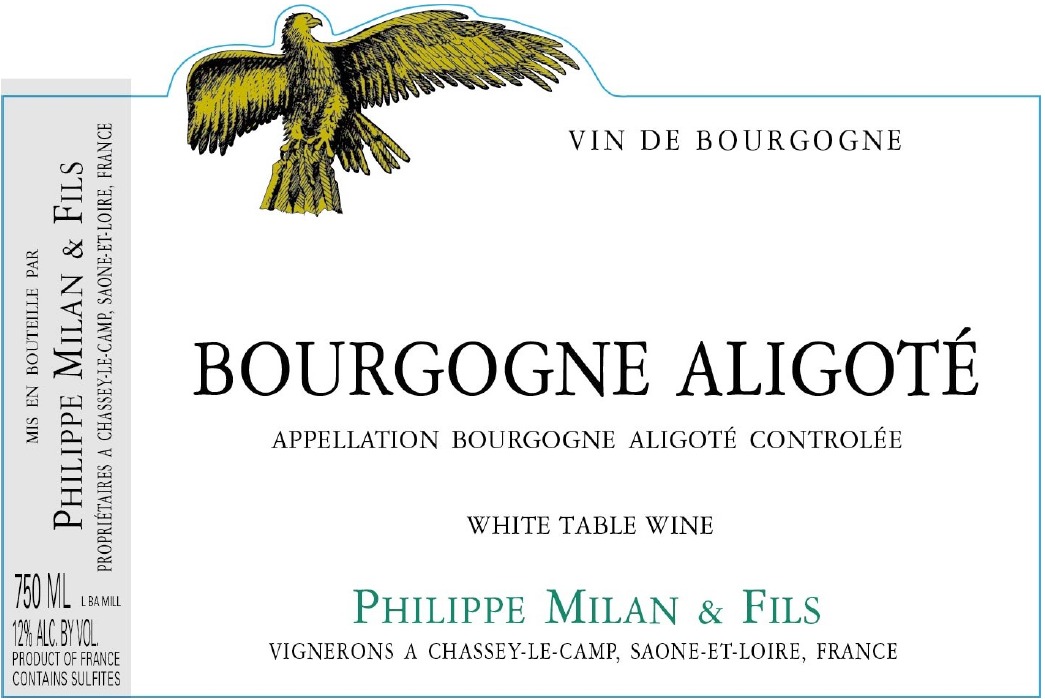
| Country: | France |
| Region: | Burgundy |
| Winery: | Philippe Milan et Fils |
| Grape Type: | Aligote |
| Vintage: | 2013 |
| Bottle Size: | 750 ml |
-150x300.jpg "Philippe Milan Bourgogne Blanc 2020")
Philippe Milan Bourgogne Blanc is made from 100% Chardonnay
The wine is produced from vines planted in the commune of Chassey le Camp at high elevation, which brings freshness to this Chardonnay. Ripe fruit is nicely balanced with delicate notes of oak and a hint of citrus on the finish. Full flavored and complex.
Philippe Milan Bourgogne Blanc is made from 100% Chardonnay
The wine is produced from vines planted in the commune of Chassey le Camp at high elevation, which brings freshness to this Chardonnay. Ripe fruit is nicely balanced with delicate notes of oak and a hint of citrus on the finish. Full flavored and complex.
-150x300.jpg "Philippe Milan Bourgogne Rouge Cote Chalonnaise 2023 (half bottle)")

The Mercurey "Les Vaux" from Domaine Philippe Milan is a red wine from the renowned Côte Chalonnaise appellation in Burgundy.
The Côte Chalonnaise, located between the Côte de Beaune and the Mâconnais, benefits from a continental climate punctuated by significant temperature variations, ideal for the ripening of Pinot Noir. The clay-limestone soils characteristic of this region impart structure, minerality, and elegance to the wine. Mercurey is one of the most renowned appellations of the Côte Chalonnaise, boasting a long winemaking history that has contributed to the fame of elegant Burgundy red wines.
The vintage is balanced and marked by a lovely freshness thanks to relatively mild weather, resulting in supple tannins and vibrant fruit.

Philippe Milan Pommard AOC is 100% Pinot Noir
This wine has been aged in Oak (25% new Oak)
This is a little more structured and the style goes more toward the
"vin de garde", or wines meant to age. This wine needs some food, or sometime
in the decanter right now. It is well structured and reminds me of a Volnay. As
a matter of fact, the parcel is located right next to Volnay. The finish is
long and still quite juicy with chewy tannins lingering.

“1752” is the name of the Damilano Barolo Cannubi Riserva, in honor of the year in which the historic bottle was first marked “Cannubi”. It still exists today perfectly conserved by the Manzone family in Bra, close to Barolo. The bottle is clearly marked as being of “1752” vintage, indicating that Cannubi historically precedes Barolo.
About the Vineyard:
The Cannubi Cru is in found within one of the 6 core zones which comprise a UNESCO heritage site in Italy. A mixture of Tortonian and Helvetian calcareous marl gives the grapes intense aromas of cherry, plum and tobacco, rose and violet in sequence. Its low potassium and high calcium/magnesium content offer the wine a fine and polished touch. The vineyard is located at about 270 m. a.s.l. and has a south-east sun exposure. Barolo Riserva Cannubi 1752 It is a small plot of about 2 hectares of Nebbiolo vines, currently between 30 and 50 years of age.
Tasting Notes:
Garnet ruby red in color, the bouquet is intense and balanced, with notes of violet, red fruit, cherry and plum, spices, liquorice, cocoa, leather and tobacco. Dry, robust, full-bodied, very persistent, rich and velvety
Food Pairing:
This wine is excellent with typical piedmontes pasta (tajarin, ravioli); perfect with red meat, braised and roast meat, game and absolutely ideal with all types of cheeses.
Review:
The purity of this wine is pretty phenomenal with blackberries, strawberries, fresh flowers and licorice. Hints of tar. It’s full-bodied, yet composed and compact with ultra fine tannins and a long, flavorful finish. Very structured. Try after 2024.
-James Suckling 97 Points
Bourgogne Aligoté AOC dates back from 1937. The Aligoté grape varietal has been known in Burgundy since the 17th century.
Great with grilled fish, oysters and goat cheese.
Bourgogne Aligoté is also the perfect companion for "Creme de Cassis" in order to make "Kir" (not to be confused with "Kir Royal", where Aligoté is replaced by Champagne).
Domaine Philippe Milan et Fils
Domaine Philippe Milan et Fils is located in the hamlet of Valotte in Chassey-Le-Camp (20 kms NW of Chalon-sur-Saone).
90% of the production is sold in France, while export only represent 10%.
The Estate was Founded in the 1950's by Karl's Grand Father.
Karl Milan is the owner and winemaker. He took over the family Estate and his first vintage was 2001.
The vineyards are located between Chalon-sur-Saône and Beaune.
They currently own 11 hectares (27 acres) and work in the following AOC:
• Bourgogne Aligoté - 2.6 hectares (100% sold to the Domestic market)
• Cote Chalonnaise
• Rully and Rully Premier Cru
• Mercurey and Mercurey Premier Cru
• Maranges Premier Cru
• Santenay Premier Cru
• Pommard
This Estate produce between 500 and 600 hectoliters (depending on the harvest) and the breakdown is as follow: 50% red wines and 50% white wines.

James Goddard was an ancestor of the Clarke family. Born in West Sussex, England in 1823, James spent his 74 years as a sailor, a whaler, a bullock driver, farmer, prospector, miner and hotel keeper. From an illiterate runaway living rough on the streets of London, he became a rich, successful and admired pillar of South Australian society.
James arrived in Adelaide in 1839 as a 16-year-old sailor. Twelve years later, his life changed forever with the news of gold findings. For the next 20 years, James roamed the country learning the geology that improved his chances of prospecting.
James Goddard Shiraz is made from 100 percent Shiraz.
In 1870, he tried his luck near his farm in the Barossa Valley and discovered the region’s first gold deposits, creating the prosperous Lady Alice Mine. The Lady Alice Mine, though it is no longer operational, was & still is the most successful gold mine in South Australia. From these roots, the Thorn-Clarke family has been connected to the region for the last 150 years.
James Goddard Shiraz is a blend Shiraz sourced from the Milton Park vineyard in the north of Eden Valley, and the St Kitts vineyard in the far northern area of the Barossa. Fruit is harvested in the cool of the night to maintain maximum flavour and freshness and it is fermented for 8 days. The ferment is pumped over twice daily to extract the colour and flavour from the fruit. Once finished fermentation the wine was then matured in a blend of French and American oak for a period of 10 to 12 months depending on the vintage.
Deep vibrant red with purple hues to the rim. The nose shows lifted plums, vibrant purple berries and a delicate spice note. The palate has concentrated satsuma plum, blackberry with lovely charry oak in the background. Long, juicy and even with plush fruit on the finish.
Review:
“Blended from two estate vineyards, St. Kitts and Milton Park, this shiraz offers its richness without any aggression or overt perfume. It’s just lush and delicious, a friendly embrace of firm tannins and purple-red fruit. The texture and flavor combine in a saturated meatiness, for Korean barbecue.”
- Wine & Spirits Magazine, 92 points

Rinaldi Barbera Appassimento is made from 100% Barbera.
Intense ruby red in color. Hints of ripe red fruits, cocoa, tobacco and sweet spices on the nose. Complex, velvety and persistent on the palate.
Hand harvested. The bunches are set on racks to dry for 6 weeks. 20 days of skin contact maceration to extract color without bringing too much tannins. No oak, only stainless steel aging to preserve the fruit character.



