
" We don't sell the wine without touching the vine "
.jpg)
| Country: | France |
| Region: | Burgundy |
| Winery: | Philippe Milan et Fils |
| Grape Type: | Pinot Noir |
| Vintage: | 2013 |
| Bottle Size: | 375 ml |
-150x300.jpg "Philippe Milan Bourgogne Rouge Cote Chalonnaise 2023 (half bottle)")
-150x300.jpg "Philippe Milan Bourgogne Blanc 2020")
Philippe Milan Bourgogne Blanc is made from 100% Chardonnay
The wine is produced from vines planted in the commune of Chassey le Camp at high elevation, which brings freshness to this Chardonnay. Ripe fruit is nicely balanced with delicate notes of oak and a hint of citrus on the finish. Full flavored and complex.
Philippe Milan Bourgogne Blanc is made from 100% Chardonnay
The wine is produced from vines planted in the commune of Chassey le Camp at high elevation, which brings freshness to this Chardonnay. Ripe fruit is nicely balanced with delicate notes of oak and a hint of citrus on the finish. Full flavored and complex.
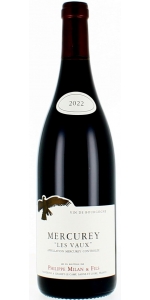
The Mercurey "Les Vaux" from Domaine Philippe Milan is a red wine from the renowned Côte Chalonnaise appellation in Burgundy.
The Côte Chalonnaise, located between the Côte de Beaune and the Mâconnais, benefits from a continental climate punctuated by significant temperature variations, ideal for the ripening of Pinot Noir. The clay-limestone soils characteristic of this region impart structure, minerality, and elegance to the wine. Mercurey is one of the most renowned appellations of the Côte Chalonnaise, boasting a long winemaking history that has contributed to the fame of elegant Burgundy red wines.
The vintage is balanced and marked by a lovely freshness thanks to relatively mild weather, resulting in supple tannins and vibrant fruit.
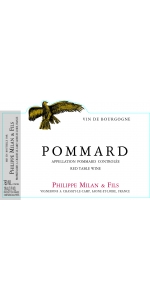
Philippe Milan Pommard AOC is 100% Pinot Noir
This wine has been aged in Oak (25% new Oak)
This is a little more structured and the style goes more toward the
"vin de garde", or wines meant to age. This wine needs some food, or sometime
in the decanter right now. It is well structured and reminds me of a Volnay. As
a matter of fact, the parcel is located right next to Volnay. The finish is
long and still quite juicy with chewy tannins lingering.
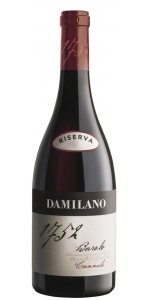
“1752” is the name of the Damilano Barolo Cannubi Riserva, in honor of the year in which the historic bottle was first marked “Cannubi”. It still exists today perfectly conserved by the Manzone family in Bra, close to Barolo. The bottle is clearly marked as being of “1752” vintage, indicating that Cannubi historically precedes Barolo.
About the Vineyard:
The Cannubi Cru is in found within one of the 6 core zones which comprise a UNESCO heritage site in Italy. A mixture of Tortonian and Helvetian calcareous marl gives the grapes intense aromas of cherry, plum and tobacco, rose and violet in sequence. Its low potassium and high calcium/magnesium content offer the wine a fine and polished touch. The vineyard is located at about 270 m. a.s.l. and has a south-east sun exposure. Barolo Riserva Cannubi 1752 It is a small plot of about 2 hectares of Nebbiolo vines, currently between 30 and 50 years of age.
Tasting Notes:
Garnet ruby red in color, the bouquet is intense and balanced, with notes of violet, red fruit, cherry and plum, spices, liquorice, cocoa, leather and tobacco. Dry, robust, full-bodied, very persistent, rich and velvety
Food Pairing:
This wine is excellent with typical piedmontes pasta (tajarin, ravioli); perfect with red meat, braised and roast meat, game and absolutely ideal with all types of cheeses.
Review:
The purity of this wine is pretty phenomenal with blackberries, strawberries, fresh flowers and licorice. Hints of tar. It’s full-bodied, yet composed and compact with ultra fine tannins and a long, flavorful finish. Very structured. Try after 2024.
-James Suckling 97 Points
Philippe Milan Bourgogne Blanc 2013 is made from 100% Chardonnay
Nice balanced fruit and oak - very nice flavorful
Ripe Chardonnay fruit with delicate notes of oak behind and a hint of citrus in the finish. Full flavored and complex.
Domaine Philippe Milan et Fils
Domaine Philippe Milan et Fils is located in the hamlet of Valotte in Chassey-Le-Camp (20 kms NW of Chalon-sur-Saone).
90% of the production is sold in France, while export only represent 10%.
The Estate was Founded in the 1950's by Karl's Grand Father.
Karl Milan is the owner and winemaker. He took over the family Estate and his first vintage was 2001.
The vineyards are located between Chalon-sur-Saône and Beaune.
They currently own 11 hectares (27 acres) and work in the following AOC:
• Bourgogne Aligoté - 2.6 hectares (100% sold to the Domestic market)
• Cote Chalonnaise
• Rully and Rully Premier Cru
• Mercurey and Mercurey Premier Cru
• Maranges Premier Cru
• Santenay Premier Cru
• Pommard
This Estate produce between 500 and 600 hectoliters (depending on the harvest) and the breakdown is as follow: 50% red wines and 50% white wines.
J. Lohr Hilltop Cabernet Sauvignon is made from 94% Cabernet Sauvignon, 3% Petit Verdot, 2% Malbec, 1% Cabernet Franc.
Displays blackberry and blueberry compote aromas garnished with crushed violet, cracked pepper, and black tea. Plump fruit on the palate with fine-grained tannins. Juicy layers of black and red currants lead to a bright finish accented by pastry notes from the 16 months aging in French cooperage.
-Tasting Panel 94 Points
-Wine Enthusiast 94 Points
-75x150.jpg "Maranones Garnacha Vinos de Madrid Sierra Gredos 2022")
“Marañones is so to say our signature vine. This is why the winery was named after this location.
It is part of the mountain at 800 m in altitude, oriented North. We find there the three types of granite of San Martin: the white granite, the brown and the pink. Each vineyard at Marañones has a different soil. Some are on a hill. Others are more towards the plains.
In this wine we wish to convey the Marañones area so representative of the whole winery. this is why we make this wine from the great Garnacha grape. We use a mix of vines since it is not a Parcela wine, which would be much more delicate and of more limited production.
The 100 percent Garnacha expresses itself fully, both in the nose and in the mouth, with flavours of blackthorn, a sensation of fleshy fruit retaining a slightly crispy texture. Then comes a full silkiness, with the granularity of these granite soils rich in quartz. That nugget of quartz is noticeable in the texture, length, fineness, elegance and the floral element of the wine.”
bright, ruby Grenache with wild herb, flower and crunchy red fruit flavors. Sharp tannins add structure to this full-bodied wine.



