
" We don't sell the wine without touching the vine "
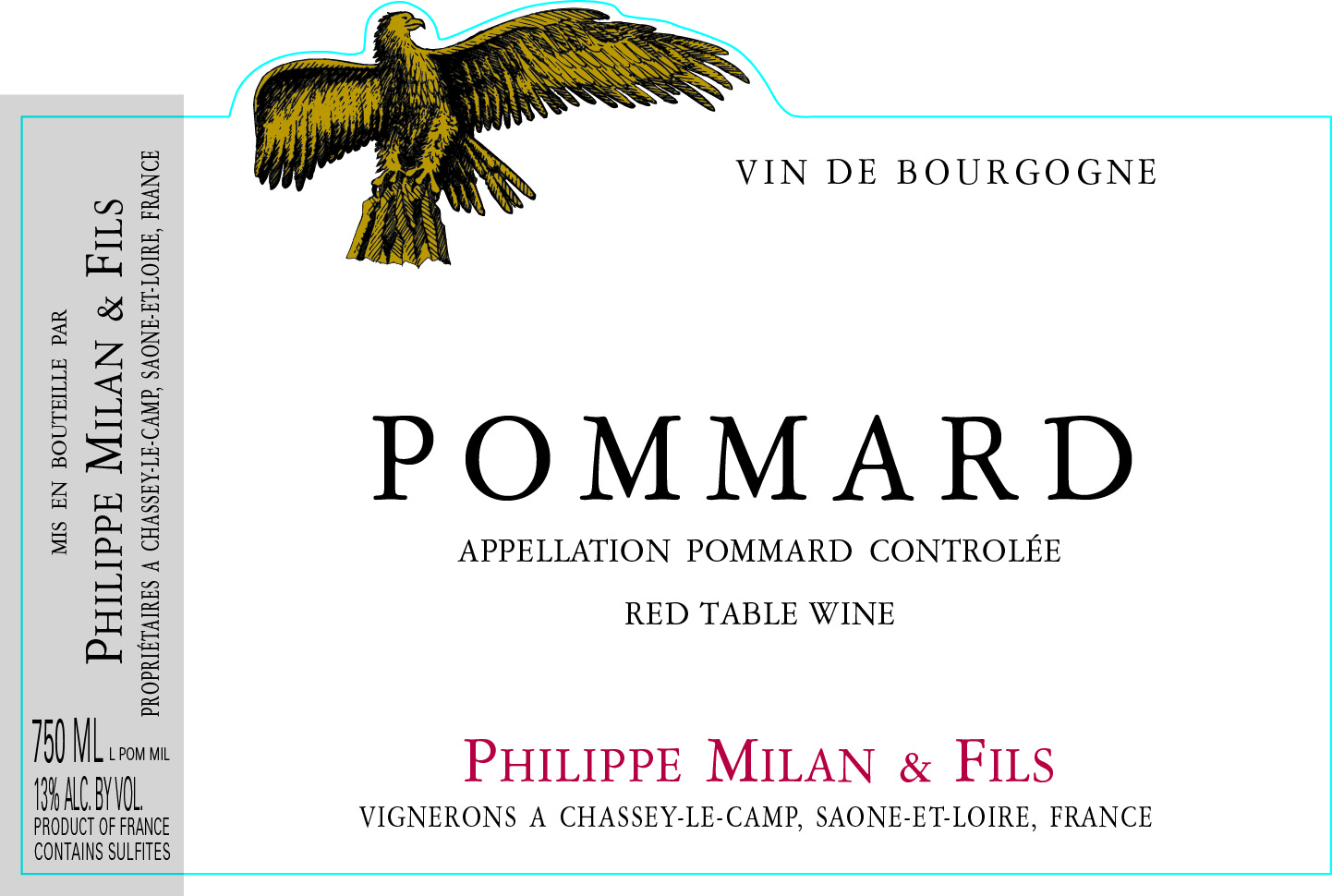
| Country: | France |
| Region: | Burgundy |
| Winery: | Philippe Milan et Fils |
| Grape Type: | Pinot Noir |
| Vintage: | 2016 |
| Bottle Size: | 750 ml |

Philippe Milan Pommard AOC is 100% Pinot Noir
This wine has been aged in Oak (25% new Oak)
This is a little more structured and the style goes more toward the
"vin de garde", or wines meant to age. This wine needs some food, or sometime
in the decanter right now. It is well structured and reminds me of a Volnay. As
a matter of fact, the parcel is located right next to Volnay. The finish is
long and still quite juicy with chewy tannins lingering.
-150x300.jpg "Philippe Milan Bourgogne Blanc 2020")
Philippe Milan Bourgogne Blanc is made from 100% Chardonnay
The wine is produced from vines planted in the commune of Chassey le Camp at high elevation, which brings freshness to this Chardonnay. Ripe fruit is nicely balanced with delicate notes of oak and a hint of citrus on the finish. Full flavored and complex.
Philippe Milan Bourgogne Blanc is made from 100% Chardonnay
The wine is produced from vines planted in the commune of Chassey le Camp at high elevation, which brings freshness to this Chardonnay. Ripe fruit is nicely balanced with delicate notes of oak and a hint of citrus on the finish. Full flavored and complex.
-150x300.jpg "Philippe Milan Bourgogne Rouge Cote Chalonnaise 2023 (half bottle)")

The Mercurey "Les Vaux" from Domaine Philippe Milan is a red wine from the renowned Côte Chalonnaise appellation in Burgundy.
The Côte Chalonnaise, located between the Côte de Beaune and the Mâconnais, benefits from a continental climate punctuated by significant temperature variations, ideal for the ripening of Pinot Noir. The clay-limestone soils characteristic of this region impart structure, minerality, and elegance to the wine. Mercurey is one of the most renowned appellations of the Côte Chalonnaise, boasting a long winemaking history that has contributed to the fame of elegant Burgundy red wines.
The vintage is balanced and marked by a lovely freshness thanks to relatively mild weather, resulting in supple tannins and vibrant fruit.

“1752” is the name of the Damilano Barolo Cannubi Riserva, in honor of the year in which the historic bottle was first marked “Cannubi”. It still exists today perfectly conserved by the Manzone family in Bra, close to Barolo. The bottle is clearly marked as being of “1752” vintage, indicating that Cannubi historically precedes Barolo.
About the Vineyard:
The Cannubi Cru is in found within one of the 6 core zones which comprise a UNESCO heritage site in Italy. A mixture of Tortonian and Helvetian calcareous marl gives the grapes intense aromas of cherry, plum and tobacco, rose and violet in sequence. Its low potassium and high calcium/magnesium content offer the wine a fine and polished touch. The vineyard is located at about 270 m. a.s.l. and has a south-east sun exposure. Barolo Riserva Cannubi 1752 It is a small plot of about 2 hectares of Nebbiolo vines, currently between 30 and 50 years of age.
Tasting Notes:
Garnet ruby red in color, the bouquet is intense and balanced, with notes of violet, red fruit, cherry and plum, spices, liquorice, cocoa, leather and tobacco. Dry, robust, full-bodied, very persistent, rich and velvety
Food Pairing:
This wine is excellent with typical piedmontes pasta (tajarin, ravioli); perfect with red meat, braised and roast meat, game and absolutely ideal with all types of cheeses.
Review:
Philippe Milan Pommard AOC is 100% Pinot Noir
This is a little more structured and the style goes more toward the "vin de garde". This wine needs some food, or some time in the decanter right now. It is well structured and reminds me of a Volnay. As a matter of fact, the parcel is located right next to Volnay. The finish is long and still quite juicy despite the tannins.
Domaine Philippe Milan et Fils
Domaine Philippe Milan et Fils is located in the hamlet of Valotte in Chassey-Le-Camp (20 kms NW of Chalon-sur-Saone).
90% of the production is sold in France, while export only represent 10%.
The Estate was Founded in the 1950's by Karl's Grand Father.
Karl Milan is the owner and winemaker. He took over the family Estate and his first vintage was 2001.
The vineyards are located between Chalon-sur-Saône and Beaune.
They currently own 11 hectares (27 acres) and work in the following AOC:
• Bourgogne Aligoté - 2.6 hectares (100% sold to the Domestic market)
• Cote Chalonnaise
• Rully and Rully Premier Cru
• Mercurey and Mercurey Premier Cru
• Maranges Premier Cru
• Santenay Premier Cru
• Pommard
This Estate produce between 500 and 600 hectoliters (depending on the harvest) and the breakdown is as follow: 50% red wines and 50% white wines.

Alejandro Bulgheroni Lithology Beckstoffer Las Piedras Cabernet Sauvignon is made from 100 percent Cabernet Sauvignon.
From a St. Helena vineyard planted by early Napa settler Edward Bale more than 150 years ago, and later serving as the estate vineyard for the area’s first winery built by Henry Pellet in 1860, the Las Piedras site always gives us our prettiest wine. When placed next to Dr. Crane and To-Kalon wines, the Las Piedras show a certain elegance, with a very graceful entry and finely detailed complexity. We produce it with at least 75% new French oak, so there is a floral, spicy, and vanilla accent to the intense red and black fruits, cassis, and black cherry liqueur. What distinguishes this bottling is the beautifully fine tannins, delicate texture, and stunning purity. (Less than 100 cases made.)
Fermentation 70% Oak, 24% Concrete, 6% Puncheon
Review:
"The 2018 Cabernet Sauvignon Lithology Beckstoffer Las Piedras Vineyard comes from a world-class site outside of St. Helena and is all Cabernet that spent 20 months in 80% new oak. It offers a touch more red fruit as well ample cassis, spring flowers, loamy earth, and spice-like aromas and flavors. It has a wonderful sense of minerality, ultra-fine tannins, a dense, layered texture, and incredibly purity of fruit. It’s another just about off the charts release from this estate."
- Jeb Dunnuck 98 Points

El Cortijillo Tempranillo La Mancha is made from 100% Tempranillo
Up front aromas of raspberry and cherry fruit, medium to light weight, Rhône wine in character, cherry fruit flavors, followed by bright acidity. Reminds of a mythical cross between a Pinot Noir and a Côtes-du-Rhône. Pleasant and fun, bistro red.
Made from 30 year old vine.
Delicious with Paella, hamburger or pasta. But also great with grilled vegetables. (bell pepper, eggplant, etc)



