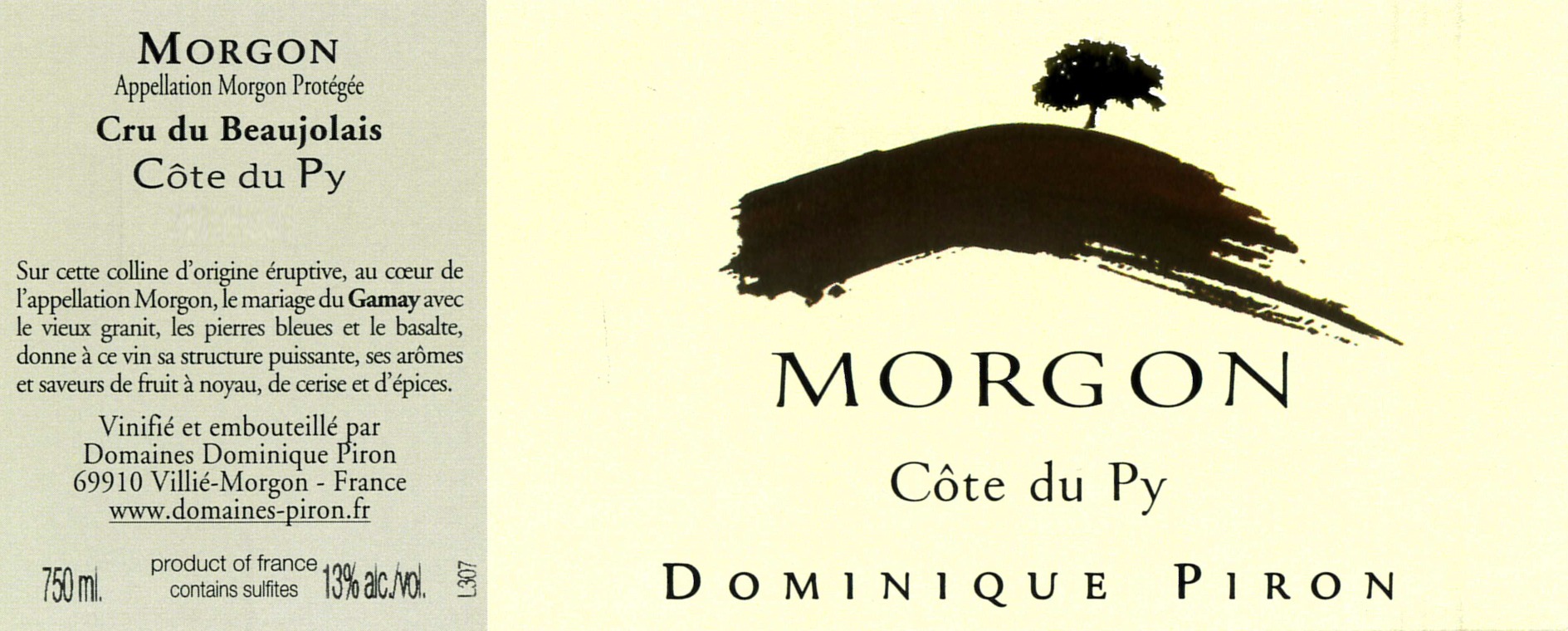
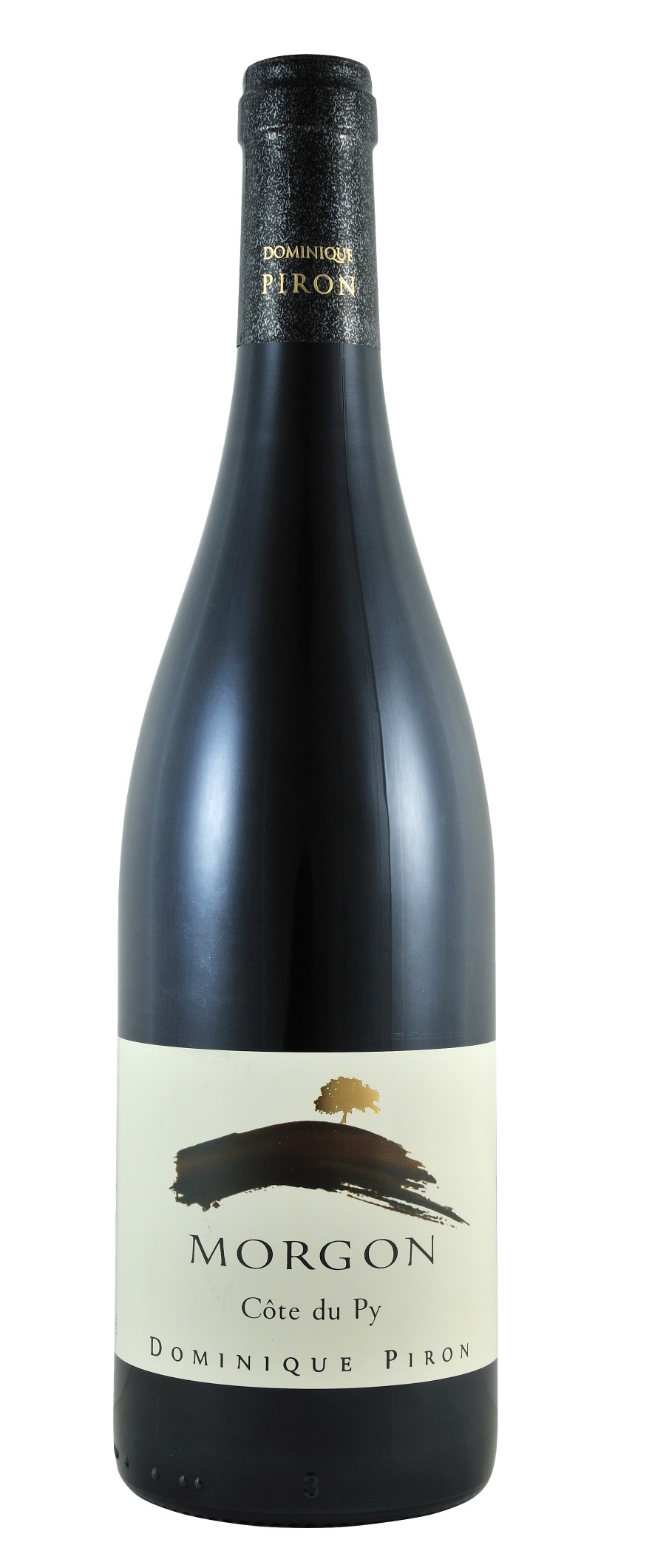
" We don't sell the wine without touching the vine "
| Country: | France |
| Region: | Beaujolais |
| Winery: | Dominique Piron |
| Grape Type: | Gamay |
| Vintage: | 2019 |
| Bottle Size: | 750 ml |
Dominique Piron Morgon Cote du Py is made from 100 percent Gamay.
The Morgon Cru is based in the heart of Northern Beaujolais. Côte du Py is the heart of Morgon, a little hill of very old blue stone rocks - the oldest soils of Beaujolais (around 430 millions years old), with a typical blue color.
Côte du Py has been known for centuries for being the best terroir of the village, producing long lived wines with strong structure and flavors.
Wines of the Côte du Py are very dark, profound and dense. Classic aromas of red berries, cherry, kirsh. Fruity, structured and mineral in the mouth with graphite flavors and spicy notes of black and white pepper. Wine can age up to 10 years.
Hand picked grapes are sorted manually and destemmed for 50 to 70%. Fermentation starts in concrete tanks and lasts for 18-25 days with remontages and pigeages. Then after pressurage starts the aging, for 2/3 in concrete tanks, and 1/3 in recent French oak barrels with batonages on fine lies only. After 10 month we do the blending, keeping only the best cuvees and best barrels, and do the bottling.
Pairs well with red meat like beef, duck and game (Hare, Dear, Wild Pork,…), cheses.
Dominique Piron Morgon Cote du Py is made from 100 percent Gamay.
The Morgon Cru is based in the heart of Northern Beaujolais. Côte du Py is the heart of Morgon, a little hill of very old blue stone rocks - the oldest soils of Beaujolais (around 430 millions years old), with a typical blue color.
Côte du Py has been known for centuries for being the best terroir of the village, producing long lived wines with strong structure and flavors.
Wines of the Côte du Py are very dark, profound and dense. Classic aromas of red berries, cherry, kirsh. Fruity, structured and mineral in the mouth with graphite flavors and spicy notes of black and white pepper. Wine can age up to 10 years.
Hand picked grapes are sorted manually and destemmed for 50 to 70%. Fermentation starts in concrete tanks and lasts for 18-25 days with remontages and pigeages. Then after pressurage starts the aging, for 2/3 in concrete tanks, and 1/3 in recent French oak barrels with batonages on fine lies only. After 10 month we do the blending, keeping only the best cuvees and best barrels, and do the bottling.
Pairs well with red meat like beef, duck and game (Hare, Dear, Wild Pork,…), cheses.
Dominique Piron Beaujolais Morgon Aux Pierres is made from 100% Gamay.
A mineral wine with fine tannins reflecting a perfume of concentrated dark fruits.
A small plot of vines of 85 ares acquired by Dominique Piron's grandfather in 1932. Registered on a place called "Aux Pierres", it is well named due to its blue stones, very typical of the Côte du Py. Year by year, the quality of the harvest has made it an emblematic plot of Piron's family. Elite of the domain, this special cuvee is produce only in case of exceptional vintage. It's a cuvee that can be kept for more than 10 years.
Review:
"This deep and powerful Morgon is just beginning to give its best. The spicy oak is there, but well integrated with the plum and blackberry fruit. Very good balance on the generous front palate, but at the back the richness makes a bold statement and the tannins just hold it in check. With a shade less ripeness this would be even more impressive. Drink or hold.
- James Suckling (April 2021), 92 pts
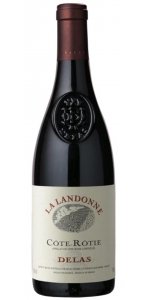
Delas Freres Cote Rotie La Landonne Rouge is made from 100 percent Syrah.
This very ancient region dates back to the Roman Era and is located on the right bank of the Rhône. It is said that during the Middle Ages, “The Seigneur de Maugiron” gave a hillside to each of his two daughters - one was brunette and the other fair - thus, were born the names of “Côte Brune” and “Côte Blonde.” Wines from the Côte Blonde tend to be more delicate and lighter in character than the fuller wines of the Côte Brune. Together, they make a wine of style and substance. This cuvée is a vineyard plot selection. The grapes come exclusively from a plot within the named slope of “La Landonne.”
This cuvée‘s first vintage was 1997. The wine is only made in the very best years. Its highly limited production never exceeds 2,500 bottles per year.
The steep, terraced hillsides along the river produce wines that are among the "biggest" reds of France. The Delas Côte-Rôtie is primarily Syrah with an addition of up to 10 to 20% of Viognier grapes in the crop. The soils of the northern part of the Côte Brune vineyard consists of extremely steep, terraced slopes of ferruginous mica schists which are covered with schist sand (arzel). The Côte Blonde has a varied geology with gneiss and granite predominating at the most southern side of the appellation. The area has dry, hot summers with regular rainfalls during other seasons. The grapes for the “La Landonne” cuvée are picked by hand at maximum maturity. Fermentation takes place in traditional open-topped concrete tanks, following three days of pre-fermentation cold maceration. Before fermentation, the maceration process continues under controlled temperatures of 82°F to 86°F. Daily cap pushing down and pumping over are carried out for about 10 days with total vatting time of up to 20 days. The wine is aged for 14 to 16 months in new or one year old oak casks. The barrels are topped up regularly.
Food Pairing: This wine pairs wonderfully with fine meats, roasted beef, water games, truffles and spicy stews. The bottle should be opened 1 to 3 hours before drinking. This wine needs at least 3 years cellaring before it can open up its complexity. In such case it is strongly recommended to decant before serving.
Tasting Notes: The wine‘s deep color is underscored by plummy hues. A complex nose shows deep, fruity aromas with hints of licorice and roasted coffee. Endowed with a dense and silky tannic structure, this is a full, fleshy wine that provides an ample and generous palate. Its lasting finish speaks of considerable ageing potential.
Reviews:
This is dark and still a bit reticent, with a cast iron cloak around the core of dark currant, plum and blackberry paste flavors, showing lots of sweet bay leaf, anise and singed apple wood notes in the background. There's serious grip through the finish. For the cellar.
-Wine Spectator 96 Points
Very open, spicy and fresh on the nose, you could almost open this now. Struck flint notes assist in teasing out notes of leaf tea, tobacco, rosemary and rose. Very full-bodied, generous but powerful on the palate, tense and mineral. Mouthcoating ripe, sweet tannin and robust amounts of sweet baking spices, along with more tobacco and black fruit on the palate. Has depth, length, power and impressive balance despite the high alcohol. Drink from now into 2022, or from 2031 to 2040. Lieu-dit La Landonne, from the Brune side (mica schist bedrock). Matured in new and one-year-old barrels for 14 months.
-Decanter 96 Points
The 2019 Côte Rôtie La Landonne comes from one of the greatest sites for Syrah in the world, the La Landonne lieu-dit located close to the center of the appellation, on the Côte Brune side. It reveals a deeper purple hue (it's slightly more opaque than the Seigneur de Maugiron) and offers a brilliant nose of ripe cassis, black raspberries, scorched earth, smoked herbs, and seared meat. Full-bodied and powerful on the palate, this is a deep, spicy, concentrated Côte Rôtie with a plush, layered mouthfeel, sweet tannins, beautiful balance, and a great, great finish. This puppy brings the fruit, opulence, and texture of the vintage yet still has a classic Côte Rôtie character.
-Jeb Dunnuck 96 Points
Fresh aromatic layers of mint sit atop crushed red cherries and wild strawberries, with light clove and thyme on the nose. The palate is rich and enticing with black cherries, plums, rhubarb, pomegranate seeds, black olives and freshly picked rosemary leaves. Tremendous texture, structure, and refreshing acidity carry this wine to a robust finish of orange zest and black tea leaves. Maisons Marques & Domaines USA.
- Wine Enthusiast 96 Points
This very ancient region dates back to the Roman Era and is located on the right bank of the Rhône. It is said that during the Middle Ages, “The Seigneur de Maugiron” gave a hillside to each of his two daughters - one was brunette and the other fair - thus, were born the names of “Côte Brune” and “Côte Blonde.” Wines from the Côte Blonde tend to be more delicate and lighter in character than the fuller wines of the Côte Brune. Together, they make a wine of style and substance. This cuvée is a vineyard plot selection. The grapes come exclusively from a plot within the named slope of “La Landonne.”
This cuvée‘s first vintage was 1997. The wine is only made in the very best years. Its highly limited production never exceeds 2,500 bottles per year.
The steep, terraced hillsides along the river produce wines that are among the "biggest" reds of France. The Delas Côte-Rôtie is primarily Syrah with an addition of up to 10 to 20% of Viognier grapes in the crop. The soils of the northern part of the Côte Brune vineyard consists of extremely steep, terraced slopes of ferruginous mica schists which are covered with schist sand (arzel). The Côte Blonde has a varied geology with gneiss and granite predominating at the most southern side of the appellation. The area has dry, hot summers with regular rainfalls during other seasons. The grapes for the “La Landonne” cuvée are picked by hand at maximum maturity. Fermentation takes place in traditional open-topped concrete tanks, following three days of pre-fermentation cold maceration. Before fermentation, the maceration process continues under controlled temperatures of 82°F to 86°F. Daily cap pushing down and pumping over are carried out for about 10 days with total vatting time of up to 20 days. The wine is aged for 14 to 16 months in new or one year old oak casks. The barrels are topped up regularly.
Tasting Notes
The wine‘s deep color is underscored by plummy hues. A complex nose shows deep, fruity aromas with hints of licorice and roasted coffee. Endowed with a dense and silky tannic structure, this is a full, fleshy wine that provides an ample and generous palate. Its lasting finish speaks of considerable ageing potential.
Food Pairing
This wine pairs wonderfully with fine meats, roasted beef, water games, truffles and spicy stews. The bottle should be opened 1 to 3 hours before drinking. This wine needs at least 3 years cellaring before it can open up its complexity. In such case it is strongly recommended to decant before serving.
Xavier Vignon Cotes du Rhone Rouge Vieilles Vignes is made from 70% Grenache, 15% Mourvèdre and 15% Syrah
Grenaches are almost hundred years old, Mourvèdres more than 60 years old and Syrahs are 45 years old in average.
There's a spicy, green peppercorn edge to the Cotes du Rhone Vieilles Vignes. It's medium to full-bodied, with svelte, supple tannins and plenty of plummy fruit that exhibits more savory notes and spice on the long finish.
Review:
"The deep black-cherry and ripe-blackberry fruit, plus the full, soft body push this to the edge of sweetness on the palate. However, the gentle dry tannins at the velvety finish just keep it on track. A style that now seems a bit dated, but plenty of wine drinkers love this. Drink now."
- James Suckling (March 2022), 90 pts
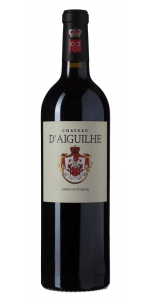
This wine reveals a complex and elegant bouquet that combines ripe fruit, leather and a fine woodiness. Round and warm on the attack, the palate is supported by solid tannins and a pleasant freshness in this harmonious and well textured wine.
The Merlot bring fruity notes and minerality from the clay-limestone terroir, enhanced by the incredibly expressive and spicy Cabernet Franc.
Review:
"A terrific effort from this large and immaculately maintained property on the clay-limestone slopes of the Côtes de Castillon, the 2019 d'Aiguilhe exhibits aromas of cherries and cassis mingled with notions of burning embers, licorice and warm spices. Medium to full-bodied, layered and concentrated, with lively acids, powdery tannins and a mineral finish, it's intelligently matured in tank and large-format oak as well as small barriques. - William Kelley"
- Robert Parker's Wine Advocate (April 2022), 92 pts
"The 2019 d'Aiguilhe has a really lovely bouquet of ample black cherry, mulberry and light floral scents, very pure and delineated. The palate is medium-bodied with cedar-infused red fruit. While not as exuberant as the aromatics, this is nicely detailed and quite poised on the finish. No, I still cannot pronounce its name, but this Castillon Côtes de Bordeaux is well worth seeking out. - Neal Martin"
- Antonio Galloni's Vinous (February 2022), 92 pts
Dominique Piron Morgon Cote du Py is made from 100 percent Gamay.
The Morgon Cru is based in the heart of Northern Beaujolais. Côte du Py is the heart of Morgon, a little hill of very old blue stone rocks - the oldest soils of Beaujolais (around 430 millions years old), with a typical blue color.
Côte du Py has been known for centuries for being the best terroir of the village, producing long lived wines with strong structure and flavors.
VINTAGE 2016
The first half of the year was complicated : cool spring, ice storm. But a perfect second half : warm and dry. Late harvests without any rain produced beautiful grapes. A fruity, elegant and greedy vintage.
Wines of the Côte du Py are very dark, profound and dense. Classic aromas of red berries, cherry, kirsh. Fruity, structured and mineral in the mouth with graphite flavors and spicy notes of black and white pepper. Wine can age up to 10 years.
Hand picked grapes are sorted manually and destemmed for 50 to 70%. Fermentation starts in concrete tanks and lasts for 18-25 days with remontages and pigeages. Then after pressurage starts the aging, for 2/3 in concrete tanks, and 1/3 in recent French oak barrels with batonages on fine lies only. After 10 month we do the blending, keeping only the best cuvees and best barrels, and do the bottling.
Pairs well with red meat like beef, duck and game (Hare, Dear, Wild Pork,…), cheses.
Review:
"Still young, but showing its full potential, this is a tight, dark and structured wine. It has ripeness, a firm set of underlying tannins and concentration. Drink this wine from 2023. - ROGER VOSS"
- Wine Enthusiast (April 2022), 95 pts
The oldest known ancestor of Dominique Piron, Etienne Bailly, was born around 1590 in Morgon, under the reign of King Henry III, in full wars of religion. 3 centuries of family Bailly and Piron followed one another, producing and selling wine from Gamay to Morgon.
Today, a new story is being written. With know-how, roots and terroirs, Dominique Piron has created a Domain among the leaders of the region.
At Maison Piron, there is no "recipe", but a multitude of possibilities and combinations, depending on the knowledge of the terroirs, the appellation, and the purpose. Grapes of quality that are ripe and representative of their soil, a severe sorting if necessary, a partial destemming depending on the maturity of the stalks, some "pigeages" and pumping over, lengths of fermentation depending on terroirs, appellations, and vintages. Few technical interventions. The major idea is "permanent adaptation to the elements". Piron wines are traditional. They express the soil from which they come from. It is a compromise between the search for the best tannins and the preservation of finesse, elegance and purity. A moderate maturation in barrels brings roundness without being overwhelming.
Starting with the Romans, wine growing has developed since the 3rd century. Dominique Piron’s oldest known ancestor was born in Morgon in 1590. Since then, there have been 14 generations of wine growers in the family. Morgon and Moulin à Vent wines have long been renowned among France’s finest wines.
Dominique Piron
1590 Oldest known ancestor Etienne Bailly, winemaker in Morgon
1950 Born in Côte du Py ; 14th generation in Morgon
1968 University of Dijon
1971 First vintage
1988 First grapes bought in Beaujolais
2003 Chenas with Lameloise
2016 President of the Interbeaujolais Bureau
Julien Revillon
1973 Born in Beaujolais
1997 Master of Wine Trade in Dijon
1998-2004 Burgundy, Bordeaux, Champagne
2005 Colombo in Rhône Valley
2013 Domaines Piron, Beaujolais
In a vineyard with difficult terrain− 30% steep slopes and a virtual patchwork of parcels, Dominique Piron is engaged in sustainable winegrowing. On winegrowing land filled with old broken-down granite and schist, the watchwords are natural balance and biodiversity.
For vinification, their goal is to create terroir wines, wines of character, that remain fruity, subtle and elegant.
Gamay is the heart and soul of Beaujolais crus.
A cross between the Pinot Noir and Gouais Blanc varieties, Gamay was originally imported from Croatia by the Huns in the 4th century. Gamay is a delicate variety and it is either excellent or nothing at all. At any rate, Gamay is a quite remarkable variety because it can either be enjoyed young for its fruitiness and elegance, or allowed to age, developing the structure and mineral qualities so appreciated by connoisseurs.
Morgon, the image of Dominique Piron.
Morgon wines are solid but never hard. They are racy and elegant. They always have a slight hint of black cherry (some would say kirsch, as the wine ages), and bright spicy notes. With their great structure, Morgon wines keep very well. Morgon, a sure value.
Eight other appellations, including Brouilly, Regnié, Fleurie, Chénas, Moulin à Vent, Saint Amour, Beaujolais rouge, rosé and white with the Chardonnay variety.
Domaines Piron, the specialist in Morgon.
A leading Beaujolais enterprise.
An international reputation with wines sold in 30 countries worldwide.
Paul Hobbs Edward James Estate Chardonnay Russian River Valley is made from 100 percent Chardonnay.
This small five-acre estate named after Paul's great-grandfather, Edward James, rewards us with a chardonnay that is pale straw in color with inviting aromas of lemon zest, red apple skin, gardenia, and honeysuckle. A creamy mouthfeel on the palate evolves into poached pear, ginger spice, and brioche that come together with a crunchy acidity and lively finish.
Review:
The 2022 Chardonnay Edward James Estate was named after Paul’s grandparents on his father’s side and originates in a vineyard planted entirely to Hyde Wente clone of Chardonnay. It was raised in French oak for 18 months on the lees. In the glass, it’s highly expressive and layered with aromas of toasted spice, incense, honeysuckle, quince, and preserved citrus. Medium to full-bodied, it has a fantastic, long, supple texture with a linear, crystalline feel, great, evenly fresh acidity, and a salty, mouthwatering finish. This is my favorite of the white wines at this tasting. Drink 2025-2037.
-Jeb Dunnuck 97 Points
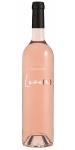
This dry rosé has a beautiful light color. Its displays aromas of red fruits with a nice, refreshing and clean finish. There is also a touch of minerality.
Love(R) Coteaux d'Aix en Provence Rosé is delicious with BBQ, lasagnas, grilled fish as well as a fresh Mediterranean salad.