
" We don't sell the wine without touching the vine "
I am a new customer.
By creating an account at Timeless Wines you will be able to shop faster, be up to date on an orders status, and keep track of the orders you have previously made.

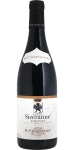
M. Chapoutier Hermitage Monier de la Sizeranne is made from 100 percent Shiraz.
In Hermitage, Syrah achieves its noblest expression and La Sizeranne has become a benchmark wine for the region. M. Chapoutier's roots in the Rhône date back to 1808, when the family first settled in Tain l'Hermitage. The family purchased a winery owned by Comte Monier de la Sizeranne and over time, acquired a number of excellent vineyards, including some of the oldest in France. M. Chapoutier was the first winery to put Braille on a wine label in 1996. Maurice Monier de la Sizeranne was the owner of the plot of the Hermitage, la Sizeranne until he was blinded in a hunting accident and unable to take care of the land, choosing instead to sell to the Chapoutier family. Following his accident, Maurice became the inventor of the first version of abbreviated Braille, and Chapoutier included Braille on the wine labels as a tribute to his work.
he grapes ferment in open wooden vats after total destemming. Two daily treadings ensure a good extraction of the tannins. Maturation takes place in oak casks, of which one third is new. Several rackings permit a slow and natural clarification process. The wine is unfiltered and unfined.
Review:
I was blown away by the 2019 Hermitage Monier De La Sizeranne, and if there’s a best buy out there in 2019 Hermitage, this might be it. Blackberries, black raspberries, spice box, new leather, and bouquet garni all dominate the bouquet, and it’s full-bodied, with a round, layered mouthfeel, beautiful tannins, and a rare mix of richness and elegance. It’s a stunning wine that’s guaranteed to put a smile on your face over the coming 2+ decades. Hats off to the team at Chapoutier!
-Jeb Dunnuck 97 Points
Mordoree Tavel Rose Reine des Bois is made from 60% Grenache, 15% Clairette, 10% Syrah, 10% Cinsault, 5% Bourboulenc (biodynamically farmed on a rocky/sandy plateau over clay).
This wine comes from a parcel planted on a pebbled soil covered with stones, whose geology is typical of the grands crus from the Rhone Valley (a base made of marine molasse from the Miocene period covered with an alpine diluvium from the Villafranchian period). 100 % destemming, cold maceration during 48 h., pneumatic pressing, fermentation at 18° C.
To pair with: roasted and or spicy chicken, duck, goose, fish soup, white meat, seafood and a lot of fishes (tuna, John Dorry, red mulet, etc...).Quite all Asian cuisine. Dishes with garlic, dishes with tomatoes.
In the glass the wine is deeply colored pink, almost orange/salmon. Complex aromas of white flowers, raspberry, pomegranate, strawberry, minerals, and citrus rise from the glass. Palate is full-bodied and voluptuous yet retains elegance while delivering great fruit intensity balanced by minerals and citrus. Light tannins appear mid-palate and carry through to the finish, giving it serious structure. Fresh, complex, and very long on the finish. Overall, powerful, textured, and food-driven — a “serious” Tavel that can age 1–5 years. Best enjoyed from June/July 2026 onward.



