
" We don't sell the wine without touching the vine "
I am a new customer.
By creating an account at Timeless Wines you will be able to shop faster, be up to date on an orders status, and keep track of the orders you have previously made.

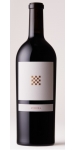
Vintners Dennis O’Neil and Steph Martin began development of Checkerboard Vineyards in 1999 and retained winemaker Martha McClellan to create a portfolio of wines reflecting the mountainside. The estate includes four vineyard sites of different elevation, exposure and soil composition, providing the foundation for a portfolio that includes Checkerboard Aurora Vineyard, Checkerboard Coyote Ridge Vineyard, Checkerboard Nash Creek Vineyard, Checkerboard Kings Row, Checkerboard Sauvignon Blanc, and Checkerboard Rose. Grapes are harvested at dawn in micro-lots and delivered steps away to the winery where clusters are sorted, discarding any blemished ones. Individual berries are hand-selected for vinification and transferred for fermentation, by hand, to Taransaud wooden tanks, stainless tanks, and individual wooden barrels.
Farming is based on long-term sustainability and includes water conservation and monitoring, permanent cover crops planted in alternating rows, and the use of entomology for pest control and the development of soils with good organic matter and microbiology. Checkerboard Vineyards is a member of Fish Friendly Farming which promotes environmentally-friendly land practices and water quality management. Aurora Vineyard is located in a small valley midway up Diamond Mountain and on a large knoll at an elevation of 1,200 feet. The knoll bulges outward, giving the vineyard full Southern exposure and open light from the East and West and protection from Napa Valley’s summer fog. Six acres are planted in the knoll’s rich, volcanic soils that are riddled with basalt cobble in a loamy red clay. The remaining six acres are planted in a deep gravely mix of volcanic ash and chips of decomposed Rhyolite that were washed down from the steep, rocky crags of Diamond Mountain above.
There's a fresh, sweet aroma to the 2016 Checkerboard Aurora Vineyard that builds excitement and anticipation for what's to come. On approach, the palate is juicy and expansive and explodes with flavors of blackberry, mulberry, dark cherry, caramel, leaf tobacco and green olive. The wine continues with a voluptuousness that's linear and constant yet lifted by natural acidity. The finish is showy, long and lingering with finely polished tannins. An exceptional vintage.
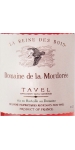
Mordoree Tavel Rose Reine des Bois is made from 60% Grenache, 15% Clairette, 10% Syrah, 10% Cinsault, 5% Bourboulenc (biodynamically farmed on a rocky/sandy plateau over clay).
This wine comes from a parcel planted on a pebbled soil covered with stones, whose geology is typical of the grands crus from the Rhone Valley (a base made of marine molasse from the Miocene period covered with an alpine diluvium from the Villafranchian period). 100 % destemming, cold maceration during 48 h., pneumatic pressing, fermentation at 18° C.
To pair with: roasted and or spicy chicken, duck, goose, fish soup, white meat, seafood and a lot of fishes (tuna, John Dorry, red mulet, etc...).Quite all Asian cuisine. Dishes with garlic, dishes with tomatoes.
In the glass the wine is deeply colored pink, almost orange/salmon. Complex aromas of white flowers, raspberry, pomegranate, strawberry, minerals, and citrus rise from the glass. Palate is full-bodied and voluptuous yet retains elegance while delivering great fruit intensity balanced by minerals and citrus. Light tannins appear mid-palate and carry through to the finish, giving it serious structure. Fresh, complex, and very long on the finish. Overall, powerful, textured, and food-driven — a “serious” Tavel that can age 1–5 years. Best enjoyed from June/July 2026 onward.



