
" We don't sell the wine without touching the vine "
I am a new customer.
By creating an account at Timeless Wines you will be able to shop faster, be up to date on an orders status, and keep track of the orders you have previously made.

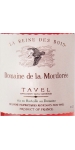
Mordoree Tavel Rose Reine des Bois is made from Grenache
Nose: Steady rose, brilliant and cristal clear.
Aromas : very complex : from flowers, white fruits and red fruits (strawberries, pomegranate, rapsberry). Slightly mentho-lated
Palate : fresh, classy, elegant, very long.
Aging capacity : 8 to 10 years.
This wine comes from a parcel planted on a pebbled soil covered with stones, whose geology is typical of the grands crus from the Rhone Valley (a base made of marine molasse from the Miocene period covered with an alpine diluvium from the Villafranchian period). 100 % destemming, cold maceration during 48 h., pneumatic pressing, fermentation at 18° C.
To pair with: roasted and or spicy chicken, duck, goose, fish soup, white meat, seafood and a lot of fishes (tuna, John Dorry, red mulet, etc...).Quite all Asian cuisine. Dishes with garlic, dishes with tomatoes.
Review:
"A blend of 60% Grenache, 20% Syrah, 10% Cinsault and 10% Clairette, the 2022 Tavel La Reine des Bois is a touch darker in hue than its stablemate, the La Dame Rousse, but it's still not among the darkest of Tavels in the glass. That's perfectly okay, as the aromas and flavors are textbook for the appellation: crushed stone, flowering garrigue, ripe cherries and mouthwatering strawberries, all capped off by refreshing citrus-zest notes on the lengthy finish. Full-bodied and full-flavored, it's one of the candidates for top Tavel this year. - Joe Czerwinski"
- Robert Parker's Wine Advocate (May 2023), 93 pts

Torello Corpinnat Finca Can Marti Brut 32% Chardonnay, 32% Xarel.lo, 22% Macabeo and 14% Parellada.
The Can Martí estate soils have been formed from sediments from the Garraf Massis, deposited thousands of years ago. One of the most characteristic features of the estate’s soils is the presence of accumulations of calcium carbonate.The movement of water through the soil dissolves the carbonates present and takes them to a certain depth. The continuous repetition of this process has ended up producing the accumulation of these deposits.When these become massive, after thousands of years, they bind together and and form a hard stratum called a petrocalcic horizon. This hard stratum limits the availbility of water to the vine and the production, but is a factor that gives the grape quality.
Straw yellow color, fine and constant bubbles, clean and bright, with golden reflections. The nose reveals a subtle aromatic intensity with fresh and sweet aromas. Honey flowers, citrus notes, white fruit, and balsamic herbs such as fennel.
In the mouth the acidity is well balanced, with delicate bitter notes to the finish and a set of ripe fruits and balsamic nuances.



