
" We don't sell the wine without touching the vine "

The wine region of Puglia is located at the, “heel,” of the Italy boot on the peninsula. Bordered by the Ionian and Adriatic Sea, it is one of the longest wine region coastlines in Italy. One of the most fertile wine regions, Puglia is covered with olive trees, and wheat, and of course, grapevines. Most people who visit Italy are not familiar with Puglia, which is virtually an undiscovered Mecca of vineyards. Wine towns in Puglia include Martina Franca, Lecce and Manduria. The two main wines produced in Puglia are Salice Salentino, and Primitivo. 60% of the wines that are produced in the region are red. The United States and wineries north of Italy have started to see the potential of the region and have begun to invest in the region. The predominant red grape in Puglia is Primitivo, which is a cousin of California’s Zinfandel grape. The wines made with Primitivo are luscious, heavy and definitely “food wines”.
Uva di Troia is the, “Grape from Troy”, and reflects the region’s Ancient Greek influence. This secondary red grape is used in Foggia to make the famous “Castel del Monte” wines. Puglia also makes light white wines with the Bombino Bianco and Verdeca grapes.
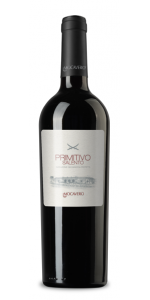
Mocavero Primitivo del Salento is 100% Primitivo.
Deep red color with hints of violet, sweet spicy and ripe fruity notes, soft, persistent taste with skilful balanced tannins.
This ancient vine variety requires special attention during vinification to ensure that it expresses all the varietal characteristics, it needs periodic aeration and a particular temperature control. Once maceration is complete, the must is separated from the marc and fermentation ends in stainless steel tanks.Once it has been fermented the wine is refined in american Oak barrels for 3-4 months. When the refining process is complete, the wine is filtered and bottled.
Pairs best with roast meat, wild fowl, cold-cuts and mature cheese.
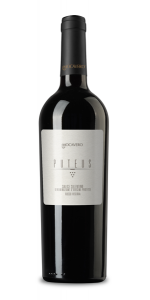
“Puteus” is a Salice Salentino DOP reserve, made of 80% of Negroamaro and 20% Malvasia Nera, as the disciplinary code requires. In the last stage of fermentation the wine is stored in stainless steel tanks for the first year, then aged in oak barrels. It has a deep red color with hints of violet.
Deep red color with hints of violet, balanced tannin, strong spicy bouquet, with notes of cocoa and coffee, fruity (cherry).
The best wine pairing is with meat dishes, roast meat with a juicy frosting, seasoned cheese and salami, and it sparks with spicy dishes!
Walt Bob's Ranch Pinot Noir is made from 100 percent Pinot Noir.
Bob’s Ranch Estate Vineyard
Characterized by its proximity to the Pacific Ocean; Coastal breezes along with low rolling hills and morning fog define this cool climate site
Sonoma Coast Appellation
Heavy fog and strong winds tempered by bright afternoon sunshine
Petaluma Wind Gap
Creates a unique micro-climate within the appellation, producing distinctive Pinot Noir
Sandy, Well-draining Soils
Stresses vines into producing grapes of full varietal intensity
43 Vineyard Blocks on 72 Acres
With an array of clones and field selections, this ranch produces complex and delicious wines
Review:
"The stunning 2021 WALT ‘Bob’s Ranch’ Pinot Noir is a masterclass by this winemaking team. This Sonoma Coast AVA property has a wide range of Pinot Noir selections and is in close proximity to the Pacific Ocean. Stored in roughly 30% new French oak, this shows off dense blackberry and black cherry notes on the nose with shades of cola. Very seamless on the mouth, this effortlessly glides throughout the drinking experience. The salty and savory aspects, as well as the length, all add to the enjoyment."
Owen Bargreen 95 Points
Thorn Clarke Single Vineyard Grenache is 100% Grenache.
The Single Vineyard Selection range focuses on single site, small batch wines, highlighting the true characteristics of each individual variety. Each block is hand selected by our winemaker and viticulturist each year, choosing the wines that best reflect the strengths of each individual vintage.
The vines sit in good sandy soils nestled below the ranges on the eastern side of the Barossa, enjoying cooling evening, gully winds and a temperature climate.
The wine is ruby in color with purple hues. Brimming with bright fruit notes of wild strawberries & cherry and backed up by subtle spice of white pepper. On the palate, the fruit continues with further notes of raspberries and plum with a hint of French oak. A juicy medium bodied red that has a delicate and complex finish.



