
" We don't sell the wine without touching the vine "

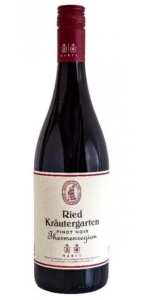
Pinot Noir is clearly the dedication of the Hartl Winery.
Strong garnet red, tending a little more towards brick-colored at the edge. On the nose, a complex abundance of herbs and dark berries, raspberry jam, thyme blossoms, dill, sage, violets and marzipan. Juicy on the palate, aromas of ripe raspberries, blueberries, rosehip tea and Mediterranean herbs, as well as hints of Assam tea. The elegant acidity gives a firm framework for the powerful body and highlights the fine-grained tannins. In addition to its classic ripe, typical Pinot fruit, the wine shows subtle notes of toast and smoked bacon in the long finish.
Pair with veal roast, leg of lamb with thyme and lemon, grilled Mediterranean vegetables, wild fowl like pheasant wrapped in bacon or duck with orange zest, prunes, roasted pumpkin and root vegetables.
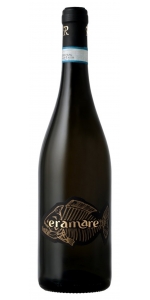
Rinaldi Eramare Piemonte Cortese is made from 90% Cortese and 10% Sauvignon Blanc.
The Cortese grapes are coming from the Estate's vineyard located at the best exposures between Ricaldone and Maranzana at about 220 meters above sea level.
A salty and tasty white wine (90% cortese 10% sauvignon) fresh simple and juicy.
After the alcoholic fermentation the wine refines on his yeast for 4 months just to have a better color and taste.
A lot of minerality and note of grapefruit.
Ideal for an aperitif, or with seafood appetizers, fish first courses, grilled fish, vegetable pies, mixed Piedmontese appetizers, omelettes.
Rinaldi Eramare Piemonte Cortese is made from 80% Barbera and 20% Bonarda.
The Cortese grapes are coming from the Estate's vineyard located at the best exposures between Ricaldone and Maranzana at about 220 meters above sea level.
A salty and tasty white wine (90% cortese 10% sauvignon) fresh simple and juicy.
After the alcoholic fermentation the wine refines on his yeast for 4 months just to have a better color and taste.
A lot of minerality and note of grapefruit.
Ideal for an aperitif, or with seafood appetizers, fish first courses, grilled fish, vegetable pies, mixed Piedmontese appetizers, omelettes.
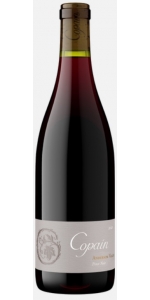
Copain Wines Pinot Noir Anderson Valley is made from 100 percent Pinot Noir.
Les Voisins, or "the neighbors" is sourced from some of the best vineyards in Anderson Valley to create a wine that displays the region's unique terroir. A myriad of fresh fruits beam from the glass including blueberry compote, kirsch, blackberry and red cherry. Underlying notes of graphite, conifer, fresh flowers, orange peel and wet sandstone add to its complexity. Bright and fresh, this Pinot Noir will take you on an adventure to one of California's most remote winemaking regions.
Review:
Taking on a touch of darker fruit, the 2021 Pinot Noir Anderson Valley brings forward aromas of black raspberry, red cherry, cinnamon, and candied flowers. Medium-bodied, with supple texture and a touch more plushness on the palate, it reveals ripe berries, fresh pine, and turned soil. Its ripe tannins come through on the finish cleanly, offering a lot of charm. Drink over the next 5-6 years.
-Jeb Dunnuck 93 Points
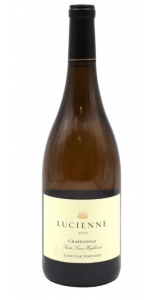
Hahn Estate Lucienne Chardonnay Lone Oak Vineyard is made from 100 percent Chardonnay.
Reviews:
Lemon blossom, grapefruit rind, pastry flake and a hint of ash show on the nose of this single-vineyard expression from the Hahn family. It's suave and broad on the palate at first, then it chisels down to pinpoint acidity, delivering flavors of apricot, lime zest and chalk before the slightly nutty finish. Matt Kettmann
-Wine Enthusiast 94 Points
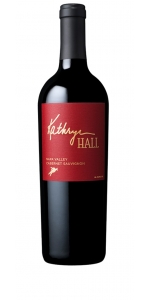
Hall Wines The Kathryn Hall Cabernet Sauvignon is made from 96% Cabernet, 4% Merlot.
The 2017 Kathryn Hall is deep, dark ruby in color and elegantly balanced with layered aromas of concentrated blackberry, freshly turned earth, and a hint of warm, spicy oak. The palate is fruit-forward with underlying notes of rich cocoa and leather. Layers of black fruit, nutmeg, cassis and brooding earthy notes are abundant. Supple, seamless tannin abounds, and the wine finishes with an incredible dark fruit feed-back that lasts several minutes.
Review:
The 2019 Cabernet Sauvignon Kathryn Hall is a blend of 95% Cabernet Sauvignon and 5% Merlot, brought up mostly in new barrels. It’s a killer bottle of wine offering lots of ripe black fruits intermixed with savory herbs, melted chocolate, and tobacco. Medium to full-bodied on the palate, it shows the lush, round, velvety style of the 2019 vintage and is already impossible to resist. It’s going to evolve for 15+ years if well stored.
-Jeb Dunnuck 95 Points
"Razon Table Wine, medium ruby in color. More complicated than the 2005 with a bouquet of sweet, ripe plum and strawberry in a light vanilla veneer. Sweet oak and medium plum flavors show on palate."
- International Wine Review (Jan. 2008), 87 pts
Rated 89 by the Wine Advocate (Issue 175, Feb 08)
The Valsacro Estate
The Escudero family has been making wine and growing grapes for generations in the rugged, semi-desert foothills around Grávalos in the southwestern corner of the Rioja Baja region. Over the last 15 years or so, the Escudero brothers led by Bordeaux-trained winemaker Amador have transformed the small family "bodega" into a major Rioja wine producer. The changes have come gradually and in addition to the new winery at Pradejón (near Calahorra) they have greatly extended vineyard acreage, a very successful "cava" sparkling wine venture (one of the few non-Catalonian cava makers), and extensive Chardonnay plantings (disallowed in Rioja, but OK for cava). Amador, now in his mid-forties, is not one to shy away from taking risks to make things happen. The Valsacro project is an excellent case in point.
"One of the most adventuresome of "new Rioja" producers; amazing Dioro selection has explosive fruit; new project in Navarra called Logos bears watching."
- Anthony Dias Blue's pocket guide to wine 2006
The Valsacro Vineyards
Operating from the small Grávalos facility, Amador realized that some of his vineyards offered the potential to do something better (and different). These old vineyards, some over 100 years planted in the old fashioned "vidau" style offered the kind of raw material needed to make a modern-style premium wine - a Rioja with a difference. ["Vidau" is a mixed variety vineyard - a field blend ready to pick.] The vineyards include Tempranillo, Mazuelo, Graciano & Garnacha. A typical Valsacro is about 40% "vidau" (majority is Garnacha with Tempranillo & Garnacha), 50% Tempranillo from 28 year old vines and 10% Mazuela (Carignan) from 25 year old vines.

James Goddard was an ancestor of the Clarke family. Born in West Sussex, England in 1823, James spent his 74 years as a sailor, a whaler, a bullock driver, farmer, prospector, miner and hotel keeper. From an illiterate runaway living rough on the streets of London, he became a rich, successful and admired pillar of South Australian society.
James arrived in Adelaide in 1839 as a 16-year-old sailor. Twelve years later, his life changed forever with the news of gold findings. For the next 20 years, James roamed the country learning the geology that improved his chances of prospecting.
James Goddard Shiraz is made from 100 percent Shiraz.
In 1870, he tried his luck near his farm in the Barossa Valley and discovered the region’s first gold deposits, creating the prosperous Lady Alice Mine. The Lady Alice Mine, though it is no longer operational, was & still is the most successful gold mine in South Australia. From these roots, the Thorn-Clarke family has been connected to the region for the last 150 years.
James Goddard Shiraz is a blend Shiraz sourced from the Milton Park vineyard in the north of Eden Valley, and the St Kitts vineyard in the far northern area of the Barossa. Fruit is harvested in the cool of the night to maintain maximum flavour and freshness and it is fermented for 8 days. The ferment is pumped over twice daily to extract the colour and flavour from the fruit. Once finished fermentation the wine was then matured in a blend of French and American oak for a period of 10 to 12 months depending on the vintage.
Deep vibrant red with purple hues to the rim. The nose shows lifted plums, vibrant purple berries and a delicate spice note. The palate has concentrated satsuma plum, blackberry with lovely charry oak in the background. Long, juicy and even with plush fruit on the finish.
Review:
“Blended from two estate vineyards, St. Kitts and Milton Park, this shiraz offers its richness without any aggression or overt perfume. It’s just lush and delicious, a friendly embrace of firm tannins and purple-red fruit. The texture and flavor combine in a saturated meatiness, for Korean barbecue.”
- Wine & Spirits Magazine, 92 points
Dal Forno Romano Valpolicella Superiore is made from Corvina, Corvinone, Rondinella, Oseleta and Croatina grown at the Monte Lodoletta estate in the Val d'Illasi, eastern Valpolicella.
One of Italy's most iconic producers, Romano Dal Forno revolutionized Valpolicella winemaking with an obsessive pursuit of quality. The grapes are hand-harvested with meticulous selection, then dried for approximately 45 days in the estate's patented, computer-controlled appassimento rooms. After pressing, the wine is fermented in custom-designed stainless steel tanks and aged for 24 months in new French oak barrels, followed by extended bottle aging before release.
Deep ruby in color with aromas of blueberry, blackberry, cherry and cocoa. Full-bodied and opulent on the palate with powerful yet polished tannins, layers of dark fruit, sweet spice, tobacco and chocolate. Despite its remarkable concentration, the wine maintains an elegant freshness and balance. Pairs beautifully with grilled or roasted red meats, game and aged cheeses.
14.5% ABV
A perfumed and elegant wine with subtle aromas of balsamic, coconut, dark bramble fruit, jasmine, mulberries, red cherries and chocolate. It’s spicy rather than fruity. On the palate it shows salted chocolate flavors and a full body. It’s crisp, zesty and velvety, with creamy tannins and a graphite finish. It shows tension despite its concentrated style. It will be released in January 2027. Try then or hold.
-James Suckling 97 Points



